
Reviewed · ABU SIMBEL DAY TRIPS
10 Day Egypt Wonders of the Pharaohs Cairo & Alexandria & The Nile & Abu Simbel
First, your eyes catch on Giza, then history keeps going. This 10-day Egypt Wonders of the Pharaohs route strings together Cairo’s top sights, a 4-night Nile cruise, and the long-day knockout of Abu Simbel. I like how the plan is structured around the big monuments, not random stops that eat your time.
The second thing I like is the way logistics are handled for you, with private transfers, domestic flights, and tickets slotted in. You’ll also get a traditional Galabeya-style party on board the cruise, which is a fun break from the temple routine. One drawback to consider, Abu Simbel is a long day, so if you hate early starts and long drives, you’ll want to pace yourself.
In This Review
- Key highlights worth marking on your map
- Giza, Saqqara, and Memphis in one big, practical first day
- Egyptian Museum, Khan el-Khalili, and the Citadel for Cairo context
- Luxor Temple and Karnak: the Nile’s long-running spotlight
- Valley of the Kings, Hatshepsut, and the Colossi of Memnon on the West Bank
- Kom Ombo and Horus Temple: Ptolemaic precision in Aswan
- Abu Simbel and Philae: two temples, one unforgettable day flow
- Flying back to Cairo, then Alexandria for Roman-era variety
- Ending day 10: airport transfer, no last-minute scramble
- What you’re really paying for at $2,850 per person
- Practical advice for timing, heat, and keeping the day enjoyable
- Who this tour suits best, and who might want a different plan
- Should you book this Egypt Wonders of the Pharaohs tour?
- FAQ
- What does this Egypt tour include?
- Are admission tickets included for the main sites?
- Does the tour include domestic flights?
- Is pickup included, and what time does the tour start?
- Is this tour suitable for children?
- Can I get a full refund if I cancel?
Key highlights worth marking on your map
- Giza plus the Sphinx in the same day, with enough time to really look up close
- Step Pyramid at Saqqara and the older Memphis area for a less-frenzied feel than downtown Cairo
- Egyptian Museum and Khan el-Khalili, combining major artifacts with everyday bazaar energy
- Karnak and Luxor Temples in Luxor, with that classic Nile-time temple atmosphere
- Valley of the Kings plus Hatshepsut’s temple, a strong one-two on the West Bank
- Abu Simbel and Philae by boat, two of Egypt’s most dramatic temple experiences
Giza, Saqqara, and Memphis in one big, practical first day
Day 1 is the easy landing. You get picked up and transferred to your Cairo hotel. It’s a relief after travel, especially in a city where taxi lines and street navigation can feel like a sport.
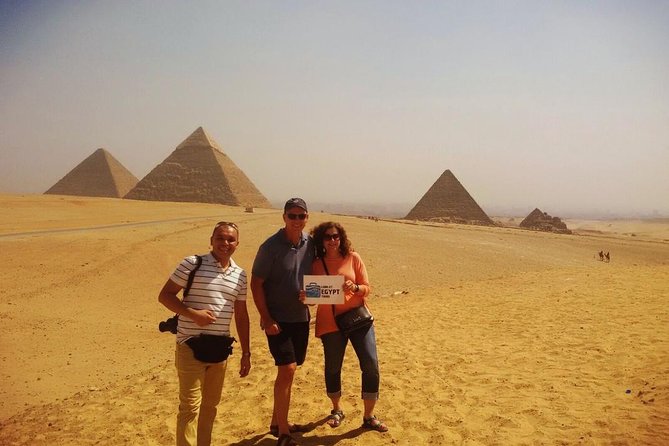
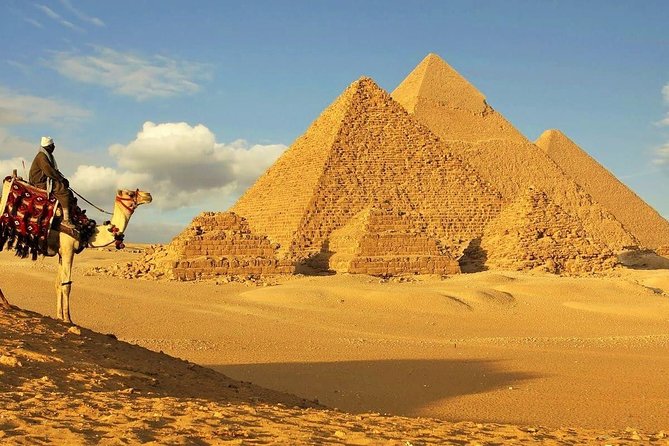
Day 2 is your monument day, and it starts at Pyramids of Giza. You get about 3 hours at Giza plus the Sphinx. This is the iconic view you always see on postcards, but being there in person is different. The scale is what hits first. The Sphinx and pyramids sit right at the base of the Giza plateau, so you can take photos without the whole “where exactly do I stand” guessing game. Admission is included too, so you don’t waste time at ticket counters.
Then you head to Saqqara (Sakkara) and the Step Pyramid. You get another 3 hours here, which matters. Saqqara rewards slow walking. The Step Pyramid is the landmark of the site, tied to Djoser and Imhotep, and it’s often described as an early major move toward stone pyramids. If you’re curious how Egyptian architecture evolved, this is the day for it.
The schedule doesn’t stop there. You also visit Memphis and Sakkara area, with about 1 hour to see ruins connected to Egypt’s early capital period. You’ll get to see highlights like a massive statue and the alabaster sphinx of Queen Hatshepsut.
What to watch for: Day 2 is long on your feet. Wear breathable clothes and plan on sunscreen you can reapply. Also, bring a hat and keep water handy, because Cairo-area heat makes every outdoor hour feel longer.
More Abu Simbel runs:
- Egypt 8 nights:Cairo,Luxor,Aswan,Abu Simbel,Nile cruise,Balloon
★ 4.5 · 227 reviews - Our Exceptional 5 days Cairo, Luxor and Abu Simbel Tour Package
★ 5.0 · 212 reviews - From Cairo: 2-Day Abu Simbel & Luxor Tour
★ 3.9 · 136 reviews
Egyptian Museum, Khan el-Khalili, and the Citadel for Cairo context
Day 3 keeps the Cairo momentum but shifts it from monuments to stories. First stop is the Museum of Egyptian Antiquities, the Egyptian Museum in Cairo. You get about 3 hours inside. This museum is where you go to connect names to faces, and it helps your later temple visits click into place. The collection is extensive, but your guide will help you focus on the essentials rather than roaming aimlessly.
Next is Khan el-Khalili, a major souk in historic Islamic Cairo. You get around 1 hour here. It’s not a “browse forever” situation. It’s the right amount of time to experience the bustle, look at crafts and spices, and practice bargaining instincts if you want souvenirs. Even if you don’t buy, you’ll feel how Cairo lives beyond the monuments.
Then you finish the day at the Mosque of Muhammad Ali, inside the Citadel area. Expect about 2 hours. The Citadel of Cairo has a medieval government history, and the setting gives you a useful perspective on the city’s layout.
My advice for this day: If you’re photographing, pace yourself. Museums and bazaar streets both pull for your camera, but it’s easy to burn battery and energy. Take fewer photos, but aim for the ones that capture details, like museum objects and market textures.
Luxor Temple and Karnak: the Nile’s long-running spotlight
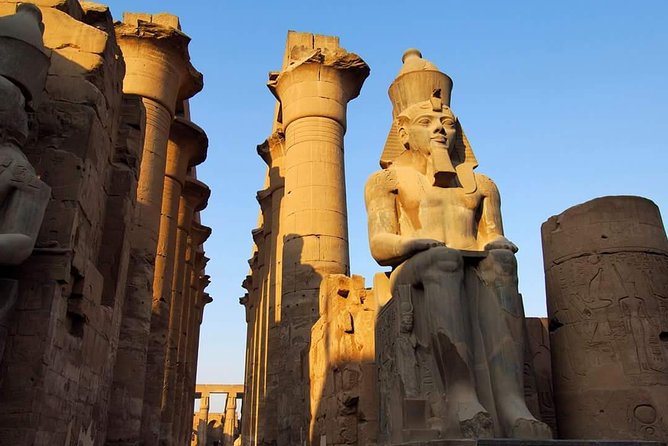
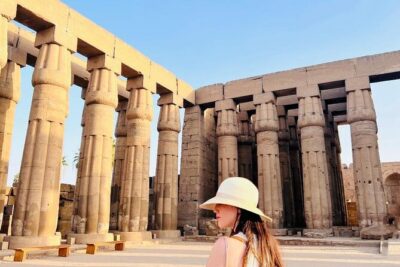
After Cairo, the tour moves you into Luxor days, and Day 4 starts on the east bank with Luxor Temple. You get about 1 hour here. This temple complex dates to roughly 1400 BCE, and the location on the Nile’s east bank makes it feel like part of the daily river rhythm.
Then it’s on to Karnak Temple, where you get about 2 hours. Karnak is massive and dedicated primarily to Amun. It’s often treated as the biggest temple complex in the region, and it’s a key stop if you want the feeling of Egyptian ceremonial scale. The best way to enjoy Karnak is to stop letting the sheer size overwhelm you. Look for patterns, gateways, and columns. Your guide’s explanations will help you connect what you’re seeing to why it was built.
What you’ll love here: Luxor temples are easier to understand than they are to “summarize.” They’re not just ruins. They’re monuments that show how Egyptians organized space for worship, power, and time.
Valley of the Kings, Hatshepsut, and the Colossi of Memnon on the West Bank
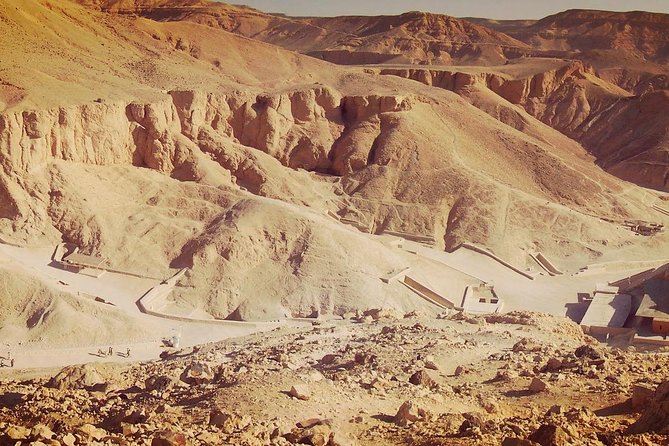
Day 5 is the West Bank highlights. You start with the Valley of the Kings, with about 3 hours allotted. This is the burial ground of many New Kingdom pharaohs. Tutankhamen’s tomb is here, and your ticket allows you to visit 3 tombs out of many, with Tutankhamen’s tomb not included on the standard admission. That ticket rule matters, because it changes what you should do mentally. You’re not seeing everything. You’re seeing enough to understand the scale of burial culture.
It can get crowded, and tomb interiors can feel warm and dim. Go with patience, and keep expectations flexible.
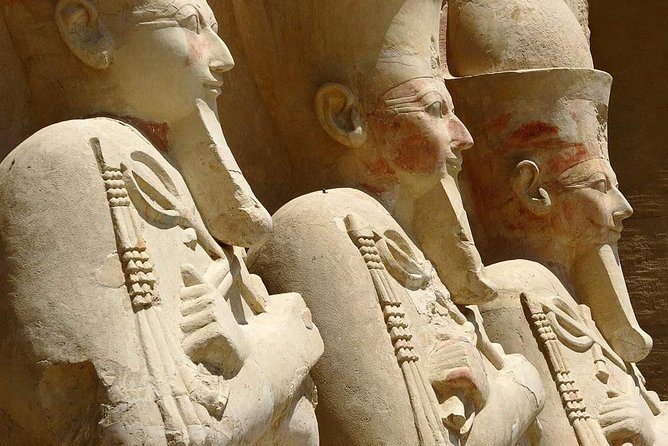
Next is the Temple of Queen Hatshepsut, about 1 hour. This temple is tied to a powerful and complicated story. Hatshepsut ruled for about 16 years, built her funeral temple, and her reign involved political maneuvering in a world where women pharaohs were not the usual norm. Your visit is the kind that makes the West Bank feel personal, because you’re looking at stone that was built to preserve a ruler’s identity.
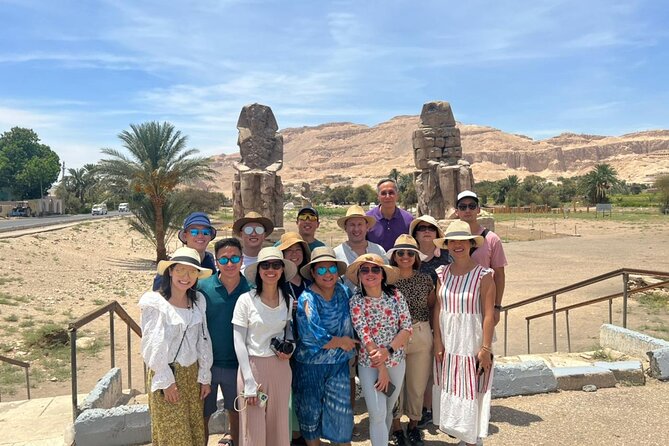
Then you see the Colossi of Memnon, two massive statues of Pharaoh Amenhotep III. It’s a stop that works even if you’re temple-tired, because the scale is so immediate. You look up and realize the artists and builders were aiming for shock and endurance.
More Alexandria day tours:
- From Cairo Alexandria Catacombs, Citadel Day Trip with Lunch
★ 4.6 · 1,312 reviews - From Cairo: Private Full-Day Tour of Historical Alexandria
★ 4.1 · 1,155 reviews - Alexandria Day Trip From Cairo
★ 4.5 · 991 reviews - Day-Trip to Alexandria from Cairo by Private Car
★ 4.5 · 480 reviews
Kom Ombo and Horus Temple: Ptolemaic precision in Aswan
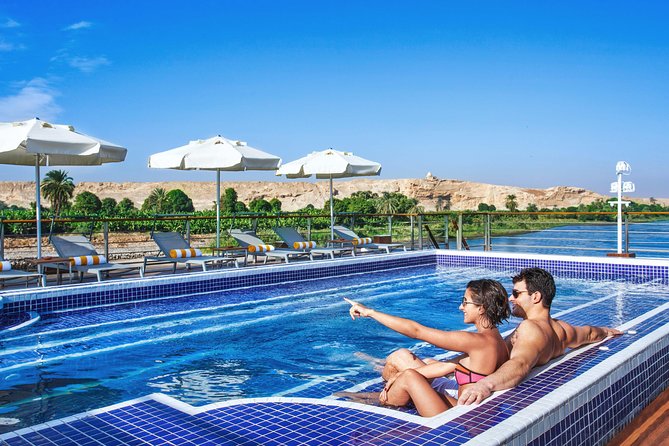
Day 6 takes you into Aswan-region temples. First is Temple of Kom Ombo, with about 2 hours. This is known for being a double temple, with one side dedicated to Sobek the crocodile god, and another associated with other deities. It’s one of those sites where the design helps you understand that temple building was also a form of religious storytelling.
Then it’s Temple of Horus, with about 3 hours. This is a Ptolemaic temple and is considered one of Egypt’s best-preserved. One reason it looks so intact is the way desert sand protected it after years of change in religious practice. It’s also atmospheric, especially when the light is lower and you can see the roof and carvings more clearly.
Practical tip: Bring a light layer. Temples can have shade pockets that feel cool for a few minutes, then the heat snaps back.
Abu Simbel and Philae: two temples, one unforgettable day flow
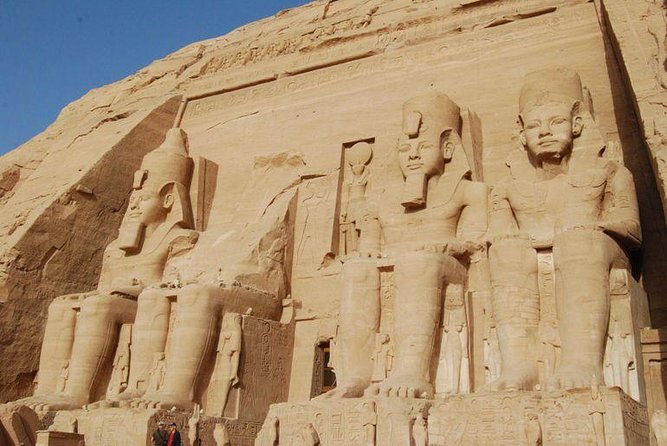
Day 7 is the day you plan your energy around. First stop is the Abu Simbel Temple Complex. You get about 7 hours here, which signals this is not a quick detour. Abu Simbel is two rock temples in Nubia near the border area, set by Lake Nasser. The long travel time is the tradeoff, and it’s why this stop is a big reason people choose the package.
After Abu Simbel, the tour includes Philae. You cross the Nile by motorboat to reach the island temple area, with about 2 hours on site. Philae is linked to the cult of Isis and survived through later eras, with rulers adding their own touches over time. It also has the UNESCO story of being saved from water, moved block by block to higher ground.
Why this pairing works: Abu Simbel gives you scale and power on a grand plane. Philae gives you a softer, more sacred mood, plus that boat transfer that breaks up temple hours.
My advice: This is where you set your expectations for rest. Eat what you can, sip water often, and accept that you will be a little tired. The payoff is that both temples are the kind you remember, not just the kind you tick off.
Flying back to Cairo, then Alexandria for Roman-era variety
Day 8 starts with a calmer transition. After breakfast on your cruise, you check out and fly back to Cairo. Once you arrive, you’re transferred to your hotel to relax.
Day 9 is the Alexandria outing, and it’s a long one: about 9 hours. You start with Pompey’s Pillar, a monument built in the late Roman period honoring Emperor Diocletian. Next you visit the Catacombs, described as the largest Roman cemetery with three rock-cut levels.
After that you stop for lunch at a local restaurant. Then you visit Qaitbay Citadel, built on the site associated with the ancient lighthouse of Alexandria. The day closes at Bibliotheca Alexandrina, the modern library building, then you drive back to your Cairo hotel.
This is a good balance if you want Egypt Beyond Tombs. Cairo and the Nile are packed with pharaohs. Alexandria adds Roman layers, plus a Mediterranean city feel.
What to watch for: Alexandria day involves multiple stops in one go. Wear shoes you can walk in comfortably. Alexandria’s weather can also shift, so having a light layer helps.
Ending day 10: airport transfer, no last-minute scramble
Day 10 is your trip’s finish. After breakfast and depending on your flight details, you’re escorted to the airport for final departure. It’s the kind of ending that reduces stress. You’re not trying to figure out transport on your own after a long set of travel days.
What you’re really paying for at $2,850 per person
At $2,850 per person, this isn’t a budget deal. But it can be good value because the package handles a lot of hard parts for you. Domestic flights are included (Cairo to Luxor to Aswan to Cairo), and that alone saves you time and hassle. You also get 5 nights at 5-star hotels in Cairo and 4 nights on a luxury Nile cruise with full board, which is a meaningful chunk of the cost in Egypt itself.
On top of lodging, the plan includes a qualified Egyptologist guide, round-trip private transfers, and admission tickets for the listed major sites. You also receive a meal schedule with breakfasts, lunches, and dinners built into the tour days.
One detail I really like: the group size limit is listed as maximum 2 travelers. That doesn’t always mean private in every sense, but it usually points toward a more controlled experience than a huge bus group.
Also, tipping for guides and drivers is not included. That’s normal for tours, but it’s good to budget.
The value takeaway: if you want a top monuments package with flights, hotels, tickets, and guides handled, this price can make sense. If you prefer total DIY flexibility and want to choose your own pace, you might find a cheaper option by booking pieces separately.
Practical advice for timing, heat, and keeping the day enjoyable
Egypt can feel intense. The tour does a lot in a set number of days, so it helps to travel with the mindset of short, focused visits, not long meandering.
Heat and sun: Giza, Saqqara, and West Bank sites are outdoors for much of the time. Plan on sunscreen, a hat, and water. Your guide and drivers can keep things moving, but you still have to deal with the weather.
Footwear: You’ll do stairs and uneven ground in multiple ancient sites. I’d treat this like a walking tour with a lot of steps, not like a museum-only trip.
Temple etiquette: You’ll be entering sacred sites, so wear clothes that are comfortable but not too revealing. If you bring a light scarf, it can help in places where shoulders or head coverings matter.
Photography expectations: Many tomb interiors can have restrictions on flash and specific rules. You might be asked to follow directions quickly. Keep your phone ready, but also stay aware of group flow.
Packing for the cruise: Since the cruise includes meals and evening programming, pack for warm evenings too. The Galabeya party means you might want something comfortable to wear and easy to change into.
Who this tour suits best, and who might want a different plan
This tour is a strong fit if you want a guided “best of” Egypt route without having to plan flights, tickets, and city-to-city transport. It works well for first-time international travelers who want confidence in logistics.
It’s also a good match for couples or small parties, especially with the max 2 travelers note. You still get group energy from the itinerary, but the pace is easier to manage.
If you dislike long travel days, the tour may feel heavy because Abu Simbel is allocated 7 hours, and Alexandria is a full 9 hours. In that case, you might consider a shorter Nile-only option.
Should you book this Egypt Wonders of the Pharaohs tour?
If your goal is to see Egypt’s headline monuments, including Giza, Karnak, Valley of the Kings, Abu Simbel, and Philae, this is a well-structured way to do it. You get a blend of ancient power, museum context, and a Roman-city day in Alexandria, plus domestic flights that keep you from wasting days moving between cities.
If you’re sensitive to crowds or long days, go in with a plan: hydrate, accept that it’s a schedule-driven tour, and let the guide manage the details. Do that, and you’ll come away with a travel memory that feels like a whole story, not a scatter of snapshots.
FAQ
What does this Egypt tour include?
It includes 5 nights at 5-star Cairo hotels, 4 nights on a luxury Nile cruise with full board, a qualified Egyptologist guide, round-trip private transfers, all activities, and meals including breakfast, lunch, and dinner.
Are admission tickets included for the main sites?
Yes. The itinerary lists admission tickets included for major stops like the Pyramids of Giza, Saqqara, Memphis and Sakkara, the Egyptian Museum, Luxor Temple, Karnak, the Valley of the Kings, Hatshepsut’s Temple, Kom Ombo, Horus Temple, and Abu Simbel.
Does the tour include domestic flights?
Yes. Domestic flights are included from Cairo to Luxor, Luxor to Aswan, and Aswan back to Cairo.
Is pickup included, and what time does the tour start?
Pickup and transfer are offered at the start. The meeting start time is listed as 8:00 am.
Is this tour suitable for children?
Children must be accompanied by an adult. The tour notes that most travelers can participate.
Can I get a full refund if I cancel?
You can cancel up to 6 days in advance for a full refund. For a full refund, you must cancel at least 6 full days before the experience’s start time.
Newly added near Cairo
- Private Day Tour to El Fayoum & Valley of the Whales from Cairo★ 5.0 · 13 reviews
- Full Day Tour Giza Pyramids, Sphinx and Egyptian Museum &Felucca★ 5.0 · 9 reviews
- Private Day Tour Egyptian Museum, Citadel ,Mohamed Ali Mosque and Coptic Cairo★ 5.0 · 34 reviews
- Private Day Tour To Luxor from Cairo by Plane★ 4.5 · 41 reviews
- Grand Egyptian Museum★ 3.5 · 48 reviews
- Private Cairo Day Tour Giza Pyramid, Sphinx, Civilisation Museum★ 5.0 · 19 reviews
- Private Day Tour To Luxor from Cairo by Plane,Tours,Sailing Felucca,Camel&Lunch★ 5.0 · 45 reviews
- Private Day Tour of the Giza Pyramids Alabaster Mosque and Hanging Church★ 4.5 · 9 reviews
Abu Simbel Day Trips, compared.
4-Days Nile Cruise From Aswan To Luxor including Abu Simbel and Hot Air Balloon
Read our review →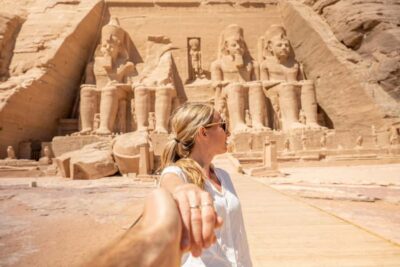
4-Day 3-Night Nile Cruise from Aswan to Luxor&Abu Simbel+Balloon
Read our review →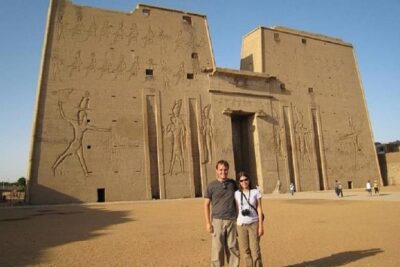
4-Day 3-Night Nile Cruise from Aswan to Luxor including Abu Simbel, Air Balloon
Read our review →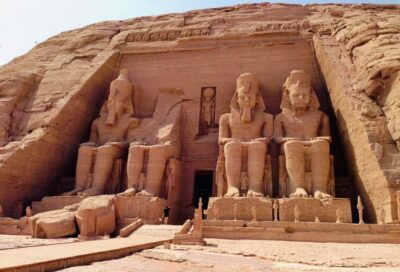
Abu Simbel Temple Private Guided Day Trip with Lunch
Read our review →4-Days Nile Cruise From Aswan To Luxor including Abu Simbel and Hot Air Balloon
Read our review →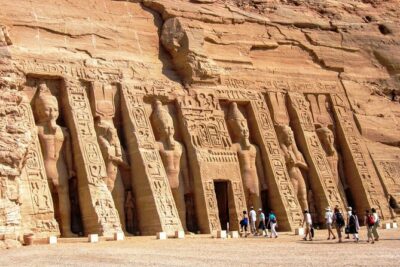
Private Day Tour to Abu Simbel Temples from Aswan
Read our review →4 Days Nile Cruise from Aswan to Luxor including Abu Simbel and Hot Air Balloon
Read our review →Browse the lists this tour appears in