
Reviewed · 3-DAY EXPERIENCES
3 Days Cairo Tour Package exploring Cairo Top attractions and best things to do
Cairo can feel like chaos at street level, but this 3-day package is the fix, with a driver, an expert guide, and a tight route to the big sites. You’ll get Giza’s pyramids and Sphinx on Day 1, then Cairo’s major museums and historic districts across the next two days, so you actually see the stuff that matters without building a plan from scratch. Two things I really like are the hotel pickup and drop-off, and how the guide experience can turn the monuments into clear, story-based context. One consideration: your schedule is busy, so you’ll want to pace yourself with water breaks and comfy shoes.
The value here is that you’re paying for coordination, not just sightseeing. For $170 per person, you’re also getting included meals (breakfast twice and lunch twice) plus bottled water, which matters when you’re moving across Cairo’s neighborhoods. I also like that it runs as a private tour for your group, so questions do not get swallowed by a large crowd. One drawback to keep in mind: depending on your group and timing, some sites can feel like a lot of moving parts in a single day, especially on the Old Cairo route.
In This Review
- Key things to know before you book
- Price and logistics: what $170 really covers
- Day 1 at Giza and Saqqara: pyramids, Sphinx, and Old Kingdom scale
- The Great Sphinx: what to look for in about 30 minutes
- Giza Plateau and the pyramids: 3 hours that can feel like a lifetime
- Entering the Great Pyramid of Cheops: plan for extra tickets
- Saqqara and Memphis: when the pyramids feel less like a theme park
- Day 2 in Cairo: Egyptian Museum, Citadel views, and Khan el-Khalili shopping
- Egyptian Museum: 120,000 items worth knowing about, with key highlights
- Citadel of Cairo: why this fortress stop is more than a photo spot
- Khan el-Khalili: shopping with a sense of place
- Day 3 Old Cairo: Coptic Cairo and Islamic Cairo in one packed morning
- Coptic Cairo sites: Abu-Sergah, St. Barbara, and Ben Ezra Synagogue
- Islamic Cairo: Amr Ibn Al-As Mosque, Sultan Hassan, and Al-Rifa’i
- Notes on time, comfort, and meals that actually help
- Who this Cairo tour suits best
- Should you book this 3-day Cairo tour?
- FAQ
- What is the duration of the 3 Days Cairo Tour Package?
- How much does the tour cost?
- Does the tour include hotel pickup and drop-off?
- Is bottled water included?
- Are meals included?
- Does the tour include an air-conditioned vehicle?
- Is the tour private?
- Are tickets and admissions included?
- What sites are visited on Day 2?
- What is the cancellation policy?
Key things to know before you book
- Focused route across three days, with Giza, Saqqara and Memphis, then museum and downtown stops, then Coptic and Islamic Cairo
- Hotel pickup and drop-off plus air-conditioned vehicle, so you spend less time figuring out transport
- Museum time with key highlights, including the King Tut exhibit mentioned as part of the experience
- Old Cairo mix of Islamic and Christian sites, plus a stop at the Ben Ezra Synagogue
- Optional add-on possibility to enter the Great Pyramid of Cheops, which may require extra tickets on the spot
- Solid included basics: bottled water, breakfasts (2), lunches (2), and a mobile ticket
Price and logistics: what $170 really covers
At $170 per person for about three days, this tour is priced like a value-focused package, not a luxury add-on. The real “why it’s worth it” is what comes with it: hotel pickup and drop-off, air-conditioned transport, an expert guide, and meals (two breakfasts and two lunches). When you’re traveling in Cairo, transport and meal time can quietly eat your budget, and this package handles both.
Also pay attention to the structure: it’s listed as a private tour/activity, meaning only your group participates. That matters because you can ask practical questions about what you’re seeing, what order to explore, and how to read the site layout without feeling rushed.
The one logistical thing to watch is pace. The day-by-day schedule is packed, with multiple stops each day and site visits that range from about 30 minutes to a few hours. If you prefer slow travel, you might feel the time pressure. If you like ticking off major landmarks with a plan, this fits.
More of Egypt worth planning for:
- Hurghada: Luxor Valley of the Kings & Tutankhamun Tomb Trip
★ 4.7 · 13,208 reviews - Cairo: Pyramids & Great Sphinx Private Tour with Camel Ride
★ 4.9 · 6,335 reviews - Tour to Giza Pyramids and The Egyptian Museum
★ 5.0 · 6,016 reviews
Day 1 at Giza and Saqqara: pyramids, Sphinx, and Old Kingdom scale
Day 1 is all about ancient Egypt on a grand scale. You start with the Great Sphinx, then move through the Giza pyramid complex, and finish with Saqqara and the Memphis area. The structure is smart: you build from icon to context. First you see the most famous face in Egypt, then you walk the necropolis that made it possible, then you shift to another burial landscape tied to Memphis.
Two practical wins on Day 1: you get guided pacing, and you’re not left guessing where to stand and what to look for. With an expert guide, the big shapes become less of a wow-only photo moment and more of a readable story.
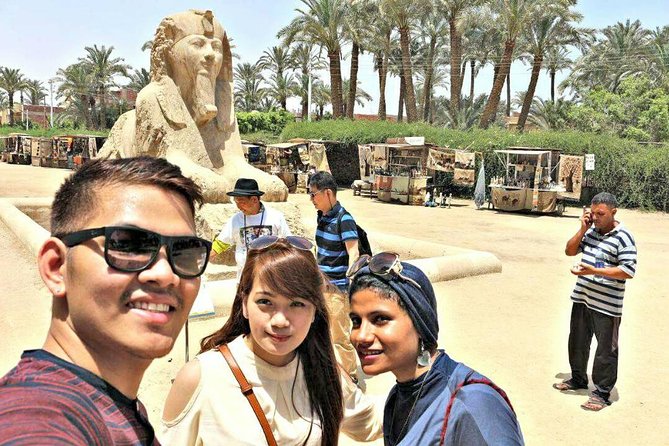
The Great Sphinx: what to look for in about 30 minutes
The Great Sphinx sits on the east side of the complex, and the guide framing here helps you notice details fast. Current Egyptology consensus noted in the tour info points toward the head being Khafre’s. Even if you are not a scholar, that kind of fact gives your brain a hook, so the Sphinx stops being just a dramatic statue and becomes a clue in the broader Old Kingdom picture.
The stop also references smaller satellite elements around the complex, sometimes called queens pyramids, plus causeways and valley temples. If you have only about 30 minutes here, you will want to focus on orientation, not perfect photo angles. Ask your guide where the key vantage points are for understanding the layout in one glance. Then take photos after you understand what you’re actually seeing.
Giza Plateau and the pyramids: 3 hours that can feel like a lifetime
Next you’re at the Pyramids of Giza, part of the Giza Necropolis on the plateau west of the Nile. You’re specifically in the zone where the Fourth Dynasty built the major pyramids: the Great Pyramid of Giza, the Pyramid of Khafre, and the Pyramid of Menkaure. The tour context is helpful because it explains these as part of a full burial complex, not three random monuments.
The itinerary also notes a workers’ village remains and cemeteries around the plateau. That’s one of the best reasons to have a guide. You’ll spend less time thinking you are just surrounded by stone and more time realizing this was built for a system, with people doing work and logistics behind the scenes.
A realism check: three hours at Giza can be a lot of walking. Wear shoes you trust, and take a quick pause when you need it. Bottled water is included, but you still have to make time to drink.
Also reachable from Egypt:
- From Hurghada: Cairo and Giza Highlights Full-Day Tour
★ 4.5 · 6,014 reviews - Hurghada: Luxury Cruise Trip to Orange Bay with Lunch
★ 4.9 · 5,451 reviews - Luxor Day Trip from Hurghada Small Group & Tutankhamun Tomb
★ 4.8 · 5,366 reviews - Hurghada: Orange Bay Island Boat Trip w/ Breakfast and Lunch
★ 4.9 · 5,345 reviews
Entering the Great Pyramid of Cheops: plan for extra tickets
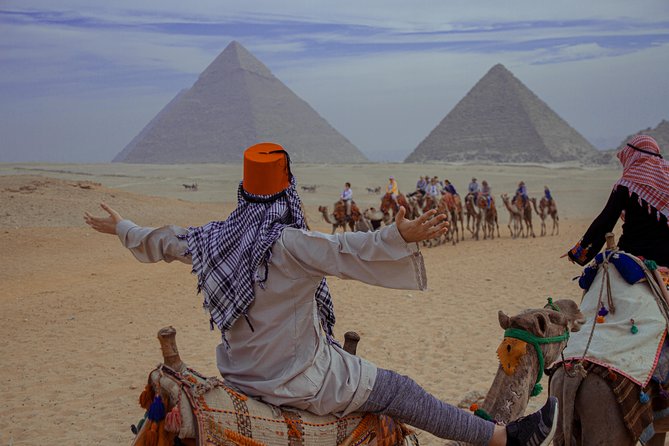
The tour includes time at the Great Pyramid of Cheops (Khufu), and it also flags a key possibility: you may be able to enter, but that typically requires additional tickets you buy on the spot. That’s important to plan around mentally.
If entry is a priority for you, treat it as a “maybe” depending on what is available that day and how your schedule is going. If entry does not work out, you can still enjoy the experience because the stop is not only about getting inside. You’re seeing the oldest and largest of the Giza pyramids and the famous Seven Wonders context.
Saqqara and Memphis: when the pyramids feel less like a theme park
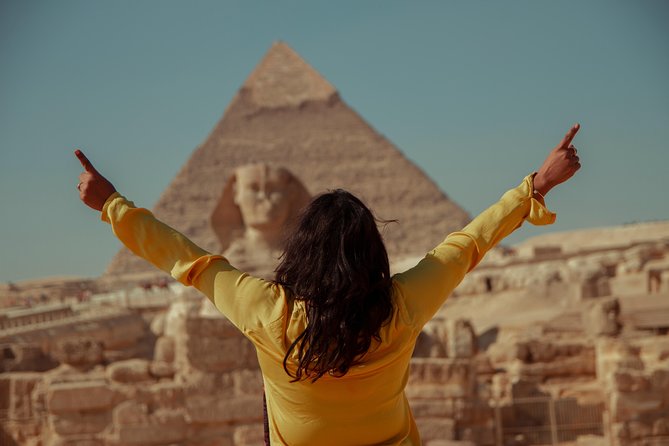
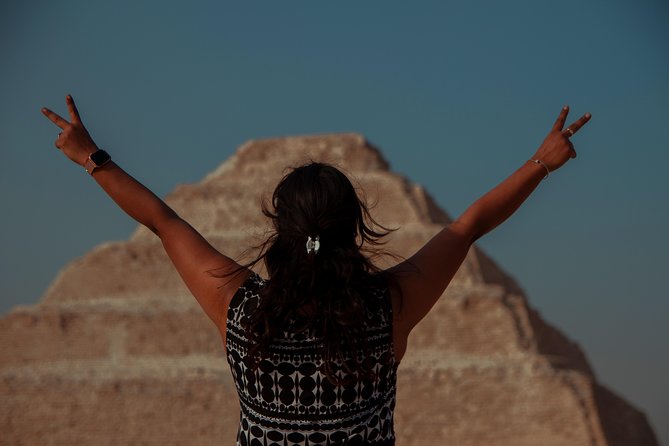
After Giza, the vibe changes. Saqqara is described as a vast ancient burial ground serving as a necropolis for the ancient capital Memphis, and you get time there to see the Step Pyramid of Djoser. This is one of the most useful stops for understanding how pyramid building evolved, because the Step Pyramid is referenced as the oldest complete stone building complex known in history, built during the Third Dynasty.
The stop includes more than one structure. Saqqara has many pyramids and mastabas, which are often described as bench-like tomb structures. When a guide helps explain what a mastaba is and why it mattered, the cemetery starts to feel like a map of belief and power, not a random field of ruins.
Then the tour adds Memphis, with ruins near Mit Rahina. The info provided ties it to the ancient capital, its role at the Nile Delta mouth, and the way it supported commerce and religion. That context matters because Saqqara is not just “another pyramid stop.” It’s part of a living network centered on Memphis.
Day 2 in Cairo: Egyptian Museum, Citadel views, and Khan el-Khalili shopping
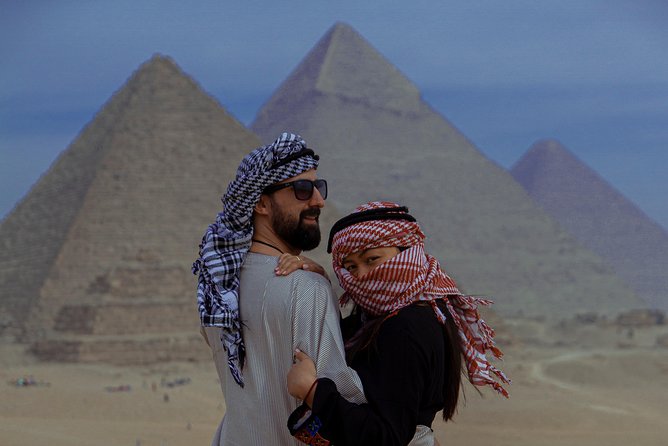
Day 2 is your “big-city Cairo” day, meaning indoor cultural time plus a downtown sweep. You start with the Museum of Egyptian Antiquities (often called the Egyptian Museum), then you head to the Citadel of Cairo (Citadel of Saladin), and then you finish at Khan el-Khalili.
This combination works because it gives you variety. The museum is where you slow down. The Citadel gives you city context and skyline views. Khan el-Khalili brings you back to daily life, with traditional crafts and souvenirs.
Egyptian Museum: 120,000 items worth knowing about, with key highlights
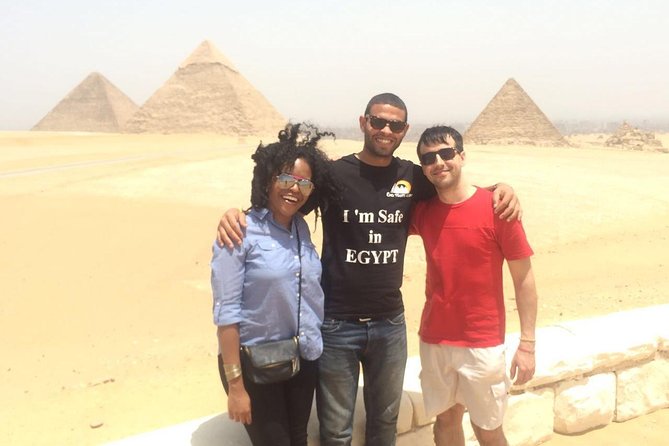
The Museum of Egyptian Antiquities is described as housing 120,000 items, with only a representative amount on display, and the rest in storerooms. That detail helps you manage expectations. You’re not trying to see everything. You’re aiming to hit the most important pieces.
The tour highlights specifically mention the King Tut exhibit, which is the kind of anchor that makes a museum visit feel focused. If you want the most from your time, prioritize the objects that match the story your guide is building. Ask your guide what you should look for first so you are not stuck wandering when you could be learning.
The info also notes the museum was built in 1901 and that the Grand Egyptian Museum at Giza was expected to supersede it as plans developed. Even if you do not visit the new museum, it’s useful to know the Cairo museum is part of a larger shift in how Egypt presents antiquities.
Citadel of Cairo: why this fortress stop is more than a photo spot
At the Cairo Citadel, the tour info describes it as a medieval Islamic-era fortification, built by Salah ad-Din (Saladin) and later developed by subsequent Egyptian rulers. It served as a seat of government and residence for nearly 700 years, from the 13th to the 19th centuries. That is a lot of time for a place to accumulate layers.
The location is also explained clearly: it sits on a promontory of the Mokattam hills, overlooking Cairo and dominating the skyline. In practice, this stop is about perspective. You get to see the city in relation to the fortification and understand why controlling this area mattered.
The Citadel stop includes mosques and museums as preserved historic sites. Even in about an hour, you can get a sense of the architecture and the historical importance without feeling like you have to study every corner.
Khan el-Khalili: shopping with a sense of place
The tour includes Khan el-Khalili, described as a famous bazaar and souq in Cairo’s historic center, with artisans and workshops making traditional crafts and souvenirs. The big value of including Khan el-Khalili in a structured tour is that you get context.
Instead of treating it only as a shopping mission, you can treat it as a living neighborhood of trade. The stop is about one hour, so it is plenty of time to browse, compare, and pick up a few items without getting stuck for half a day.
Day 3 Old Cairo: Coptic Cairo and Islamic Cairo in one packed morning
Day 3 is where Cairo’s religious layers really show. The day is built around Coptic Cairo, then continues to Islamic Cairo, with the tour info connecting the route to sites associated with the Holy Family and early Christian presence.
It also begins early. The schedule notes pickup from your hotel in Cairo at 8:00 am for the full day route. That timing helps you get moving before you feel overwhelmed by midday crowds and heat, even if you cannot control the city’s energy level.
Coptic Cairo sites: Abu-Sergah, St. Barbara, and Ben Ezra Synagogue
Coptic Cairo is described as one of the most important locations connected to the Holy Family, with a strong spiritual impact still felt. Your stops here include entering the Church of Abu-Sergah, the hanging church of St. Barbara, and also an old Jewish synagogue, the Ben Ezra Synagogue.
This mix matters. You are not looking at separate boxes on a map. You are seeing a layered neighborhood where different communities have deep roots.
Because the stops are time-limited (for example, about two hours for the Coptic Cairo block and then smaller chunks for other sites), the guide’s role becomes even more important. You want to know what you are looking at while you’re still there, not after you’ve rushed past the details.
Islamic Cairo: Amr Ibn Al-As Mosque, Sultan Hassan, and Al-Rifa’i
After Coptic Cairo, the route continues to Islamic Cairo, explained as founded in 641 A.D. by Amr Ibn Elas in the El Fustat area. You visit and enter Masjid Amr Ibn Elas Mosque, described as built in 642 A.D.
Then you move to major Mamluk-era architecture at the Sultan Hassan Mosque, also known as Madrasa El Sultan Hassan, founded in 1356 A.D. The itinerary emphasizes it as a massive mosque and madrassa near the Citadel.
Finally, you visit Al-Rifa’i Mosque, located opposite the Sultan Hassan madrassa, dated around 1361, and described as architecturally conceived as a complement to the older structure.
If you only get one thing out of Day 3, make it this: Cairo’s religious buildings are not only places of worship. They are also public statements of power, design, and community identity. With a guide pointing out what is from when, you can tell the buildings apart instead of just admiring the overall look.
Notes on time, comfort, and meals that actually help
This package includes bottled water, breakfasts twice, and lunches twice. That reduces stress. It also helps you avoid the common Cairo problem where the sightseeing day turns into a scavenger hunt for food and shade.
You should still plan your own pacing. With multiple stops per day, you will benefit from quick rest moments, especially between sites. If you get tired during the museum or at larger complexes, speak up. A good guide will help you adjust your rhythm without turning your day into a scramble.
Who this Cairo tour suits best
This 3-day Cairo tour package is a strong match if you want:
- Maximum big-site coverage in a short time
- A guide who explains meaning behind monuments, not just facts
- A group format that feels private for your party
- Included basics like pickup, meals, and water
It may be less ideal if you want long, slow wandering or if you hate tight schedules. Day 1 and Day 3 are especially packed, and you’ll be moving through multiple major sites with limited time per stop.
Should you book this 3-day Cairo tour?
I’d book it if you want a smart, structured route and you value having someone else handle the sequencing. The best reasons are the hotel pickup and drop-off, the included meals and bottled water, and the way the day plans combine major monuments with city districts like Khan el-Khalili and Old Cairo.
I’d be cautious only if you are very sensitive to schedule pressure or you plan to spend a lot of time just lingering without moving on. For most people, though, this is a practical way to get Cairo’s essential hits in three days, without turning your trip into logistics homework.
FAQ
What is the duration of the 3 Days Cairo Tour Package?
The tour duration is 3 days (approx.).
How much does the tour cost?
The price is $170.00 per person.
Does the tour include hotel pickup and drop-off?
Yes. Hotel pickup and hotel drop-off are included.
Is bottled water included?
Yes. Bottled water is included.
Are meals included?
Yes. Lunch is included twice, and breakfast is included twice.
Does the tour include an air-conditioned vehicle?
The package features mention an air-conditioned vehicle.
Is the tour private?
Yes. It is listed as a private tour/activity, with only your group participating.
Are tickets and admissions included?
The itinerary lists admission as free for the listed stops. It also notes that entering the Great Pyramid of Cheops may require additional tickets you can buy on the spot.
What sites are visited on Day 2?
Day 2 includes the Museum of Egyptian Antiquities, Cairo Citadel, and Khan al-Khalili.
What is the cancellation policy?
Free cancellation is available. You can cancel up to 24 hours in advance of the experience for a full refund.
Newly added near Egypt
- St Catherine Monastery Private Tour From Sharm El Sheikh★ 5.0 · 55 reviews
- Snorkeling and Diving to Ras Mohamed And White Island by VIP Boat★ 4.5 · 33 reviews
- Boat Party With Dinner, Show and Belly dancer In Sharm el Sheikh★ 4.5 · 19 reviews
- Sharm Sunset Quad Biking ride, Show, Dinner★ 3.5 · 18 reviews
- White Island & Ras Mohamed: Full-Day Snorkeling Adventure★ 5.0 · 17 reviews
- Sharm El-Sheikh: Relaxing Hammam & Massage With Private Transfer★ 4.5 · 20 reviews
- Sharm el Sheikh Private Airport Transfer★ 4.5 · 84 reviews
- Sharm El-Sheikh: Royal Seascope Submarine cruise in with pickup★ 4.0 · 26 reviews
3-Day Experiences, compared.

Siwa Oasis All inclusive 3 days Tour from Cairo or Giza
Read our review →
Siwa Oasis Tour All inclusive 3 Days Experience from Cairo&Giza
Read our review →
3-Day Nile Cruise to Aswan with Private Guide
Read our review →
White Desert & Bahariya oasis 3 days 2 nights Tour from Cairo
Read our review →
all-inclusive Private 3 Days to the best 11 sightseeing Cairo
Read our review →
3-Day Siwa Oasis Tour, Safari, Camp & Historical Site
Read our review →
Browse the lists this tour appears in