
Reviewed · LUXOR & ASWAN NILE CRUISES
3 Night 4 Day Luxor and Aswan Nile Cruise From Aswan
Temples by day, Nile by night. This 3-night Aswan to Luxor cruise strings together the big-name sites with an Egyptologist guide and real Nile cruise downtime.
I like the door-to-door port transfers and the structured, on-site guidance that helps the temples make sense. One caution: entrance fees are not included, so you should budget for tickets on top of the tour price.
In This Review
- Key highlights I would plan around
- Why this Aswan to Luxor route is efficient
- Price and logistics: what your $350 covers, and what it does not
- Day 1 in Aswan: Philae, the High Dam, and the Unfinished Obelisk
- Philae Temple, the island temple complex
- Aswan High Dam, built 1960 to 1970
- The Unfinished Obelisk in the Aswan quarries
- Felucca sailboat ride on the Nile
- Day 2 Edfu and Kom Ombo: Horus first, then the double temple twist
- Temple of Horus in Edfu
- Kom Ombo: a double temple built under Ptolemies, updated under Romans
- Day 3 Luxor-West: Valley of the Kings, Hatshepsut at Deir el Bahari, Colossi of Memnon
- Valley of the Kings, 4 hours in the tomb valley
- Hatshepsut at Deir el Bahari, 3 terraces and cliff walls
- Colossi of Memnon, two huge statues
- Day 4 Luxor-East: Luxor Temple and Karnak in one strong finale
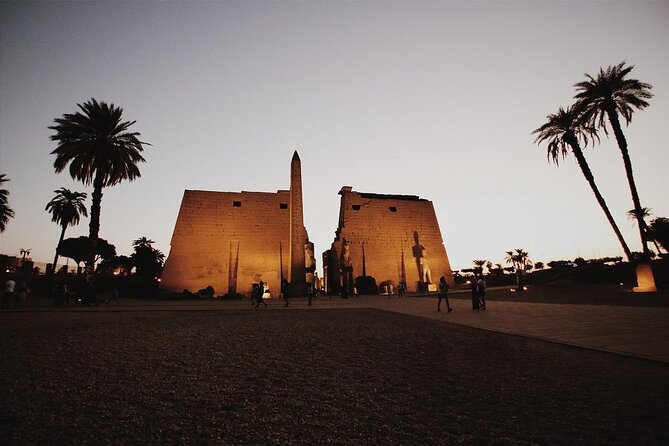
- Luxor Temple, called the southern sanctuary
- Karnak Temple Complex, a huge mix of pylons, chapels, and buildings
- Fewer crowds on a cruise day, more meaning with a guide
- Onboard life: buffet meals, 3-night comfort, and where the downtime fits
- Entrance fees, GST, and smart packing for temple days
- Who should book this cruise from Aswan
- Should you book this Aswan to Luxor Nile cruise?
- FAQ
- What is the duration of this Aswan cruise?
- What time does the tour start?
- Are entrance fees included in the price?
- What meals are included?
- Is pickup or port transfer included?
- Is a felucca sailboat ride included?
- Is vegetarian food available?
- What is the group size?
- What is the cancellation policy for a full refund?
Key highlights I would plan around
- Aswan in depth with Philae, the High Dam, and the Unfinished Obelisk before the cruise even gets going
- Edfu and Kom Ombo back-to-back, including the unusual double-temple experience at Kom Ombo
- Valley of the Kings plus Hatshepsut on one busy day, which is exactly how many first-time visitors want to see Luxor-West
- Buffet meals on board across the cruise, so you are not hunting for lunch every day
- Small group size (max 40), which keeps the day tours feeling manageable compared with huge bus groups
Why this Aswan to Luxor route is efficient
Doing Aswan and Luxor by land can mean two separate trips, lots of driving, and more schedule stress. On this cruise, you get the best of both worlds: early temple mornings on shore, and then the simple rhythm of traveling by boat between stops.
The route also makes logical sense. You start in Aswan, move downriver through Edfu and Kom Ombo, and then hit Luxor highlights on both sides of the river. If it is your first time in Egypt’s temple heartland, this is a strong way to see the main highlights without turning your trip into a logistics contest.
One smart detail here is pacing. You are not sightseeing nonstop. With three nights aboard, you have enough time to let the trip feel like a vacation and not just an organized checklist.
More Nile Cruises in Cairo
- 6 Days Hypnotic Cairo & Nile Cruise Tour Package
★ 5.0 · 248 reviews - Egypt: Private 5-Day Tour, Nile Cruise, Flights & Balloon
★ 4.1 · 248 reviews - Egypt 8 nights:Cairo,Luxor,Aswan,Abu Simbel,Nile cruise,Balloon
★ 4.5 · 227 reviews
Price and logistics: what your $350 covers, and what it does not
The headline price is $350 per person for an approximately 4-day experience, with pickup offered and port transfers included. You also get a mobile ticket, and the group size is capped at 40, which generally helps keep things organized.
From a value standpoint, the tour bundles a lot that is usually extra when you DIY:
- Qualified Egyptologist guide for the main sightseeing blocks
- Onboard accommodation for 3 nights
- Meals: 3 breakfasts, 4 lunches, and 3 dinners (all listed as provided)
- Port pickup and drop-off, which saves time and hassle when you just want to be on the boat
The part to budget for: the tour states entrance fees for the sights are not included, and GST is also not included. Also note that some specific stops may list admission as free, but the overall tour structure expects you to pay tickets at many major sites.
If you want the simplest planning math, think of the $350 as covering the cruise rhythm, guide-led touring, and meals, while your separate spend will mainly be temple entry tickets plus any taxes.
Day 1 in Aswan: Philae, the High Dam, and the Unfinished Obelisk
Your day starts with you meeting a representative at the airport or train station and then being picked up for breakfast and orientation on the cruise. That early handoff matters. On arrival days, the hardest part of travel is often just getting from point A to point B, without figuring out transport while you are still jet-lagged.
Then the schedule leans into Aswan’s mix of ancient and modern engineering.
Philae Temple, the island temple complex
You spend about 2 hours at Philae. This temple is tied to the Nile and the Aswan dam systems, because Philae sits on an island in the reservoir downstream of the Aswan Low Dam, and it is downstream from the Aswan Dam and Lake Nasser.
That setting is part of why Philae feels different from many other temple stops. You are not just walking through stone rooms. You are also seeing how geography, water, and history overlap.
Entrance is not included for this stop, so you will want to keep temple tickets in mind as a cost.
More Nile cruise itineraries:
- Cairo: 6-Day Egypt Tour with Flights and Nile Cruise
★ 3.8 · 177 reviews - 8-Day Private Tour Cairo, Aswan, Luxor and Nile Cruise Including Air Fare
★ 5.0 · 142 reviews - Egypt on Budget – 8 Days ( Cairo , Aswan , Nile Cruise – Luxor ) Sleeper Train
★ 4.5 · 121 reviews - From Cairo: 4-Day Nile Cruise to Luxor with Balloon Flight
★ 4.2 · 112 reviews
Aswan High Dam, built 1960 to 1970
Next is the High Dam for about 1 hour. The tour notes it as the world’s largest embankment dam, built between 1960 and 1970. For a lot of people, this is the first moment the trip shifts from ancient monuments to modern Nile power.
I like adding this kind of stop early because it gives you perspective. You start to understand why the Nile today looks and feels the way it does, and that context makes the rest of the sites easier to interpret.
The Unfinished Obelisk in the Aswan quarries
Finally, you visit the Unfinished Obelisk (about 1 hour). This is described as the largest known ancient obelisk, and it is located in the stone quarries of ancient Egypt in Aswan. It was studied in detail by Reginald Engelbach in 1922.
This stop is a nice contrast to polished, completed monuments. Instead of seeing a finished icon, you see the workshop state of ancient craft and ambition. It is the sort of place that rewards a guide who can explain how stone decisions were made.
Felucca sailboat ride on the Nile
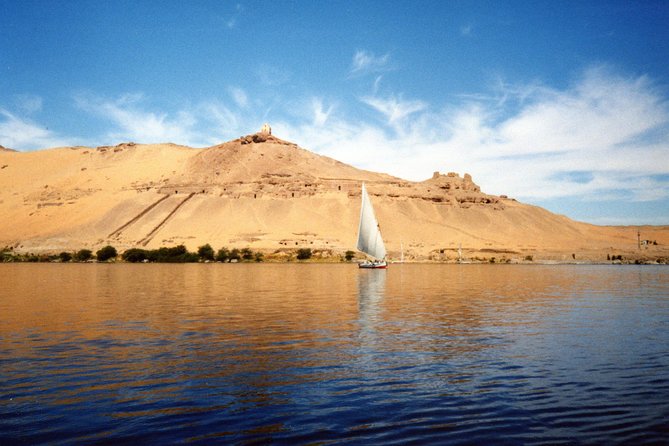
You also get a felucca sailboat ride as part of the Aswan experience. The itinerary does not assign it to a specific day in the details you provided, but it is clearly part of what the trip offers.
Even if you only have a short time on a felucca, it changes the tone of the trip. It slows you down. It gives you Nile views without the same level of stone and signage that temples demand.
Day 2 Edfu and Kom Ombo: Horus first, then the double temple twist
Day 2 keeps you in the temple zone, but with two very different flavors.
Temple of Horus in Edfu
You spend about 3 hours at the Temple of Edfu, also tied to Horus. The description notes it as an Egyptian temple on the west bank of the Nile in Edfu, and it also references the city’s Hellenistic-era name in Greek and Latin, tied to Apollo.
That cross-cultural naming detail can help your guide explain how Egypt’s temple world continued under different empires. If you pay attention to the way the temple is presented, you will usually pick up what locals and rulers expected the gods to do across time.
Entrance is not included for this stop.
Kom Ombo: a double temple built under Ptolemies, updated under Romans
Then you head to Kom Ombo for about 3 hours at the Temple of Kom Ombo. This one is special because it is described as a double temple, built during the Ptolemaic dynasty (about 180 to 47 BC), with later additions in the Roman period.
Even without going deep into theology, this architecture matters. A double temple design changes how you walk, how you compare spaces, and how you understand the site as something more than one straight line of rooms.
Kom Ombo is listed with admission as free in the information you provided, but do not treat that as a guarantee for every component of your day. Still, it is a pleasant cost relief compared to major paid sites.
Day 3 Luxor-West: Valley of the Kings, Hatshepsut at Deir el Bahari, Colossi of Memnon
This is the day most people picture when they think Luxor. It is also the day that asks you to handle long walking, sand, and sun. You will be outdoors for long blocks, and the schedule is packed.
Valley of the Kings, 4 hours in the tomb valley
You spend about 4 hours in the Valley of the Kings. The tour description calls it the Valley of the Gates of the Kings and notes that for nearly 500 years (from the 16th to 11th century BC), rock-cut tombs were excavated for pharaohs and powerful nobles of the New Kingdom.
This stop works best if you approach it with a guide who can explain what you are looking at, not just name-drop. The valley is large, and the differences between tombs can be subtle. With real Egyptologist context, you usually understand why each tomb matters.
Entrance fees are not included for this stop.
Hatshepsut at Deir el Bahari, 3 terraces and cliff walls
Next is the Temple of Hatshepsut at Deir el Bahari, about 2 hours. The description points out it as a mortuary temple built during Pharaoh Hatshepsut’s reign, and it highlights the three massive terraces rising above the desert floor into the cliffs.
This is one of those architectural moments that makes you feel like you stepped into a model, except the model is real and the stone is ancient. The terraces also give you built-in viewpoint changes as you walk upward, so you are not just staring forward the whole time.
Entrance is not included for this stop.
Colossi of Memnon, two huge statues
Then you finish with the Colossi of Memnon for about 1 hour. These are described as two massive stone statues of Pharaoh Amenhotep III, standing at the front of the ruined mortuary temple of Amenhotep III.
If you like scale, this is a strong closer. You see monumental art without needing to spend the entire day inside.
Entrance fees are not included for this stop.
Day 4 Luxor-East: Luxor Temple and Karnak in one strong finale
Day 4 stays on the east bank and leans into the biggest temple complexes.
Luxor Temple, called the southern sanctuary
You start at Luxor Temple for about 3 hours. It is described as a large Ancient Egyptian temple complex on the east bank in modern Luxor, constructed approximately 1400 BCE. The Egyptian-language name is given as ipet resyt, meaning southern sanctuary.
This site is often easier to emotionally connect with than some of the more maze-like complexes because it gives you a sense of one continuous sacred space. If your guide walks you through how it was used and what different areas were for, Luxor Temple becomes more than photo backdrops.
Entrance is not included.
Karnak Temple Complex, a huge mix of pylons, chapels, and buildings
Then comes Karnak, about 4 hours. The description emphasizes it as a complex of many decayed temples, pylons, chapels, and other buildings near Luxor.
Karnak can feel like a lot, and that is exactly why a guide helps. Without context, it is easy to stop noticing details and just think, big, big, big. With Egyptologist explanations, you start to understand what you are seeing and why it was built in layers.
Entrance is not included.
Fewer crowds on a cruise day, more meaning with a guide
One of the best parts of this trip is how the day tours line up around the cruise. The boat travel keeps the trip from feeling like nonstop transit, and the guide adds meaning when you are standing in front of major monuments.
That said, the quality of any escorted experience can vary by departure. I recommend treating your guide time as important and protecting it:
- Keep your schedule confirmation handy so meeting times do not become a scavenger hunt.
- If you have entrance ticket questions, ask early before you commit to a long walk.
- During the day, listen for what the guide asks you to notice. That is usually where the best photos and understanding come from.
Also, group size is capped at 40. That is big enough for a lively group, but small enough to usually manage queues and movement.
Onboard life: buffet meals, 3-night comfort, and where the downtime fits
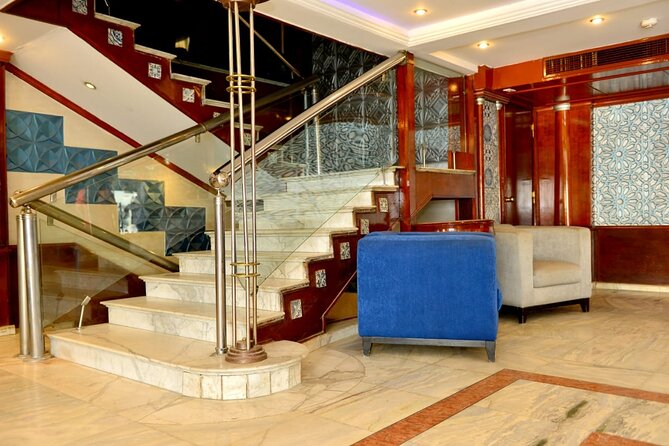
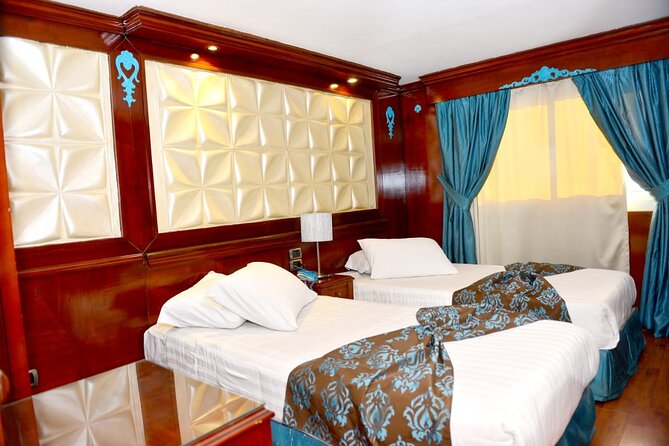
This tour lists a 5-star ship experience with buffet lunches, dinners, and breakfasts. You are also covered for 3 nights accommodation and port transfers.
The meal setup matters more than it sounds. When you are moving through temples, meals become one of the main stress points if you are doing everything independently. Here, you can reset between morning touring blocks and afternoon time.
Meal counts are straightforward:
- Breakfast included for 3 days
- Lunch included for 4 days
- Dinner included for 3 days
One review detail you might encounter is the specific ship name Semiramis I on at least one departure. Since ship assignments can change, treat that as an example of what you might sail on, not a guaranteed promise for every booking.
Entrance fees, GST, and smart packing for temple days
The tour is clear: entrance fees are not included for the sights, and GST is not included. Even with some stops listed as free, plan on paying for the major temple entries yourself.
Dress code is smart casual. I would also treat it as practical casual for walking. Temple areas often mean stairs, uneven ground, and long outdoor stretches.
Packing that tends to work well on this kind of route:
- Comfortable walking shoes you trust
- A light layer for morning or evening wind on the river
- Sun protection, since you will be outside across multiple days
If you are budgeting tightly, do not wait until you arrive at the gate to do the math. Carry enough cash or card access for tickets on the day.
Who should book this cruise from Aswan
This is a good match if you want:
- A structured, guide-led path through Aswan, Edfu, Kom Ombo, and Luxor
- The “see a lot without driving a lot” style of travel
- Door-to-door port transfers so you do not wrestle with local transport on arrival and departure
It also suits people who like a clear plan. If you prefer total freedom, you might find the guided schedule limiting. If you prefer certainty and context, this itinerary style can be very satisfying.
If you travel with children, the tour states children must be accompanied by an adult. The route is still temple-heavy, so you will want to be realistic about pace and outdoor time.
Should you book this Aswan to Luxor Nile cruise?
I would book it if you care about value and want a classic river route done the easy way. For the money, you get guided temple time, meals on board, and the comfort of staying on a boat for 3 nights.
I would hesitate only if you hate paying extra at the gate or you need the highest level of communication perfection every step of the way. Since entrance fees are not included and guide and organization quality can vary across departures, your best move is simple: read your confirmation carefully and keep your key details in one place from the moment you book.
If you do that, you are set up for an Egypt trip that feels like travel, not work.
FAQ
What is the duration of this Aswan cruise?
It is listed as a 4-day experience (approximately), including 3 nights accommodation on the ship.
What time does the tour start?
The start time is 8:00 am.
Are entrance fees included in the price?
No. Entrance fees for the sights are not included, and GST is also not included.
What meals are included?
You get breakfast for 3 days, lunch for 4 days, and dinner for 3 days, all provided as buffet meals on board.
Is pickup or port transfer included?
Yes. Port pickup and drop-off are included, and pickup is offered.
Is a felucca sailboat ride included?
Yes. A felucca sailboat ride is included as part of the Aswan experience.
Is vegetarian food available?
Yes. A vegetarian option is available if you advise the operator at booking.
What is the group size?
The tour has a maximum of 40 travelers.
What is the cancellation policy for a full refund?
You can cancel up to 6 days in advance of the experience for a full refund.
More Evening Experiences in Cairo
- White & Black Desert tour 2 Days 1 night camping from Cairo.
★ 5.0 · 649 reviews - White & Black desert camping tour 2 Days 1 night From Cairo
★ 5.0 · 467 reviews - Cairo/Giza: Sunset Dinner Cruise on the Nile River Tour with Show
★ 5.0 · 198 reviews - Cairo/Giza: Nile Sunset, Dinner Cruise, Show & Private Transfer
★ 5.0 · 191 reviews
More Cruises & Boat Tours in Cairo
- Cairo: Dinner Cruise on the Nile River with Entertainment
★ 4.2 · 2,190 reviews - Cairo: Nile Sunset Dinner Cruise, Show & Optional Transfer
★ 4.1 · 2,184 reviews - Cairo: Nile Dinner Cruise with Belly Dancer Show with Pickup
★ 4.4 · 835 reviews - Giza pyramids, Sphinx, ATV bike, Lunch,Camel ride, Dinner cruise& shopping tour
★ 5.0 · 798 reviews
Newly added near Cairo
- Private Day Tour to El Fayoum & Valley of the Whales from Cairo★ 5.0 · 13 reviews
- Private Day Tour Egyptian Museum, Citadel ,Mohamed Ali Mosque and Coptic Cairo★ 5.0 · 34 reviews
- Private Day Tour To Luxor from Cairo by Plane★ 4.5 · 41 reviews
- Full Day Tour Giza Pyramids, Sphinx and Egyptian Museum &Felucca★ 5.0 · 9 reviews
- Grand Egyptian Museum★ 3.5 · 48 reviews
- Private Cairo Day Tour Giza Pyramid, Sphinx, Civilisation Museum★ 5.0 · 19 reviews
- Allinclusive Private Tour Fayoum Oasis & Valley of Wales★ 5.0 · 78 reviews
- Private Day Tour To Luxor from Cairo by Plane,Tours,Sailing Felucca,Camel&Lunch★ 5.0 · 45 reviews
Luxor & Aswan Nile Cruises, compared.
4-Days Nile Cruise From Aswan To Luxor including Abu Simbel and Hot Air Balloon
Read our review →
4-Day 3-Night Nile Cruise from Aswan to Luxor&Abu Simbel+Balloon
Read our review →
4-Day 3-Night Nile Cruise from Aswan to Luxor including Abu Simbel, Air Balloon
Read our review →
4-Day Nile Cruise from Aswan to Luxor with Guide
Read our review →4-Days Nile Cruise From Aswan To Luxor including Abu Simbel and Hot Air Balloon
Read our review →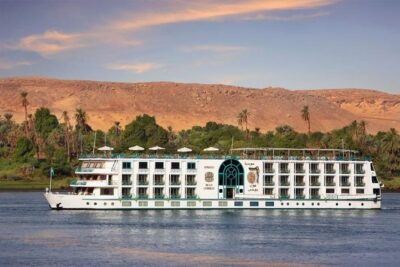
4-Day 3-Night Nile Cruise from Aswan to Luxor – Private Tour
Read our review →4 Days Nile Cruise from Aswan to Luxor including Abu Simbel and Hot Air Balloon
Read our review →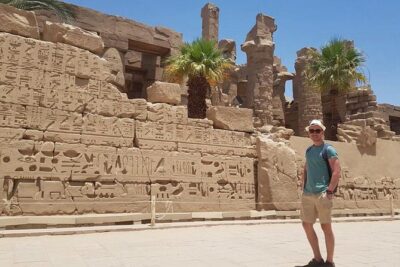
4-Day 3-Night Nile Cruise from Aswan to Luxor With Balloon and Abu Simbel
Read our review →Browse the lists this tour appears in