
Reviewed · LUXOR & ASWAN NILE CRUISES
3 Nights Nile Cruise include hotair ballon, sound&light AbuSimbel
One trip, three miracles: balloon sunrise, Abu Simbel, and Karnak at night. I like the way this route packs the big-name sites efficiently, with a qualified Egyptologist guide (often Mohamed Al Basry, Mohsin, or Ahmed) who helps you see more than just walls and statues. I also love that hot air balloon and Abu Simbel are built into the schedule, not treated as optional extras, so the trip feels like a true highlight reel. One thing to consider, though, is the days are packed, especially the Abu Simbel drive, so you’ll want comfy shoes and patience.
You get a proper Nile change of scenery too, sailing north between temples instead of bouncing between cities all day. The included meals and transport take a lot of stress off your plate, and the cruise crew tends to deliver the kind of service you notice, not the kind you just hear about. Still, this is a “see a lot” itinerary, so if you want slow travel, you may feel the pace.
In This Review
- Key highlights you will actually care about
- From Aswan to Luxor in 4 days: why this route works
- Philae Temple and the Aswan High Dam: the Nubia-to-Nile intro
- Abu Simbel by road: Ramses II’s temples are the whole point
- Kom Ombo: crocodiles, astronomy vibes, and an easy onboard meal
- Edfu and the Temple of Horus: the kind of preservation you notice
- Luxor Temple plus Karnak sound and light: the night tempo you want
- Hot air balloon at sunrise: the calm that makes the whole trip feel special
- Valley of the Kings and Hatshepsut at Deir el Bahari: big tomb art, big ideas
- Colossi of Memnon and Karnak: wrapping Luxor with scale
- Food, comfort, and how the cruise supports the touring
- Price value: is $288 fair for this many included elements?
- Who this Nile cruise is best for (and who should think twice)
- Quick call: should you book this Nile cruise?
- FAQ
- What is included in the tour price?
- Are pickup and private transportation included?
- Which major sites are part of the experience?
- Is a hot air balloon ride included?
- Does the tour include sound and light shows?
- Is tipping included?
- Can you cancel for a full refund?
Key highlights you will actually care about
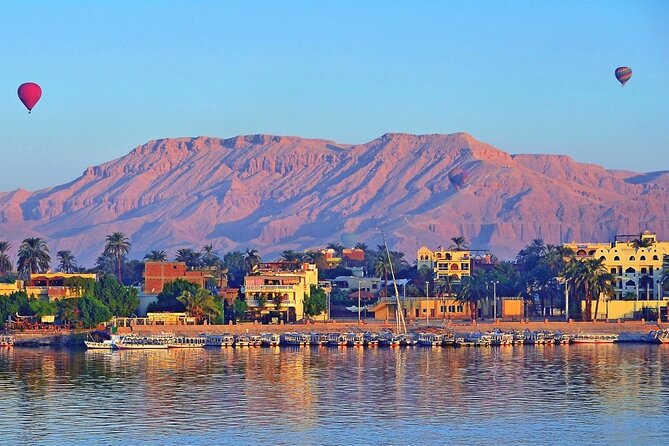
- Hot air balloon over Luxor’s west bank early in the day, for that calm sunrise view of the temples and Nile area
- Abu Simbel in one long day trip with Ramses II’s monumental temple and the smaller one dedicated to Nefertari
- Sound and light on two temple settings (Abu Simbel and Karnak), with evening atmosphere built in
- Philae Temple moved to save it from flooding, so you see history shaped by modern engineering
- Kom Ombo split between Sobek and Horus plus crocodile museum time
- Esna lock crossing where you can watch the Nile’s elevation process from the sundeck
From Aswan to Luxor in 4 days: why this route works
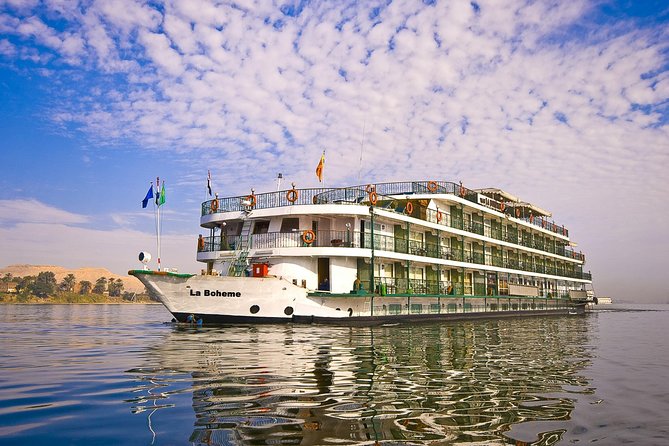
This is one of those Nile cruises that actually earns its “3 nights” label. You are sleeping on the ship while still landing the major temple moments on both ends, Aswan and Luxor, so you do not waste vacation time in transit between separate hotel stays.
The value here is not just the cruise. It is the combination: Philae and the High Dam to set the Aswan story, Abu Simbel as the dramatic outlier, then the temple chain north through Kom Ombo, Edfu, and Luxor. If you like your Egypt with clear structure, you will probably feel happy on day one instead of overwhelmed.
The only real caution is energy budgeting. Expect early starts on at least one day for the balloon, and a long road day for Abu Simbel. If you are traveling with kids or anyone who hates long sit-downs, plan snacks and breaks in your own mind even if the schedule is tight.
More Nile Cruises in Aswan
- 4-Days Nile Cruise From Aswan To Luxor including Abu Simbel and Hot Air Balloon
★ 5.0 · 3,142 reviews - 4-Day 3-Night Nile Cruise from Aswan to Luxor&Abu Simbel+Balloon
★ 5.0 · 2,023 reviews - 4-Day 3-Night Nile Cruise from Aswan to Luxor including Abu Simbel, Air Balloon
★ 4.5 · 612 reviews
Philae Temple and the Aswan High Dam: the Nubia-to-Nile intro
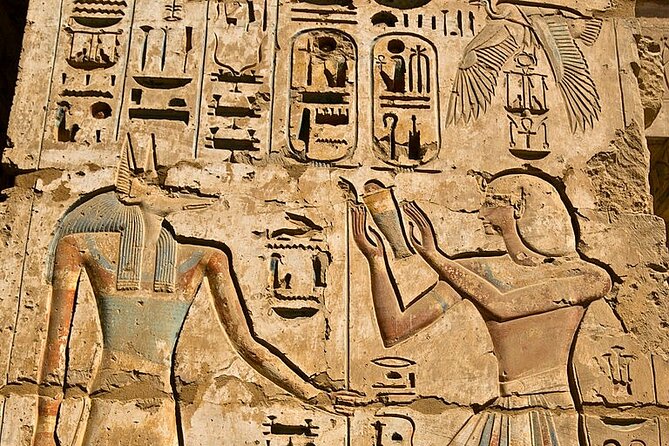
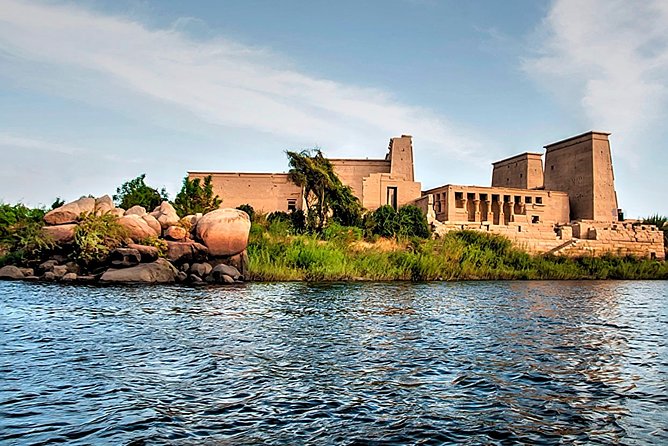
Day one starts with pick up from your hotel or the airport and heads to Philae Island, where the temple complex is tied to the goddess Isis. What makes Philae special is that it was not just preserved, it was saved. The whole complex was moved to Egilika Island when dams threatened to submerge the original site.
You will see the Greek-Roman chapels and the Philae temple setting, and the whole experience helps you understand Egypt is not frozen in time. It is history that people worked to keep from disappearing.
After that, you head south to view the Aswan High Dam and the generators responsible for Egypt’s electricity. This is the part many visitors rush past, but I like it because it adds context. You are staring at the modern system that also shaped what you are seeing around you on the Nile.
Abu Simbel by road: Ramses II’s temples are the whole point
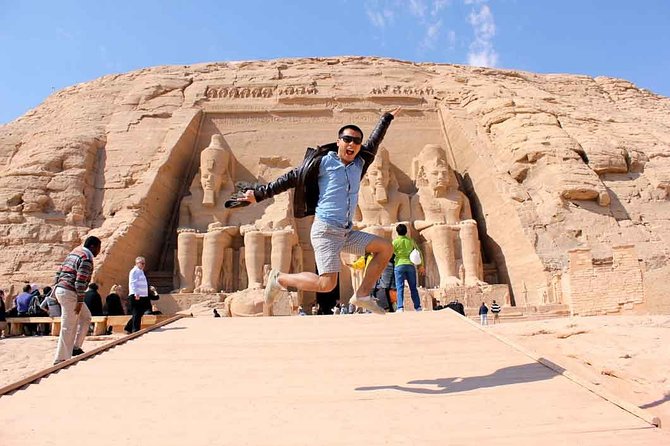
Abu Simbel is the day you plan around, because the total time is long. You are picked up to hit the road and then visit the temples carved under Ramses II.
The bigger temple is built as a rock-cut monument with four giant statues of Ramses seated on his throne, and the layout includes major areas like colonnades, carved caverns, and a sanctuary. There is also a famous solar alignment element described as a phenomenon occurring twice annually, where sunlight penetrates deep into the temple and reaches the seated king area. Even if you come away with only the broad idea, you will feel the scale instantly.
The smaller temple is dedicated to Ramses II’s wife Nefertari. Together, the pair makes Abu Simbel feel like a designed message from a specific royal moment, not just an impressive building.
One practical consideration: it is a long day, and you are spending time both in transit and in the site itself. Wear something easy for sun and dust, and keep your water and patience ready. This is exactly the kind of “worth it” experience that reviews highlight as a top moment.
Kom Ombo: crocodiles, astronomy vibes, and an easy onboard meal
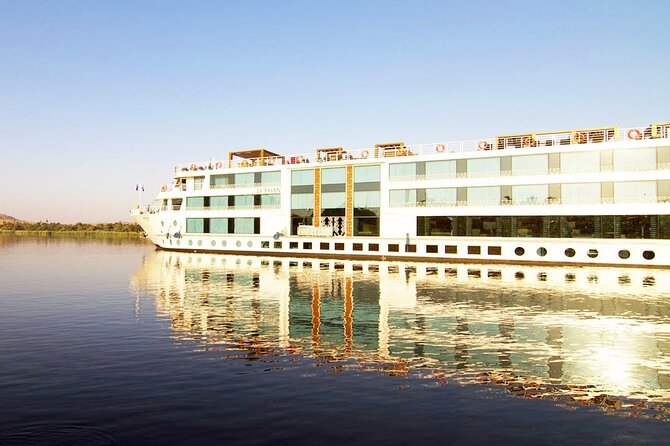
After Abu Simbel, the cruise sails toward Kom Ombo, and you get lunch on board during the sailing. I like that the schedule gives you a built-in break after the big day, and the ship time makes the next stop feel smoother.
Kom Ombo’s temple is known for its unique split design. It is divided between Sobek, the crocodile god, and Horus, the falcon god. You will see two long access ways leading to two interior sanctuaries, which makes the architecture feel intentional and symmetrical.
There is also time for a crocodile museum visit. Even if you are not a museum person, this helps connect the temple symbolism to the local themes visitors are likely to hear about.
You also get a bit of open-air downtime on board, including tea time on the sundeck, which is a nice counterbalance to temple walking. It is an easy moment to reset before the next day’s sights.
More Nile cruise itineraries:
- From Aswan: 4-Day Nile Cruise from Aswan to Luxor with Guide
★ 4.1 · 593 reviews - 4-Days Nile Cruise From Aswan To Luxor including Abu Simbel and Hot Air Balloon
★ 4.5 · 509 reviews - 4-Day 3-Night Nile Cruise from Aswan to Luxor – Private Tour
★ 5.0 · 369 reviews - 4 Days Nile Cruise from Aswan to Luxor including Abu Simbel and Hot Air Balloon
★ 4.5 · 356 reviews
Edfu and the Temple of Horus: the kind of preservation you notice
Edfu is one of the better “stop and actually look” temples. The focus here is the Temple of Horus, described as one of the most preserved Greek-Roman achievements in Egypt, and the cult tied to Horus as the falcon god.
You will see the large facade with one of the tallest pylon structures in Egypt, plus inscriptions tied to the legendary struggle between Horus and Seth. The “reading” part is what makes this different from a quick photo stop. Even if you do not memorize names of pharaohs and gods, the story structure becomes clearer when a guide connects scenes to meaning.
There is also an added bonus the same day: as you sail, you reach Esna and cross two locks through the Nile. Watching the elevation process from the sundeck is genuinely fun, because it is a rare chance to see how the river is managed instead of only seeing what is carved into stone.
Luxor Temple plus Karnak sound and light: the night tempo you want
Once in Luxor, you visit Luxor Temple first. This temple stretches across eras, with references linked to Pharaonic, Coptic, and Islamic use. It was built by Amenhotep III around the 18th Dynasty, with scenes connected to the story of divine birth and the justification of rule.
You also get details tied to Ramses II and Tut Ankh Amon, which helps you understand Luxor was not only a one-king show. It was repeatedly adapted as power shifted.
Then the timing turns to evening with the sound and light show at Karnak. This is the moment where temple architecture becomes narrative. The show is set up to explain monuments and tell the story of many temples within Karnak, so you are not just looking at columns in darkness.
If you love atmosphere, this is a strong inclusion. It also helps you pace the day so you are not walking nonstop until bed. For many people, Karnak at night becomes the memory anchor, not just another entry in a list.
Hot air balloon at sunrise: the calm that makes the whole trip feel special
The balloon experience is handled with an early pick up to go to Luxor’s west bank. You ride above the area where temples and ruins dot the horizon, and the timing is designed around sunrise, when the air is cooler and the views feel soft rather than harsh.
From a travel-value perspective, this is a smart add-on. Hot air balloon rides can be touristy in many places, but here it lines up with the geography and the temple sites, so you get a rare “context from above” moment.
The biggest practical note is to be mentally ready for an early start. Even if you sleep well on the cruise, sunrise rides mean your body has to switch gears fast. If you are the type who hates waking up early, plan for coffee and quiet time later that morning.
Valley of the Kings and Hatshepsut at Deir el Bahari: big tomb art, big ideas
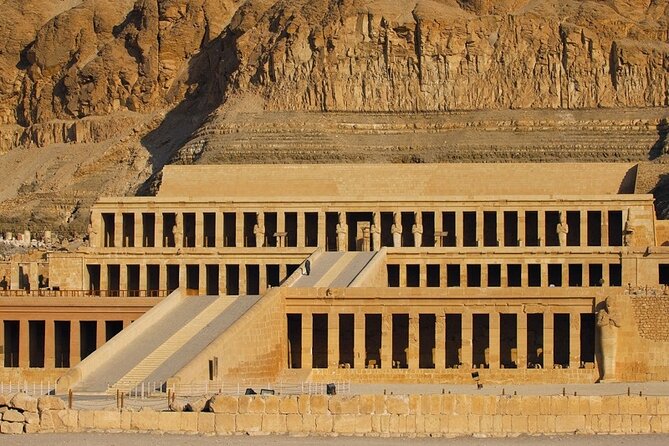
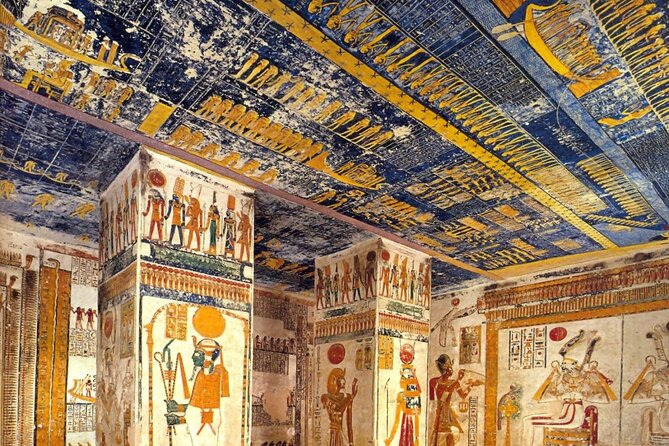
Day four starts with the Valley of the Kings. You are told it holds 63 royal tombs from the New Kingdom era. This is the reason the west bank exists in the first place: dry conditions, limestone structure, and a belief that royal mummies and tombs could be better protected from robbers.
You will see tomb walls with carvings and inscriptions tied to religious life and royal belief. Even when you cannot read every line, the sheer density of scenes makes it clear these tombs were meant for more than burial. They were for a worldview.
After that, you go to Temple of Hatshepsut at Deir el Bahari. This temple stands out because of its architectural style and its story elements. You will see inscriptions tied to royal journeys and visions of divine birth.
What I like about pairing Valley of the Kings with Hatshepsut is the shift from burial focus to living monument design. You feel the west bank as a place of rule, worship, and afterlife, not just graves.
Colossi of Memnon and Karnak: wrapping Luxor with scale
Next is the Colossi of Memnon, two giant sandstone statues. The tour includes the legendary story connected with them, which is a good way to make these statues feel alive instead of just standing stones.
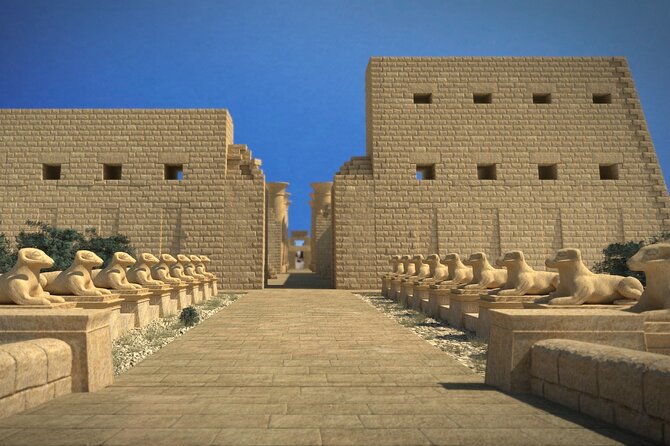
Then you return to the east bank for Karnak Temple. Karnak is described as one of the biggest temple complexes in the world, and you get time for highlights like the sacred lake and a huge scarab statue area. There is also the well-known wish ritual connected to walking around the scarab statue, if you want to do it.
Karnak is dedicated to the Theban triad: Amon, Mut, and Khonsu. This is where the trip’s biggest theme clicks for many visitors. You start with one temple story, then another, and by the time you reach Karnak, it feels like you are walking through a long-running religious system that kept being rebuilt and reinterpreted.
After Karnak, you transfer to the airport or back to your Luxor hotel. It is a clean end to a very full experience.
Food, comfort, and how the cruise supports the touring
This package includes meals and key comforts, which matters when your days are long. You get breakfast, lunch, and dinner each for three days, plus a bottled of water every day per person. You also get air-conditioned vehicle transport and private transportation for the ground portions.
The cruise food and crew service are repeatedly praised in the trip feedback you were given. That aligns with a real-world expectation: if your sites start early and end late, good onboard service helps you recover instead of just surviving.
Room expectations do come up as mixed. Some people want more from the cabins given the price, so if you are picky about accommodation, set your expectations before you go. I would treat the cruise as your moving base for the sights, not as a luxury resort.
Price value: is $288 fair for this many included elements?
At $288 for a 4-day, 3-night Aswan-to-Luxor experience, the key question is what you get for the money. Here, the value is tied to inclusions that are expensive on their own: major entrance fees, guided visits with an Egyptologist, air-conditioned transport, private transfers, and the balloon plus Abu Simbel day trip.
This is also the kind of route that saves money compared to piecing it together. A balloon ride, Abu Simbel transport, and multiple temple admissions add up fast if you book separately.
The “cost” you pay is time and pace. You are trading some downtime for multiple high-impact sights. If you want a lighter schedule, you might feel the itinerary is heavy. If you want the classic Egypt highlights with solid guidance and less planning work, it is a strong match.
Who this Nile cruise is best for (and who should think twice)
This tour fits best if you want a clear route, daily structure, and big-name monuments handled for you. You are also a good fit if you enjoy temple storytelling and appreciate when a guide connects what you see to who built it and why.
It is less ideal if you want long unplanned evenings, slow museum browsing, or lots of free time in each city. The schedule is dense, and one long road day can make you feel rushed if you are not used to touring.
You also need moderate physical fitness, mostly because of walking through temple complexes and uneven surfaces. The good news is that the tour is private, so you can often move at your group pace rather than being dragged by a large crowd.
Quick call: should you book this Nile cruise?
I would book this if your dream trip includes Abu Simbel and a sunrise hot air balloon and you also want the Luxor circuit covered in a tight, guided way. The plan is built around major sites that are hard to manage alone, and the included meals and transport reduce the daily friction that can ruin a trip.
I would hesitate if you are extremely sensitive to early mornings, long travel days, or if cabin comfort is your top priority. In that case, you can still have a great trip, but you should go in with the right expectations about what the cruise part delivers.
If your goal is one smooth, high-impact Nile journey from Aswan to Luxor, this is the kind of package that makes your time count.
FAQ
What is included in the tour price?
The tour includes hotel or airport pick up, air-conditioned vehicle and private transportation, all fees and taxes, entrance fees, a qualified Egyptologist tour guide, and meals (breakfast, lunch, and dinner for three days), plus bottled water each day.
Are pickup and private transportation included?
Yes. Pickup is offered, and the tour uses private transportation for the touring days.
Which major sites are part of the experience?
You visit Philae Temple and the Aswan High Dam, Abu Simbel Temple Complex, Kom Ombo Temple and crocodile museum, Temple of Horus in Edfu, Luxor Temple, Karnak Temple, Valley of the Kings, Temple of Hatshepsut at Deir el Bahari, and the Colossi of Memnon.
Is a hot air balloon ride included?
Yes. A hot air balloon ride is included with an early pick up to ride over Luxor from the west bank.
Does the tour include sound and light shows?
Yes. Sound and light is included, with one show associated with the Abu Simbel area and another sound and light show at Karnak Temple in Luxor.
Is tipping included?
No. Tipping is not included.
Can you cancel for a full refund?
You can cancel up to 24 hours in advance for a full refund. If weather conditions require cancellation, you will be offered a different date or a full refund.
More Cruises & Boat Tours in Aswan
- From Aswan: 3-Day Cruise to Luxor with Hot Air Balloon
★ 4.3 · 598 reviews - 4-Day 3-Night Nile Cruise from Aswan to Luxor With Balloon and Abu Simbel
★ 5.0 · 327 reviews - 4-Days Nile Cruise Aswan&Luxor,Hot Air Balloon&Abu Simbel.Hot deal
★ 5.0 · 322 reviews - 2 Night Nile Cruise from Aswan to Luxor
★ 5.0 · 311 reviews
Newly added near Aswan
- Sailing Nile Cruise from Aswan to Luxor for 2 Nights★ 4.5 · 139 reviews
- Private Tour in Aswan : Felucca and Nubian village★ 5.0 · 29 reviews
- Philae Temple and Aswan High-Dam Half-day tour★ 5.0 · 49 reviews
- 4-Days Aswan sails Nile Cruise Luxor &Abu Simbel.Hot air Balloon★ 4.5 · 77 reviews
- Abu Simbel Private Full-Day Tour from Aswan★ 5.0 · 114 reviews
- (3-Nights Cruise From Aswan To Luxor & Balloon, Abu Simbel)★ 4.5 · 23 reviews
- Day Tour to Abu Simbel from Aswan by Bus★ 4.5 · 25 reviews
- Private Transfer from Aswan to Luxor★ 5.0 · 11 reviews
Luxor & Aswan Nile Cruises, compared.
4-Days Nile Cruise From Aswan To Luxor including Abu Simbel and Hot Air Balloon
Read our review →
4-Day 3-Night Nile Cruise from Aswan to Luxor&Abu Simbel+Balloon
Read our review →
4-Day 3-Night Nile Cruise from Aswan to Luxor including Abu Simbel, Air Balloon
Read our review →
4-Day Nile Cruise from Aswan to Luxor with Guide
Read our review →4-Days Nile Cruise From Aswan To Luxor including Abu Simbel and Hot Air Balloon
Read our review →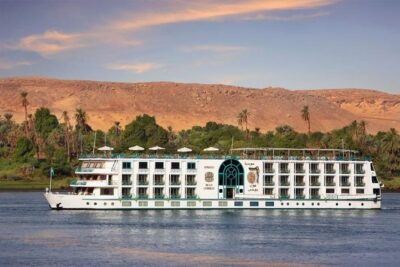
4-Day 3-Night Nile Cruise from Aswan to Luxor – Private Tour
Read our review →4 Days Nile Cruise from Aswan to Luxor including Abu Simbel and Hot Air Balloon
Read our review →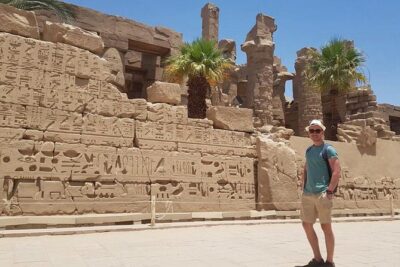
4-Day 3-Night Nile Cruise from Aswan to Luxor With Balloon and Abu Simbel
Read our review →Browse the lists this tour appears in