
Reviewed · 4-DAY EXPERIENCES
4 Days Aswan Luxor Cruise with Visit in the Famous Attractions
A Nile cruise from Aswan to Luxor is history you can see. This 4-day trip pairs a comfy 5-star cruise with guided Egyptology-style site visits, so the temples make sense, not just photos. You also get the upside of moving by boat, with less daily hassle.
I especially like the way the days are structured around the big names: Philae and the High Dam on arrival day, then Karnak and Luxor Temple when the light turns soft. The other thing I really like is the built-in support. It is a small group, and the guide team is repeatedly praised for staying on time and handling small changes with calm efficiency.
One consideration: entrance fees can be confusing. The tour notes entrance fees are not included, while the day-by-day stop details show several admissions as free or included, so I suggest confirming exactly what you will pay at the gates.
In This Review
- Key highlights worth focusing on
- What the Aswan-to-Luxor Cruise Actually Does for Your Trip
- Day 1 in Aswan: Philae Temple and Aswan High Dam in the Same Day
- Day 2: Abu Simbel Option, Kom Ombo at Sunset, and Edfu Dinner With Galabia
- Day 3 in Luxor: Karnak Temple First, Luxor Temple at Sunset
- Day 4 on the West Bank: Valley of the Kings, Hatshepsut at Deir el Bahari, and Colossi of Memnon
- Egyptologist Guidance and the Small-Group Advantage
- Price and the Entrance Fee Puzzle for $850
- Timing, Heat, and How to Make the Temples Easier
- Who This Tour Fits Best (and Who Might Want Something Different)
- Should You Book This 4-Day Aswan to Luxor Nile Cruise?
- FAQ
- How long is the cruise from Aswan to Luxor?
- What start time does the experience use?
- Is pickup offered?
- How many travelers are included in the group?
- What’s included in the price?
- Are entrance fees included for the sites?
- Is Abu Simbel included?
- What attractions are included besides the cruise sailing?
- What is the cancellation policy?
- What happens if the weather is poor?
Key highlights worth focusing on
- 5-star Nile cruise, full board for 3 nights, which simplifies your budget and meals
- Aswan Day 1 classics, Philae Temple and the Aswan High Dam, with UNESCO context
- Abu Simbel is optional and requires an early start, so decide based on your energy level
- Sunset temple timing, especially for Luxor Temple, when the site feels less harsh
- Max 10 travelers, which usually means better pace and fewer crowd-control headaches
- Guides like Daniel and George show up often in the real-world experiences shared, with strong organization
What the Aswan-to-Luxor Cruise Actually Does for Your Trip
This is the kind of tour that helps you focus on Egypt’s top sites without turning your vacation into a daily commute. You check in, eat on board, then head out in a reliable rhythm with an air-conditioned vehicle and an Egyptologist guide.
The route itself matters. Aswan to Luxor is a classic way to understand how ancient power moved along the Nile. You are going upriver by boat through the same corridor that shaped trade, travel, and religion for centuries. And because you are sleeping on the water, you spend less time hauling luggage across town.
For value, the key is that this is not just “a few tours.” You get 3 nights on a Nile cruise with meals included plus guided visits on both banks. That adds up fast if you were trying to line up all the pieces alone.
Other Aswan options on the table
- 4-Days Nile Cruise From Aswan To Luxor including Abu Simbel and Hot Air Balloon
★ 5.0 · 3,142 reviews - 4-Day 3-Night Nile Cruise from Aswan to Luxor&Abu Simbel+Balloon
★ 5.0 · 2,023 reviews - 4-Day 3-Night Nile Cruise from Aswan to Luxor including Abu Simbel, Air Balloon
★ 4.5 · 612 reviews
Day 1 in Aswan: Philae Temple and Aswan High Dam in the Same Day
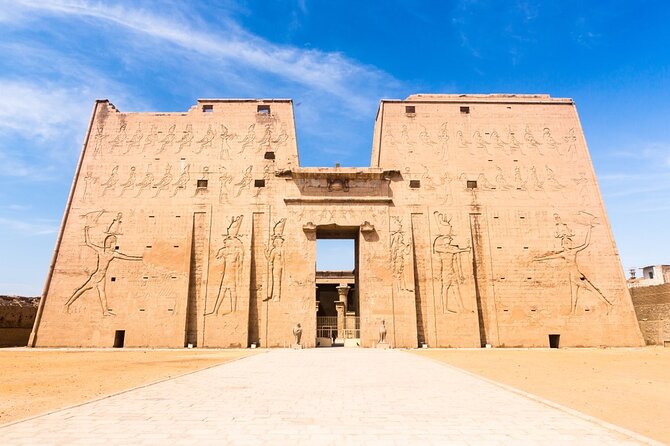
You start in Aswan with a welcome meeting and lunch on board, then your guided time begins. After lunch, you head to Philae Temple, a site that carries a major UNESCO story. The temple you see today was relocated because the Aswan Dam project threatened the original location.
Philae is dedicated to Isis, and the temple layout helps you understand why her cult mattered so much. You will see shrines and sanctuaries tied to myths around Isis, Osiris, and Horus, including details linked to funeral rites and, in the same breath, ideas about protection and new life. It is also interesting that her worship spread far beyond Egypt, reaching the Greek and Roman worlds.
Practical tip: Philae is a temple complex, not a single stop with one room. Build in a little patience for walking from area to area. If you want the details to land, move at a steady pace rather than sprinting for the next photo angle.
Then the day shifts from mythology to engineering at the Aswan High Dam. The numbers here are huge: 3,600 meters long, about 980 meters thick at the base, and 111 meters tall at its highest point. It is part of how Egypt produces irrigation water and electricity, and it forms Lake Nasser behind it, described as the world’s largest man-made lake.
This pairing works well because it gives you two different ways to think about Egypt. Philae shows what people built for eternity. The High Dam shows what modern Egypt built for survival and stability.
Day 2: Abu Simbel Option, Kom Ombo at Sunset, and Edfu Dinner With Galabia
Day 2 has the most “choose-your-own-adventure” feeling. There is an optional trip to Abu Simbel, with an early morning pickup from the cruise in a private air-conditioned vehicle. Abu Simbel is famous in Egypt for the scale and drama of Ramses II’s temples, including two magnificent temple spaces you get time to explore.
That early start is not just a logistics detail. It changes the whole mood of the day. If you hate waking up too early on vacation, skip Abu Simbel and use the extra energy for the calmer parts later. If you love iconic sites and do not mind the morning grind, Abu Simbel is the type of stop that can become a personal highlight.
Back on the main plan, your cruise navigates toward Kom Ombo. The schedule includes tea time on the sundeck and a sunset-focused sightseeing rhythm. You then visit the Kom Ombo temple, built during the Graeco-Roman period, with an earlier 18th dynasty structure preceding it.
Kom Ombo is a temple you often enjoy most when your guide explains the structure, since it is not only about one king or one theme. It is about how the Greeks and Romans continued and reorganized Egyptian religious ideas after their era began.
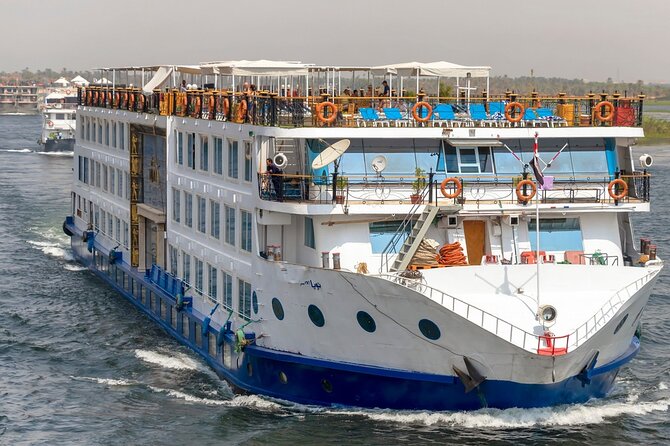
After Kom Ombo, the cruise heads to Edfu. You get an oriental dinner and then the fun part: you are invited to dress in a galabia for an oriental party. This is not just costume theater. It is a small, low-pressure way to step into local culture while staying on schedule.
Day 3 in Luxor: Karnak Temple First, Luxor Temple at Sunset
In the afternoon, you arrive in Luxor and head straight to Karnak Temple, which is described as the largest religious building ever constructed. Karnak is not one building. It is a site made of temples built over more than 2,000 years.
Your guide sets it up around the Theban triad: Amun, Mut, and Khonsu. From there, the highlights make more sense. The Hypostyle Hall alone is a mind-bender on scale, with 134 columns and an enormous floor area. There is also a sacred lake within the complex, and smaller temples across the wider site.
I like Karnak in this tour format because you are not just dropping in. You have a guided walkthrough that keeps the site coherent. Without that, Karnak can turn into “I saw columns” instead of “I understood what each section represented.”
Next is Luxor Temple timed for sunset. This is a great choice. Luxor Temple is active even today in layered ways. It was built by Amenhotep III, completed by Tutankhamun and Horemheb, and later added to by Ramses II. Then it kept being used and repurposed through different eras, including Christian and Coptic periods, and eventually a mosque built over part of the site.
You will also see the granite shrine dedicated to Alexander the Great. That detail matters because it connects Luxor’s ancient religious life to later rulers who still tried to operate within Egyptian sacred space.
Also reachable from Aswan:
- From Aswan: Abu Simbel Temple Day Trip with Hotel Pickup
★ 4.4 · 2,807 reviews - From Aswan: 3-Day Cruise to Luxor with Hot Air Balloon
★ 4.3 · 598 reviews - From Aswan: 4-Day Nile Cruise from Aswan to Luxor with Guide
★ 4.1 · 593 reviews - 4-Days Nile Cruise From Aswan To Luxor including Abu Simbel and Hot Air Balloon
★ 4.5 · 509 reviews
Day 4 on the West Bank: Valley of the Kings, Hatshepsut at Deir el Bahari, and Colossi of Memnon
After breakfast, you cross to Luxor’s west bank, where you get the most famous tomb-and-temple setting in the whole region. The tone here is different. The sites are quieter in feeling, but the stories are intense because they are about burial, survival beyond death, and a world where kings became part of the divine order.
First stop is the Valley of the Kings. In the New Kingdom period, this valley became a royal burial ground. You will hear about pharaohs like Tutankhamun, Seti I, and Ramses II, plus queens and high-status elites from the 18th, 19th, and 20th dynasties.
The Valley of the Kings is also where Egypt’s belief system shows up in architecture. The tour framing focuses on hidden underground mausoleums and the elaborate preparations meant for the next world. If you come with even a basic curiosity about why the Egyptians treated tombs like life machines, this stop usually clicks quickly.
Next, it is Hatshepsut’s mortuary temple at Deir el Bahari. The cliffside setting is part of the drama, but what really makes this stop worth your time is Hatshepsut herself. She was a woman who rose to pharaoh status after serving as regent, then ruled for more than two decades. Her story stands out because it is not an offhand detail, it is the reason the temple exists as it does.
Architecturally, you get stepped platforms, pillared porticoes, and reliefs set against the desert backdrop. It is one of those places where your eyes keep moving because the design supports the narrative.
Finally, you visit the Colossi of Memnon. These are two enormous seated statues representing Amenhotep III, carved from single blocks of sandstone. They face east toward the Nile and rise about 60 feet high each, with each statue weighing around 720 tons.
This last stop is short, but it is a classic way to finish. You get to see what “monumental” looks like in real scale, not only in drawings or videos.
Egyptologist Guidance and the Small-Group Advantage
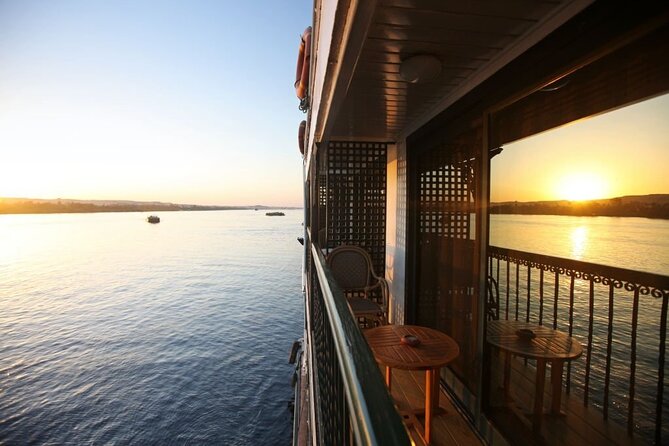
One of the strongest practical benefits here is the Egyptologist guide role across multiple stops. You are not just walking through sites and reading signs. The guide gives you a thread: who built what, why it mattered, and how the culture changed over time.
That matters most when you are jumping across different styles and eras in a short time. Karnak’s layers, Luxor Temple’s later reuses, and Philae’s relocation story all benefit from someone connecting the dots.
The group size also plays a role. With a maximum of 10 travelers, you typically get less waiting around and more personal pacing. It is easier to ask questions and harder for the day to drift off schedule.
In the real world, names like Daniel and George show up often as people credited with smooth organization and helpful support. Other guide names like Andrew, Mina, Abanoub, and Romain also appear in the experiences shared. If your confirmation includes any of these names, that is a positive sign for communication and on-the-ground management.
Price and the Entrance Fee Puzzle for $850
At $850 per person, the value hinges on what you get without adding extra costs. The package includes:
- 3 nights on a 5-star Nile cruise on a full board basis
- Air-conditioned vehicle transport
- A tour guide described as an Egyptologist
- Meals: lunch three times, dinner three times, breakfast three times
That is a solid chunk of your trip already paid for. On a cruise, meals can easily become a silent budget drain if you are eating separately every day. Here, you have predictable onboard dining included.
Now the tricky part is entrances. The tour notes that entrance fees to sites are not included. At the same time, several stop descriptions list admission tickets as free or included. I would treat this as a “confirm before you go” issue.
My advice: when you book, ask exactly which sites you pay for on arrival, and whether you will need cash or card at the gates. That one step avoids surprise expenses and helps you plan your day comfortably.
Timing, Heat, and How to Make the Temples Easier
This schedule has a clear start, with pick up and start time set at 8:00 am. Early starts are normal in Egypt when you want to beat crowds and travel time.
The biggest “timing sensitivity” is Abu Simbel, since it is optional but requires an early morning departure. If you go, plan for an early wake-up and treat it as your main outing of the day.
Luxor Temple is built into the plan for sunset. That timing is a win because the light softens and the whole setting feels less harsh.
Also, think about the month. One experience shared includes a clear warning about August heat. If you are traveling in hotter months, you will want to pace your walking and take shade breaks where your guide suggests. Even if you are fit, temples are stone and sun, and your body notices.
Who This Tour Fits Best (and Who Might Want Something Different)
This cruise is a good match if you want:
- A structured Aswan to Luxor experience with major landmarks
- Guided temple time with an Egyptologist approach
- Fewer day-to-day logistics, because your cruise handles the “home base”
- A small group size, which helps keep the day smooth
You might want to consider a different style of tour if:
- You dislike early mornings, especially if you think Abu Simbel might be a regret
- You prefer total control over what you see, since this plan is built around set stops
- Entrance fee costs are a big deal for your budgeting, since the included versus not-included notes conflict and need confirmation
Should You Book This 4-Day Aswan to Luxor Nile Cruise?
If your goal is a high-impact Nile cruise with guided visits to the biggest hits in Aswan, Luxor, and the West Bank, this is an easy yes to consider. The mix of Philae, Karnak, Luxor Temple, the Valley of the Kings, and Hatshepsut’s temple is the kind of combination that usually only works well when someone handles the sequencing for you.
I would book it if you can align with early mornings (at least for the option if you choose it) and you confirm entrance fee details before you land. If you do that, you get a rare win: the temples feel guided, the cruise stays comfortable, and the whole trip stays on a reliable rhythm instead of turning into a puzzle.
FAQ
How long is the cruise from Aswan to Luxor?
It runs for about 4 days.
What start time does the experience use?
The start time is 8:00 am.
Is pickup offered?
Yes, pickup is offered.
How many travelers are included in the group?
The maximum group size is 10 travelers.
What’s included in the price?
The tour includes 3 nights on a 5-star Nile cruise on a full board basis, an air-conditioned vehicle, a tour guide (Egyptologist), and meals listed as 3 breakfasts, 3 lunches, and 3 dinners, plus dinner described as part of the program.
Are entrance fees included for the sites?
The tour says entrance fees to all sites are not included, even though some stop details show admissions as free or included. Confirm what you will pay for at the gates when booking.
Is Abu Simbel included?
Abu Simbel is listed as an optional trip.
What attractions are included besides the cruise sailing?
The stops include Aswan High Dam and Philae Temple, plus Karnak Temple and Luxor Temple. On the west bank you visit the Valley of the Kings, the Temple of Hatshepsut at Deir el Bahari, and the Colossi of Memnon. Kom Ombo and Edfu are also part of the plan.
What is the cancellation policy?
You can cancel up to 24 hours in advance for a full refund.
What happens if the weather is poor?
The experience requires good weather, and if it is canceled due to poor weather, you are offered a different date or a full refund.
Newly added near Aswan
- Sailing Nile Cruise from Aswan to Luxor for 2 Nights★ 4.5 · 139 reviews
- Private Tour in Aswan : Felucca and Nubian village★ 5.0 · 29 reviews
- Philae Temple and Aswan High-Dam Half-day tour★ 5.0 · 49 reviews
- 4-Days Aswan sails Nile Cruise Luxor &Abu Simbel.Hot air Balloon★ 4.5 · 77 reviews
- Abu Simbel Private Full-Day Tour from Aswan★ 5.0 · 114 reviews
- (3-Nights Cruise From Aswan To Luxor & Balloon, Abu Simbel)★ 4.5 · 23 reviews
- Day Tour to Abu Simbel from Aswan by Bus★ 4.5 · 25 reviews
- Private Transfer from Aswan to Luxor★ 5.0 · 11 reviews
4-Day Experiences, compared.
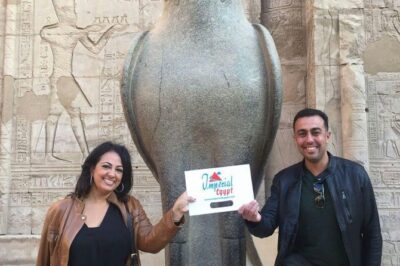
4-Day 3-Night Nile Cruise from Aswan to Luxor&Abu Simbel+Balloon
Read our review →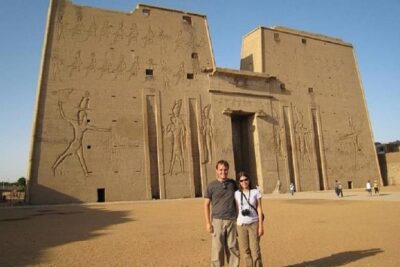
4-Day 3-Night Nile Cruise from Aswan to Luxor including Abu Simbel, Air Balloon
Read our review →
4-Day Nile Cruise from Aswan to Luxor with Guide
Read our review →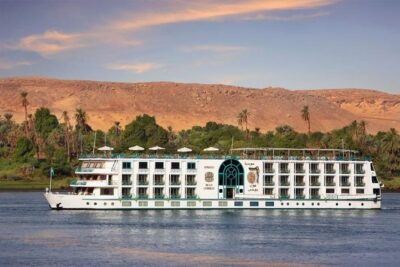
4-Day 3-Night Nile Cruise from Aswan to Luxor – Private Tour
Read our review →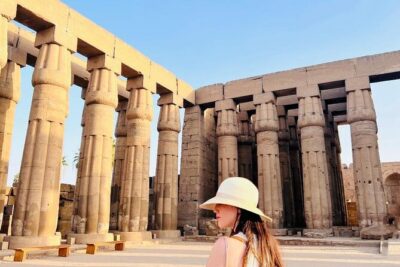
4 Days Nile Cruise from Aswan to Luxor including Abu Simbel and Hot Air Balloon
Read our review →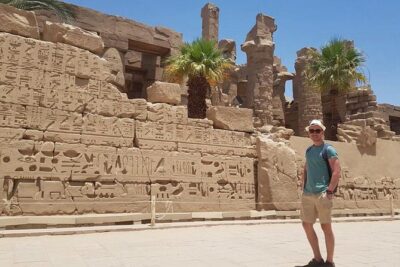
4-Day 3-Night Nile Cruise from Aswan to Luxor With Balloon and Abu Simbel
Read our review →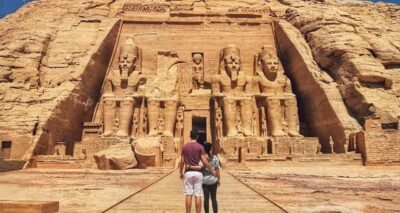
4 Days Nile Cruise Luxor Abu Simbel & Air Balloon
Read our review →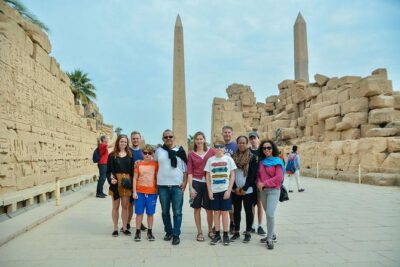
4-Day Nile Cruise sails Aswan to Luxor&Abu Simbel.Hot air Balloon
Read our review →Browse the lists this tour appears in