
Reviewed · ABU SIMBEL DAY TRIPS
Egypt Best Holidays to Cairo, Abu Simbel, Aswan & Luxor
Egypt is the world’s biggest open-air museum. This 8-day route strings together Cairo landmarks, the Nile Valley classics, and the far-south spectacle of Abu Simbel, plus a taste of Alexandria. You get hotel pickup, daily breakfast, and an Egyptologist guide to translate what you are looking at, not just drop you at monuments.
I especially like the way this trip stitches big sites into one logical loop. You start with Giza and the Egyptian Museum, then shift to Luxor’s temples and the West Bank, before continuing south to Aswan and Abu Simbel, and finally ending with Alexandria’s Roman burial site and the modern Bibliotheca Alexandrina. The travel days are long, but the payoff is that you see the key highlights without extra planning.
One consideration: the driving and early starts can be tiring. The Abu Simbel day involves a long road transfer (about 145 miles), and some sites involve stairs and uneven surfaces, so bring water, comfortable shoes, and a patient attitude.
In This Review
- Key Highlights at a Glance
- Why This Cairo, Abu Simbel, Aswan, and Luxor Route Works
- Arrival in Cairo: Airport Assistance That Gets You Moving
- Giza Pyramids and the Egyptian Museum in One Calm Block
- From Valley of the Kings to Karnak and Luxor Temple
- Aswan Temple Life: Philae, the High Dam, and an Unfinished Obelisk
- Abu Simbel: The Long Road Trip With Two Ramses II Temples
- Saqqara and Memphis: Older Than You Expect
- Alexandria Stops That Actually Add Variety
- Guides and Service: Where This Tour Really Scores
- Price and Value: What $2,800 Covers (And What to Budget Extra)
- Who This Tour Fits Best
- Should You Book This Cairo to Abu Simbel, Aswan, and Luxor Tour?
- FAQ
- How long is the tour?
- Where does the tour start?
- Is hotel pickup and drop-off included?
- What meal is included each day?
- Are entrance fees included?
- Is bottled water included?
- How far do you travel to Abu Simbel?
- What Alexandria sites are included?
- What is the cancellation window for a full refund?
Key Highlights at a Glance
- Door-to-door pickup and airport support in Cairo to reduce stress on arrival and departure
- Egyptologist-guided time at major monuments like Karnak Temple and the Valley of the Kings
- Abu Simbel with a focused temple visit of both Ramses II temples (including Nefertari)
- Aswan temple experience with Philae Temple moved to Agilika Island
- Saqqara and Memphis add depth beyond the famous pyramids at Giza
- Alexandria day includes both ancient and modern stops, from Kom el Shoqafa to the Bibliotheca Alexandrina
Why This Cairo, Abu Simbel, Aswan, and Luxor Route Works
If your goal is classic Egypt in one trip, this route makes sense. You are not hopping randomly between cities, you are following a historical spine: ancient capitals and royal necropolises in the Nile corridor, then a well-paced detour to Alexandria.
The practical win is that you are not juggling tickets, guides, and transfers site by site. The tour includes a qualified Egyptologist guide, private vehicle transport, and entrance fees to the listed sites. That matters because Egypt’s top sights are not quick photo stops. They are layered, and the guide helps you read what you see instead of guessing.
The other win is balance. Cairo and Giza cover the Old Kingdom wow factor, Luxor and the West Bank cover royal religion and burial, Aswan adds the Nubian-era layer, Abu Simbel gives you the scale of Ramses II propaganda, and Alexandria brings a different cultural chapter.
More Abu Simbel runs:
- Egypt 8 nights:Cairo,Luxor,Aswan,Abu Simbel,Nile cruise,Balloon
★ 4.5 · 227 reviews - Our Exceptional 5 days Cairo, Luxor and Abu Simbel Tour Package
★ 5.0 · 212 reviews - From Cairo: 2-Day Abu Simbel & Luxor Tour
★ 3.9 · 136 reviews
Arrival in Cairo: Airport Assistance That Gets You Moving
Day 1 is all about getting you safely through Cairo International Airport and into the travel rhythm. A representative meets you, assists with passport control and customs formalities, and then transfers you to your hotel by private air-conditioned vehicle.
This is a small detail that can make or break your first day. If you have ever tried to manage lines, forms, and taxi bargaining right after a flight, you know why this helps. It also means your first afternoon is less likely to be spent lost or stuck.
Expect the rest of the day to be low-pressure. Since the tour focus is big sites over the next seven days, the arrival day is more of a setup than a sprint.
Giza Pyramids and the Egyptian Museum in One Calm Block
On Day 2, you start at the Pyramids of Giza with a guided visit that is designed for real understanding, not just sighting. You will see the Great Pyramid of Cheops (Khufu), and your guide will explain the area including the pyramids of Chephren and Mycerinus. The time here is substantial, with more than two hours at the site and the option to enter a pyramid chamber.
That chamber access is worth noting because it is not included. You can expect the standard visit plus time to enter one chamber at an added cost. If you want that extra experience, budget for it. If you are not feeling it, you can still enjoy the scale, the engineering story, and the photo angles.
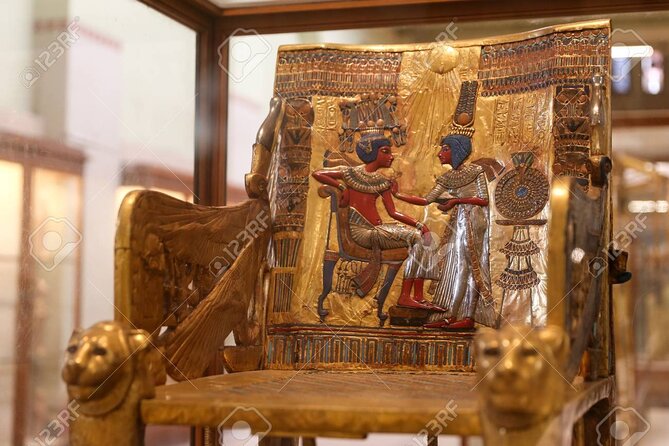
After Giza, you go to the Museum of Egyptian Antiquities. The Egyptian Museum is huge, but the guided plan focuses on highlights. You will get attention on the Tut Ankh Amun wing and the collection of gold treasures and artifacts tied to his era, plus free time to browse more at your own pace.
If you care about how Egyptology became modern, this museum stop is also a good anchor. Opened in 1901, it frames the story of discovery and collecting that shaped what we know today.
From Valley of the Kings to Karnak and Luxor Temple
Day 3 is your big Luxor day, and it is built around the West Bank and the temple complexes on the east bank.
You begin across the Nile with the Valley of the Kings. This is where pharaohs hid mummies and treasures in a harsh desert setting. The plan includes time to visit three tombs, with murals and colored interiors that help you understand why these tombs were masterpieces of both art and belief. You also have options for additional royal tombs such as Tut Ankh Amun.
Then you move to the Temple of Hatshepsut at Deir el Bahari, a stunning mortuary temple and a key stop for the story of Egypt’s first female pharaoh. It is famous for its terraces and its limestone construction, built to tell the tale of her divine birth. If you like when architecture carries a message, this is the kind of stop you will remember.
Next come the Colossi of Memnon, the two massive statues of Amenhotep III. They face east toward the Nile and are carved from single blocks of sandstone. The guide context here helps because the statues are famous, but the symbolism and the era usually land much better when someone explains them.
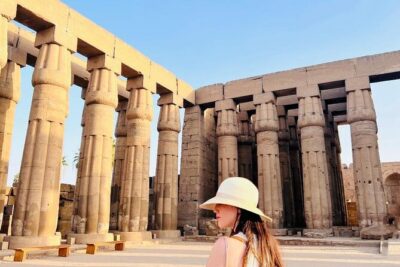
After that, you hit Karnak Temple, dedicated to Amun Ra. This is the moment when the scale of Egyptian religious building becomes undeniable. The plan includes the Great Hypostyle court, tall obelisks, and the column capitals loaded with hieroglyphs. If you are the type who likes to look closely, this is where your camera and your patience both earn their keep.
You wrap at Luxor Temple, which shows additions from different eras, including Greek, Roman, Islamic, and Coptic influences. You will also see references to Ramses II and the temple entrance obelisks, including the fact that one obelisk was sent to Paris.
One practical note: this day stacks a lot of entrances and walking. Plan to take your time at each stop rather than rushing for checkboxes. The guide does the heavy lifting, so you can focus on absorbing the details.
Other Cairo options on the table
- Cairo: Pyramids & Great Sphinx Private Tour with Camel Ride
★ 4.9 · 6,335 reviews - Tour to Giza Pyramids and The Egyptian Museum
★ 5.0 · 6,016 reviews - VIP All inclusive Best of the best Giza Pyramids,Sakkara,Memphis
★ 5.0 · 3,164 reviews - From Cairo: Pyramids of Giza, Sphinx, Saqqara & Memphis Tour
★ 4.7 · 3,110 reviews
Aswan Temple Life: Philae, the High Dam, and an Unfinished Obelisk
Day 4 shifts the mood. You are still in the Egypt of temples, but now the story includes modern engineering and UNESCO-era rescue efforts.
The day begins with Philae Temple. This temple was dedicated to Isis, but it was submerged after the first Aswan dam was built in 1902. That is why you visit it as a relocated monument, moved to Agilika Island. The guide explanation of the reliefs, courts, and pylons matters here because your brain is trying to place it in time, not just admire it in space. You then ride a motorboat back to your next stop.
Then you learn about the Aswan High Dam, one of Egypt’s major achievements of the 20th century. Your guide explains how it provided hydroelectric power and reduced flood risks, plus the advantages and disadvantages. This is a rare chance to connect ancient Egypt to modern state choices, with context rather than politics.
You finish with the Unfinished Obelisk, lying in a granite quarry. It is called unfinished because it was never erected, estimated at about 42 meters if completed and roughly 1,164 tons. It is also believed that the female pharaoh Hatshepsut ordered carving it during the 18th dynasty. That connection makes it more than a random chunk of rock.
Aswan can feel hot and slow in the middle of the day, so the guided pacing helps keep you from zoning out. It is a strong day if you like when history covers both ancient belief and modern change.
Abu Simbel: The Long Road Trip With Two Ramses II Temples
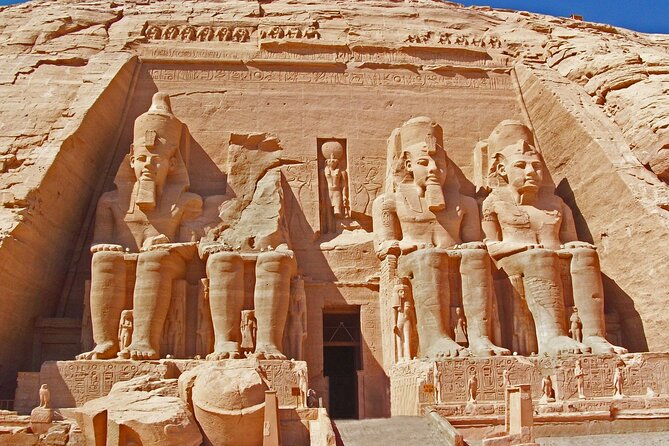
Day 5 is the reason many people sign up. You drive to Abu Simbel, about 145 miles south of Aswan, and visit a complex of two temples carved into the mountainside.
Both temples were erected by Ramses II in 1240 B.C. The larger temple is built around four huge seated statues of the pharaoh, each about 70 feet tall. The smaller temple is for his wife Nefertari, with six statues on the façade and a mix of queen and king figures.
What I like about how this is handled is the focus. Your guide explains the history of the temples and Ramses II outside the temples first, then you get free time to explore the interiors. That structure gives you context before you are trying to read carvings and proportions by eye.
Two things to consider. First, this is a long day because of the transfer time. Second, you will want to move steadily but not feel rushed. Abu Simbel rewards careful looking, especially if you keep in mind it is royal messaging carved for eternity.
If you like spectacle, you will be happy here. If you prefer fewer driving hours, you might feel the trip is intense, but the scale is hard to replace anywhere else in Egypt.
Saqqara and Memphis: Older Than You Expect
Day 6 returns north in terms of time, not just geography. You visit Saqqara (Sakkara), the old kingdom necropolis, known as the main burial area for that era.
The centerpiece is the Step Pyramid area, tied to Imhotep and described here as the oldest pyramid structure, about 4,800 years old. The plan also includes time to see how royal tomb forms developed over time, plus a visit inside one of the noble tombs, such as the tomb of Kagmini, with murals showing daily life activities. You may also enter the pyramid of Titi to see an older form of pyramid texts inside the chamber walls.
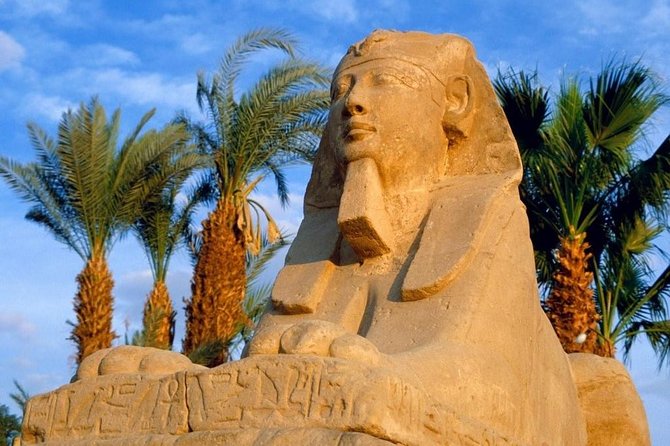
Then you go to Mit Rahina Museum in Memphis, where you see major sculpture and ruins in an open-air setting. The second-largest sphinx in Egypt is featured, known as the alabaster sphinx. You also see the lying colossus of Ramses II and other monuments dug in the city. Memphis mattered because it was the first capital after the unity of the southern and northern kingdoms, so this is a good counterweight to the Giza story.
If you are a history nerd, Saqqara is satisfying because it shows Egypt’s architectural progression. If you just want the wow, Saqqara still delivers, just in a quieter way than Giza.
Alexandria Stops That Actually Add Variety
Day 7 brings you to Alexandria, and the itinerary keeps you from only doing the modern sites.
You visit the Catacombs of Kom el Shoqafa, a Roman subterranean tomb about 1,900 years old. The mix of Egyptian and Roman styles shows up in burial traditions and art. Catacombs are also physically involved, with stairs and dim spaces, so comfortable shoes help a lot.
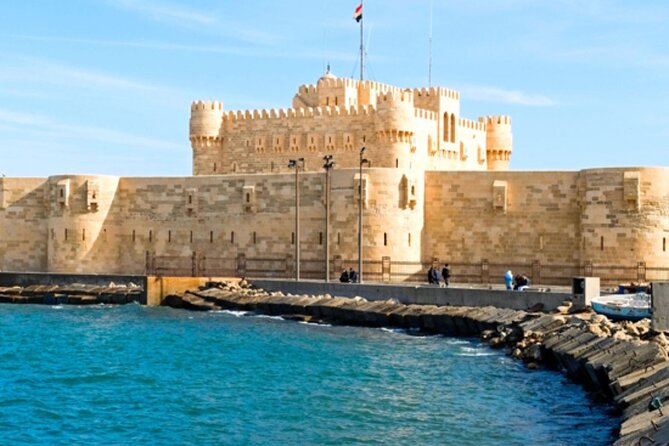
Next is Fort Qaitbay, built in the 15th century on the site of the old lighthouse that is gone. The purpose was to protect the eastern harbor, and the stop gives you a sea-and-city view.
Finally, you visit the Bibliotheca Alexandrina, the modern library built as a revival of the ancient one. The plan includes time to tour the library and then free time to consider the seafood and cafe culture Alexandria is known for.
This day is a nice change of pace from temples. You get Roman burial, coastal defense history, and a modern symbol of knowledge. Even if you are not a library person, the location and symbolism make it worth the stop.
Guides and Service: Where This Tour Really Scores
The biggest praise in the available feedback is about the people, especially the Egyptologists and the drivers.
Names that come up include Eman in Cairo, Abdul for the Abu Simbel to Luxor portion, and other guide names like Mamdouh, Omar, Abraham, Mahmoud, Beko, and Ashraf for various sections. What matters to you is not the names themselves, it is the consistency: these guides take time to explain what you are seeing and answer questions instead of rushing.
You also get that driver-and-guide continuity vibe. When you are bouncing between Cairo, Luxor, Aswan, and Alexandria, smooth logistics reduce mental fatigue. That is when the Egyptologist explanations stick, because you are not constantly thinking about what happens next.
The tour also includes bottled water, which you will appreciate on long hot days. And the use of mobile ticketing helps cut down on paperwork stress at entrances.
Price and Value: What $2,800 Covers (And What to Budget Extra)
At $2,800 per person for about 8 days, this tour is not cheap. But it is also not just a series of bus stops with a generic guide.
Here is what is covered based on the tour details:
- daily breakfast
- hotel pickup and drop-off
- transport by private vehicle
- qualified Egyptologist guide
- entrance fees to the mentioned sites
- bottled water
- mobile ticket
- group discounts
- airport meet and assistance for passport control and customs
What is not included:
- entrance fees to the chambers of the pyramids
- entrance to the tomb of Tut Ankh Amun in Luxor
- camel ride
- (and other personal expenses like meals beyond breakfast)
So where is the value? It is in the combination of guided time plus the fact that many key entrances are already handled. If you want the added pyramid chamber experience, plan for it separately. If you care deeply about Tut Ankh Amun’s tomb access in Luxor, also plan extra since it is not included.
In plain terms: if you would otherwise pay for private guides and drivers, this package can feel like a fair deal. If you are only aiming for the outside views and skipping most paid entrances, the extras may feel less useful. The tour fits best when you want the full, guided experience.
Who This Tour Fits Best
This is a strong fit if:
- you want classic Egypt highlights with minimal planning
- you like guided context, especially at Karnak, Valley of the Kings, and the relocated Philae Temple
- you want Cairo, Upper Egypt, and Alexandria in one trip
- you prefer door-to-door help (airport, hotel pickup, drop-off)
It may feel like a lot if:
- you hate long travel days, especially the Abu Simbel road transfer
- you do not like stairs or tight underground spaces (catacombs and some tombs)
- you expect lots of downtime with no scheduled stops (this is a structured tour)
Should You Book This Cairo to Abu Simbel, Aswan, and Luxor Tour?
I would book it if your priority is seeing Egypt’s headline monuments with a guide who helps you understand them. The route covers the main “must-see” areas in Cairo, Luxor, Aswan, Abu Simbel, and Alexandria, and the included guide time plus entrance fees usually keeps the trip smooth.
I would hesitate only if you are extremely sensitive to travel fatigue or you strongly prefer a slower pace with fewer transfers. The long Abu Simbel day is the biggest stress point, so plan your energy around it.
If you like the sound of a guided sweep through pyramids, temple complexes, royal tomb areas, and an Alexandria day that includes both ancient and modern sights, this is a sensible way to do it.
FAQ
How long is the tour?
The tour is approximately 8 days.
Where does the tour start?
The start point is Cairo International Airport in Cairo, Egypt.
Is hotel pickup and drop-off included?
Yes. Hotel pickup and drop-off is included, along with transportation by private vehicle.
What meal is included each day?
Daily breakfast is included.
Are entrance fees included?
Entrance fees to the mentioned sites are included. Pyramids chamber entrances are not included, and the entrance to the tomb of Tut Ankh Amun in Luxor is also not included.
Is bottled water included?
Yes, bottled water is included.
How far do you travel to Abu Simbel?
The Abu Simbel drive is described as about 145 miles from Aswan.
What Alexandria sites are included?
The itinerary includes the Catacombs of Kom el Shoqafa, Fort Qaitbay, and the Bibliotheca Alexandrina.
What is the cancellation window for a full refund?
You can cancel up to 6 days in advance of the experience for a full refund.
Newly added near Cairo
- Private Day Tour to El Fayoum & Valley of the Whales from Cairo★ 5.0 · 13 reviews
- Full Day Tour Giza Pyramids, Sphinx and Egyptian Museum &Felucca★ 5.0 · 9 reviews
- Private Day Tour Egyptian Museum, Citadel ,Mohamed Ali Mosque and Coptic Cairo★ 5.0 · 34 reviews
- Private Day Tour To Luxor from Cairo by Plane★ 4.5 · 41 reviews
- Grand Egyptian Museum★ 3.5 · 48 reviews
- Private Cairo Day Tour Giza Pyramid, Sphinx, Civilisation Museum★ 5.0 · 19 reviews
- Allinclusive Private Tour Fayoum Oasis & Valley of Wales★ 5.0 · 78 reviews
- Private Day Tour To Luxor from Cairo by Plane,Tours,Sailing Felucca,Camel&Lunch★ 5.0 · 45 reviews
Abu Simbel Day Trips, compared.
4-Days Nile Cruise From Aswan To Luxor including Abu Simbel and Hot Air Balloon
Read our review →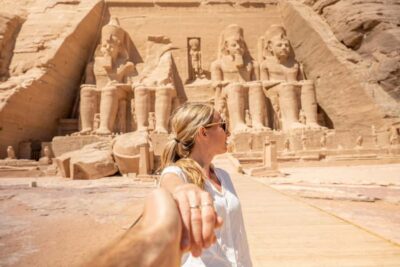
4-Day 3-Night Nile Cruise from Aswan to Luxor&Abu Simbel+Balloon
Read our review →
4-Day 3-Night Nile Cruise from Aswan to Luxor including Abu Simbel, Air Balloon
Read our review →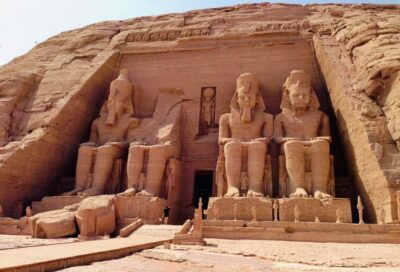
Abu Simbel Temple Private Guided Day Trip with Lunch
Read our review →4-Days Nile Cruise From Aswan To Luxor including Abu Simbel and Hot Air Balloon
Read our review →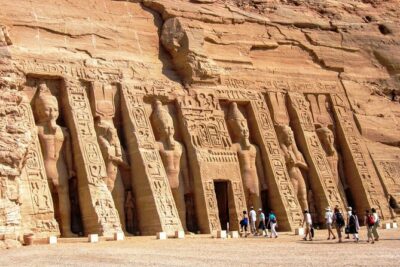
Private Day Tour to Abu Simbel Temples from Aswan
Read our review →4 Days Nile Cruise from Aswan to Luxor including Abu Simbel and Hot Air Balloon
Read our review →Browse the lists this tour appears in