
Reviewed · 7-DAY EXPERIENCES
Egypt Must See Sites Cairo Luxor 7 Days Private Tour
Seven days, and Egypt fills your eyes. This private Cairo-to-Luxor trip is built around the big-ticket sights you came for, with a real Egyptologist guide giving context as you walk. I like that the plan mixes the famous monuments with a few smart add-ons, so the days feel like a story, not a checklist.
I also like the practical setup: meet-and-assist support, private air-conditioned transfers, and admission fees included for the stops listed. One consideration, check what your exact package includes for lodging, because the details say accommodation is optional under Not Included, even while the overview describes all lodging as included. Also, meals beyond daily breakfast are not included, and you still need to handle your Egypt entry visa and flights.
In This Review
- Key highlights and what you should notice
- Why a Cairo-to-Luxor private route makes sense in one week
- Price and logistics: what $840 per person really buys you
- Day 1 arrival in Cairo: getting started the easy way
- Day 2: Giza pyramids, Saqqara’s Step Pyramid, and the Memphis-area museum stops
- Giza pyramids and Sphinx area (and the “choose your moment” time)
- Saqqara (Sakkara): older than you expect
- Mit Rahina Museum: the “Memphis” add-on that fills in the blanks
- Day 3 in Cairo: Egyptian Museum highlights, Muhammad Ali’s mosque view, and Coptic Cairo
- Egyptian Museum: a guided highlights plan inside a huge building
- Citadel of Saladin and the Alabaster Mosque: history plus city views
- Coptic Cairo: Hanging Church and multiple layers of faith
- Day 4: West Bank Luxor day, Valley of the Kings tombs, Hatshepsut’s temple, then the Colossi of Memnon
- Valley of the Kings: choose three tombs and look for the stories in the walls
- Temple of Hatshepsut at Deir el Bahari: terraces and the “divine birth” theme
- Colossi of Memnon: short stop, strong photo payoff
- Day 5: Karnak’s hypostyle court and Luxor Temple’s mixed historical layers
- Karnak Temple: how to read the “forest” of pillars
- Luxor Temple: connected to Karnak, then layered by later empires
- Day 6: Kom el Shoqafa catacombs, Bibliotheca Alexandrina, and Fort Qaitbay sea views
- Catacombs of Kom el Shoqafa: Roman burial traditions with Egyptian design
- Bibliotheca Alexandrina: the modern library linked to an ancient idea
- Fort of Qaitbay: the best view payoff
- Day 7: hotel breakfast and transfer out of Cairo
- The service level you should expect, based on how this company operates
- Should you book this Cairo-to-Luxor private tour?
Key highlights and what you should notice
- Airport meet and assist to help you get through customs and transfers with less hassle
- Private, air-conditioned vehicle for day-to-day travel between major sites
- Giza time that allows options, like entering a pyramid chamber or visiting the Sun boat museum
- A Egypt museum strategy that focuses on highlights, not just endless halls
- West Bank Luxor highlights in a single flow, Valley of the Kings, Hatshepsut, then Colossi of Memnon
- An Alexandria day with Kom el Shoqafa catacombs, Bibliotheca Alexandrina, and Fort of Qaitbay views
Why a Cairo-to-Luxor private route makes sense in one week
If you only have about a week, this is the kind of route that keeps you moving in a way that feels efficient. You start in Cairo, then you move into the Luxor-area ancient sites, and you finish with a final return toward Cairo for departure. That structure matters, because Egypt’s distances are real, and you do not want to waste time playing logistics roulette.
This tour also leans into a guide-led experience. Your Egyptologist commentary is part of what you are paying for, and it changes how you see things. Instead of staring at symbols you cannot place, you get explanations that help you connect pyramids, tombs, temples, and everyday life across different eras.
Other Cairo options on the table
- Cairo: Pyramids & Great Sphinx Private Tour with Camel Ride
★ 4.9 · 6,335 reviews - Tour to Giza Pyramids and The Egyptian Museum
★ 5.0 · 6,016 reviews - VIP All inclusive Best of the best Giza Pyramids,Sakkara,Memphis
★ 5.0 · 3,164 reviews
Price and logistics: what $840 per person really buys you
At $840 per person, the big value is that the core costs are bundled. The package includes qualified Egyptologist guidance, admission fees to the sites named in the plan, and all transfers by a private air-conditioned vehicle. It also lists all fees and taxes, which usually means fewer surprise add-ons once you arrive.
Still, do a quick reality check on what is not included. The details specifically list Egypt entry visa and international flights. They also say meals are optional, with daily breakfast included. And because accommodation is described two different ways in the provided info, you should confirm whether your exact booking rate includes your hotel nights or if accommodation is being treated as an add-on.
Practical tip: ask your booking contact for a clear breakdown of what is included on the ground versus what you pay directly at the hotel or for meals. That small step prevents the most common frustration on guided trips.
Day 1 arrival in Cairo: getting started the easy way
Your day begins with a meet-and-assist service at Cairo International Airport. You are helped through passport control, the luggage area, and customs formalities, then transferred to your Cairo hotel by a private air-conditioned vehicle for check-in.
This kind of start is not flashy, but it is a big deal. Cairo airports can be busy and confusing, especially after travel. Having a representative waiting to guide you through the early steps means you spend less energy on logistics and more on getting comfortable.
Day 2: Giza pyramids, Saqqara’s Step Pyramid, and the Memphis-area museum stops
This is the day for first impact. You start with Giza and the pyramids complex, then you head to Saqqara for the Step Pyramid area, and you finish with the open-air Mit Rahina Museum, tied to the old capital city of Memphis.
Also reachable from Cairo:
- From Cairo: Pyramids of Giza, Sphinx, Saqqara & Memphis Tour
★ 4.7 · 3,110 reviews - Cairo 8 Hour Private Tour of Pyramids, Egyptian Museum and Bazaar
★ 5.0 · 2,931 reviews - Cairo: Pyramids, Sakkara & Memphis Tour with Lunch
★ 4.6 · 2,493 reviews - Private ViP all-inclusive Giza Pyramids,Sphinx,Inside Pyramid
★ 5.0 · 2,448 reviews
Giza pyramids and Sphinx area (and the “choose your moment” time)
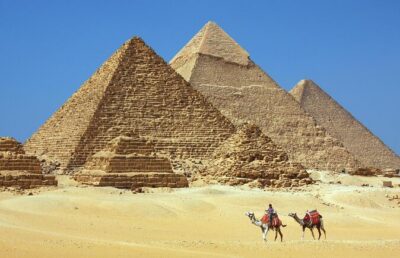
You spend more than two hours in the Giza area. The plan calls out time at the Great Pyramid of Khufu, plus a guided explanation that covers the other pyramids, with lots of time for questions and photos. The practical win here is that you are not only looking from outside. You also have the chance to enter one of the pyramid’s chambers or to visit the Sun boat museum.
If you want to add the classic touch, the plan mentions a camel ride as an option around the area. Not required, but if you enjoy a quick, scenic photo moment, it can fit without turning the day into a detour.
Saqqara (Sakkara): older than you expect
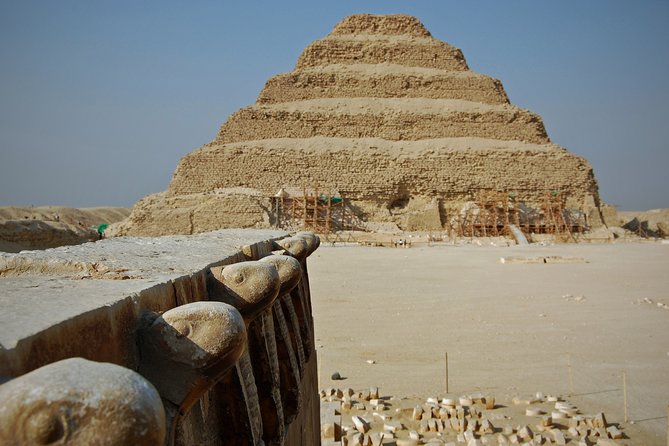
Next up is Saqqara, home to Egypt’s oldest pyramid in this area, built around 2800 B.C. The Step Pyramid gets the spotlight, and you also get free time to walk around and visit painted tombs of nobles.
This is a great contrast day. Giza is iconic and huge, but Saqqara helps you understand the progression of pyramid building and burial beliefs. If you enjoy seeing how Egypt’s architecture evolved, you’ll get extra satisfaction here.
Mit Rahina Museum: the “Memphis” add-on that fills in the blanks
Your final stop of the day is Mit Rahina Museum, linked to Memphis, described here as Egypt’s oldest capital after unity. The open-air museum is where you get to see major pieces like a second-largest Sphinx in Egypt and the lying colossus of Ramses II.
This stop is shorter, about one hour, but it works well as a bridge between “pyramid era giants” and the idea of Egypt as a living civilization with capitals, rulers, and monuments.
Day 3 in Cairo: Egyptian Museum highlights, Muhammad Ali’s mosque view, and Coptic Cairo
Day 3 is built for culture variety. You get the Egyptian Museum first, then the Citadel area with the Mosque of Muhammad Ali, and then Coptic Cairo, including multiple churches.
Egyptian Museum: a guided highlights plan inside a huge building
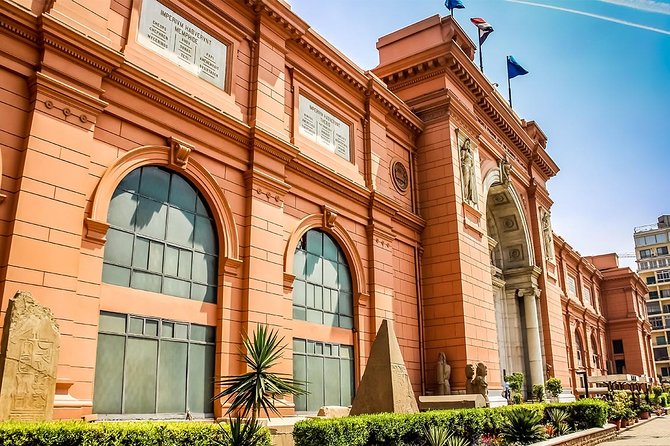
The Egyptian Museum visit is set at around 4 hours, with a guided tour focused on the museum’s masterpieces. The key detail here is that your Egyptologist does not try to cover everything. They focus on highlights, which matters because the museum has tens of thousands of artifacts and you could burn hours getting nowhere.
You will also visit the Tut Ankh Amun Wing on the first floor, where you focus on historically important pieces, especially the gold treasures plus related statues and items.
If you are worried about museum fatigue, this is the right approach. A focused route beats wandering, and the guide’s interpretation helps you understand why each object mattered.
Citadel of Saladin and the Alabaster Mosque: history plus city views
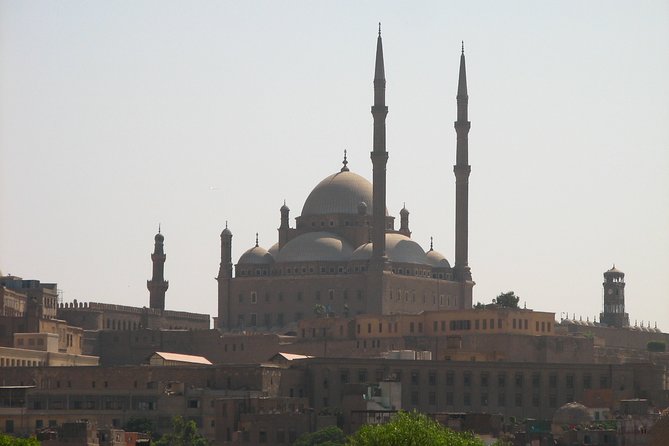
After the museum, you go to the Citadel of Saladin, a 12th-century fortress. Inside, you visit the Alabaster Mosque, built in 1830 and designed by a Turkish architect in a style compared here to Istanbul’s Blue Mosque.
You also get a panoramic city view from the top, which is the kind of reward that makes a compact stop feel worthwhile.
Coptic Cairo: Hanging Church and multiple layers of faith
The final part of the day is Coptic Cairo, starting with the Hanging Church, consecrated to Virgin Mary and described as built in the 5th century above part of the fort of Babylon. The plan points out 110 icons, plus the church’s role as a seat of the patriarch.
Then you move on to the Cavern Church and the Church of St Sergius and Bacchus. The plan also includes a stop at the cave connected to a story about refuge for three months, and it mentions visiting the oldest Jewish temple in Cairo as part of the religious tolerance theme.
This is one of the most interesting parts of Cairo that many first-timers skip. It reminds you Egypt is not only ancient. It is layered, and different faith communities shaped it over centuries.
Day 4: West Bank Luxor day, Valley of the Kings tombs, Hatshepsut’s temple, then the Colossi of Memnon
This day is all about dramatic tombs and big temple angles, on the West Bank of Luxor. You cross the Nile to the West bank, then you move through a classic sequence: Valley of the Kings, Temple of Hatshepsut at Deir el Bahari, and Colossi of Memnon.
Valley of the Kings: choose three tombs and look for the stories in the walls
The Valley of the Kings stop is set at around 2 hours. The plan emphasizes the idea of pharaohs hiding mummies and treasures in a barren desert, and it offers you the option to visit three tombs to enjoy murals and color.
You can also choose other royal tombs like Tut Ankh Amun. That “choice” matters because tomb contents can feel more meaningful when you pick based on what you want to see.
Temple of Hatshepsut at Deir el Bahari: terraces and the “divine birth” theme
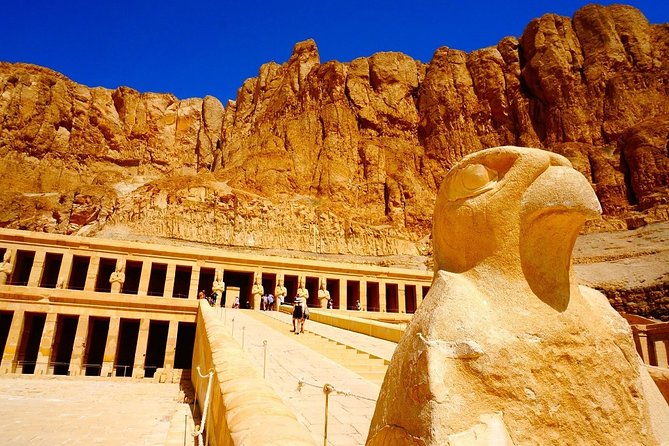
Next is Deir el Bahari, where you visit the mortuary temple of Queen Hatshepsut, described as the first female pharaoh ruling for 20 prosperous years. The plan points out the temple’s limestone construction and that it includes three terraces.
You also get a guided focus on the story of her divine birth, which helps you see the architecture as a message, not just stone steps.
Colossi of Memnon: short stop, strong photo payoff
Your final stop is Colossi of Memnon, two monumental seated statues of Amenhotep III, carved from single blocks of sandstone. The name comes from a Greek hero connection, and the plan describes them facing east toward the Nile.
Time is short here, around 30 minutes, but it fits. It is a great way to end the West Bank day with scale and atmosphere.
Day 5: Karnak’s hypostyle court and Luxor Temple’s mixed historical layers
Day 5 brings you back to temple scale. You start at Karnak, then you head to Luxor Temple.
Karnak Temple: how to read the “forest” of pillars
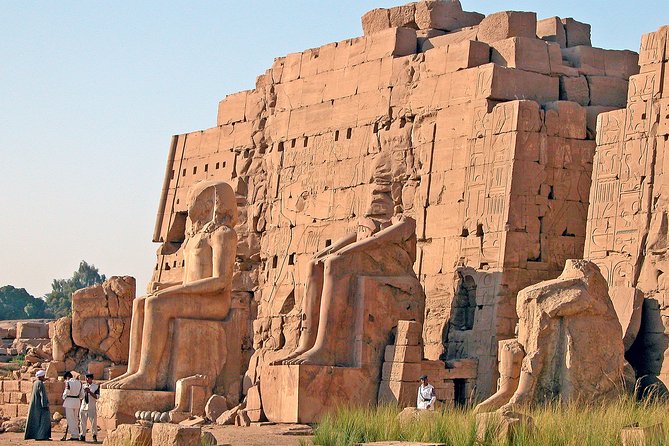
Karnak is a complex, not one single temple. You spend about 2 hours exploring it, dedicated to Amun Ra. The plan highlights the Great Hypostyle court, reliefs, murals, and tall obelisks described as reaching 70 feet high, cut from a single piece of granite.
One useful detail is the mention of papyrus and lotus capitals loaded with hieroglyphics. Those details are easy to miss if you are rushing, but with an Egyptologist guide you can learn what to look for, so your photos actually capture meaning, not only size.
Luxor Temple: connected to Karnak, then layered by later empires
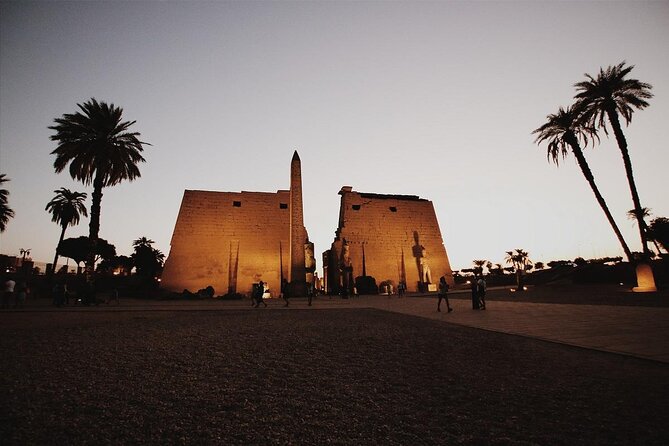
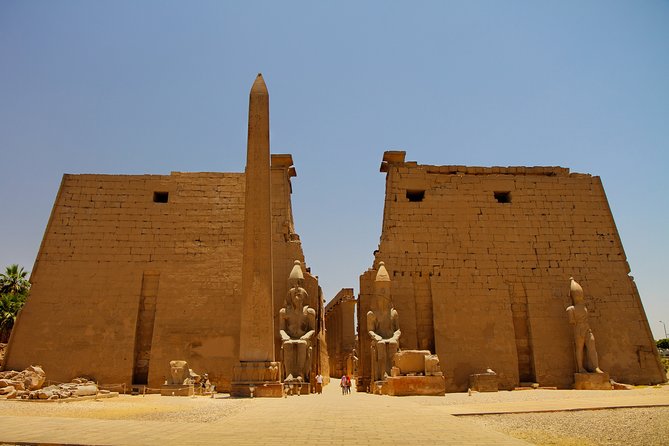
Then you visit Luxor Temple for about 1 hour 30 minutes. The plan notes Luxor Temple and Karnak were originally connected by the Ram-headed Sphinxes Avenue, linking Ra’s annual visit from Karnak to Mut in Luxor.
This is also where the tour points out multiple historical layers. You can see influences from Greek, Roman, Islamic, and Coptic eras. The plan also mentions Ramses II statues and obelisks at the entrance, with one obelisk sent to Paris.
If you like history that changes over time, this is a satisfying stop. It shows how later periods did not wipe everything out, they added their own marks.
Day 6: Kom el Shoqafa catacombs, Bibliotheca Alexandrina, and Fort Qaitbay sea views
Day 6 shifts tone. You move from temple world into Roman burial spaces and modern landmarks, then end with a fort view over city and sea.
Catacombs of Kom el Shoqafa: Roman burial traditions with Egyptian design
The day starts at Catacombs of Kom el Shoqafa, described as a Roman subterranean tomb about 1900 years old. The plan emphasizes the mix of Egyptian art, architecture, and burial traditions with Roman elements.
It is about 1 hour, and it is a good change of pace. After days of pyramids and temples, the catacombs feel more intimate, because you experience the idea of funerary life from inside the earth.
Bibliotheca Alexandrina: the modern library linked to an ancient idea
Next is Bibliotheca Alexandrina, described as a modern library built as a revival of the ancient one. You spend around 1 hour touring it.
This stop is brief by design. It does not try to replace the ancient sites. Instead it gives you a quick sense of how Egypt keeps reimagining knowledge and memory.
Fort of Qaitbay: the best view payoff
Finally you go to the Citadel of Qaitbay, a 15th-century fort built on the location of the original Lighthouse that was gone. The plan highlights the best view over the city and the sea, and that the fort protected the Eastern harbor.
This is a smart closer. You end with a wide view instead of more indoor monuments, so the day feels complete.
Day 7: hotel breakfast and transfer out of Cairo
On the last morning, you have breakfast at the hotel, check out, and then transfer to Cairo International Airport for departure.
This is the kind of ending you want after a fast week. You have a gentle morning, then you leave without rushing through one last major attraction.
The service level you should expect, based on how this company operates
The booking process is described as easy and responsive in the feedback linked to this provider. Named contacts include Mona, who handled trip planning support, and Ali, who helped tailor a private 7-day plan for some travelers.
On the guiding side, Ayman comes up as a guide who made the experience feel friendly and fun while still staying focused on facts. That matters, because Egypt works best when your guide can adapt to your questions instead of reciting a script.
Safety and comfort are also repeatedly described in the feedback as strong, with travelers mentioning they felt safe throughout and that everything stayed organized and on time. Since private transport is part of the package, that kind of consistency is usually easier to maintain.
Should you book this Cairo-to-Luxor private tour?
I think this is a good fit if you want a structured one-week route that hits Giza, key Cairo sights, Luxor’s temple icons, and an Alexandria-area day, with an Egyptologist guide doing the heavy lifting on context.
You should think twice if you prefer very slow travel or you need lots of free time to wander without a set plan. This itinerary is built around major sites and scheduled visits, so downtime is limited. Also, plan for what is not included: your Egypt entry visa, international flights, and any meals beyond daily breakfast.
If your main goal is seeing the must-see ancient monuments with guide-led clarity, and you want private comfort with fewer logistics headaches, this tour is a solid choice to book with eyes open. Just confirm lodging coverage for your exact rate, so the only surprise on your trip is how unreal the pyramids feel in person.
Newly added near Cairo
- Private Day Tour to El Fayoum & Valley of the Whales from Cairo★ 5.0 · 13 reviews
- Full Day Tour Giza Pyramids, Sphinx and Egyptian Museum &Felucca★ 5.0 · 9 reviews
- Private Day Tour Egyptian Museum, Citadel ,Mohamed Ali Mosque and Coptic Cairo★ 5.0 · 34 reviews
- Private Day Tour To Luxor from Cairo by Plane★ 4.5 · 41 reviews
- Grand Egyptian Museum★ 3.5 · 48 reviews
- Private Cairo Day Tour Giza Pyramid, Sphinx, Civilisation Museum★ 5.0 · 19 reviews
- Private Day Tour To Luxor from Cairo by Plane,Tours,Sailing Felucca,Camel&Lunch★ 5.0 · 45 reviews
- Private Day Tour of the Giza Pyramids Alabaster Mosque and Hanging Church★ 4.5 · 9 reviews
7-Day Experiences, compared.
Incredible 7 Days Tour around Cairo, Luxor, and Hurghada
Read our review →
7 Days Egypt Tour Package to Cairo and Nile Cruise
Read our review →
7 Days & 6 Nights by Flight Cairo Pyramids & Nile cruise Aswan To Luxor(Private)
Read our review →
Browse the lists this tour appears in