Reviewed · FULL-DAY
Full Day Luxor East and West Banks Tour With Lunch
Luxor in one day feels like time travel. You’ll bounce between the east and west banks with an Egyptologist guide, hitting the big-name monuments and ending with the chance to see the King Tut mummy.
I like the way this tour turns famous pharaohs into something you can actually picture, especially with Ramses III and the unusual scenes in his tomb side rooms. A small drawback to plan for: entrance fees are not included, and the King Tut tomb has an extra charge of 360 EGP, even though the tour includes lunch and air-conditioned transport.
In This Review
- Key highlights to look for
- East and West Banks in One Guided, Full-Day Sweep
- What the Egyptologist Briefing Actually Gives You
- Luxor Temple: Ramses Statues and the Theban Triad
- Valley of the Kings: Ramses III (KV 11) and the Tomb of the Harpers
- Ramses IV (KV 2): Blue and White Walls, Rose-Granite, and Nut’s Ceiling Scene
- Tomb of Merenptah: KV 8, Howard Carter’s Find, and Royal Craftsmanship
- Deir el Bahari and Hatshepsut: Why This Temple Feels Different
- Colossi of Memnon: A Short, Free Stop Worth Using for Photos
- Karnak Temple: The World-Class Feel Comes from the Parts
- King Tutankhamun Tomb: Optional Entrance and What You’ll See
- Avenue of Sphinxes: Short in Distance, Big in Meaning
- Valley of the Kings Time Planning: How to Make 8 to 9 Hours Feel Smooth
- Price and Value: What You Get for $92.92
- Pickup, Private Format, and the Small Money Choices
- Who This Tour Is Best For
- Should You Book This Luxor East and West Banks Tour?
- FAQ
- How long is the full day Luxor east and west banks tour?
- What is included in the tour price?
- Are entrance fees included?
- Is pickup included?
- Is this tour private?
- Which major sites are included on the itinerary?
- How much does the optional King Tutankhamun tomb entrance cost?
- Is there any stop with free admission?
- Is a hot air balloon ride included?
- Where do I meet the tour?
Key highlights to look for
- Egyptologist-led context that helps you connect what you see, temple to tomb to era
- Ramses III tomb details like colorful painted reliefs and the famous side-room material
- Ramses IV tomb colors and texts in KV 2, including the goddess Nut ceiling scene
- Deir el Bahari and Hatshepsut’s reign told through the terraces and temple design
- Karnak Temple complex scale with the Avenue of Sphinxes approach and Hypostyle Hall
- Budgeting for entrances (about $40 total, plus optional King Tut at 360 EGP)
East and West Banks in One Guided, Full-Day Sweep
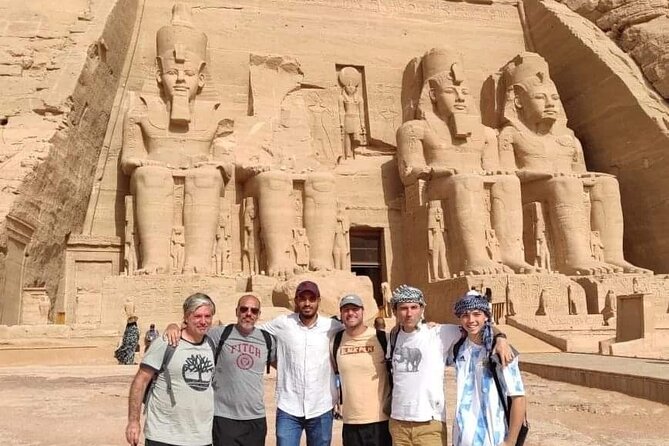
This is the kind of Luxor day that saves you from planning stress. In about 8 to 9 hours, you move from the east bank’s temple world to the west bank’s royal tombs, all with an Egyptologist guide and an air-conditioned vehicle.
You’ll also get practical help that matters in Egypt, like staying hydrated with mineral water during travel and having lunch included so you are not scrambling for food between sights.
Other Luxor options on the table
- Hurghada: Luxor Valley of the Kings & Tutankhamun Tomb Trip
★ 4.7 · 13,208 reviews - Luxor Day Trip from Hurghada Small Group & Tutankhamun Tomb
★ 4.8 · 5,366 reviews - Hot Air Balloon Ride in Luxor Egypt with Transfers Included
★ 5.0 · 4,319 reviews
What the Egyptologist Briefing Actually Gives You
The best tours don’t just move you from one stop to the next. They give you a mental map so each site makes sense, and that’s what this day is built around.
You’ll get a guided story that links different eras and themes, from Theban religious power to royal burial beliefs. A guide like Mohamed, mentioned in past experiences with Egypt Viajes Tours, is known for coordinating the day smoothly and helping arrange add-ons like a hot air balloon ride when you want one.
Luxor Temple: Ramses Statues and the Theban Triad
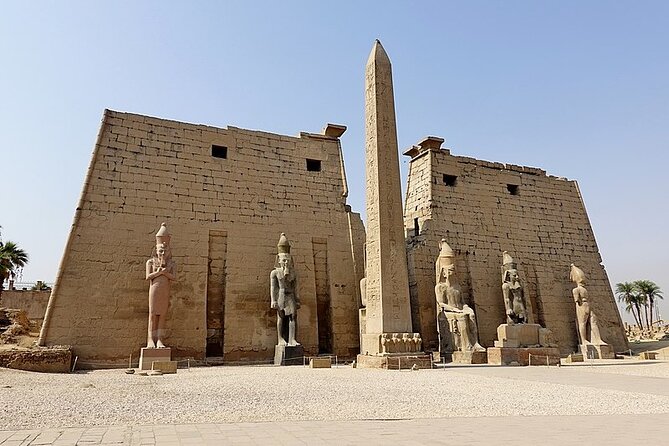
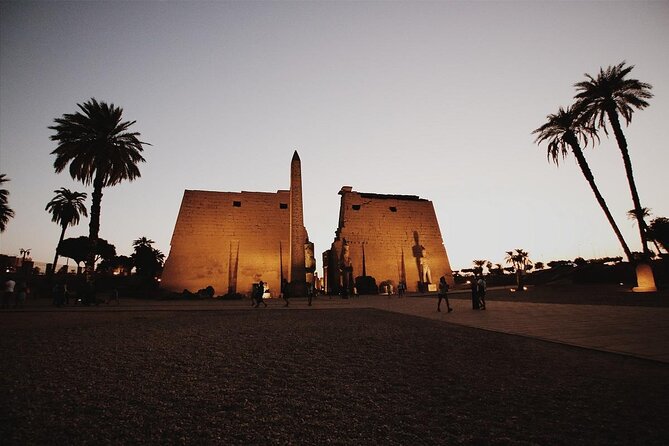
Your day starts at Luxor Temple, dedicated to the Theben Triad: Amun-Ra, Mut, and Khonsu. Even if you only have a short visit (about 1 hour), it’s a strong opener because it sets the religious framework for what comes next.
Look out for the granite statues of Ramses the Great. They’re the kind of detail that helps you remember this is not just one “temple day,” it’s a long-running monument shaped by pharaohs.
Tip for your visit: give yourself a moment to slow down and read the “who’s who” theme in your head, Amun-Ra and company, then your later tomb scenes feel less random.
Valley of the Kings: Ramses III (KV 11) and the Tomb of the Harpers
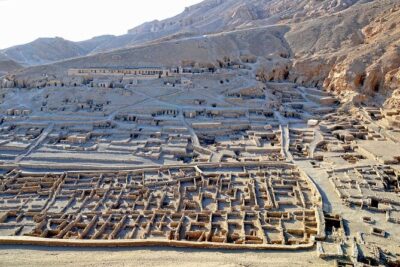
Next come the Valley of the Kings stops, where the walls become the main attraction. The tomb of Ramses III, KV 11, is a complex set of corridors and rooms (you’ll have about 15 minutes here).
What makes KV 11 special is the mix of religious and everyday, ceremonial detail. You’ll see colorful painted sunken reliefs tied to ritual texts and images of Ramses before the gods. And then there are the side-room scenes that feel more worldly: foreign tributes, detailed pottery imported from the Aegean, royal armor, boats, and the blind harpists that gave the tomb an alternate name, Tomb of the Harpers.
That combination matters because it shows you something important about Egyptian royal ideology. This is not only gods and underworld. It’s also power with reach, trade connections, and symbolism.
Also reachable from Luxor:
- Luxor: Shared Full-Day Tour to Luxor West and East Banks
★ 4.5 · 1,812 reviews - Luxor: Hot Air Balloon Ride over Luxor Relics
★ 4.8 · 1,681 reviews - Luxor Day Tour: Valley of Kings & Queens & Hatchepsut Temples
★ 5.0 · 1,496 reviews - Full Day Tour to East and West Banks of Luxor
★ 5.0 · 1,449 reviews
Ramses IV (KV 2): Blue and White Walls, Rose-Granite, and Nut’s Ceiling Scene
The tomb of Ramses IV is KV 2, and it’s described as one of the most spectacular of the tombs in this run (again, about 15 minutes). The standout is how the hieroglyphs cover major texts: Litany of Ra, Book of the Dead, Book of Caverns, Book of the Heavens, Book of Amduat, and Book of the Night.
Inside the burial chamber, the blue and white tones are striking, and you also have the chance to see the king’s sarcophagus made of rose-colored granite. Then there is the ceiling scene with goddess Nut swallowing the sun, with the sun traveling through her and being reborn.
Even with a brief stop, this is one of those places where your brain goes, oh, so that’s the whole point of the afterlife scenes. The iconography becomes a story, not just decoration.
Tomb of Merenptah: KV 8, Howard Carter’s Find, and Royal Craftsmanship
The next Valley stop is the tomb of Merenptah (described as Tomb 8). It ties into Egyptian mythology by referencing Ptah, the demiurge of Memphis, and the way certain forms of protective deities were placed to accompany the dead on their journey to the West of Luxor.
The details here include a discovery note: it was discovered by Howard Carter in 1903. The description also points out design shifts you can notice in the layout, including fewer lateral rooms and taller corridors and rooms compared with some other models.
You also get a direct lineage link: Merenptah is presented as a son of Ramesses II and Queen Isis-Nofret. That’s useful because it helps you place the tombs in a family timeline rather than treating every burial site as an unrelated stop.
Deir el Bahari and Hatshepsut: Why This Temple Feels Different
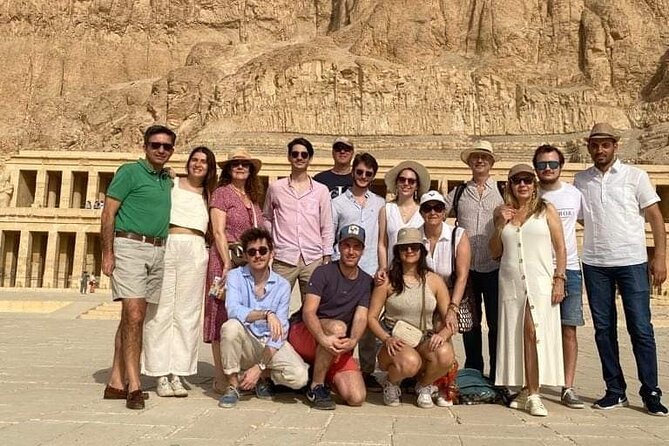
After the tomb visits, you transfer to the Temple of Hatshepsut at Deir el Bahari. You’ll have about 1.5 hours here, and this stop is special because it spotlights a rare story: Hatshepsut, the only woman described here as having reigned over Egypt as pharaoh.
Her temple is also framed as an ancestor connection to King Tutankhamun, belonging to the same dynasty. That link gives the day a nice thread, west bank burial, then east bank religious power, then back to dynastic continuity.
The terraces and the temple structure are the payoff. Even without getting lost in architectural jargon, you’ll feel the intention in the way the complex rises and holds space.
Colossi of Memnon: A Short, Free Stop Worth Using for Photos
The Colossi of Memnon are two of the largest ancient statues in Egypt, dating back to King Amenhotep III. This is a short stop (about 20 minutes), and it is marked as free for admission.
Because the visit is quick, use your time well. Take a few minutes to capture the scale in your photos, but also give yourself time to look at proportions. These are big, and your brain needs a second to register how large they really are.
Karnak Temple: The World-Class Feel Comes from the Parts
Karnak Temple is where Luxor’s temple power becomes obvious. You’ll spend around 2 hours here, and the site is described as an architectural masterpiece built across different reigns.
You can expect a guided walk that covers key areas: the Avenue of Sphinxes, the Hypostyle Hall with 134 gigantic columns, the obelisks of Queen Hatshepsut and Tuthmosis I, the Temple of Amon with lotus and papyrus designs, the Granite Scarab of Amenophis III, and the Sacred Lake.
Karnak can be overwhelming if you wander without a plan. With a guide, you can aim your attention at specific features and make the scale feel manageable instead of chaotic.
Practical note: entrance fees are not included for Karnak, so have your budget ready.
King Tutankhamun Tomb: Optional Entrance and What You’ll See
The highlight everyone talks about is the chance to see the royal mummy of King Tutankhamun. This is listed as an optional entrance, with a fee of 360 EGP, and your time in the tomb stop is about 15 minutes.
The tour description explains Tut’s story clearly: he became king at about age 10 and died at about 19. That age detail is useful because it reminds you this is the most famous boy-pharaoh in the world, and the mummy encounter is the emotional anchor of the day for many people.
Here’s the value question for you: if this is the moment you came for, it’s worth paying the extra entrance fee. If you’re more into tomb art and longer exploration, you might decide to skip the optional entry and spend that time focusing on the other Valley tombs you already included.
Avenue of Sphinxes: Short in Distance, Big in Meaning
Between Luxor Temple and Karnak, you’ll visit the Avenue of Sphinxes. The description notes it used to connect the temples over a much longer distance, now reduced to a few hundred meters you can walk.
You’ll get a quick look at how it once stretched with sphinxes on both sides, historically about 6 miles long. Even if the modern walk is short, it’s a helpful bridge that ties the east bank temples together into a single planned route.
Valley of the Kings Time Planning: How to Make 8 to 9 Hours Feel Smooth
This is a packed day, and the tomb visits are timed, often around 15 minutes per tomb. That means you won’t linger forever at one corner of KV 11, KV 2, or KV 8, even if you want to.
So your best strategy is simple: decide what you want to photograph in your head before you enter. For example, in KV 2 you’ll want to pay attention to the ceiling Nut scene and the sarcophagus material. In KV 11, prioritize the unusual side-room scenes like foreign tributes and the harpists theme.
Also, the tour includes mineral water during travel and lunch, so you can keep your energy steady. Still, expect heat and sun on open-air transitions between stops.
Price and Value: What You Get for $92.92
At $92.92 per person, you are paying for more than sightseeing. You’re paying for an Egyptologist guide, an air-conditioned vehicle, mineral water during travel, and lunch.
Entrance fees are not included, with a stated total around $40 per person, and King Tut’s tomb is an additional 360 EGP if you choose it. When you add that in, the day stops being a bargain-only deal and becomes a “pay for access plus expert guidance” deal, which is exactly how major Luxor days usually work.
Value-wise, the tour makes sense if you want your time guided and structured. It’s less ideal if you prefer total independence, because you’ll have a set route and set timing per stop.
Pickup, Private Format, and the Small Money Choices
This is a private tour, meaning only your group participates. That usually helps you keep questions flowing and avoid the feeling of being rushed by strangers.
Pickup is offered, but pickup from West Bank hotels or the airport is listed as available at 10 USD per person. Also, tipping is not included, so keep some cash aside for that.
If you want the optional hot air balloon for sunrise over the west bank, it’s not part of the base price and comes with an extra cost.
Who This Tour Is Best For
This fits best if you want a strong “greatest hits” Luxor day with expert context. I’d recommend it for first-timers who want both banks covered, and for people who value clear guidance in places where the symbols are dense.
It also works well for couples and families who don’t want to piece together transport and tickets city by city. Because it’s a private format, it can feel more relaxed than joining a crowded bus group.
If you’re a hardcore tomb-enthusiast who wants long stays inside each chamber, the timed stops may feel short. In that case, you might prefer a more tomb-focused itinerary rather than a full cross-city day.
Should You Book This Luxor East and West Banks Tour?
I’d book it if your goal is a guided, efficient Luxor day where the east bank temples and west bank tombs connect into a coherent story. The combination of Karnak, multiple Valley of the Kings tombs, and an optional King Tutankhamun tomb entrance is a very strong package for one long outing.
Book it especially if you like having an Egyptologist point out what to look for, like the KV 11 side rooms and the KV 2 ceiling scene. Just go in with the mindset that entrance fees add cost, and the King Tut tomb is optional but meaningful.
If you tell me your travel dates and whether you plan to pay for the King Tut tomb entrance, I can help you estimate your total day budget and choose which parts to prioritize.
FAQ
How long is the full day Luxor east and west banks tour?
The tour runs about 8 to 9 hours.
What is included in the tour price?
The tour includes an Egyptologist guide, mineral water during travel, lunch, and an air-conditioned vehicle.
Are entrance fees included?
No. Entrance fees are not included, and the total entrance fees are stated as around $40 per person. The King Tutankhamun tomb entrance is also optional.
Is pickup included?
Pickup is offered. Pickup from West Bank hotels or the airport is available at an extra 10 USD per person.
Is this tour private?
Yes. It is a private tour, so only your group participates.
Which major sites are included on the itinerary?
You visit Luxor Temple, Karnak Temple, Temple of Hatshepsut at Deir el Bahari, the Colossi of Memnon, and multiple Valley of the Kings tombs including Ramses III (KV 11), Ramses IV (KV 2), and Merenptah (Tomb 8). The King Tutankhamun tomb is listed as optional, and you also stop at the Avenue of Sphinxes.
How much does the optional King Tutankhamun tomb entrance cost?
The King Tutankhamun tomb entrance fee is listed as 360 EGP.
Is there any stop with free admission?
Yes. The Colossi of Memnon is listed as free admission.
Is a hot air balloon ride included?
No. The optional hot air balloon sunrise tour is not included and has an additional cost.
Where do I meet the tour?
The ticket redemption point is Luxor Temple, Luxor City, Luxor, Luxor Governorate, Egypt.
Newly added near Luxor
- Full-Day Private Guided Tour in the West Bank of Luxor★ 5.0 · 22 reviews
- Amazing 3 nights Nile cruise includes tours from Luxor to Aswan★ 5.0 · 57 reviews
- Hot Air Balloon Flight in Luxor with Pickup★ 4.5 · 14 reviews
- Private transfer from Luxor to Hurghada★ 5.0 · 43 reviews
- Quad Bike safari Experience in Luxor★ 4.5 · 62 reviews
- Private 2 Day Luxor Tour★ 5.0 · 71 reviews
- Private Tour in Luxor Egypt included entrance fees★ 5.0 · 11 reviews
- Private Transfer From Luxor to Marsa Alam★ 5.0 · 28 reviews
Full-Day, compared.

Shared Full-Day Tour to Luxor West and East Banks
Read our review →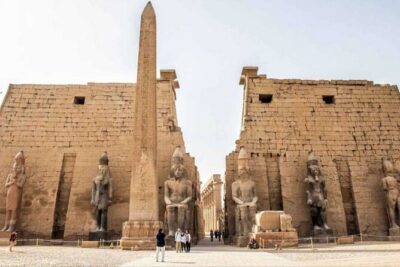
Full Day Tour to East and West Banks of Luxor
Read our review →
Private Full-Day Tour of Historical Alexandria
Read our review →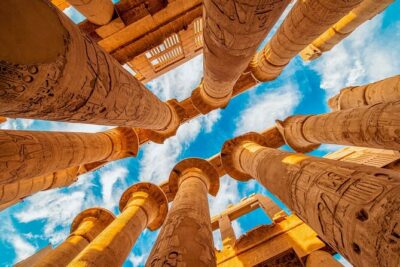
Full Day Tour to Luxor West and East Banks & Lunch
Read our review →