
Reviewed · VALLEY OF THE KINGS & WEST BANK TOURS
Full Day Tour :Kings valley &Karnak &Luxor and Hatshepsut Temples
One day in Luxor can feel like a whole dynasty. This tour strings together major east and west bank highlights, from tomb paintings in the Valley of the Kings to the mind-bending scale of Karnak. What I like most is the built-in time to see key places without racing, and the chance to match the story of pharaohs to what you actually see on the walls.
I also appreciate that guides such as Mo, Mahmoud, and Abo are praised for clear explanations and patient pacing, so you get time for photos and questions rather than a drive-by. The one thing to consider is the day runs about 6 to 8 hours, so it is not the choice if you want a slow, deep walk through only one site.
In This Review
- Key highlights to look forward to
- Why this Luxor route is smart for one full day
- Valley of the Kings: tomb art you can actually see in 2 hours
- Hatshepsut at Deir el-Bahari: the power story behind the terraces
- Karnak Temple: 2,000 years of building in one religious complex
- Colossi of Memnon: huge statues in a short, free stop
- Luxor Temple on the east bank: a site used again and again
- How the tour runs: transport, guide style, and pacing
- Price and value: what $18 really covers
- Who should book this tour, and who might skip it
- Final call: book it or not?
- FAQ
- What is the tour duration?
- Is pickup included?
- Are admission tickets included?
- What is included with the tour besides the guide?
- Do I need an extra fee for other languages?
- Is this tour private?
Key highlights to look forward to
- Value for $18 because lunch, bottled water, transport, an English Egyptologist guide, and major entry fees are included
- A tight but balanced route across both banks, so you see more without backtracking all day
- Deir el-Bahari (Temple of Hatshepsut) with the terrace setting and the story of a female pharaoh in male regalia
- Karnak Temple with thousands of years of additions, dedicated to Amun-Ra, Mut, and Khonsu
- Colossi of Memnon as a quick, free stop with huge scale in about 20 minutes
- Luxor Temple on the east bank, shaped by Greek, Roman, Christian, and Islamic use
Why this Luxor route is smart for one full day
Luxor can be overwhelming on your first trip. You have choices: focus only on the west bank for tombs, or stay east for temple grandeur. This plan does the best of both, with stops that cover the big picture of pharaonic power and religious life.
The timing works like this: you start with tomb country, then go to the dramatic cliff-temple of Hatshepsut, then move to the huge temple complex of Karnak. You finish with the Colossi of Memnon and Luxor Temple on the east bank. In practice, this means you get a day that feels like a highlight reel, but still leaves time to actually look.
The tour is set up as a private activity, so it is your group only. That matters, because temple visits go better when you are not stuck matching your pace to strangers.
More West Bank and Valley of the Kings visits:
- Hurghada: Luxor Valley of the Kings & Tutankhamun Tomb Trip
★ 4.7 · 13,208 reviews - Luxor: Valley of the Kings and Hatshepsut Temple Day Tour
★ 4.4 · 1,404 reviews - Hurghada: Luxor Tour with Valley of Kings, Karnak & Tut Tomb
★ 4.6 · 1,082 reviews
Valley of the Kings: tomb art you can actually see in 2 hours
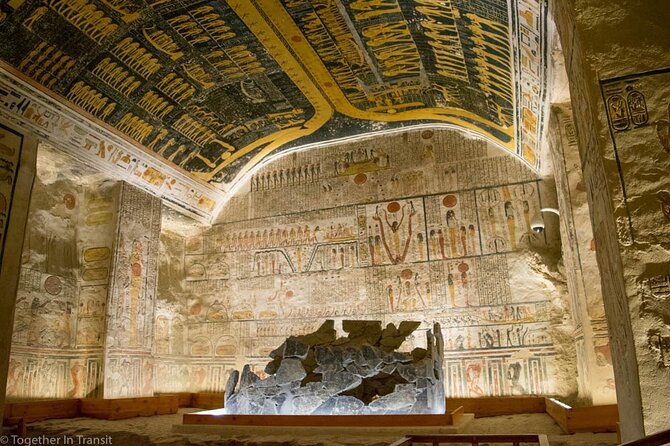
The day begins at the Valley of the Kings, the sacred burial ground of pharaohs. This is where you come for the decorated tomb walls and the carved afterlife scenes tied to royal burials. The stop is timed at about 2 hours, with admission included.
A big reason this works well in a half-day style visit is that the tombs are not just pretty rooms. They are structured with meaning, and the details reward time. You will see imagery connected to pharaohs such as Tutankhamun and Ramses II, and you can get a sense of how the Egyptians imagined the next world.
Two practical tips help here. First, go in with the expectation that some parts are darker and more enclosed than you might picture. Second, bring a phone camera plan you trust, since you will want to capture details without rushing.
The one drawback to keep in mind is physical and mental, not dramatic. This is tomb country, so you are doing entrances and exits, plus looking carefully in spaces that may feel warm. If you hate the idea of moving at all, then this is a tougher fit than it looks on paper.
Hatshepsut at Deir el-Bahari: the power story behind the terraces
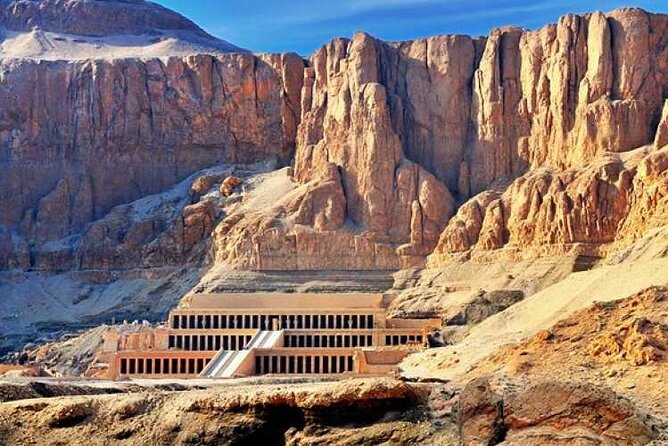
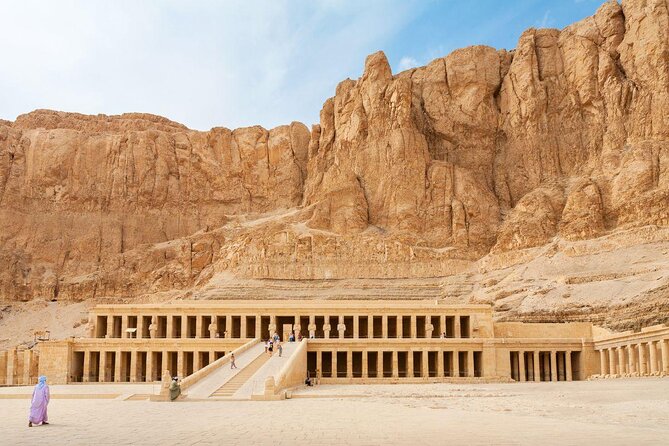
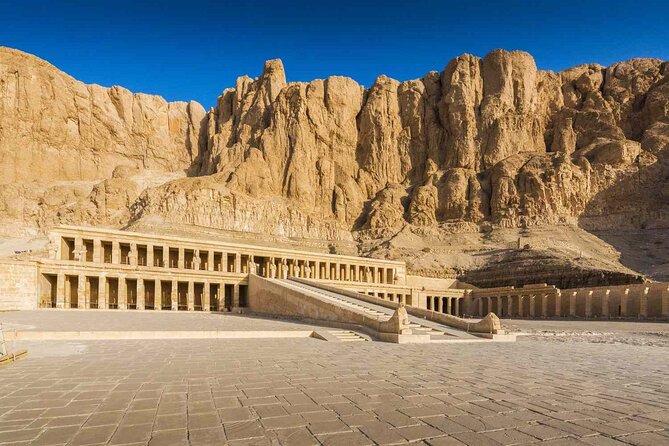
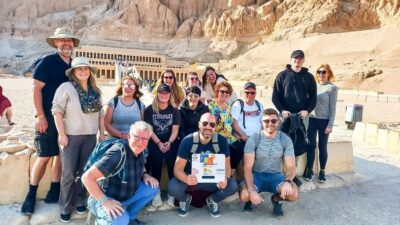
Next comes Temple of Hatshepsut, also known as Deir el-Bahari, near the Valley of the Kings. The visit is about 1 hour 30 minutes, and admission is included.
This stop has a special kind of wow factor. You are not just looking at statues or columns. You are stepping into a setting that matches the idea of royal authority. Hatshepsut built and commissioned major work during her reign, and the temple reflects that message.
Here is the story hook that makes the site click: Hatshepsut, one of the few female pharaohs in ancient Egypt, often portrayed herself as a male pharaoh. She wore traditional male clothing and a false beard to solidify authority in a male-dominated society. After her death, Thutmose III tried to erase her legacy, which is part of why her story feels both triumphant and complicated.
When you pair that history with what you see at Deir el-Bahari, the temple becomes more than architecture. It turns into a political statement in stone.
A small consideration for your planning: because this is near the west bank tomb area, the day can feel like it keeps “stacking” sights back-to-back. If you get temple fatigue easily, you may want a slower photo pace here.
Karnak Temple: 2,000 years of building in one religious complex
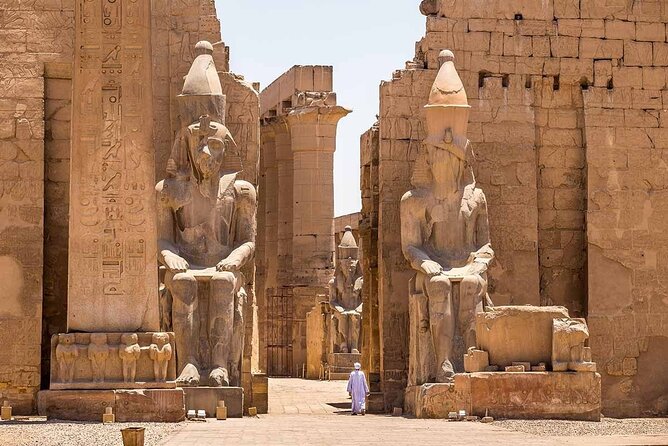
Then you head to Karnak Temple, one of Egypt’s most important religious complexes. The visit is about 2 hours, and admission is included.
Karnak is dedicated to the Theban triad: Amun-Ra, Mut, and Khonsu. One of the coolest facts here is that the complex was built and expanded over about 2,000 years, starting around the Middle Kingdom (near 2000 BCE) and continuing into the Ptolemaic period. That means you are seeing layers of intention from different rulers.
The scale helps explain why people rave about this place. Karnak covers roughly 200 acres (80 hectares), and it grew as pharaohs added their own contributions. Even if you are not a math person, that size is hard to picture until you are walking through it.
This stop also benefits a lot from having a guide who can explain what you are looking at, because there is a lot happening. The best days are the ones where someone points out the major elements and ties them together into a simple story: gods, kingship, and how religion shaped public life.
One more practical note: plan your energy. Karnak can be tiring just because it is so large. Build in small pauses, and you will enjoy it more.
Other Luxor options on the table
- Luxor Day Trip from Hurghada Small Group & Tutankhamun Tomb
★ 4.8 · 5,366 reviews - Hot Air Balloon Ride in Luxor Egypt with Transfers Included
★ 5.0 · 4,319 reviews - Luxor: Shared Full-Day Tour to Luxor West and East Banks
★ 4.5 · 1,812 reviews - Luxor: Hot Air Balloon Ride over Luxor Relics
★ 4.8 · 1,681 reviews
Colossi of Memnon: huge statues in a short, free stop
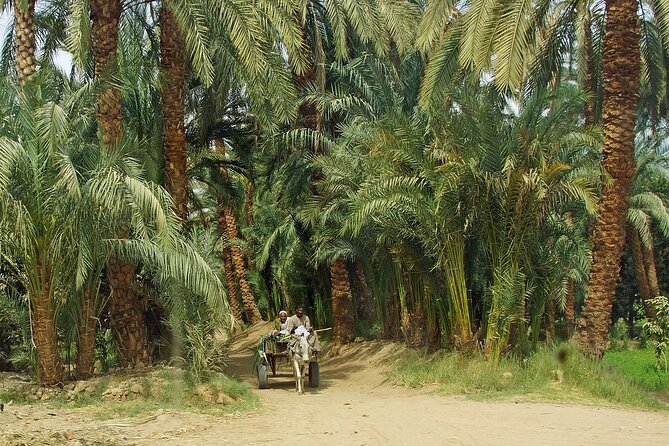
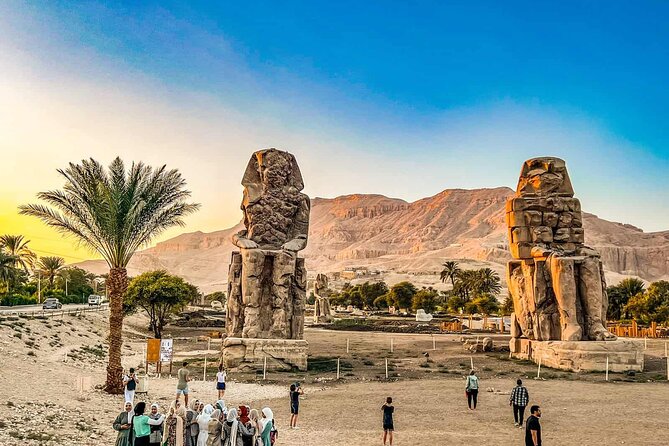
After Karnak, you will see the Colossi of Memnon. The visit is short, about 20 minutes, and admission is free.
These are two massive stone statues that once guarded the entrance to the mortuary temple of Amenhotep III. Even in a quick stop, the scale lands. You feel how imposing royal monuments were, and you can imagine the original approach to the site.
In a day this packed, the Colossi feel like a palate cleanser. They are not a long maze. They are two big visual anchors, and they let you reset before heading to Luxor Temple.
The main consideration is exactly the thing that makes it convenient: it is brief. If you want more time for photos, you might have to be efficient with your shots.
Luxor Temple on the east bank: a site used again and again
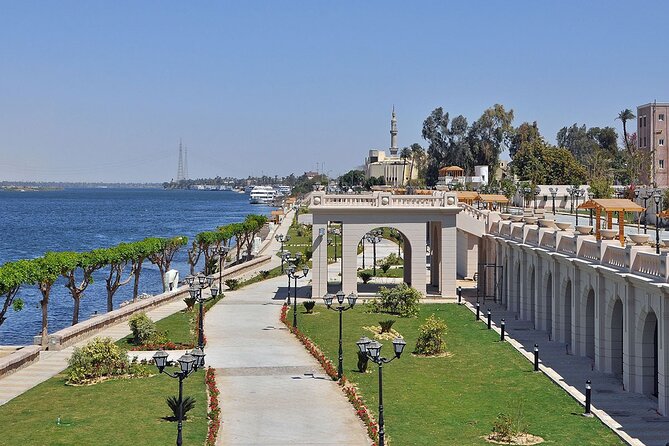
You finish with Luxor Temple, on the east bank of the Nile in the middle of modern Luxor. The visit is about 1 hour, and admission is included.
This temple is memorable because it is not stuck in one era. It was used and modified across Greek, Roman, Christian, and Islamic periods. That continuous occupation is one reason Luxor feels alive, not like a museum that froze in time.
If you like connecting the ancient and modern worlds, Luxor Temple helps. You can look at the ancient structure while also understanding why later cultures would have found value in the same sacred ground.
One practical suggestion: keep your last hour focused. It is easy to start chatting too much in the final stretch, then realize you missed what you came for. If you pace your attention, this ending stop gives you a satisfying sense of closure.
How the tour runs: transport, guide style, and pacing
The logistics are built for comfort. You get air-conditioned vehicle transport and private transportation, plus pickup is offered. The meeting point is the Sofitel Winter Palace Luxor, 17 Cornish El Nile Street, Luxor City.
You also get lunch and bottled water included, which matters in Luxor heat. Even if the day is not extreme for everyone, the included food and water help you avoid the common mistake of spending time hunting for a meal between sites.
The guide is an English Egyptologist, which is a big deal for a day like this. When the explanations are grounded in archaeology and language, the sites stop being disconnected postcards.
A pattern in the feedback is that guides such as Mo, Abdul, Mahmoud, and Don Coleone are praised for being patient, answering questions, and taking the time to let you explore and take pictures. That is exactly what you want in a multi-stop itinerary, because it is the difference between rushing and actually understanding what you see.
If you prefer another language, there is an added option listed for French, Spanish, and German, with a 15 Euro extra fee. The tour also notes a mobile ticket.
Price and value: what $18 really covers
At $18.00 per person, this tour is one of those deals that feels almost too simple. The key reason is what is included.
You are not just paying for transport and a guide. The price includes:
- Lunch
- Bottled water
- Air-conditioned vehicle and private transport
- English Egyptologist tour guide
- Entry fees for the Valley of the Kings, Hatshepsut, Karnak, and Luxor Temple
If you add up the cost of major site admissions in Egypt on your own, this starts to look like a strong bargain. In other words, you are paying for a structured day, not just a driver.
There is also a value angle in the route itself. By covering both the west bank and east bank in one day, you reduce the need for extra transfers and separate tours that can multiply cost.
The only caution on value is the tradeoff. Because the day is packed, the visit times per site are not huge. If you love one specific type of site, you might do better booking a longer, single-theme day. But for a first Luxor day, this is a very efficient way to get grounded.
Who should book this tour, and who might skip it
This is a great fit if:
- You are visiting Luxor for the first time and want the biggest hits
- You like context, not just sightseeing photos
- You want private group pacing with an English Egyptologist
- You prefer a plan that handles entry fees for several major sites
It may be less ideal if:
- You want lots of time in only one tomb or one temple complex
- You hate a busy schedule and prefer slow wandering over structured stops
- You are sensitive to long days, since it runs about 6 to 8 hours
Final call: book it or not?
I would book this if you want one full day that hits the main Luxor essentials without extra planning stress. The value is the biggest selling point, especially because major entry fees, lunch, water, and transport are wrapped into the price.
If you are the type who studies every doorway and inscription, then you may wish you had more time. But if you want a smart introduction and a clean storyline from the west bank to the east bank, this route makes it easy.
FAQ
What is the tour duration?
The full day tour runs about 6 to 8 hours.
Is pickup included?
Pickup is offered. If you do not use pickup, the meeting point is the Sofitel Winter Palace Luxor on Cornish El Nile Street.
Are admission tickets included?
Yes. Admission fees are included for the Valley of the Kings, Hatshepsut Temple, Karnak Temple, and Luxor Temple. The Colossi of Memnon stop is free.
What is included with the tour besides the guide?
The tour includes lunch, bottled water, an air-conditioned vehicle, private transportation, an English Egyptologist tour guide, and entry fees for the listed temples.
Do I need an extra fee for other languages?
The tour is described with an English Egyptologist guide, and there is an optional 15 Euro extra fee if you choose French, Spanish, or German.
Is this tour private?
Yes. It is listed as a private tour/activity, so only your group participates.
Newly added near Luxor
- Full-Day Private Guided Tour in the West Bank of Luxor★ 5.0 · 22 reviews
- Amazing 3 nights Nile cruise includes tours from Luxor to Aswan★ 5.0 · 57 reviews
- Hot Air Balloon Flight in Luxor with Pickup★ 4.5 · 14 reviews
- Private transfer from Luxor to Hurghada★ 5.0 · 43 reviews
- Quad Bike safari Experience in Luxor★ 4.5 · 62 reviews
- Private 2 Day Luxor Tour★ 5.0 · 71 reviews
- Private Tour in Luxor Egypt included entrance fees★ 5.0 · 11 reviews
- Private Transfer From Luxor to Marsa Alam★ 5.0 · 28 reviews
Valley of the Kings & West Bank Tours, compared.
Luxor Valley of the Kings & Tutankhamun Tomb Trip
Read our review →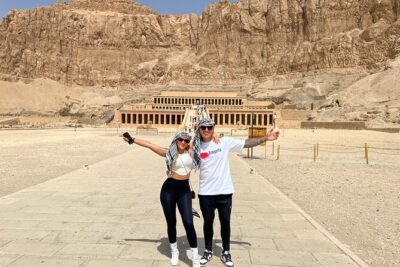
Small group Hurghada to Luxor, Valley of the Kings by Van
Read our review →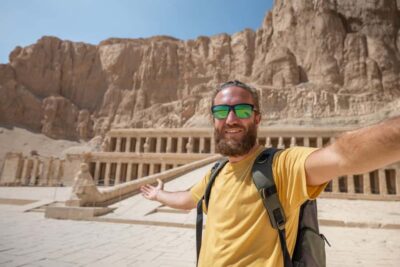
Valley of the Kings and Hatshepsut Temple Day Tour
Read our review →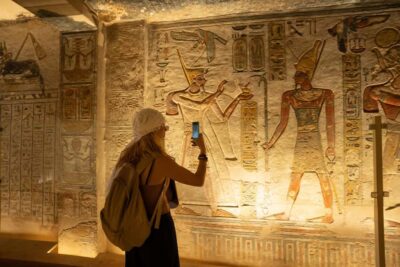
Luxor Tour with Valley of Kings, Karnak & Tut Tomb
Read our review →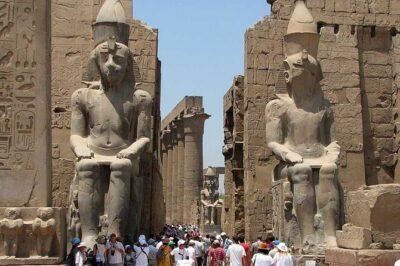
Valley of Kings, Hatchepsut Temple ,Karnak & Luxor-DayTour
Read our review →
Full Day Tour of Luxor West Bank Temples and Tombs (Private)
Read our review →
Small Group Excursion to Luxor Valley of the Kings from Hurghada
Read our review →Browse the lists this tour appears in