
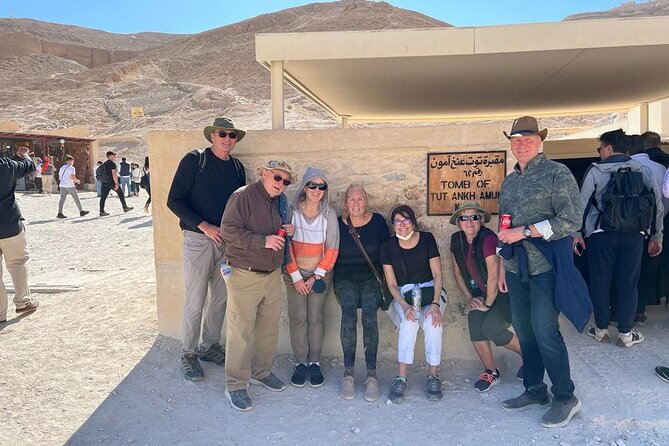
Reviewed · LUXOR DAY TRIPS FROM THE RED SEA
Guided tour to Luxor From Cairo by plane visiting the Tut Tomb
Luxor in a single day works if the plan is tight. This guided trip turns a long journey into a smooth, flight-first day, then layers in the big names like the Valley of the Kings and the Tomb of Tut. I really like how much you fit in without feeling rushed, plus the Egyptologist adds the stories that make the ruins make sense fast. One thing to consider is timing, the day can run long (about 8 to 10 hours), and the flight schedule depends on your reservation day.
A key plus is door-to-door logistics. You start with hotel pickup, get taken to Cairo airport in an A/C car, fly to Luxor, and meet your guide and driver right at the terminal gate. Then you spend the daylight doing classic west-bank and east-bank sites with admission included for each stop, including Tut if that option is selected.
My only caution is about value math. The tour price is $172 per person, but the domestic flight is dependent on the option you choose, and extra flight charges can apply in high season or if you book very close to departure. If you’re flexible and you plan early, it usually feels like a smart shortcut.
In This Review
- Key points I’d plan around
- Flying Cairo to Luxor in one day, and why it feels different
- Cairo airport pickup, meeting your guide, then landing in Luxor
- Valley of the Kings, carving secrets in the cliffs
- Tomb of King Tutankhamun, the story behind the curse
- Deir el Bahari and Hatshepsut’s power move
- Colossi of Memnon, reading what’s left of Amenhotep III
- Temple of Medinat Habu, Ramses III and the colored story
- Karnak Temple on the East Bank, Amun, Mut, Khonsu, and Sekhmet
- Time management in 8 to 10 hours, what to expect
- Price and value: what $172 per person really covers
- Who this Luxor from Cairo day trip suits best
- Booking decision: should you choose this tour
- FAQ
- Is hotel pickup and drop-off included?
- Are domestic flights from Cairo to Luxor included?
- What is the tour duration?
- Which sites are included in the day?
- Is this a private tour?
- Is there time to eat during the day?
- What happens if the weather is bad?
Key points I’d plan around
- Flight-first schedule that saves you serious Cairo to Luxor travel time
- Egyptologist-led explanations that connect the sites instead of listing facts
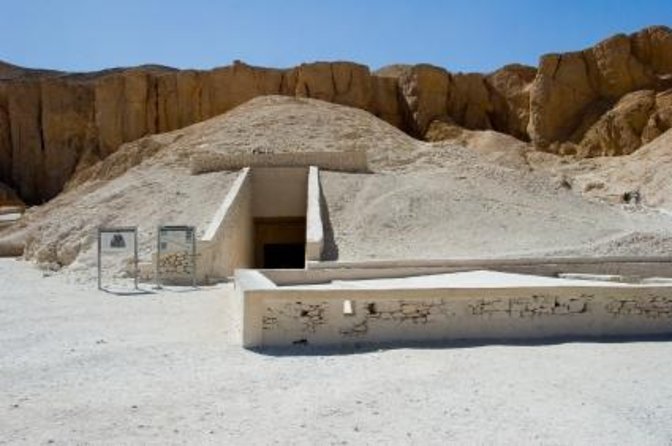
- Tutankhamun tomb included (if selected), with context on the famous curse story
- West bank highlights like Deir el Bahari and Colossi of Memnon
- Karnak Temple time plus an optional look at the goddess Sekhmet statue in a private room
- Private format where it’s just your group, not a mixed crowd
Flying Cairo to Luxor in one day, and why it feels different
This is the kind of Luxor day trip that works because it reduces the slow parts. Instead of eating up your time on trains or long drives, you go by plane and start sightseeing with daylight.
The result is a trip that feels focused. You’re not trying to “get everything” in Egypt. You’re hitting the core Luxor storyline, from royal burials in the Valley of the Kings to the grand temple complexes on the east bank, in one organized sweep.
The “door to door” piece matters too. Hotel pickup and drop-off removes the stress of finding the right transport in Cairo, and it also reduces the risk of being late to a flight. For a day trip, that can be the difference between enjoying your day and spending it in airport anxiety.
More day trips out of Cairo:
- From Cairo: Pyramids of Giza, Sphinx, Saqqara & Memphis Tour
★ 4.7 · 3,110 reviews - From Cairo Alexandria Catacombs, Citadel Day Trip with Lunch
★ 4.6 · 1,312 reviews - From Cairo: Desert Safari, Camel Ride, Magic Lake, & Lunch
★ 4.9 · 1,273 reviews
Cairo airport pickup, meeting your guide, then landing in Luxor
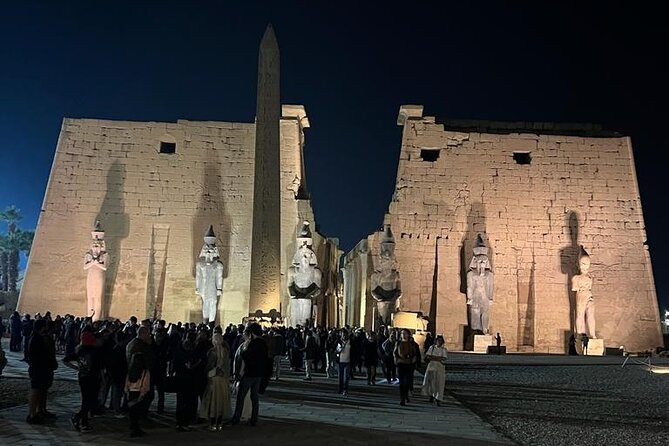
Your day starts with a pick-up by A/C car to Cairo airport. From there, you fly to Luxor, and the setup is designed so you do not wander around alone. When you land, your guide and driver are waiting at the Luxor terminal gate.
Once you’re with your Egyptologist, you get a short orientation about life in the south of Egypt and the Arab community in the region. It sounds simple, but it changes your mindset. You see the monuments as part of a living culture, not just an archaeological checklist.
Timing note: the quoted domestic flight window typically starts from Cairo around 5 AM, with the return flight around 6 PM or 9 PM. Your exact flight plan can shift based on your reservation day, so I’d treat the day like a set route, not something you can freely rearrange at the last minute.
Valley of the Kings, carving secrets in the cliffs
Most Luxor days start strong, but the Valley of the Kings has a special kind of atmosphere. You’re touring in the place where the royal idea of afterlife became architecture cut into the mountain.
What I like about this stop is the way it gets explained beyond what you see. The approach road is part of the experience. Your guide points out the hidden carving work on top of the mountains, and you get a sense that exploration is still going on. Archaeological expeditions continue searching for tombs not yet discovered.
You also get the practical side of preservation. Opening times can vary month to month to protect the tombs from visitor pressure. That’s a detail that helps you understand why access can feel different depending on when you go.
Plan for about 2 hours here, with admission included. This is enough time to see the valley’s scale, visit the relevant tomb entrances, and still keep your head clear for the big moment next.
Tomb of King Tutankhamun, the story behind the curse
The Tomb of King Tutankhamun is the one most people come for, and it’s included if you pick the option that has Tut’s admission.
Tut is often described as a young king, ruling Egypt for nearly 10 years, around 1336 to 1327 BC. The modern fairy-tale origin story begins in November 1922, when Howard Carter and Lord Carnarvon discovered Tutankhamun’s near-intact tomb. The mummy of the young pharaoh was found and displayed inside the tomb.
But what makes this stop worth your time is the tone set by your guide. You’re not only seeing the fame. You’re also learning the truth behind the Curse of the Pharaohs story that became attached to Tut’s tomb over time.
That balance matters. The curse tale is sensational, but history is more interesting when it’s explained in a grounded way. You get to enjoy the legend as a cultural idea while still understanding the real narrative around the discovery.
This stop runs about 1 hour with admission included.
More Luxor days from the coast:
- Day Trip To Luxor From Cairo By Plane
★ 4.5 · 393 reviews - Day Trip to Luxor From Cairo By Flight, King Tut Tomb Included
★ 4.5 · 270 reviews - Private Day from Cairo to Luxor by plane with hotel,balloon,west,east and lunch
★ 4.5 · 199 reviews - From Cairo: 4-Day Nile Cruise to Luxor with Balloon Flight
★ 4.2 · 112 reviews
Deir el Bahari and Hatshepsut’s power move
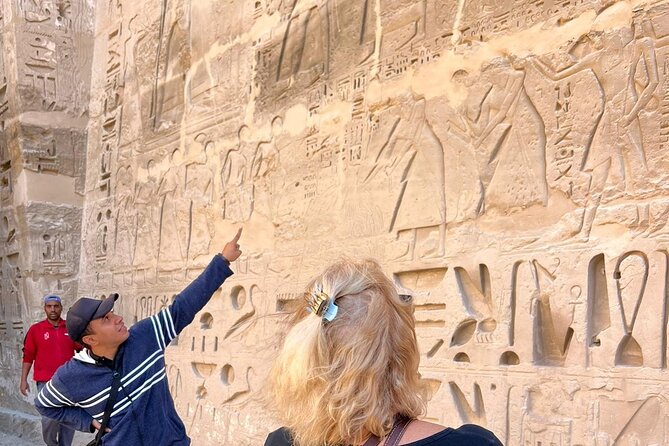
Next you head to the Temple of Queen Hatshepsut at Deir el Bahari. This is one of those Luxor stops where the architecture and the political story fit together.
Hatshepsut was known as the Iron Woman, and she’s remembered as the first Egyptian queen to take the throne for more than 20 years. Her reign changes how you interpret the statues and reliefs here. Even her presentation shifts: she is depicted with male features, including a beard, and dressed in men’s clothes. It’s a visual strategy meant to control how authority is understood.
You’ll spend about 1 hour at Deir el Bahari, with admission included. This is a good segment of the day because the temple is built to be read step by step. You can slow down for a moment, notice the forms, then let your guide connect it to the story of rule, legitimacy, and propaganda.
If you like Egypt best when it’s political and human, you’ll find this stop hits.
Colossi of Memnon, reading what’s left of Amenhotep III
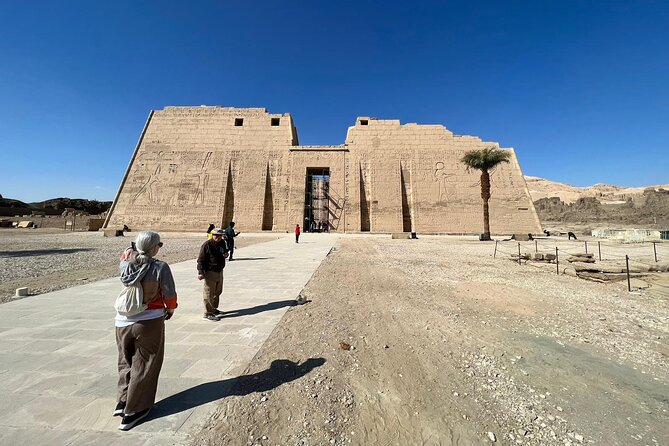
From Deir el Bahari you continue to the Colossi of Memnon. These massive statues are the surviving pieces of the mortuary temple of Amenhotep III.
What you’re looking at is not a “small photo stop.” The scale can trick you. Even though there are only a couple of standing statues, you get a sense of what kind of effort and ambition went into the original temple complex. Your guide helps you place it in the larger sequence of Luxor’s royal building projects.
This stop is about 1 hour with admission included. I recommend using part of that time to look at the statues from a few angles. Even without inventing meaning, the posture, proportions, and placement tell you this wasn’t just decoration. It was part of a system of memory meant to last.
Temple of Medinat Habu, Ramses III and the colored story
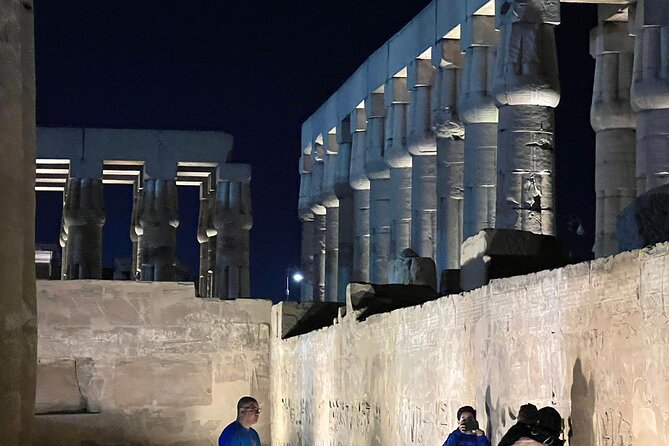
Then the day heads to the Temple of Medinat Habu, also associated with Madinat Habu. This is framed as one of Luxor’s most beautiful temples, and the description you get from your guide focuses on details that are easy to miss if you’re rushing.
King Ramses III is central here. The inscriptions and time markers are still visually stimulating in color. You also get the sense that the temple carried forward stories of Egyptian battles, and that the art here was finished with color.
There’s also a fascinating nearby detail. The tour notes mention a Gold City, a small underground village where workers made gold in ancient Egypt. Even if you don’t see every part of it, knowing the idea changes how you view the temple area. It’s not only sacred space. It also connects to labor, craft, and empire.
Plan about 1 hour here, with admission included.
Karnak Temple on the East Bank, Amun, Mut, Khonsu, and Sekhmet
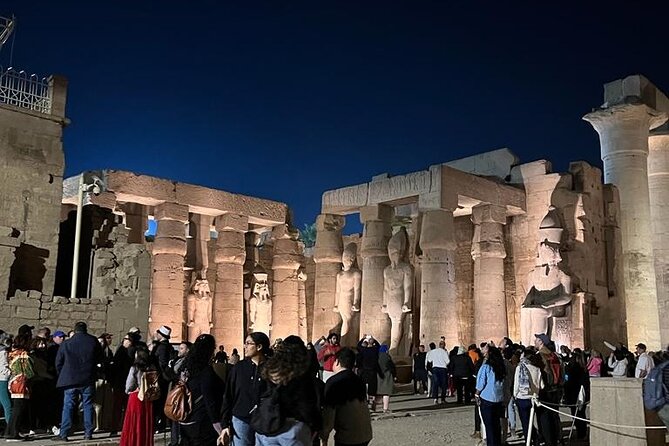
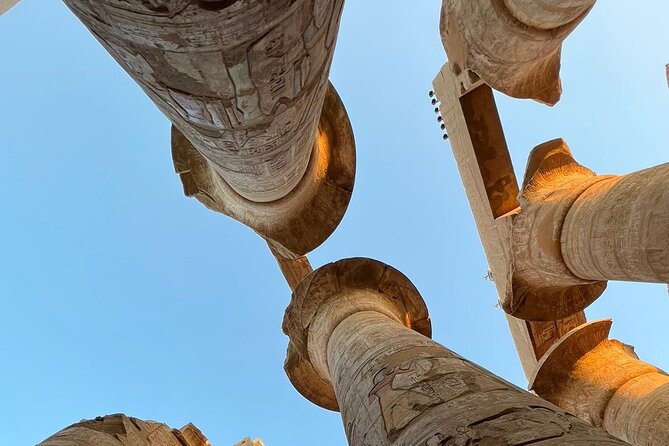
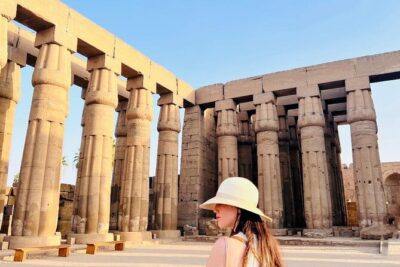
Your final major stop is Karnak Temple on the east bank. This is where Luxor turns grand, dedicated to the god Amun, along with his wife Mut and their son Khonsu.
Karnak can feel endless, which is why the timing matters. You get time to eat or take a coffee during the day before or during this segment, and that pause helps you enjoy the temples instead of just surviving them.
One practical detail you might care about: there is an opportunity to see the famous statue of the goddess Sekhmet in her private room in Karnak. If you have interest in that kind of access, ask your guide about it early in the day so you know whether it fits your schedule.
This Karnak segment is around 3 hours with admission included. That’s a good chunk because it gives room for both the big halls and the smaller moments your guide can point out.
Time management in 8 to 10 hours, what to expect
A day like this runs on planning. You’re moving between the west bank highlights and the east bank temples with guided timing designed to keep admissions smooth and your energy decent.
Because it’s a private tour with only your group, your pace is less chaotic than big group bus tours. That said, you should still expect some waiting for transport and ticket checks. The schedule is fixed around flight timing, so you cannot treat it like an all-day wandering day.
Also note the included structure. You get a guide, private transportation, and domestic flights if selected. Tickets for the temples and tombs are included, with Tomb of King Tutankhamun included if that option is chosen.
For the practical part, wear comfortable shoes and plan for sun. Even in a shorter window, you’ll cover real ground and stand for parts of each site.
Price and value: what $172 per person really covers
At $172 per person, the tour isn’t just paying for sightseeing. You’re paying for coordination that would be annoying to DIY:
- Hotel pickup and drop-off that helps you start and end the day without stress
- Egyptologist guide for every major site, so you’re not stuck translating on your own
- Private transportation between sites
- Domestic flights Cairo to Luxor if your selected option includes them
- Admission tickets to the temples and tombs, including Tut if selected
The value gets stronger if you specifically want Tut and a full Luxor circuit, because entry fees and the cost of organizing flights add up fast. The one area where value can shift is flight pricing. High seasons and last minute bookings can push domestic flight ticket costs higher, and extra charges may apply.
A smart move: book early if you can. The average booking pattern shows people often reserve about 82 days ahead, which usually means they are locking in better timing and reducing the odds of last-minute flight pricing surprises.
Who this Luxor from Cairo day trip suits best
This is a strong fit if you:
- Have limited time and want Luxor without spending a night there
- Want Tutankhamun plus the main west bank and east bank highlights in one organized day
- Prefer an Egyptologist explanation, especially for the stories around Tut’s tomb and Hatshepsut’s presentation
- Appreciate door-to-door logistics, especially when flights are involved
If you’re the type who likes slow museum-style pacing with breaks every hour, you may find the day full. But if you’re realistic about what a one-day Luxor sprint can do, this format is built for you.
Booking decision: should you choose this tour
I’d book it if you want the Luxor classics with structure, and you are ready to accept a full-day pace driven by flight timing. The combo of flight-first scheduling, included admissions, and Egyptologist guidance is exactly what makes this style of day trip work.
I would pause and double-check your plan if:
- Your dates fall in a high season or you’re booking very close to departure, because flight costs can create extra charges
- You’re hoping for lots of unscheduled free time, because the day is built around fixed site order and flight windows
- You did not select the option that includes Tut’s admission, because Tut’s tomb entry is tied to that choice
If you want a practical Luxor day that gets you to the big moments fast, this is the kind of organized day that actually feels worth it.
FAQ
Is hotel pickup and drop-off included?
Yes. You’ll get hotel pickup and drop-off as part of the tour.
Are domestic flights from Cairo to Luxor included?
Domestic flights Cairo to Luxor are included only if you select that option. Flight timing is quoted as roughly 5 AM departure from Cairo, with the return around 6 PM or 9 PM, depending on your reservation day.
What is the tour duration?
It runs about 8 to 10 hours.
Which sites are included in the day?
The major stops are the Valley of the Kings, the Tomb of King Tutankhamun (if that option is selected), the Temple of Hatshepsut at Deir el Bahari, the Colossi of Memnon, the Temple of Medinat Habu, and Karnak Temple on the East Bank.
Is this a private tour?
Yes. It’s private, meaning only your group participates.
Is there time to eat during the day?
Yes. The schedule includes time to eat or take a coffee during the day tour before continuing to Karnak.
What happens if the weather is bad?
This experience requires good weather. If it’s canceled due to poor weather, you’ll be offered a different date or a full refund.
Newly added near Cairo
- Full Day Trip from Cairo to Luxor★ 5.0 · 16 reviews
- Private half Day Tour to the Great 3 Pyramids of Egypt★ 5.0 · 15 reviews
- Private Guided Day Tour to Luxor from Cairo by Plane★ 4.5 · 11 reviews
- Private guide’s trip to Giza pyramids, Great sphinx valley temple★ 5.0 · 37 reviews
- Explore Pyramids & Great Egyptian Museum(gym)★ 5.0 · 12 reviews
- White desert camping and Baharya oasis overnight from Cairo★ 4.5 · 12 reviews
- Full-Day Private Tour to Giza Pyramids, Sphinx, Memphis & Saqqara★ 5.0 · 106 reviews
- Unique Tour to The Grand Egyptian Museum and 12 main galleries★ 4.0 · 38 reviews
Luxor Day Trips from the Red Sea, compared.
4-Days Nile Cruise From Aswan To Luxor including Abu Simbel and Hot Air Balloon
Read our review →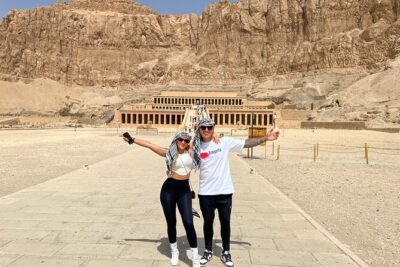
Small group Hurghada to Luxor, Valley of the Kings by Van
Read our review →
4-Day 3-Night Nile Cruise from Aswan to Luxor&Abu Simbel+Balloon
Read our review →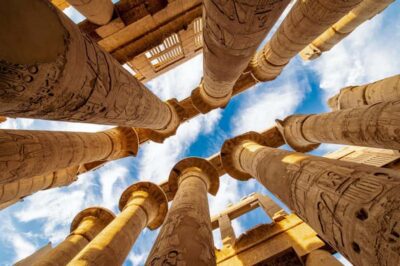
Shared Full-Day Tour to Luxor West and East Banks
Read our review →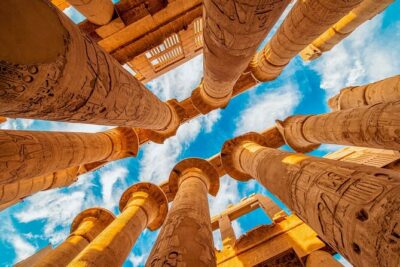
Full Day Tour to Luxor West and East Banks & Lunch
Read our review →
Small Group Excursion to Luxor Valley of the Kings from Hurghada
Read our review →
4-Day 3-Night Nile Cruise from Aswan to Luxor including Abu Simbel, Air Balloon
Read our review →
Browse the lists this tour appears in