
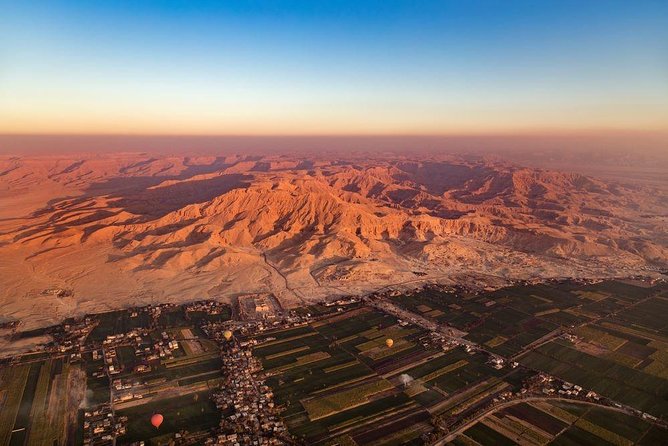
Reviewed · VALLEY OF THE KINGS & WEST BANK TOURS
Half Day Tour: Valley of the Kings and Hatshepsut Temple & Mamnon
Ancient tombs, grand terraces, huge statues. That mix is why this half day West Bank loop feels so satisfying, you hit Valley of the Kings tombs plus Queen Hatshepsut’s funerary temple, then finish at the monumental Colossi of Memnon. What I like most is the pace, you cover the big sights in one go, and the format, you get a private English-speaking Egyptologist guide with entrance fees included. The main thing to consider is that the itinerary skips the Tomb of Tutankhamun, so if that is your only target, you may want a different option.
You’ll also see how much the guide matters here. The strongest feedback I found highlights expert storytelling from guides like Hany and even a smooth tweak of the order to help with crowds, credited to Mohamed Awad. If you’re someone who just wants photos and not much explanation, you might feel the value depends on the Egyptologist in your group.
In This Review
- Key things to know before you go
- West Bank in one half day: what this tour is really good at
- Valley of the Kings tombs: a smart three-tomb approach
- Queen Hatshepsut at Deir el-Bahari: why the temple hits
- Mortuary Temple details: what to notice as you walk
- Colossi of Memnon: your quick ending that feels huge
- Private guide value: how the best tours make history stick
- Price and value in Luxor: is this deal too good?
- What’s included, what’s not, and what to plan for
- Who should book this West Bank half day, and who should skip it
- Tips to make the day feel smooth, not rushed
- Should you book Valley of the Kings, Hatshepsut, and Memnon?
- FAQ
- How long is the Valley of the Kings and Hatshepsut plus Colossi of Memnon tour?
- Does the tour include hotel pickup and drop-off in Luxor?
- What sites are included in the itinerary?
- Are entrance fees included?
- Does the tour include the Tomb of Tutankhamun?
- What is the cancellation policy?
Key things to know before you go
- Hotel pickup and private vehicle: Air-conditioned transfers with bottled water, which saves time in Luxor traffic.
- A focused tomb plan: You visit three Valley of the Kings tombs, with the Tomb of Tutankhamun left out.
- Hatshepsut’s temple is the star: Deir el-Bahari, built for Egypt’s most famous ruling queen, with architecture that still feels bold.
- Short stop, big impact: Colossi of Memnon are quick, but they are massive enough to stop you in your tracks.
- Tickets and entrances included: Entrance fees for the listed sites are part of the package, depending on the option you choose.
- Private tour setup: It’s for your group only, even though group discounts may be listed by the operator.
West Bank in one half day: what this tour is really good at
This tour is built for travelers who want the West Bank highlights without spending a full day zigzagging between sites. It runs about 4 to 6 hours, and you get round-trip hotel pickup in Luxor. That matters because on the West Bank, timing and heat can turn a “quick visit” into a long slog.
I like the way the route groups the experience. You start underground with the royal tombs at the Valley of the Kings, then shift to daylight and terraces at Hatshepsut’s mortuary temple, then end with towering stone statues that act like a boundary marker between eras. Even if you only know Egypt’s highlights from postcards, you’ll leave with a clearer picture of how the ancient Egyptians handled burial, worship, and power.
The other big value: you’re not doing this as a DIY puzzle. The tour includes a private English-speaking Egyptologist guide plus entrance fees, so you’re paying for interpretation, not just access. If you’ve ever tried to coordinate tomb tickets and timing on your own, you’ll appreciate that structure.
More West Bank and Valley of the Kings visits:
- Hurghada: Luxor Valley of the Kings & Tutankhamun Tomb Trip
★ 4.7 · 13,208 reviews - Luxor: Valley of the Kings and Hatshepsut Temple Day Tour
★ 4.4 · 1,404 reviews - Hurghada: Luxor Tour with Valley of Kings, Karnak & Tut Tomb
★ 4.6 · 1,082 reviews
Valley of the Kings tombs: a smart three-tomb approach
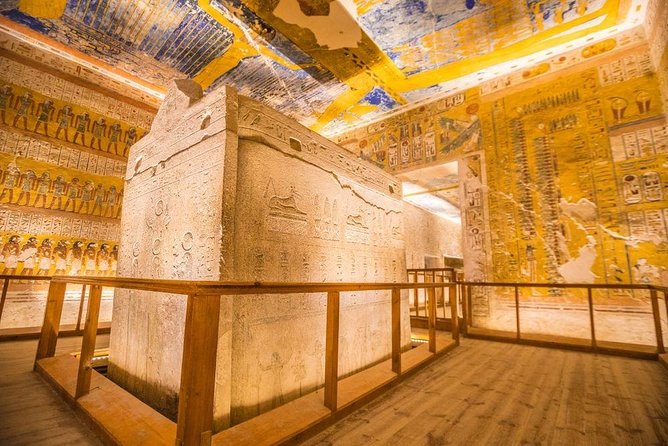
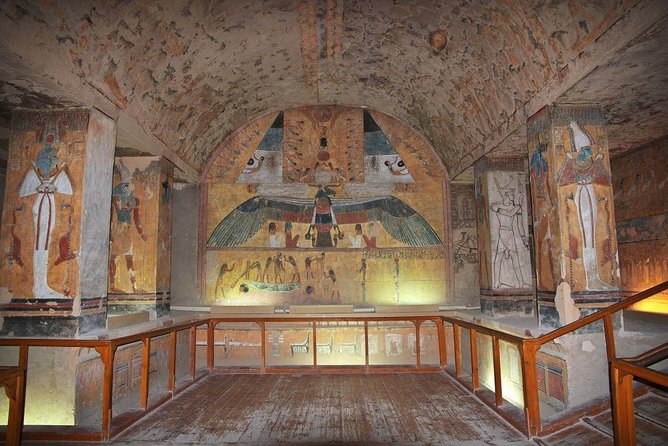
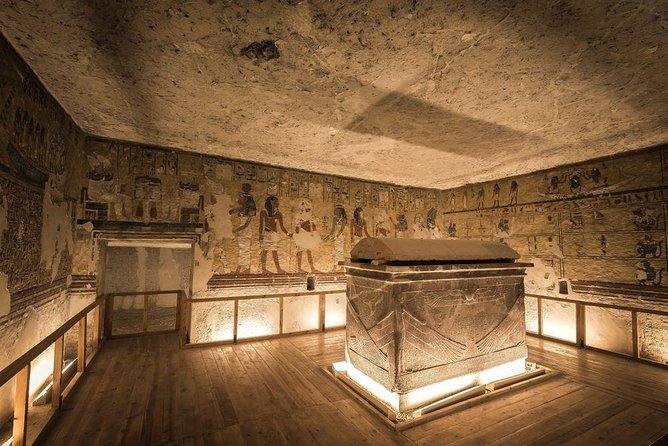
The first stop is the Valley of the Kings, where you’ll learn how royal burials were protected by location and design. The tour includes visits to three tombs. Importantly, it says these tombs are taken without the Tomb of King Tutankhamun, which is a deal breaker only if Tut is your must-see.
The benefit of choosing three tombs is that you get variety without getting exhausted. Tomb interiors tend to run dim, and you’re reading a lot of carved scenes and symbolism. With only one or two tomb stops, you might miss the pattern of what changes across reigns and burial choices. With too many tombs, you risk fatigue and repeating the same visual themes without extra understanding. Three is a good middle ground.
If you care about names and context, this is where an Egyptologist earns their keep. The difference between seeing carvings as decoration and seeing them as burial messages is huge. This tour’s setup, private guide plus a tight route, is made for that kind of learning.
One practical note: tombs can be visually intense. You’ll want comfortable shoes, and you may want to pace yourself inside so the later stops still feel enjoyable instead of rushed.
Queen Hatshepsut at Deir el-Bahari: why the temple hits
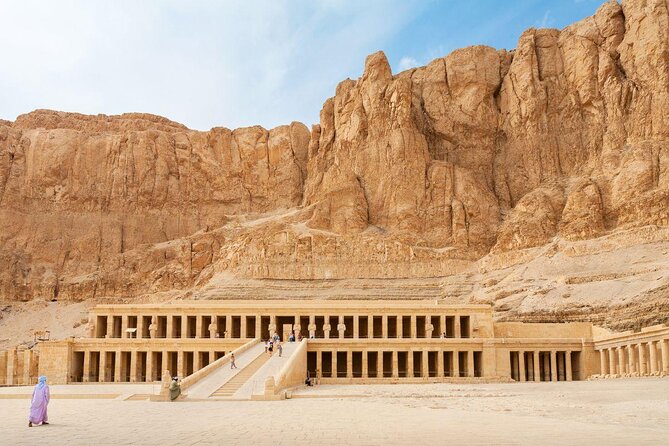
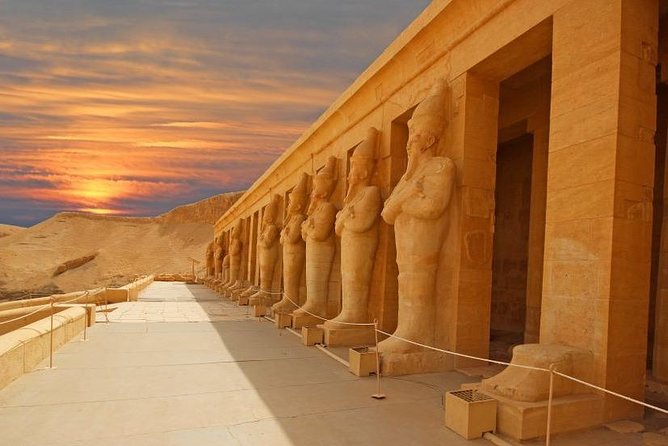
After the Valley of the Kings, you move to the Temple of Queen Hatshepsut, also known as Deir el-Bahari. This is the stop that often feels like the emotional center of the tour because the architecture turns worship into drama. You’re not just walking through rooms, you’re moving through a designed landscape of terraces and columns.
The guide story here usually focuses on Hatshepsut herself, a ruler of the 18th Dynasty, whose reign is often placed around the late 15th century BCE. The tour description also frames her as the only ruling pharaoh among women in the standard lineup most visitors know. That makes sense as a hook, because once you see her temple, it’s hard to treat her as a footnote.
Another reason this temple stands out is the design intent. It was built as a funerary temple, and the tour credits Senenmut as the designer. When someone explains how a funerary space was meant to connect kingship, religion, and the journey after death, the temple starts making more sense, even if you’re not a hieroglyph expert.
Timing can matter too. One standout piece of feedback credited a guide, Mohamed Awad, with adjusting the order so the Hatshepsut visit happened first, before bigger crowds settled in. Even if you don’t get an exact same timing tweak, the idea is smart: earlier time can mean quieter photos and a more calm pace to take in the terraces.
Expect a slower, more “look closely” stop compared to the tombs. This is where you’ll benefit most from pausing, taking in the layout, and letting the shapes and scale sink in.
Mortuary Temple details: what to notice as you walk
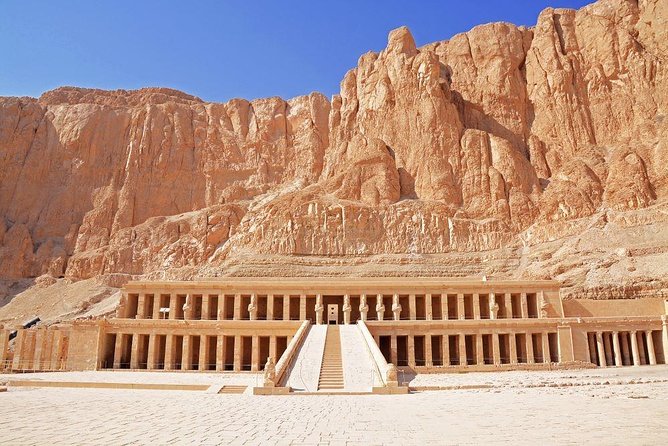
At Hatshepsut’s temple, I like to think of your visit in two layers. First, you’re viewing a monument to one person. Second, you’re seeing how Egypt used architectural theater to express authority.
As you explore, focus on how the temple’s terraces guide your eye upward. Then look at the overall geometry: the temple is built to be seen as a whole, not as scattered ruins. That’s why many people find it more satisfying than simply hopping from wall to wall. It’s also why an Egyptologist guide can genuinely change your experience. The better guides help you read what you’re seeing, like what the design is trying to communicate and why the placement matters.
If you’re visiting in hot weather, plan on hydration breaks. Water is included on the vehicle, but you’ll still want to pace yourself once you’re outside. The tour includes time for the temple visit, about two hours, which is enough to do it at a humane pace without feeling like you’re sprinting.
Other Luxor options on the table
- Luxor Day Trip from Hurghada Small Group & Tutankhamun Tomb
★ 4.8 · 5,366 reviews - Hot Air Balloon Ride in Luxor Egypt with Transfers Included
★ 5.0 · 4,319 reviews - Luxor: Shared Full-Day Tour to Luxor West and East Banks
★ 4.5 · 1,812 reviews - Luxor: Hot Air Balloon Ride over Luxor Relics
★ 4.8 · 1,681 reviews
Colossi of Memnon: your quick ending that feels huge
The final stop is the Colossi of Memnon, two massive seated statues that are all that remains of a much larger mortuary temple complex built by Pharaoh Amenhotep III. The statues are about 18 meters tall and carved from single blocks of quartzite sandstone. Even if you don’t know who Amenhotep III was, the scale of these figures does the teaching for you.
This stop is short, around 20 minutes, and that’s exactly what it needs to be. You get a moment to take in the sheer size, and then you’re back on the move. It’s the kind of finish that gives closure, like a stone checkpoint marking you’re leaving the West Bank’s main temple corridor behind.
If you like quick photo moments, this is one. But I’d also encourage you to look beyond the “standing in front of the statue” shot. The statues were originally placed at the entrance of the temple complex and they were meant to guard the site and represent pharaoh’s authority. That perspective makes the statues feel less like scenery and more like a role in a religious story.
Private guide value: how the best tours make history stick
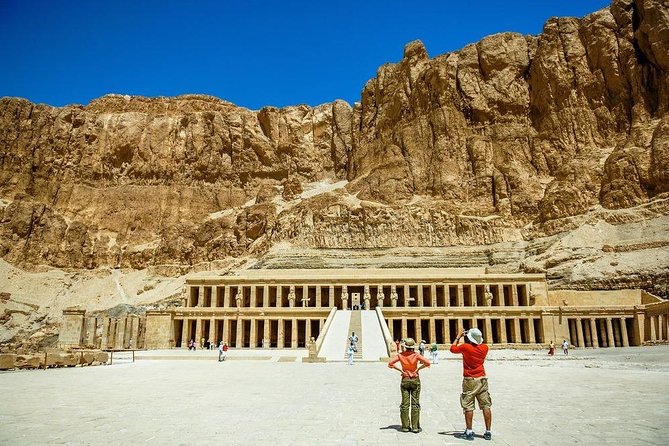
This tour includes a private English-speaking Egyptologist guide, and the difference shows fast. A guide can explain what you’re seeing in a way that makes it stick, especially in the Valley of the Kings tombs where the carvings can blur together.
The most praised feedback I saw highlighted guides who told stories in a way that made history feel alive. One person specifically called out Hany as an amazing expert who brought history to life with useful information. That kind of guide is great for two reasons. First, you get clarity. Second, you get context fast, so you’re not spending the whole day trying to figure out what matters.
There was also one less positive note in the mix, saying the guide did not match expectations. That’s a reminder for you to think about what you want. If you really want interpretation and explanation, choose your guide preference carefully if options are offered. If you mainly want access and simple commentary, you may still enjoy the sites, but the guide can shape how much you get out of the day.
Price and value in Luxor: is this deal too good?
The listed price is $9.00 per person, which is strikingly low for a tour that includes hotel pickup and entrance fees. On paper, it sounds like a bargain, especially because it also includes private transfers by air-conditioned vehicle and a private English-speaking Egyptologist guide.
That said, the tour data also includes a couple of possible add-ons. There is mention of a $15 extra if you choose a guide who speaks Spanish or French. Also, it notes that tickets may be included depending on the option you choose. So when you confirm, check exactly what’s covered for your date and what your selected ticket option includes.
If you want the simplest math, treat this as a value purchase when the package includes entrances and guide time you actually want. The worst value scenario is when you end up needing separate tickets or extra language upgrades to match your needs, or if your expectations are much higher than a half day can deliver. But if you’re flexible and focused on hitting key sites, this price point can be a very good deal.
In Luxor, time matters. A well-run half day can be cheaper than paying entrance fees separately and hiring a guide later. Add the convenience of bottled water and hotel pickup, and the value equation starts to look even better.
What’s included, what’s not, and what to plan for
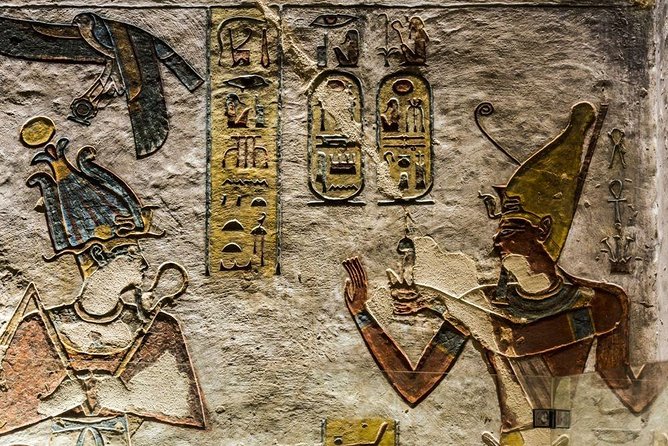
Included items are a big part of the peace of mind here. You get all transfers by private air-conditioned vehicle, bottled water on board, hotel pickup and return, a private English-speaking Egyptologist guide, and entrance fees to the mentioned sites.
Not included is tipping, plus the possible $15 extra for a guide speaking Spanish or French. It also says the tickets are included if you choose the option with tickets, which you should verify before you go.
For planning, I’d suggest you bring:
- Comfortable shoes for uneven paths and tomb steps
- Sunscreen and a hat for the outdoor temple and statue areas
- A light layer, because evenings in Egypt can shift cooler than midday
Also, pack a charging strategy. Your phone will do a lot of work in tomb lighting conditions and bright temple terraces. A small power bank can save stress.
Who should book this West Bank half day, and who should skip it
This tour is a strong fit for:
- First-time Luxor visitors who want the West Bank highlights in one outing
- Travelers who prefer guided context over guidebooks
- People who like a tight itinerary with minimal transit hassle, thanks to hotel pickup
It may be a weaker fit for:
- Anyone who specifically wants the Tomb of King Tutankhamun, since it’s excluded
- Travelers who hate crowds and have a very strict timing obsession, because half day schedules can still overlap with other tour groups even when your tour is private
If you’re traveling with kids or teens, this itinerary can work because it stays within a half day, but you’ll want your guide’s explanations to keep younger attention moving. If you’re a hardcore archaeology fan, you might still want a longer format, since three tombs can only show a slice of what’s possible in the valley.
Tips to make the day feel smooth, not rushed
A half day is short, so you win by being ready. Here are practical moves that align with how this itinerary runs.
First, keep expectations realistic about time inside tombs. Three tombs sounds quick, but inside you’re looking, reading, and absorbing. A guide helps you prioritize, but you still need a calm pace.
Second, take advantage of the temple’s structure. Don’t just wander. Use the terraces as your guide to how the temple was designed. If the order is flexible when you book, an earlier Hatshepsut timing can make the experience feel more relaxed, as suggested by prior scheduling tweaks credited to Mohamed Awad.
Third, save your best questions for the guide at the transition points. Asking questions while moving from tomb darkness to bright temple light often gets clearer answers, because the guide can point out specific design and symbolism you’re currently seeing.
Finally, plan your return energy. You’ll end at the Colossi, then transfer back to your hotel. If you schedule dinner immediately after, pick something close, so you don’t turn a good day into a tired day.
Should you book Valley of the Kings, Hatshepsut, and Memnon?
I’d say you should book this tour if you want a focused West Bank overview with entrance fees handled, private guide time, and an efficient route that covers the big emotional beats: tombs, a queen’s temple, and colossal statues.
You might skip it if Tutankhamun is your only priority, because the itinerary explicitly excludes the Tomb of King Tutankhamun. And if you are very sensitive to how a guide communicates, read your own comfort level into your expectations, because the experience clearly lives or dies with the Egyptologist’s storytelling.
If you’re deciding between doing it solo and doing it guided, I’d lean guided here. The West Bank can be confusing on the first visit, and a good Egyptologist guide turns carved stone into something you can actually follow. At this price point, when tickets and entrances align with your chosen option, it’s the kind of Luxor half day that gives you more understanding than just more photos.
FAQ
How long is the Valley of the Kings and Hatshepsut plus Colossi of Memnon tour?
The tour runs about 4 to 6 hours.
Does the tour include hotel pickup and drop-off in Luxor?
Yes. It includes pick up services from your hotel in Luxor and return transfers.
What sites are included in the itinerary?
You visit the Valley of the Kings, the Temple of Queen Hatshepsut (Deir el-Bahari), and the Colossi of Memnon.
Are entrance fees included?
Entrance fees to the mentioned sites are included, and tickets are included if you choose the option with tickets.
Does the tour include the Tomb of Tutankhamun?
No. The plan visits three tombs, excluding the Tomb of King Tutankhamun.
What is the cancellation policy?
You can cancel for free, with a full refund if you cancel at least 24 hours in advance of the experience start time. If you cancel less than 24 hours before, the amount paid is not refunded. The tour may also be rescheduled or refunded if canceled due to poor weather or if a minimum number of travelers is not met.
Newly added near Luxor
- Full-Day Private Guided Tour in the West Bank of Luxor★ 5.0 · 22 reviews
- Amazing 3 nights Nile cruise includes tours from Luxor to Aswan★ 5.0 · 57 reviews
- Hot Air Balloon Flight in Luxor with Pickup★ 4.5 · 14 reviews
- Private transfer from Luxor to Hurghada★ 5.0 · 43 reviews
- Quad Bike safari Experience in Luxor★ 4.5 · 62 reviews
- Private 2 Day Luxor Tour★ 5.0 · 71 reviews
- Private Tour in Luxor Egypt included entrance fees★ 5.0 · 11 reviews
- Private Transfer From Luxor to Marsa Alam★ 5.0 · 28 reviews
Valley of the Kings & West Bank Tours, compared.
Luxor Valley of the Kings & Tutankhamun Tomb Trip
Read our review →
Small group Hurghada to Luxor, Valley of the Kings by Van
Read our review →
Valley of the Kings and Hatshepsut Temple Day Tour
Read our review →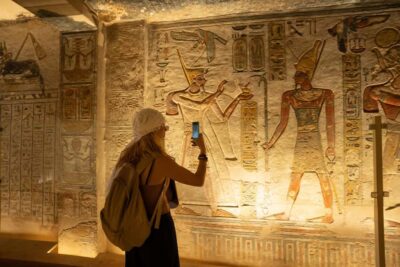
Luxor Tour with Valley of Kings, Karnak & Tut Tomb
Read our review →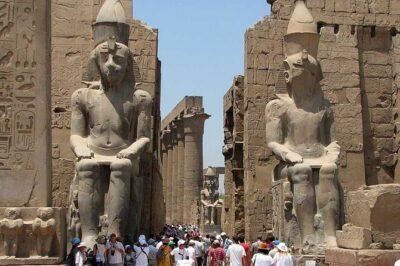
Valley of Kings, Hatchepsut Temple ,Karnak & Luxor-DayTour
Read our review →
Full Day Tour of Luxor West Bank Temples and Tombs (Private)
Read our review →
Small Group Excursion to Luxor Valley of the Kings from Hurghada
Read our review →Browse the lists this tour appears in