
Reviewed · LUXOR TOURS & ACTIVITIES
Luxor: East and/or West Banks Guided Tour with Lunch
Luxor feels like stepping into two different time zones. This East and West Banks guided tour strings together the big-hitters of royal life and afterlife, with time in Karnak, Luxor Temple, Valley of the Kings, Hatshepsut’s temple, and the Colossi of Memnon.
I like that you get a real guided frame for what you are seeing, not just a checklist. Two standouts for me are Karnak Temple (huge, impressive, and easier with a guide to explain it) and the Valley of the Kings tomb area, where specific royal burials like Ramesses III, Ramesses VI, and Mrenptah make the walking feel meaningful.
One caution: the experience can vary a lot depending on guide pacing. Some guides can feel rushed, and you may be nudged toward shops or add-ons, so go in ready to set boundaries and keep an eye on how your time is spent.
In This Review
- Key things to know before you go
- Luxor East and West, what this tour does well
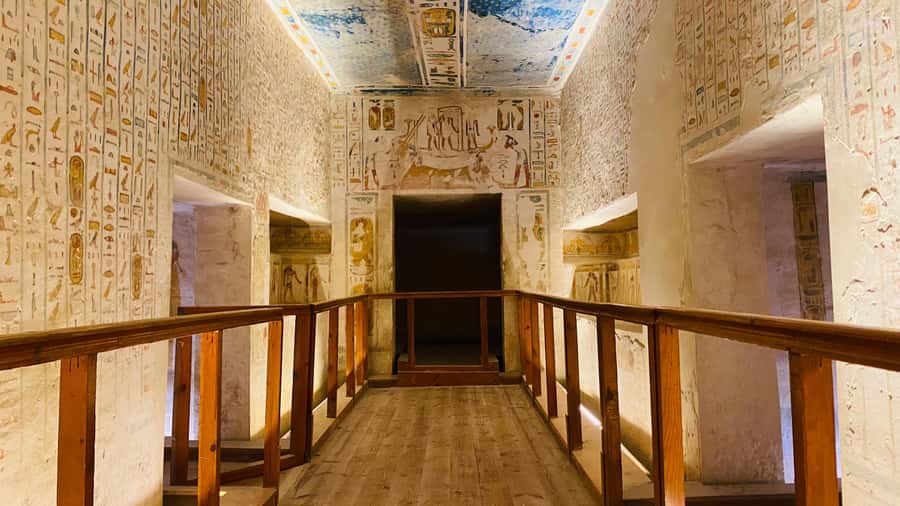
- Valley of the Kings: the royal tombs that make it click
- Hatshepsut’s mortuary temple: a female ruler in stone
- Colossi of Memnon and Amenhotep III: the quick hit that lands hard
- Karnak Temple: the biggest temple in the world, explained
- Luxor Temple: the walk that brings the Nile into the story
- Lunch in Luxor: included, but drinks are not
- Nile boat cruise: a calmer way to close the loop
- Guides, pacing, and the shopping question
- Price and value around $62 for a 5 – 8 hour day
- Should you book this East and West Banks tour?
- FAQ
- What sites are included on the West Bank?
- What sites are included on the East Bank?
- Is lunch included, and are drinks included too?
- Do you get pickup from your hotel?
- Which languages is the guide available in?
- Is the felucca ride included?
Key things to know before you go
- An Egyptologist guide helps connect the dots between monuments, rulers, and symbolism.
- Time blocks are fixed-ish: Valley of the Kings is about 2 hours, then the day moves efficiently.
- You choose the side or go full East and West, which changes which major sites are included.
- Lunch is included at a local restaurant, but drinks are not.
- Skip-the-ticket-line is part of the deal, which matters in busy Luxor.
- A Nile boat cruise is built into the day at the end for a calmer finish.
Luxor East and West, what this tour does well
Luxor is famous for one thing, temples and tombs. But it is also famous for chaos, traffic, heat, and lines. This tour is designed to give you the greatest hits without making you do the logistics juggling.
What you get, in plain terms, is a guided loop across the Nile. On the West Bank, you focus on the royal mortuary world: tombs in the Valley of the Kings plus major memorial spaces like the Temple of Queen Hatshepsut and the Colossi of Memnon. On the East Bank, you hit the temple power centers: Karnak and Luxor Temple. The day finishes with a Nile boat cruise, so you do not end on stone dust and sunburn alone.
The practical value is that you can do a lot of Luxor in one half to full day, while still having enough guided context to make it more than “I saw ruins.”
Other Luxor options on the table
- Hurghada: Luxor Valley of the Kings & Tutankhamun Tomb Trip
★ 4.7 · 13,208 reviews - Luxor Day Trip from Hurghada Small Group & Tutankhamun Tomb
★ 4.8 · 5,366 reviews - Hot Air Balloon Ride in Luxor Egypt with Transfers Included
★ 5.0 · 4,319 reviews
Valley of the Kings: the royal tombs that make it click
The West Bank starts with the Valley of the Kings, where you typically spend about 2 hours with a guide. This is the part where Luxor stops being scenic and starts being specific.
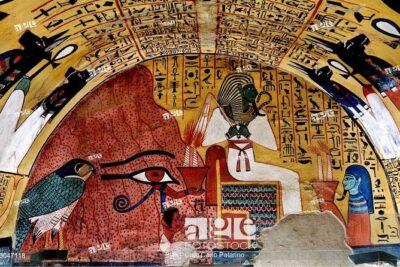
You are not just walking around in a canyon of entrances. The tomb visits focus on prominent royal burials, including Ramesses III, Ramesses VI, and Mrenptah. Those names matter because they give you a thread through the afterlife story the Egyptians were building into the landscape.
Here is how to make the most of the Valley visit:
- Wear comfortable shoes and plan on uneven walking.
- Keep your eyes open for how the entrances and tomb spaces connect to the idea of prepared burial and protection.
- Use the guide’s explanations to understand why certain tombs were monumental for their rulers.
One small timing reality: the tour does not linger forever. Two hours is enough for highlights, but it is not enough for deep “wander at will” exploration. If you love archaeology details and you want to read every wall, you might want to build in extra time separately. But for most first-timers, the guided format gives you the fast clarity you need.
Hatshepsut’s mortuary temple: a female ruler in stone
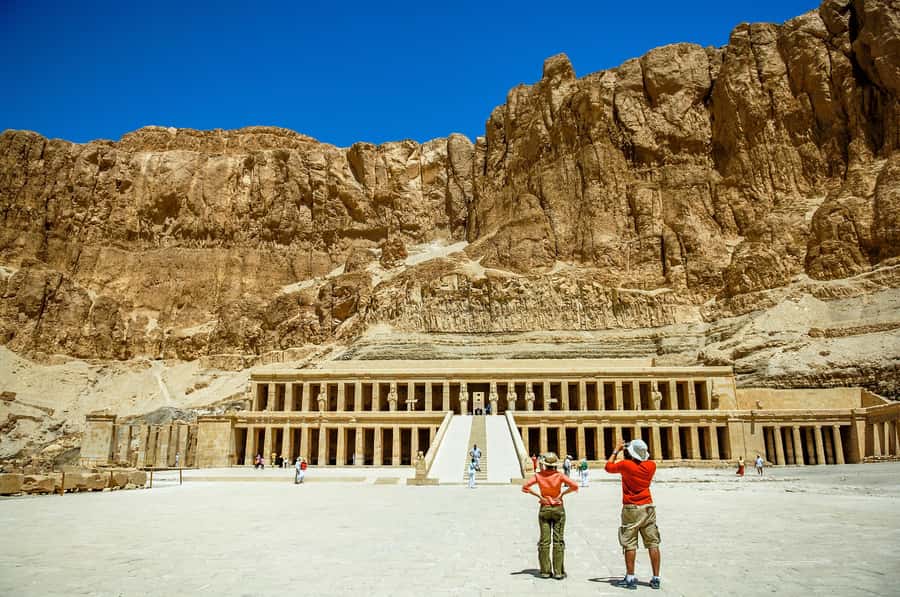
Next comes the mortuary temple of Queen Hatshepsut, usually around 1 hour with guided walking. This temple is famous for its association with a strong female ruler who reigned for about two decades, bringing wealth and peace. That context changes how you experience the site, because you are not just admiring architecture. You are seeing power expressed through design.
What I like about this stop is that it breaks the all-male rhythm you often get when you tour ancient Egypt. The guide’s job is to translate the symbolism into plain language: why the memorial matters, what the complex is communicating, and how it fits into the broader Luxor story.
Practical tip: go slowly on the main areas and stairs. The heat can turn “short walk” into “long walk” quickly. Bring your sunscreen and hat, and keep drinking water, since mineral water is provided during travel.
Colossi of Memnon and Amenhotep III: the quick hit that lands hard
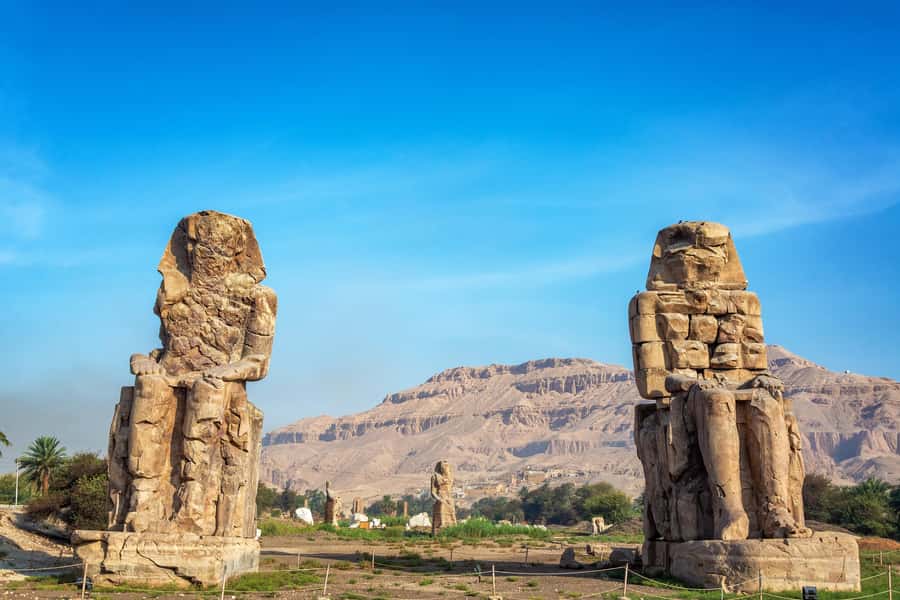
The Colossi of Memnon are a shorter stop, about 30 minutes. Two huge seated statues, massive enough to make you feel a bit tiny. Even if you only get a quick look, they are worth it.
The point of the stop is to connect the statues to the mortuary temple of Amenhotep III. If your guide gives context, the statues stop being random giants and become part of an intentional royal program.
Because the time here is limited, treat it as a photo, a moment, and a memory. Look, listen to the guide’s explanation, then move on. This is a “get the essentials” stop, not a slow drift.
Also reachable from Luxor:
- Luxor: Shared Full-Day Tour to Luxor West and East Banks
★ 4.5 · 1,812 reviews - Luxor: Hot Air Balloon Ride over Luxor Relics
★ 4.8 · 1,681 reviews - Luxor Day Tour: Valley of Kings & Queens & Hatchepsut Temples
★ 5.0 · 1,496 reviews - Full Day Tour to East and West Banks of Luxor
★ 5.0 · 1,449 reviews
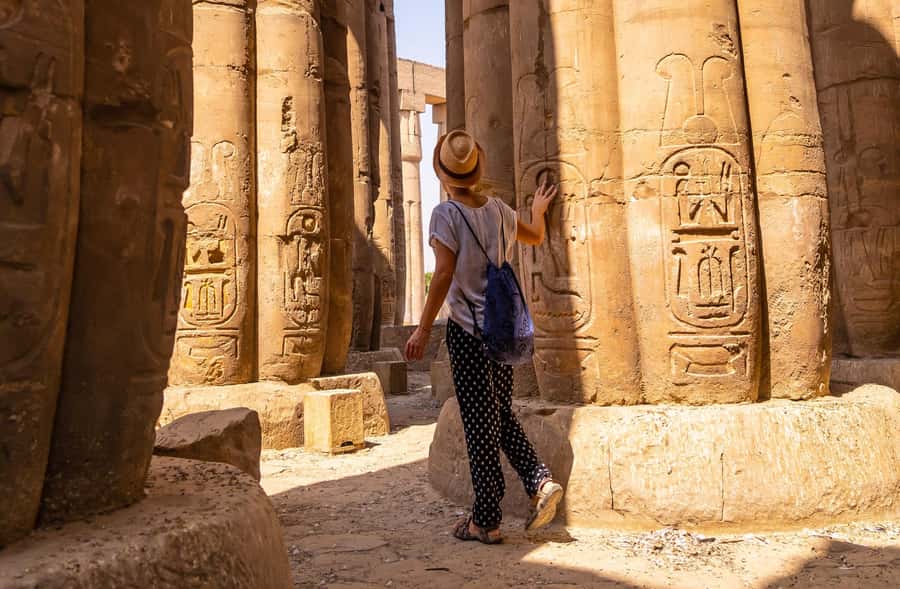
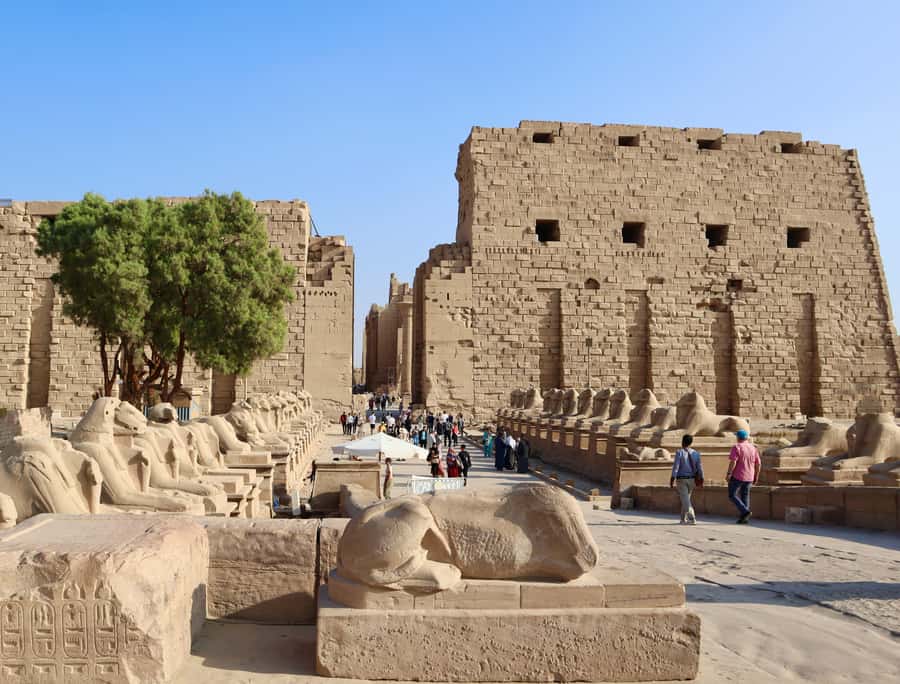
Karnak Temple: the biggest temple in the world, explained
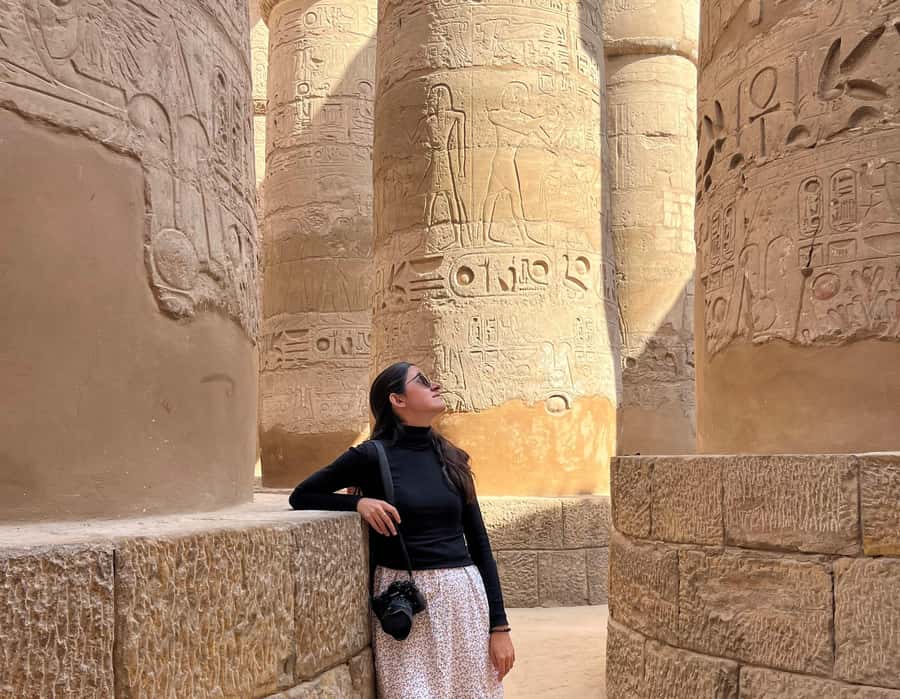
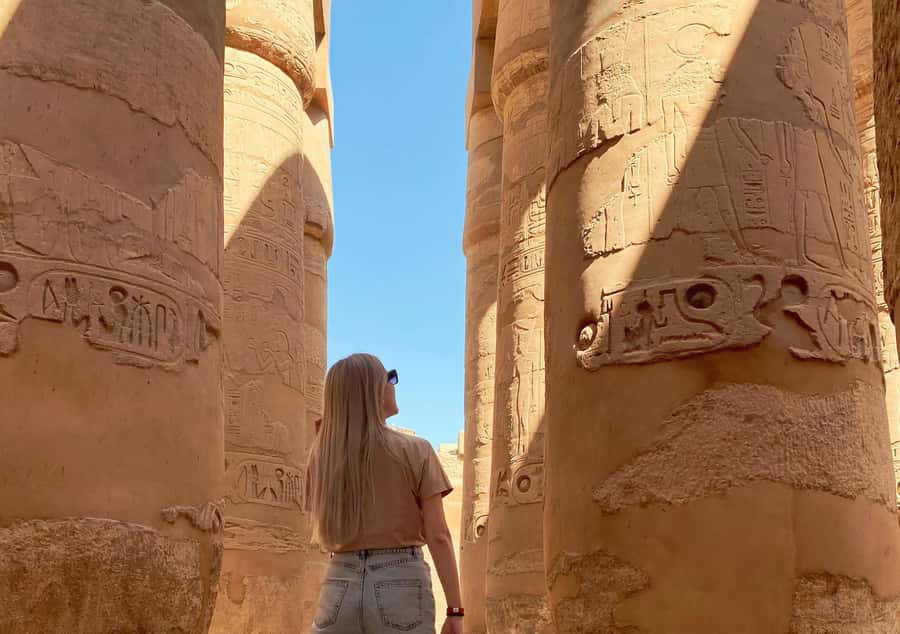
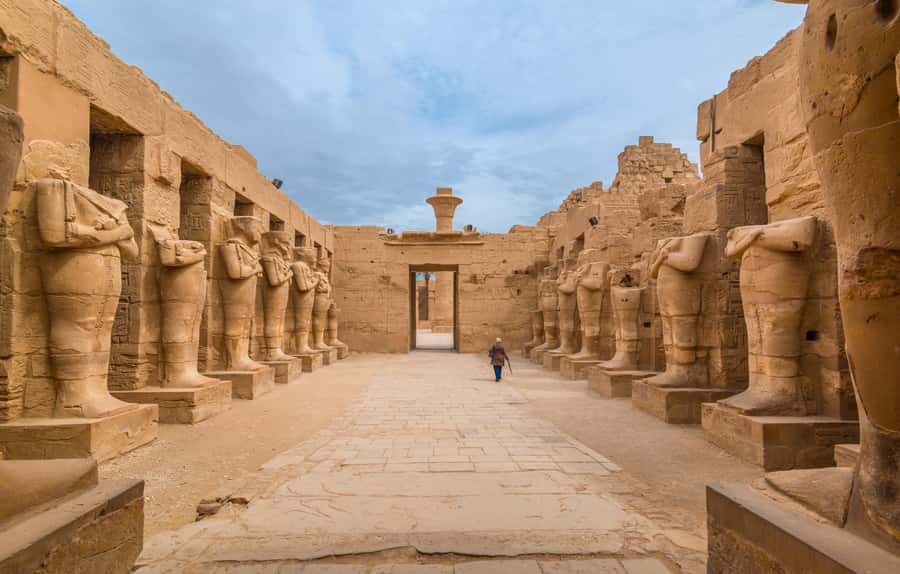
Karnak is usually about 1 hour on the tour, and it is a highlight for a reason. This is described as the largest temple in the world, and walking into it can feel like stepping into a maze made of history.
The real help here is the guide. Without guidance, Karnak can become a blur of columns and pylons. With guidance, you start to understand how different parts connect, why the spaces are arranged as they are, and what the Egyptians were building over time.
I love how this stop rewards attention. Even in a limited time window, you can still catch the scale and the intent. You do not need to memorize everything. You just need to get your bearings and understand what you are looking at.
And yes, it is hot and bright. Do not try to outrun the sun. Slow your pace, shade your eyes, and let the guide’s storytelling do some of the work for your brain.
Luxor Temple: the walk that brings the Nile into the story
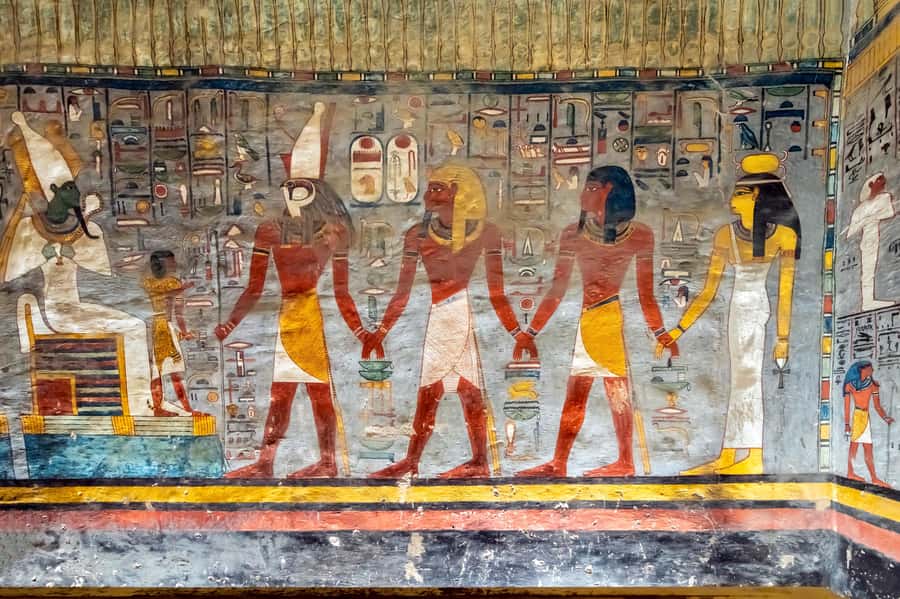
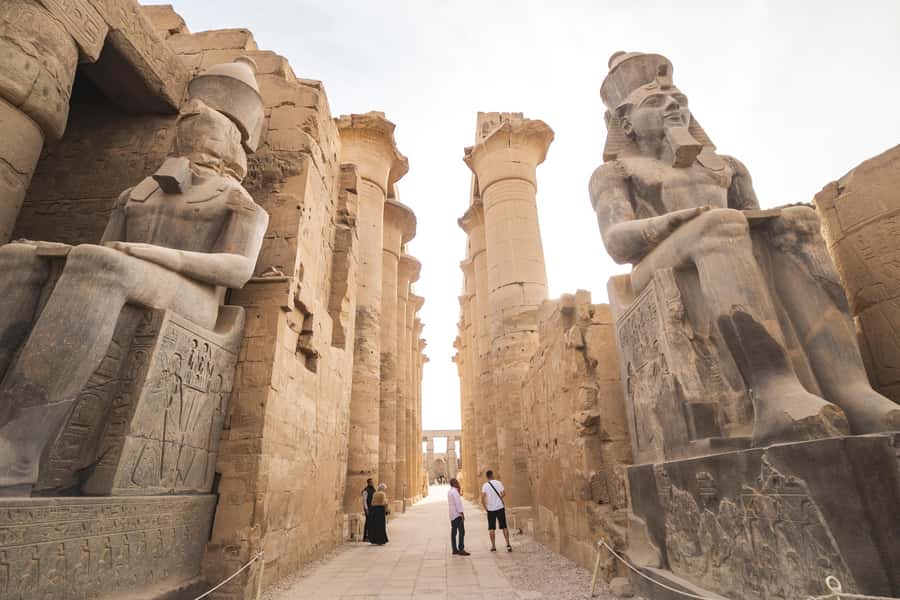
Luxor Temple typically takes about 1 hour. It is another major East Bank temple, and it is also easy to understand why it is iconic: it sits in a way that ties the monumental world to daily life along the river.
This stop is usually more about atmosphere than max size. You are moving through a temple space that feels designed for an experience, not just a structure. When you pair Karnak and Luxor Temple back-to-back, it becomes clearer how Luxor’s power centers functioned.
If you are the type who gets temple fatigue, use this method: treat Karnak as the big explanation, then use Luxor Temple as the personal emotional connection. Let Karnak teach you the scale. Let Luxor Temple help you imagine the human rhythm of rituals and movement.
Lunch in Luxor: included, but drinks are not
Lunch is included, and you typically get about 1 hour break time. It is served at a local restaurant, and the tour also includes mineral water during travel.
Two value points:
- You avoid the problem of finding a reliable meal quickly between sites.
- You get a set schedule that helps you conserve energy for the afternoon.
One downside is also simple: drinks during lunch are not included. If you like soda, juice, or bottled water beyond what is provided in transit, plan for it. If you are sensitive to spicy food, stick to safer choices.
Also, keep your wallet situation in mind. This is a tourist-heavy area, and small purchases add up fast when the day includes additional optional stops.
Nile boat cruise: a calmer way to close the loop
After the temples, the day includes a boat cruise on the Nile, about 1 hour. This matters because it gives you a different kind of Luxor view, less about memorizing and more about absorbing.
You are also switching your mode mentally. After hours of walking through stone and sand, a boat ride lets you rest your feet and refocus. Even if you do not love boats, the timing is smart, because it gives a natural finish to an intense sightseeing block.
If you tend to get motion sick, take it easy, sit where you are comfortable, and bring what you need for your usual travel habits. Nothing in the tour data suggests anything unusual here, so basic common-sense comfort still applies.
Guides, pacing, and the shopping question
Here is where your experience can swing.
Some guides are genuinely good at explanations and keep the day moving in a way that respects your time. One guide name that shows up with praise is Mohamed, described as very good at explaining and as a source of knowledge about Egypt.
Other experiences can feel less ideal. A few comments point to guides who move fast, do not cover as much as you expect, or steer the group toward extra stops that feel more like sales opportunities than education. There are also examples of guides directing visitors to places like overpriced shops, including stops such as a stone shop or perfume or oil shops, where people are treated differently if you do not buy.
So here is my practical advice if you want the better version:
- Be clear early that you want more time with the actual monuments.
- If the guide suggests shopping stops, you can politely decline and ask to return to the main route.
- Pay attention to the timetable. If time disappears on detours, ask what you are giving up next.
Also, I would take the communication seriously. One experience describes inappropriate behavior, including repeated pet-name language and pressure to go out together after the tour. You should never feel pressured. If it happens, you can set firm boundaries and, if necessary, speak up so the issue does not keep unfolding. It is okay to protect your comfort.
Bottom line: the monuments are the draw. Your guide quality affects how much you get out of them. If you care about deep explanations, pick your tour with extra attention to guide reputation, and be ready to manage pacing in the moment.
Price and value around $62 for a 5 – 8 hour day
At about $62 per person, the tour price is relatively good value for what you are getting, especially if you factor in the typical pain points of independent touring.
You are paying for:
- Pickup and drop-off from your accommodation on the East Bank
- A professional Egyptologist guide
- Entrance tickets included based on which option you book
- Mineral water during travel
- Lunch at a local restaurant
- Visit coverage for major sites, either West Bank only, East Bank only, or full East and West based on your selection
If you tried to do this yourself, you would still have to solve transportation, ticketing, and guiding. Luxor can be exhausting to coordinate on your own. This tour gives you a structure and a plan.
Who gets the best value:
- First-time Luxor visitors who want the headline monuments without spending time building an itinerary
- People who like their history explained, not just photographed
- Travelers who want a guided day but still plan to relax afterward
Who might hesitate:
- Travelers who prefer total freedom and hate scheduled walking windows
- Anyone very sensitive to shopping detours
- People who want a slow, unhurried exploration of tomb interiors, since this tour focuses on highlights
One more logistical note: the tour includes pickup on the East Bank, but if you are staying on the West Bank, you meet at El Mesala Hotel. If you are arriving via Luxor Airport, pickup and drop-off is available but costs extra.
Should you book this East and West Banks tour?
I think you should book if your goal is simple: see the major Luxor sights with guidance, get lunch taken care of, and finish with a Nile boat cruise, all inside a half to full day.
Choose carefully if:
- You really dislike shopping-style detours and need a very strict monument-only plan.
- You have had bad experiences with tour guides before and want a tour that you feel comfortable controlling with clear boundaries.
- Your schedule or mobility is limited. The tour is listed as not suitable for wheelchair users, and the walking between sites is part of the package.
If you do book, go in with a helpful mindset. Wear comfortable shoes, bring a sun hat, and use sunscreen. Be ready for heat and quick transitions. And if your guide starts rushing, ask directly for more time where it matters most, like the Valley of the Kings or the temples.
FAQ
What sites are included on the West Bank?
You typically visit the Valley of the Kings, the Mortuary Temple of Queen Hatshepsut, and the Colossi of Memnon on the West Bank option (or on a full-day East and West Banks tour).
What sites are included on the East Bank?
On the East Bank option (or full-day tour), you visit Karnak Temple and Luxor Temple.
Is lunch included, and are drinks included too?
Lunch at a local restaurant is included. Drinks during lunch are not included.
Do you get pickup from your hotel?
Pickup and drop-off are included from your accommodation on the East Bank. If your hotel is on the West Bank, you meet at El Mesala Hotel. Pickup from Luxor Airport is available for an additional cost.
Which languages is the guide available in?
The live tour guide is available in English, French, and German.
Is the felucca ride included?
The felucca ride is not included, but it is available as an add-on. It depends on wind conditions, and if there is no wind a motor boat may be provided instead.
If you want, tell me which side you plan to focus on (East Bank, West Bank, or full-day) and where you are staying in Luxor, and I’ll help you pick the version that saves you the most time.
Newly added near Luxor
- Luxor: Karnak and Luxor Temples Private Half-Day Tour★ 4.7 · 27 reviews
- Private Full Day West Bank: Valley of kings Hatshepsut &More★ 4.9 · 40 reviews
- From Hurghada: Luxor Private Guided Day Tour with Lunch★ 4.6 · 28 reviews
- From Luxor: 3-Day Nile Cruise to Aswan with Private Guide★ 4.2 · 147 reviews
- Marsa Alam : Over Day Tour to Luxor & Balloon Ride & Felucca★ 4.4 · 29 reviews
- Marsa Alam: Snorkeling with Sea Turtles Marsa Mubarak★ 4.9 · 26 reviews
- Luxor Tour from Hurghada by bus★ 3.9 · 11 reviews
- Luxor: Habu, Deir El Medina, Shared tour, Guide, and Lunch★ 4.7 · 21 reviews
Luxor Tours & Activities, compared.
Luxor Valley of the Kings & Tutankhamun Tomb Trip
Read our review →
Luxor Day Trip from Hurghada Small Group & Tutankhamun Tomb
Read our review →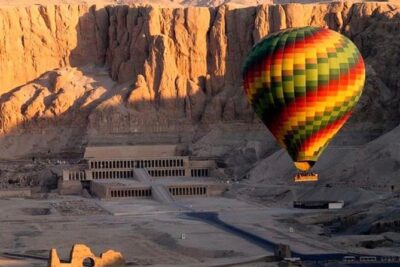
Hot Air Balloon Ride in Luxor Egypt with Transfers Included
Read our review →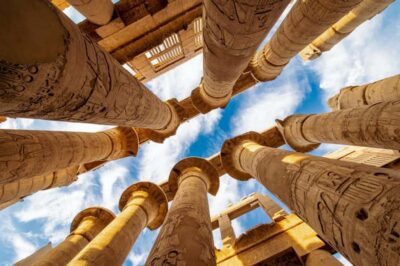
Shared Full-Day Tour to Luxor West and East Banks
Read our review →
Luxor Day Tour: Valley of Kings & Queens & Hatchepsut Temples
Read our review →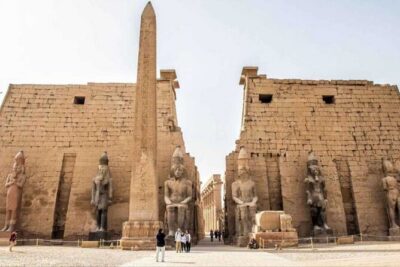
Full Day Tour to East and West Banks of Luxor
Read our review →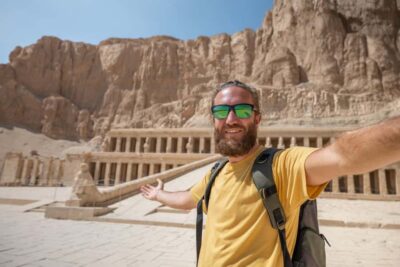
Valley of the Kings and Hatshepsut Temple Day Tour
Read our review →Browse the lists this tour appears in