
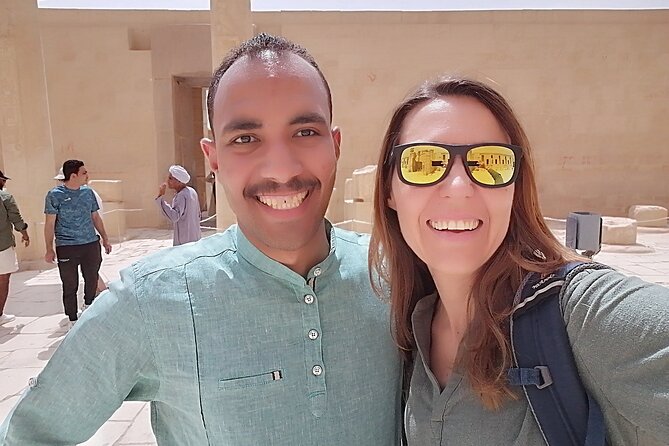
Reviewed · VALLEY OF THE KINGS & WEST BANK TOURS
Luxor East and West Bank Tour with Egyptologist
Luxor feels personal when the guide can read the stones. This Luxor East and West Bank day pairs licensed, archaeology-minded experts with smooth private transport. You’ll also get a clear plan via mobile ticket access and a tight sequence of monuments that make the geography of Luxor feel logical.
What I like most is the focus on interpretation, not just sightseeing. You get pointed storytelling at Deir el Bahari, the Valley of the Kings, and Karnak, plus practical on-the-ground help from the founder, Ahmad Salah-eldin Zaki. One thing to consider: site entrance fees and lunch are not included, so your final day cost depends on what you choose to pay on top of the $84 price.
In This Review
- Key highlights worth planning around
- Licensed Egyptologists, not a faceless tour bus
- Price and logistics: what $84 really buys
- West Bank focus: Temple of Hatshepsut at Deir el Bahari
- Practical notes for this stop
- Valley of the Kings: where the walls act like sacred books
- Colossi of Memnon: giant statues with an explanation for the Greek name
- Temple of Medinat Habu: Ramesses III, Amun Ra, and oval cartouches
- East Bank at Karnak: 134 columns and a sacred lake story
- Luxor Temple: a temple that stacks civilizations in one place
- How to plan your day without getting tired or stuck
- Should you book this Luxor East and West Bank tour?
- FAQ
- How long is the Luxor East and West Bank tour?
- Is pickup offered, and where does the tour start?
- Are entrance fees included in the $84 price?
- What sites are included on the day?
- Is this a private tour or shared group?
- What’s included in the tour price?
- Is lunch included?
Key highlights worth planning around
- Licensed Egyptologist guidance, led by Ahmad Salah-eldin Zaki, with local archaeology experience built into the explanations
- Deir el Bahari in detail, including the Anubis and Hathor chapels with the tour’s focus on original color work
- Valley of the Kings tomb texts, where you’ll hear about Book of the Dead, Book of the Caverns, Book of the Gates, and Book of the Earth
- Colossi of Memnon context, including the height, red granite material, and why the name Memnon is Greek
- Karnak’s scale made practical, with hall of columns described as 134 columns and even compared to the size of a famous cathedral
- Comfort and convenience included, like air-conditioned transport, bottled water, and gratuities in the price
Licensed Egyptologists, not a faceless tour bus
This tour is built around the idea that a good day in Luxor needs more than a driver and a checklist. The guides here are described as licensed, and the group also includes archaeologists. That matters because Luxor is not just pretty ruins. It’s loaded with names, symbols, and architectural choices that only click when somebody explains what you are looking at.
Another detail I appreciate is that the day runs in a private format. You are not getting split up or rushed to match a large group rhythm. The driver is described as qualified and licensed, and the vehicle is a newer luxury style air-conditioned car, which helps a lot when you are bouncing between the East and West Banks.
More West Bank and Valley of the Kings visits:
- Hurghada: Luxor Valley of the Kings & Tutankhamun Tomb Trip
★ 4.7 · 13,208 reviews - Luxor: Valley of the Kings and Hatshepsut Temple Day Tour
★ 4.4 · 1,404 reviews - Hurghada: Luxor Tour with Valley of Kings, Karnak & Tut Tomb
★ 4.6 · 1,082 reviews
Price and logistics: what $84 really buys
At $84.00 per person, you’re paying mainly for people and movement. What’s included is air-conditioned vehicle service, private transportation, guiding services, gratuities, and bottled water. You also get a pickup option, and the meeting point is Luxor Railway Station, with the tour returning you back there.
What’s not included is equally important. Entrance fees are not included for the sites listed as ticketed, and lunch is also not included. Souvenirs are not included either. That doesn’t make the deal bad. It just means you should budget for the ticket layer on top of $84, plus plan how you want to handle lunch during an 8 to 12 hour day.
Also, one site is noted as admission free, the Colossi of Memnon. That’s a nice extra because it helps balance the rest of the paid entries.
West Bank focus: Temple of Hatshepsut at Deir el Bahari
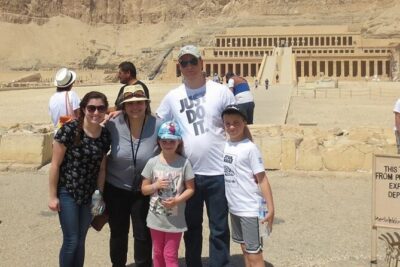
Deir el Bahari sets the mood right away. You’re visiting the temple of Queen Hatshepsut, a ruler associated with more than 21 years, and the layout is all about terraces and big views. The tour notes that the first terrace is closed for restoration, so you may not get the full open sightline you hoped for. Still, the second terrace and chapels are the core story.
The guide’s attention goes to two chapels on the second terrace. One is dedicated to Anubis, shown with a jackal head and black face, tied to mummification. The other is dedicated to Hathor, the goddess linked with beauty, childhood, motherhood, and music. The best part here is the emphasis on original colors that have survived for more than 3 thousand years. Even when you know the basics of Egyptian art, seeing how specific colors and symbolism are used helps you read the space faster.
The visit continues to the upper terrace for the sanctuary, described as the most important part of the temple with “amazing wonderful stories.” That’s the kind of stop where a guide makes a real difference, because you’ll see the same stone your photos capture, but you’ll understand why it’s arranged the way it is.
Practical notes for this stop
You’re walking terraces, and the lighting can change as you move upward. Wear comfortable shoes and give yourself time to look before you rush to the next viewpoint.
Other Luxor options on the table
- Luxor Day Trip from Hurghada Small Group & Tutankhamun Tomb
★ 4.8 · 5,366 reviews - Hot Air Balloon Ride in Luxor Egypt with Transfers Included
★ 5.0 · 4,319 reviews - Luxor: Shared Full-Day Tour to Luxor West and East Banks
★ 4.5 · 1,812 reviews - Luxor: Hot Air Balloon Ride over Luxor Relics
★ 4.8 · 1,681 reviews
Valley of the Kings: where the walls act like sacred books
The Valley of the Kings is the big-ticket West Bank draw for a reason. This is presented as Egypt’s most important archaeological site, with royal tombs carved into the mountain. You’ll go deeper inside and see tombs tied to kings and queens, and the tour highlights the number of royal tombs as 62.
Here, the payoff is the way your guide connects what you see to what it means. The tour’s description focuses on tomb wall inscriptions that function like ancient books, including the Book of the Dead, the Book of the Caverns, the Book of the Gates, and the Book of the Earth. That framing makes the tombs feel less like “rooms full of carvings” and more like a plan for the afterlife, written in images and spells.
The stop is about 2 hours. That’s usually enough time to enjoy one tomb fully, without feeling like you’re speed-running the valley. The downside is that if you’re someone who dislikes confined spaces, you’ll want to go at a comfortable pace and not feel pressured to rush through darker interiors.
Colossi of Memnon: giant statues with an explanation for the Greek name
The Colossi of Memnon are your quick reset after tomb intensity. The tour takes you to two enormous monolithic statues, each described as about 16.6 meters high. They are made of red granite, and the material origin is part of the story, since it’s noted as red granite stone taken from a quarry in Cairo.
The guide’s explanation also covers why you hear a Greek name here. Memnon is a Greek name, even though the statues are tied to an Egyptian royal context. The tour notes the statues originally belonged to King Amenophis the Third, and it even gives the title associated with him as Magnificent, connected to a prosperous artistic period.
This stop is about 1 hour and is listed as admission free. That combination, short time plus no ticket cost, makes it a smart breather before you move on to the temple sites.
Temple of Medinat Habu: Ramesses III, Amun Ra, and oval cartouches
Next comes Medinat Habu, which the tour presents as a masterpiece of ancient Egyptian structure. Here you’re meeting King Ramesses the Third, building a temple dedicated to Amun Ra, the sun god and a major deity in ancient Egypt.
Inside the temple, the tour focuses on the idea of written royal identity. You’ll see references described as a Ritual Massacre, plus cartouches containing the king’s name. The cartouches are explained as oval circles, and the tour emphasizes that kings in ancient Egypt had two names. One is the birth name tied to the day the king was born, and the second is the coronation name tied to the day he ascended to the throne and became lord of Upper and Lower Egypt.
That dual-name detail is one of those small pieces that can change how you read inscriptions. Suddenly you’re not just hunting for symbols. You’re tracking rank, dates, and royal messaging.
This stop is about 1 hour, and ticketing is noted as not included.
East Bank at Karnak: 134 columns and a sacred lake story
Karnak is where Luxor stops being “a few temples” and starts being a scale lesson. The tour calls it the biggest temple complex in the whole world and points out that building work stretches from the early Middle Kingdom into the New Kingdom. It even gives a specific starting date in the Middle Kingdom era, described as December 23, 1946 B.C, so your guide will likely connect the timeline as part of the narration.
The highlight you’ll feel immediately is the hall of columns. The description gives a striking number: 134 columns. It also gives a size comparison: the hall could contain the Cathedral of Notre-Dame in France, with about 5,000 square meters. You may see photos first, but the lived experience is different when you are standing under that many columns.
The tour also mentions a sacred lake that was originally underground. Even if you don’t fully picture it from the start, the point is that Karnak was not only about walls. It was also about ritual spaces, water symbolism, and planned geometry.
The tour notes an amazing statue of King Ramesses inside Karnak as well. This is usually the kind of stop where your guide helps you choose what to look at, instead of letting you get lost in the sheer size.
This stop is about 2 hours, and ticketing is again listed as not included.
Luxor Temple: a temple that stacks civilizations in one place
Luxor Temple is presented as a temple of different civilizations. Built initially in 1974 B.C by King Amenophis the Third and completed by King Ramesses the Second, it is framed as a layered site rather than one single-period monument.
The tour’s “civilizations” list is helpful because it tells you what to watch for on the ground: Ancient Egyptian, Greek, Roman, and Islamic. It also mentions that you’ll find a mosque and a church within the temple area. That can be surprising if you came expecting only ancient remains. Here you get a real-world example of how older sacred spaces can carry religious meaning across eras.
The obelisks are another practical anchor. Luxor Temple has two obelisks. One currently remains in place, and the other was sent as a gift from Mohamed Ali Pasha to King Louis Philippe of France. The tour notes that this obelisk is now in the Place de la Concorde in Paris. That detail helps you connect what you’re seeing in Luxor to a global story of how Egyptian monuments were moved and repurposed.
This stop is about 1 hour, with ticketing listed as not included.
How to plan your day without getting tired or stuck
This is a full Luxor day. Expect an 8 to 12 hour schedule, moving between the West Bank and East Bank, with multiple stops that require walking and looking up or along walls for inscriptions. It’s a private tour, which helps with pacing, but it still takes time to move, enter sites, and absorb explanations.
Two budgeting tips:
- Plan entrance fees separately. The tour is explicit that they are not included for several sites.
- Plan for lunch. Since lunch is not included, you’ll want a basic strategy before the day starts, like choosing a simple spot near where you’ll be.
Bring basics that make the experience easier: sun protection, water (bottled water is provided), and comfortable shoes. The day can also feel emotionally “heavy” in the best way at the Valley of the Kings, so give yourself time to breathe between tomb interiors and open-air temples.
One more small consideration: the first Hatshepsut terrace being closed for restoration can shift what views you get. If you’re expecting a specific wide shot, go with the flow, because the chapels and sanctuary are still the core experience.
Should you book this Luxor East and West Bank tour?
I’d book it if you want a day in Luxor that feels guided by real archaeology thinking, not just a driver with a microphone. The strongest reasons are the guide quality centered on Ahmad Salah-eldin Zaki, the fact that you get interpretation at nearly every major stop, and the private comfort that keeps the day from feeling like a race.
It may not be the best match if you’re only interested in quick photos and you dislike paying entrance fees on top of the base price. It’s also a long day, so if you want something shorter or more relaxed, you might consider a reduced itinerary.
If you do book, it’s a good sign that confirmation comes at booking time, and you get free cancellation up to 24 hours before the start for a full refund.
FAQ
How long is the Luxor East and West Bank tour?
The tour lasts about 8 to 12 hours.
Is pickup offered, and where does the tour start?
Pickup is offered. The tour starts at Luxor Railway Station in Luxor, and it ends back at the meeting point.
Are entrance fees included in the $84 price?
No. Entrance fees for the sites are not included. Colossi of Memnon is listed as free.
What sites are included on the day?
The tour includes Temple of Hatshepsut at Deir el Bahari, Valley of the Kings, Colossi of Memnon, Temple of Medinat Habu, Karnak Open Air Museum, and Luxor Temple.
Is this a private tour or shared group?
It is a private tour or activity, so only your group participates.
What’s included in the tour price?
Included are an air-conditioned vehicle, private transportation, guiding services, gratuities, and bottled water.
Is lunch included?
No, lunch is not included in the price.
Newly added near Luxor
- Full-Day Private Guided Tour in the West Bank of Luxor★ 5.0 · 22 reviews
- Amazing 3 nights Nile cruise includes tours from Luxor to Aswan★ 5.0 · 57 reviews
- Hot Air Balloon Flight in Luxor with Pickup★ 4.5 · 14 reviews
- Private transfer from Luxor to Hurghada★ 5.0 · 43 reviews
- Quad Bike safari Experience in Luxor★ 4.5 · 62 reviews
- Private 2 Day Luxor Tour★ 5.0 · 71 reviews
- Private Tour in Luxor Egypt included entrance fees★ 5.0 · 11 reviews
- Private Transfer From Luxor to Marsa Alam★ 5.0 · 28 reviews
Valley of the Kings & West Bank Tours, compared.
Luxor Valley of the Kings & Tutankhamun Tomb Trip
Read our review →
Small group Hurghada to Luxor, Valley of the Kings by Van
Read our review →
Valley of the Kings and Hatshepsut Temple Day Tour
Read our review →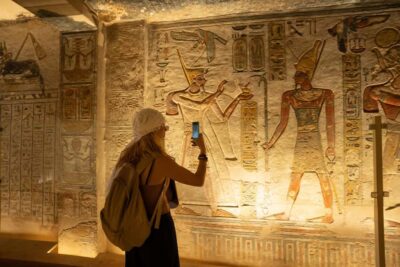
Luxor Tour with Valley of Kings, Karnak & Tut Tomb
Read our review →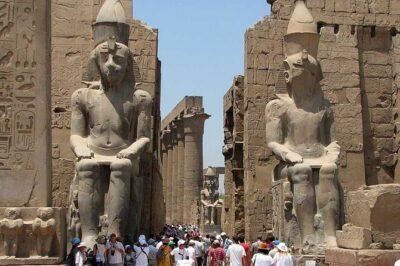
Valley of Kings, Hatchepsut Temple ,Karnak & Luxor-DayTour
Read our review →
Full Day Tour of Luxor West Bank Temples and Tombs (Private)
Read our review →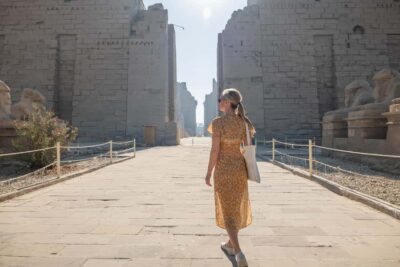
Small Group Excursion to Luxor Valley of the Kings from Hurghada
Read our review →Browse the lists this tour appears in