
Reviewed · VALLEY OF THE KINGS & WEST BANK TOURS
Luxor East and West Bank: Valley of the kings, Habu Temple,Karnak&Luxor Temples
Two banks, five temples, one unforgettable day. This private Luxor highlight tour is built around seeing the big names on both sides of the Nile, with an English-speaking Egyptologist guide keeping the context clear as you move. The day really clicks when you reach the Valley of the Kings, because it is not just pretty scenery, it is where the whole logic of royal tomb planning starts to make sense.
I also like how efficiently the schedule packs in the must-sees without leaving you totally alone to figure things out. You get Karnak and the Luxor Temple in the same day, plus a guide who tends to have paperwork sorted so you spend more time looking and less time waiting. The main drawback to plan for: entrance fees and tipping are not included, so the final cost can feel higher than the $85 headline number, and the day runs long.
In This Review
- Key highlights to know before you go
- Luxor East and West Bank in one day, and why it works
- Pickup, private vehicle, and a 7:00 am start you should plan for
- Valley of the Kings: the royal tomb landscape on Luxor’s West Bank
- Temple of Hatshepsut at Deir el Bahari: a female pharaoh’s dramatic setting
- Colossi of Memnon: a short, atmospheric stop (and free)
- Karnak Temple Complex: Amun, Mut, and Khonsu in massive scale
- Luxor Temple: Amenhotep III and Ramses II, with the Theban Triad
- Medinat Habu (Ramesses III): where a labor strike story echoes
- Price and what your $85 really covers
- Guide quality: the difference between seeing and understanding
- A long day plan, and how to keep it comfortable
- Who should book this Luxor East and West Bank tour
- Should you book?
- FAQ
- What time does the tour start?
- How long is the Luxor East and West Bank tour?
- Does the tour include pickup from my hotel or Nile cruise?
- Is the tour private?
- Are entrance fees included?
- What is included in the tour price besides the guide?
- Is tipping included?
- Do I need good weather for the tour?
- What is the cancellation policy?
Key highlights to know before you go
- Private, air-conditioned transport plus hotel or Nile cruise pickup for a low-stress start
- Egyptologist-guided touring that ties each site to the people and purpose behind it
- East and West Bank in one day, so you do not waste time choosing between sides
- Valley of the Kings and Karnak as the two biggest anchor stops, both with real payoff for first-timers
- Mobile ticket plus prepared check-in, often meaning less time in lines
- Colossi of Memnon is free, giving you a quick, atmospheric stop without extra cost
Luxor East and West Bank in one day, and why it works
Luxor is basically two different worlds stretched along the Nile. The East Bank focuses on temples tied to daily ritual life, especially at Karnak and Luxor Temple. The West Bank is where you go for the funerary landscape, including the royal necropolis and the Valley of the Kings.
Doing both sides in one day matters if you only have a short window. It also helps you compare how the ancient Egyptians thought about sacred space: one side built for worship, the other for a king’s afterlife story. With a guided format, you are not just scanning walls for carvings, you are learning what you are actually seeing and why it was placed there.
Your day starts early, and that is a good thing. The big sites are easier when you are moving while the crowds are still forming, and when the light is calmer for photos and general orientation.
More West Bank and Valley of the Kings visits:
- From Hurghada: Day Trip to Valley of the Kings in Luxor
★ 5.0 · 9 reviews - Hurghada: Luxor Valley of the Kings & Tutankhamun Tomb Trip
★ 4.7 · 13,208 reviews - Small group Hurghada to Luxor, Valley of the Kings by Van
★ 4.5 · 2,470 reviews
Pickup, private vehicle, and a 7:00 am start you should plan for
The tour begins at 7:00 am, with pickup from your hotel or Nile cruise and transfers in a private air-conditioned vehicle. For a packed day, I like that the transport part is taken care of, because Luxor traffic and site-to-site travel can eat up your energy fast.
This is listed as a private tour, meaning only your group goes with you. That matters for pacing. If someone needs a slower moment at a stop, you are more likely to get that adjustment than on a big group bus day.
You also get one bottle of water during the tour. Since this is a long stretch of sightseeing, I strongly recommend you bring a snack with you, especially if you know you get hungry on long tours. One practical tip from the field is to come ready with something small to keep your energy steady.
Valley of the Kings: the royal tomb landscape on Luxor’s West Bank
The day’s West Bank anchor is the Valley of the Kings, also known as the Valley of the Gates of the Kings. This area sits on the West Bank opposite Thebes, within the Theban Necropolis. The wadi area is made up of two main valleys, East Valley and West Valley, and the whole place is structured around secrecy and planning for eternity.
You are scheduled for about 2 hours here. That is enough time to see why tombs could feel like different worlds even when they share the same overall purpose. It is also the part of Luxor where a guide’s explanation matters most, because the tomb layouts and symbols can look confusing if you only read them as decoration.
Entrance tickets are not included, so you should budget extra for the tomb access you choose. Tip level is also not included, so keep that in mind too if you want to recognize the guide’s effort.
Temple of Hatshepsut at Deir el Bahari: a female pharaoh’s dramatic setting
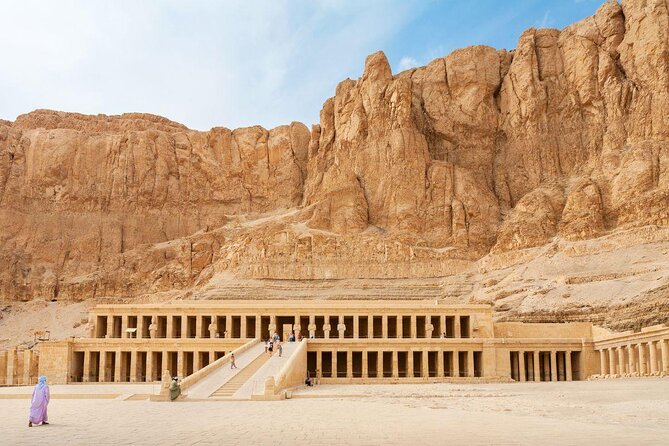
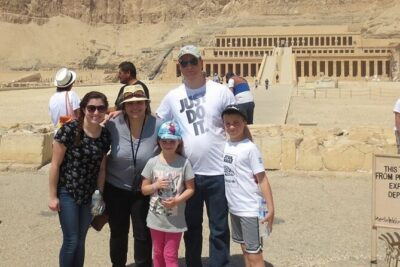
Next comes the Temple of Hatshepsut at Deir el Bahari, with about 1 hour 30 minutes on the clock. This is one of Luxor’s most memorable temple settings, not just because of the architecture, but because of the story tied to it.
Hatshepsut is highlighted here as Egypt’s famed queen, tied to Amun and celebrated for a reign that Egyptologists often describe as a major milestone. In this complex, you are seeing a ruler reinforce legitimacy through sacred building, and you can feel how carefully the temple location supports that message.
Entrance is not included, so you will want to have your budget ready. If you are the type who likes a site to make emotional sense, this is a great place to slow down. The guide’s job is to connect names and political context to what you see stone-by-stone.
Other Cairo options on the table
- Cairo: Pyramids & Great Sphinx Private Tour with Camel Ride
★ 4.9 · 6,335 reviews - Tour to Giza Pyramids and The Egyptian Museum
★ 5.0 · 6,016 reviews - VIP All inclusive Best of the best Giza Pyramids,Sakkara,Memphis
★ 5.0 · 3,164 reviews - From Cairo: Pyramids of Giza, Sphinx, Saqqara & Memphis Tour
★ 4.7 · 3,110 reviews
Colossi of Memnon: a short, atmospheric stop (and free)
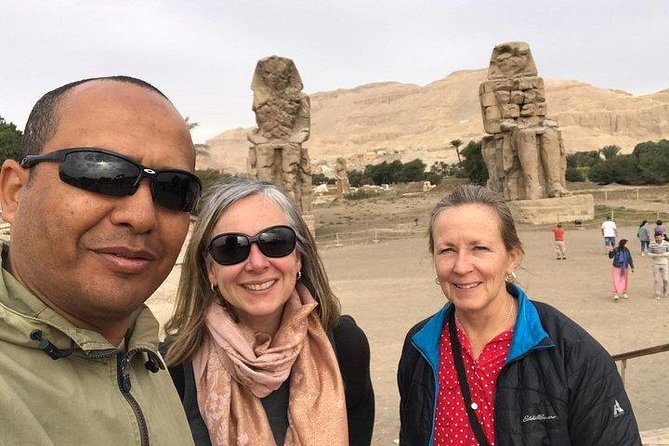
After Deir el Bahari, you get a quick stop at the Colossi of Memnon. The tour gives about 30 minutes, and the entry is listed as free. These are two enormous seated statues built around 1350 BC, associated with Pharaoh Amenhotep III.
What makes this stop work is the mood. Even though it is short, it gives you a visual break from walking tomb corridors and temple courtyards. The statues depict the king sitting with hands spread on his knees, facing toward the river, tying him to the landscape around him.
Because it is free here, it is a low-commitment chance to grab a few photos and reset your eyes before you tackle the heavier temple complexes on the East Bank.
Karnak Temple Complex: Amun, Mut, and Khonsu in massive scale
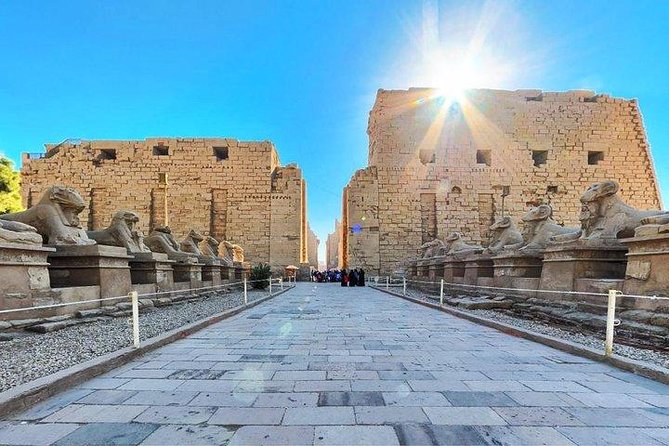
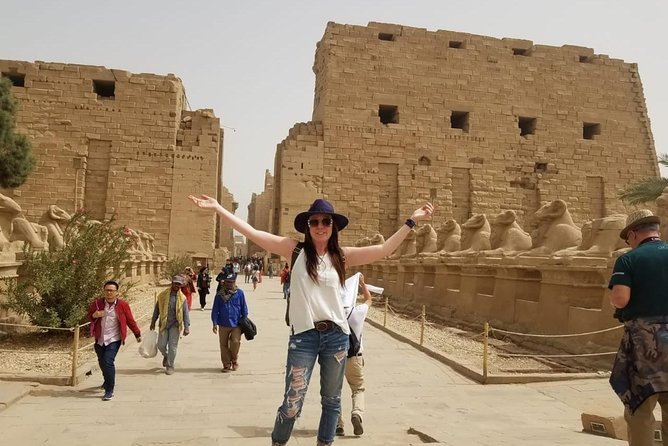
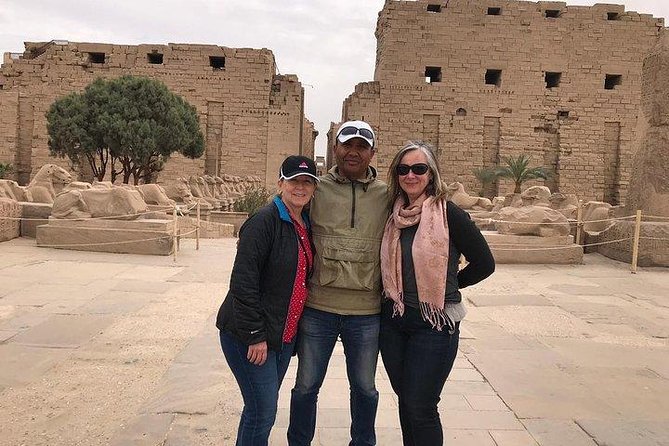
Karnak is the big one on the East Bank, with about 2 hours scheduled. You are visiting the Karnak Temple Complex, which is a group of temples and buildings expanded over long periods, with construction continuing from the pharaonic era into later times.
The complex is dedicated to the divine triad: Amun (Amun-Ra), his wife Mut, and their son Khonsu. In practice, it is easy for first-timers to feel overwhelmed by size and repetition. This is where your guide matters, because they can point out how the site was built and expanded, and how the religious purpose changes as dynasties add their own layers.
Entrance is not included, so again, plan for added costs. I also like that you have a full chunk of time here, because Karnak is not a check-the-box place. Even if you do not read every carving, you can still learn how to look like you know what you are seeing.
Luxor Temple: Amenhotep III and Ramses II, with the Theban Triad
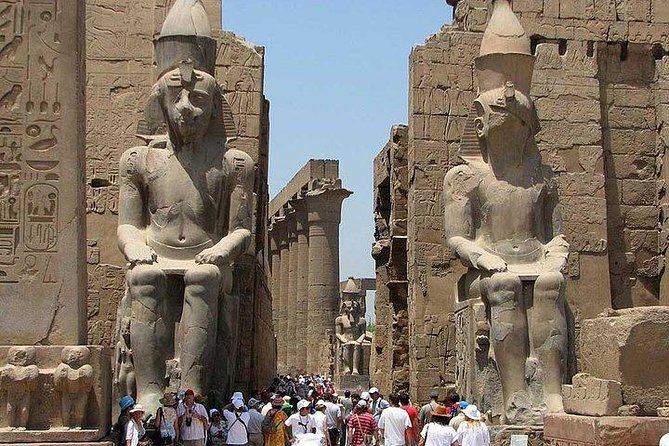
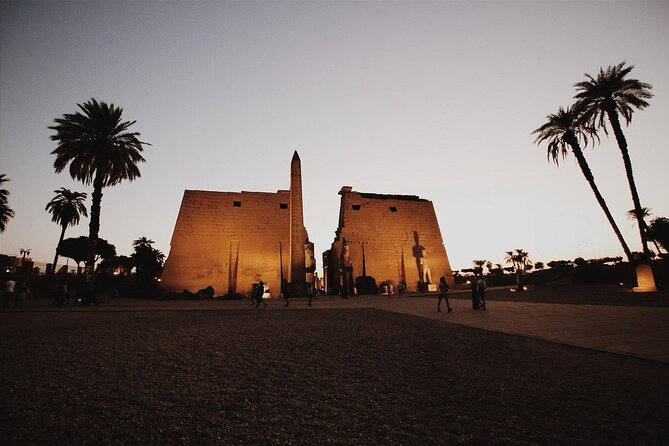
After Karnak, you move to Luxor Temple for about 1 hour 30 minutes. This temple is tied to worship of Amun-Ra, Mut, and Khonsu, the same Theban Triad theme you hear about at Karnak.
Luxor Temple dates back to around 1400 BC and includes important contributions by rulers such as Amenhotep III and Ramses II, who added elements like an open courtyard and obelisks. The guide can help you connect these names to what you see, so the temple stops feeling like a random collection of stones.
Entrance is not included here either. Since this tour is early-to-late in feel, Luxor Temple is a nice place to find slower attention and let the scale settle in after Karnak’s intensity.
Medinat Habu (Ramesses III): where a labor strike story echoes
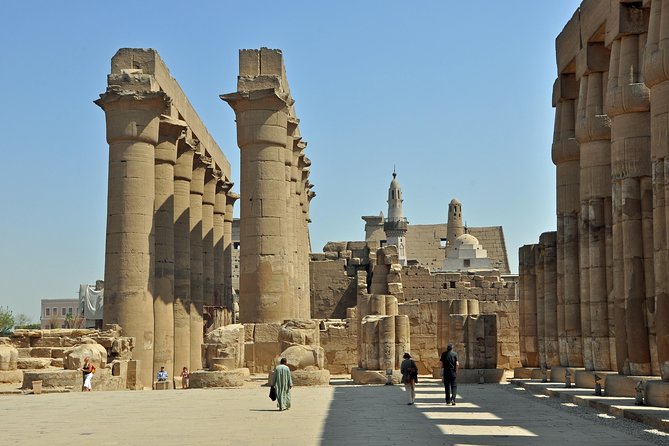
The final major stop is Temple of Medinat Habu (often associated with Memnon in how it is referenced locally), located at the southern end of the Theban Necropolis. You get about 1 hour 30 minutes, and this is one of the tour’s most historically pointed moments.
This memorial temple of Ramesses III is described as one of the best-preserved in Egypt, surrounded by a massive mud-brick enclosure wall, which may have been fortified. The tour also highlights a serious story here: the first labor strike in history against Ramesses III.
If you like your Egypt trips to include more than king-and-queen portraits, this stop adds a human angle. It is also a good capstone, because it shifts you from the more famous museum-like highlights into a temple setting that feels grounded and lived-in.
Entrance fees are not included for this stop either, so budget extra for the full day cost.
Price and what your $85 really covers
At $85 per person, the big value is that the tour includes the heavy logistics: private air-conditioned transfers, pickup and return from your hotel or Nile cruise, a qualified English-speaking Egyptologist guide, and one bottle of water during the day.
Where the price can surprise you is the extras. Entrance fees are not included, and tipping is not included. On a day that includes multiple major sites, the entrance costs can stack up quickly. One comment you should pay attention to is that costs can add up from the moment you start paying into the ticketed sites.
So the real question is not just whether the tour is cheap or expensive. It is whether you want this many highlights guided in a single day with private transport. If you value efficiency, context, and saved time, this format tends to be a good deal. If you are trying to keep every extra fee at zero, you might feel the added ticket costs.
Guide quality: the difference between seeing and understanding
This is a history-heavy day, so you should care about your guide. The overall pattern in the strong feedback is that guides like Laila and Mohamed Noor are praised for excellent English and for being organized. In practical terms, that often means tickets ready so you do not waste time in long lines.
Organization matters a lot in Luxor. When your guide can keep your group moving and still answer questions clearly, you end up with a better memory of the sites, not just a pile of photos. One reason people like these guides is patience, including adapting when someone needs a rest and still ensuring the rest of the group can continue.
I also like the idea that you get someone who can explain both the famous parts and the practical ones, like how temples fit into the larger religious system. That makes Karnak and Luxor Temple much easier to parse when you are standing there.
A long day plan, and how to keep it comfortable
This tour is listed at 8 hours (approx.), and the sequence is compact. You move from royal tombs to a major queen’s temple, then to two big East Bank temples, and finally back to a West Bank-style necropolis temple.
That length is not a deal-breaker, but it is a consideration. One practical note that came up is to bring a snack. Since only one bottle of water is included, you will want to manage your energy so the last stops do not feel like a rush.
Also keep an eye on the weather. The experience notes that it requires good weather. If weather is poor, you can be offered a different date or a full refund.
Who should book this Luxor East and West Bank tour
This is a strong fit if:
- you want East and West Bank highlights without doing multiple separate tours
- you like having an Egyptologist guide to explain names, purposes, and how the sites relate
- you prefer private transport so you can keep your day moving
It may be less ideal if:
- you want a super short stop list, because this schedule is full
- you are very budget-sensitive about entrance fees and tipping, since those are not included
This setup also says most travelers can participate, and the tour is private, so families and couples often find it easier to handle than very large group days.
Should you book?
I’d book this if you want a smart, guided sweep of Luxor’s best-known power spots across both banks, and you care about understanding what you are looking at, not just walking through. The $85 base price is fair when you factor in private transfers, an Egyptologist guide, and the start-to-finish structure.
Skip it or plan carefully if entrance fees and tips will stress your budget. Also remember the day is long, so come ready with a snack and a relaxed attitude. If you do, you are likely to end the day feeling like Luxor’s layout actually makes sense.
FAQ
What time does the tour start?
The tour start time is 7:00 am.
How long is the Luxor East and West Bank tour?
It runs for about 8 hours (approx.).
Does the tour include pickup from my hotel or Nile cruise?
Yes. Pickup service from your Hotel or Nile cruise and return is included.
Is the tour private?
Yes. This is a private tour/activity, and only your group participates.
Are entrance fees included?
No. Entrance fees are not included, except the itinerary lists the Colossi of Memnon as free.
What is included in the tour price besides the guide?
Included are all transfers by private air-conditioned vehicle, one bottle of water, and a qualified English-speaking Egyptologist tour guide.
Is tipping included?
No. Tipping is not included.
Do I need good weather for the tour?
Yes. The experience requires good weather. If canceled due to poor weather, you can get a different date or a full refund.
What is the cancellation policy?
You can cancel up to 24 hours in advance for a full refund. If you cancel less than 24 hours before the start time, the amount paid is not refunded.
Newly added near Cairo
- Private Day Tour to El Fayoum & Valley of the Whales from Cairo★ 5.0 · 13 reviews
- Full Day Tour Giza Pyramids, Sphinx and Egyptian Museum &Felucca★ 5.0 · 9 reviews
- Private Day Tour Egyptian Museum, Citadel ,Mohamed Ali Mosque and Coptic Cairo★ 5.0 · 34 reviews
- Private Day Tour To Luxor from Cairo by Plane★ 4.5 · 41 reviews
- Grand Egyptian Museum★ 3.5 · 48 reviews
- Private Cairo Day Tour Giza Pyramid, Sphinx, Civilisation Museum★ 5.0 · 19 reviews
- Allinclusive Private Tour Fayoum Oasis & Valley of Wales★ 5.0 · 78 reviews
- Private Day Tour To Luxor from Cairo by Plane,Tours,Sailing Felucca,Camel&Lunch★ 5.0 · 45 reviews
Valley of the Kings & West Bank Tours, compared.
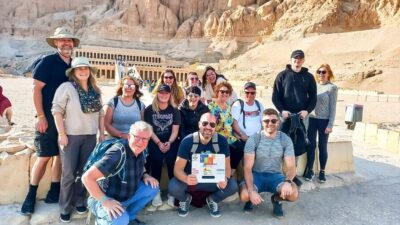
Luxor Valley of the Kings & Tutankhamun Tomb Trip
Read our review →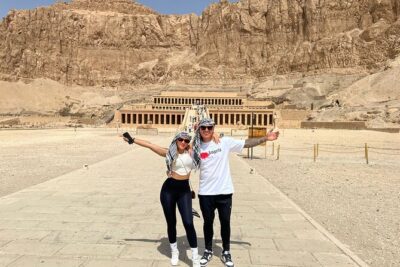
Small group Hurghada to Luxor, Valley of the Kings by Van
Read our review →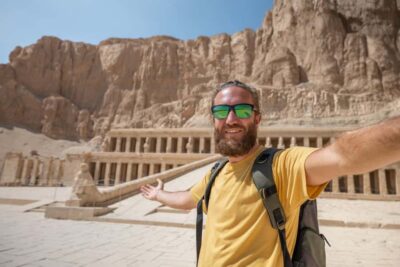
Valley of the Kings and Hatshepsut Temple Day Tour
Read our review →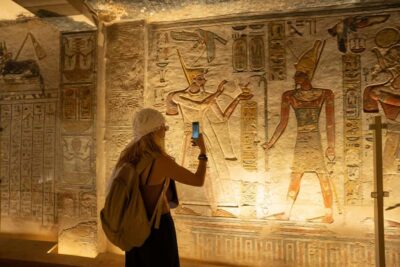
Luxor Tour with Valley of Kings, Karnak & Tut Tomb
Read our review →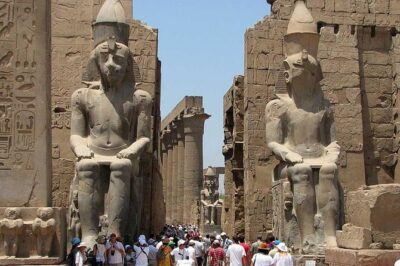
Valley of Kings, Hatchepsut Temple ,Karnak & Luxor-DayTour
Read our review →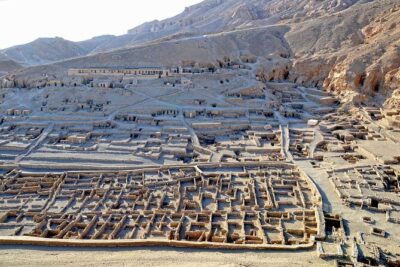
Full Day Tour of Luxor West Bank Temples and Tombs (Private)
Read our review →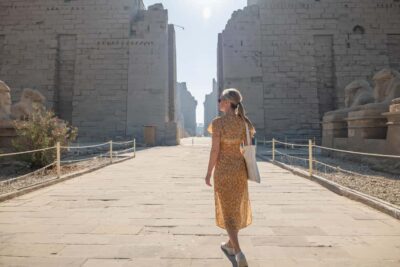
Small Group Excursion to Luxor Valley of the Kings from Hurghada
Read our review →Browse the lists this tour appears in