
Reviewed · VALLEY OF THE KINGS & WEST BANK TOURS
Luxor East & West Bank Private Full Day Tour
Luxor can feel like a time machine for one long day. This private full day plan hits the big names, from Karnak Temple to the Valley of the Kings, plus the quieter West Bank stops that make the whole story feel complete. It’s built around a smooth route, admission tickets included at each site, and a handy pickup window that keeps you from losing time to logistics.
I especially like the focus on three core sites: Karnak, Luxor Temple, and the Valley of the Kings. I also like that your schedule includes lunch at a local restaurant, so you are not hunting for food between monuments. That combo makes the day feel intentional, not like a rushed grab bag of photos.
One thing to consider: the tour runs about 6 to 8 hours, so you will be walking and standing in sun for stretches. If you are heat sensitive or easily tired, go in with a plan for water and take comfort seriously.
In This Review
- Key things to know before you go
- Karnak Temple, then Luxor Temple, in a route that makes sense
- Karnak Temple: Amon-Ra, Mut, Khonsou, and 1,500 years of building
- Luxor Temple: The road of sphinxes and a temple completed by Ramses II
- Valley of the Kings: More than 70 tombs, and the smart plan of three
- Deir el Bahari and Hatshepsut: three terraces cut into the mountain
- Colossi of Memnon: quick statues stop, plus the archaeology story
- What makes $120 feel like good value in Luxor
- Comfort, timing, and how to plan your day well
- Who this tour suits best
- Should you book the Luxor East and West Bank Private Full Day Tour?
- FAQ
- What places does the Luxor East and West Bank tour cover?
- How long is the tour?
- Is pickup offered?
- Are admission tickets included?
- How many tombs do you visit in the Valley of the Kings?
- Is lunch included?
- What is the starting time?
- Is this a private tour?
- What happens if the tour is canceled due to weather?
- Do I need to budget for tipping?
Key things to know before you go
- Private transportation plus pickup keeps the day efficient, especially when you are crossing between East and West Bank sites
- Tickets are included for each main stop, which saves time at entrances and prevents surprise add-ons
- Valley of the Kings includes three tomb visits, chosen by your guide to fit the time you have
- A full route, not just highlights, ties together Karnak, Luxor Temple, and West Bank monuments in one flow
- Real-world care for comfort, including the way the driver and guide handled an ill passenger with extra stops and pharmacy help
Karnak Temple, then Luxor Temple, in a route that makes sense
If you want one Luxor day that actually connects the dots, this itinerary is a smart way to do it. Karnak is the religious powerhouse, Luxor Temple is the city’s ceremonial face, and the West Bank stops then shift you from living gods and pharaoh pageantry to eternity and burial.
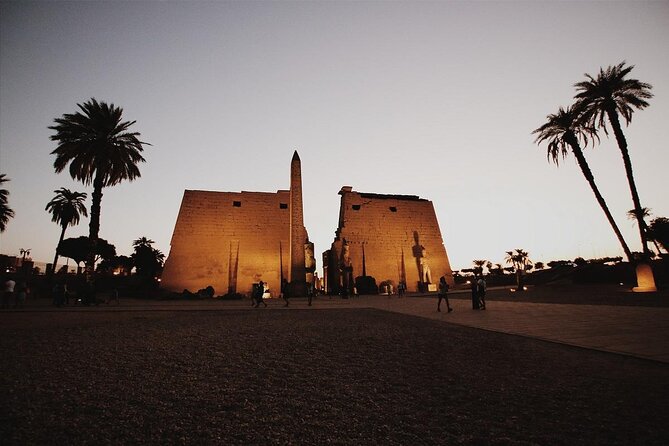
The day starts with Karnak Temple, usually the place where first-time visitors realize the scale is hard to picture until you are standing there. From there, the route moves about 3 kilometers south to Luxor Temple, linked in spirit by the historic road lined with human-headed sphinxes (known as Sphinx Avenue). Even if that avenue is only partly restored today, the idea matters. It reminds you that Luxor’s monuments were never meant to be isolated showpieces.
By the time you reach the Valley of the Kings, your brain has already adjusted to the symbols: gods, triads, royal lines, and the slow grinding confidence of stone architecture.
More West Bank and Valley of the Kings visits:
- Hurghada: Luxor Valley of the Kings & Tutankhamun Tomb Trip
★ 4.7 · 13,208 reviews - Luxor: Valley of the Kings and Hatshepsut Temple Day Tour
★ 4.4 · 1,404 reviews - Hurghada: Luxor Tour with Valley of Kings, Karnak & Tut Tomb
★ 4.6 · 1,082 reviews
Karnak Temple: Amon-Ra, Mut, Khonsou, and 1,500 years of building
Karnak is not one temple. It is a whole complex, built up over time until it became the giant religious site Egypt produced when it had the money, manpower, and devotion to keep going. You’ll hear the big-picture framing: the complex is tied to the Triad of Thebes, centered on Amon-Ra, with Mut and Khonsou as the key supporting figures.
What makes Karnak special on a short day is how it shows layers of power. It started as a smaller shrine for Amon in the Middle Kingdom period when Luxor was more of an ordinary city. Then, when Luxor became the capital in the early New Kingdom, the local god got promoted. The result was expansion and enlargement across something like 1500 years.
Practical takeaway: plan to walk slowly. Karnak rewards you when you stop for a moment and let the sheer layout settle. If you rush, it turns into a blur of columns. If you take it at a steady pace, you start to see how the sacred spaces connect.
Timing note: the visit here is about 2 hours, and that’s a good amount for understanding the complex without burning your legs out early.
Luxor Temple: The road of sphinxes and a temple completed by Ramses II
After Karnak, Luxor Temple feels different. It’s still impressive, but the atmosphere shifts toward ceremonies tied to the daily life of royalty and state religion. It sits around 3 kilometers south of Karnak, and the two sites are historically linked by Sphinx Avenue, a road once lined with human-headed sphinxes.
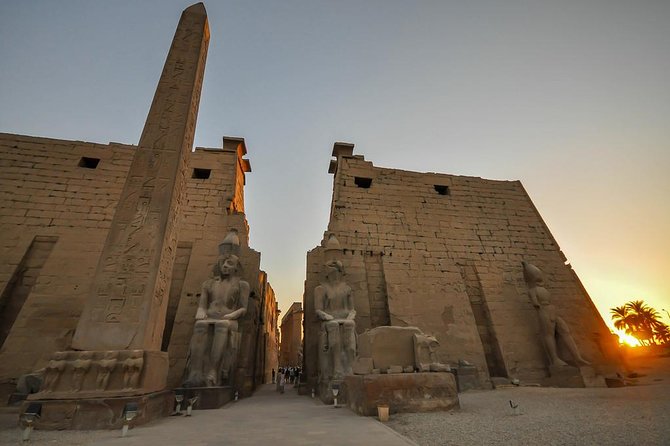
Luxor Temple was built by Amenhotep III and completed by Ramses II, which is a big clue that this is not a one-king project. It’s also a reason the temple can feel like it belongs to more than one era. As time moved from ancient Egyptian rule into later periods, the site continued to collect meaning, including periods linked to Greco-Roman history.
Practical takeaway: Luxor Temple is a great place to refocus your attention after Karnak’s size. You get a cleaner “main story,” plus the satisfying sense of walking from one major center to another.
Timing note: you’re scheduled for about 1 hour here. If you like taking photos, pace yourself. The best photos often take longer than you think, especially in bright afternoon light.
Valley of the Kings: More than 70 tombs, and the smart plan of three
This is the stop most people imagine first. The Valley of the Kings is a mountain valley packed with tombs cut into the rock for royal burials, with more than 70 tombs known from the New Kingdom period. You’ll hear about key names like Ramesses II, Merenptah, Tutmosis I, Tutmosis III, and Tut Ankh Amon.
The key word for planning is choice. With only so much time, the tour visits three tombs, and the guide recommends which ones to see. That matters because not all tombs are equal in how they feel and how well-maintained their interiors can be. Seeing only three might sound short, but it usually turns into a better experience than trying to see too many and feeling like you only passed by.
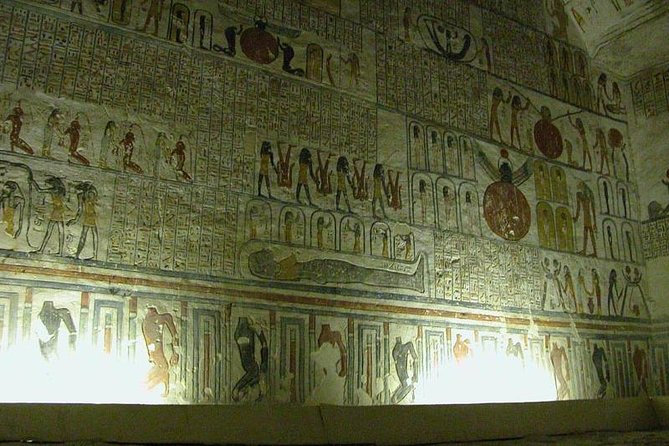
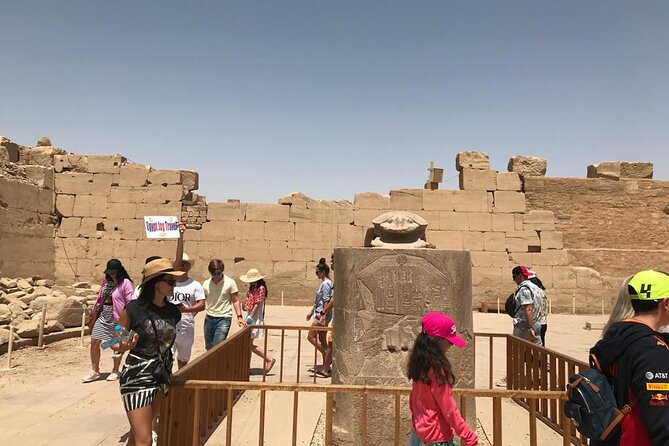
Inside, what hits you is the artwork. Those tomb walls have colored paintings that survive to the present in recognizable form. You also get a sense of effort and tools. Even with primitive tools by modern standards, the workers carved and decorated spaces meant to last for centuries.
Practical takeaway: bring patience for crowded moments and dim interiors. Tombs can be cooler than the outside air, but they also have lower visibility. If you like details, you will want your camera ready, but you will also want to slow down and look with your eyes first.
Timing note: this stop is scheduled for about 2 hours, which is a solid window for three tombs without feeling like you are sprinting.
Other Luxor options on the table
- Luxor Day Trip from Hurghada Small Group & Tutankhamun Tomb
★ 4.8 · 5,366 reviews - Hot Air Balloon Ride in Luxor Egypt with Transfers Included
★ 5.0 · 4,319 reviews - Luxor: Shared Full-Day Tour to Luxor West and East Banks
★ 4.5 · 1,812 reviews - Luxor: Hot Air Balloon Ride over Luxor Relics
★ 4.8 · 1,681 reviews
Deir el Bahari and Hatshepsut: three terraces cut into the mountain
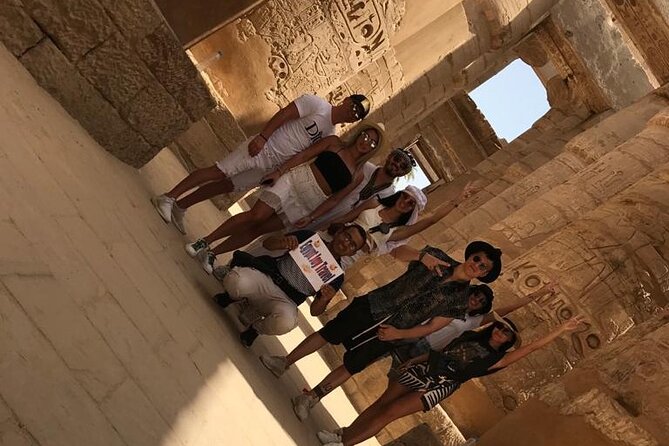
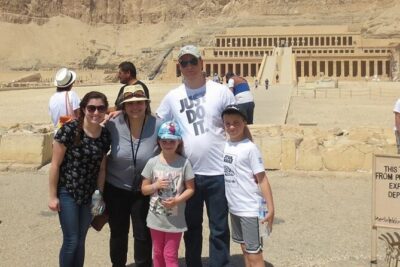
Next up is Temple of Hatshepsut at Deir el Bahari, one of those Luxor sights that feels instantly distinctive. It’s built to honor Queen Hatshepsut, and the temple is famous for its unusual design in three terraces, each one stepping higher as it climbs. You also get the symbolic framing: it was meant to commemorate her memory forever, and it faces the valley toward the Nile.
A fun way to understand why this temple looks the way it does is to picture it from a distance first. The design is not just decorative. It’s architecture that turns the landscape into part of the story. The temple is partially cut into the mountain, so you feel the blend of nature and monument.
Practical takeaway: this is a great stop if you want variety in your day. Karnak and Luxor Temple give you big formal spaces, while Deir el Bahari gives you a layered view and a more dramatic setting.
Timing note: the visit is about 1 hour, enough to appreciate the terraces and soak in the setting without feeling stuck.
Colossi of Memnon: quick statues stop, plus the archaeology story
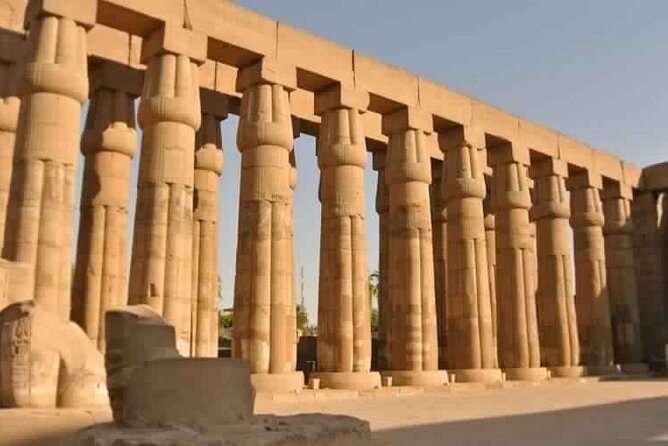
Then you get a shorter, calmer finale: Colossi of Memnon. These are huge seated statues linked to the mortuary temple of Amenhotep III. You will see the statues flank the entrance gate that has since been destroyed, and the area still has excavations in progress that may reveal additional structures underground.
What makes this stop worth your time is the contrast. After tombs and temples with lots of indoor detail, the Colossi give you an open-air perspective and scale you can measure instantly with your own body for comparison.
Practical takeaway: use this as a photo break and a decompression moment. You can also watch how the statues connect visually back toward the West Bank landscape, which helps you understand the monumental planning of the whole area.
Timing note: the stop is brief, around 20 minutes. That’s enough for a few strong photos and a clear look, but if you are extremely photo-driven, keep an eye on the time so you do not eat into the rest of the day.
What makes $120 feel like good value in Luxor
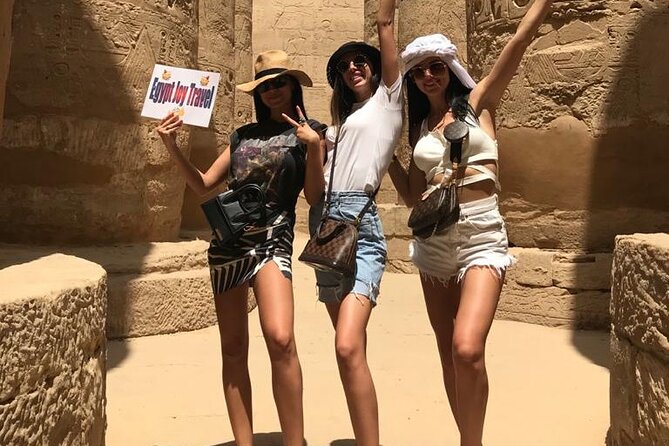
At $120 per person, the main value here is not only that you get a private day. It is that you are paying for a structured route where the admission tickets are included at each main stop, plus air-conditioned vehicle and private transportation. In a place like Luxor, time is money. Tickets included reduces small delays, and a driver who handles transfers means you are not spending your energy negotiating.
The day also includes lunch at one of the best local restaurants in Luxor. Lunch often decides whether a long tour feels enjoyable or exhausting. Having it placed into the schedule helps you keep your energy steady.
And here’s the part I really appreciate: the tour has shown flexibility with real comfort needs. One review highlighted how the driver made frequent stops when a passenger was unwell, and the guide even helped with pharmacy needs so they could get medicine. That is not a typical “hard sells” feature. It’s what you want from a private tour, when your day might not go exactly as planned.
Is it cheap? No. But it tends to feel fair because it combines private guidance, included admissions, and a full East and West Bank lineup in one shot.
Comfort, timing, and how to plan your day well
The tour starts at 8:00 am, which is a smart time to reduce heat pressure at your first stops. Expect about 6 to 8 hours total, depending on flow and how long you spend in each site.
You will be walking in ancient sites, which means you should treat this as a warm-weather outing. Wear shoes you can trust on uneven stone and stairs. Bring water. If you are sensitive to the sun, plan hats and sunscreen.
Also, remember that this is a private setup. You are not sharing your experience with a rotating crowd in the same way you might on a group tour. That makes a big difference for pacing, bathroom breaks, and the small pauses that help you actually take things in.
Mobile ticket and pickup are included, which helps you avoid last-minute stress. And if your plans change, the tour includes free cancellation, as long as you cancel at least 24 hours before the start time. If weather is poor and it gets canceled, you’re offered a different date or a full refund.
Who this tour suits best
This private day is a strong fit if you want:
- A clear route that hits Luxor’s most famous East and West Bank landmarks
- Included admissions so you can spend time looking, not buying tickets
- A guide recommendation style for the Valley of the Kings, where seeing three tombs is a good balance
- A comfortable pace supported by air-conditioned transport and planned lunch
It’s also a good choice if you want real flexibility from your driver and guide. Private tours work best when you value comfort as much as sightseeing.
Should you book the Luxor East and West Bank Private Full Day Tour?
I would book it if you are trying to do Luxor in one day without wasting time. The itinerary covers the headline sites in a logical order, and the included tickets remove a chunk of uncertainty. The schedule also makes room for the West Bank, which many one-day plans shortchange.
If you hate long sightseeing days, or you know heat and walking are tough for you, you might prefer a shorter East Bank-focused tour. But if you can handle a full day with breaks, this is one of the most practical ways to see Luxor’s most important monuments in a single stretch.
If you want one Luxor day that feels organized, comfortable, and worth the money, this is a smart pick.
FAQ
What places does the Luxor East and West Bank tour cover?
It includes Karnak Temple, Luxor Temple, the Valley of the Kings, the Temple of Hatshepsut at Deir el Bahari, and the Colossi of Memnon.
How long is the tour?
The duration is about 6 to 8 hours.
Is pickup offered?
Yes, pickup is offered.
Are admission tickets included?
Yes. Admission tickets are included for each stop listed in the itinerary.
How many tombs do you visit in the Valley of the Kings?
You can visit three tombs, with choices recommended by the tour guide.
Is lunch included?
Yes. Lunch is included at a local restaurant in Luxor.
What is the starting time?
The tour starts at 8:00 am.
Is this a private tour?
Yes, it is a private tour/activity, and only your group participates.
What happens if the tour is canceled due to weather?
The experience requires good weather. If it is canceled due to poor weather, you will be offered a different date or a full refund.
Do I need to budget for tipping?
Tipping is not included.
Newly added near Luxor
- Full-Day Private Guided Tour in the West Bank of Luxor★ 5.0 · 22 reviews
- Amazing 3 nights Nile cruise includes tours from Luxor to Aswan★ 5.0 · 57 reviews
- Hot Air Balloon Flight in Luxor with Pickup★ 4.5 · 14 reviews
- Private transfer from Luxor to Hurghada★ 5.0 · 43 reviews
- Quad Bike safari Experience in Luxor★ 4.5 · 62 reviews
- Private 2 Day Luxor Tour★ 5.0 · 71 reviews
- Private Tour in Luxor Egypt included entrance fees★ 5.0 · 11 reviews
- Private Transfer From Luxor to Marsa Alam★ 5.0 · 28 reviews
Valley of the Kings & West Bank Tours, compared.
Luxor Valley of the Kings & Tutankhamun Tomb Trip
Read our review →
Small group Hurghada to Luxor, Valley of the Kings by Van
Read our review →
Valley of the Kings and Hatshepsut Temple Day Tour
Read our review →
Luxor Tour with Valley of Kings, Karnak & Tut Tomb
Read our review →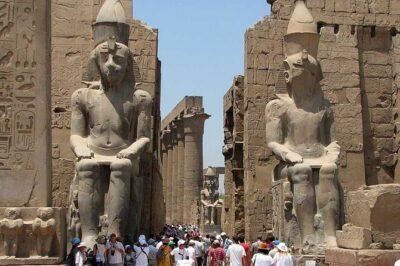
Valley of Kings, Hatchepsut Temple ,Karnak & Luxor-DayTour
Read our review →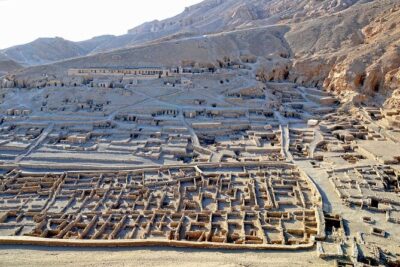
Full Day Tour of Luxor West Bank Temples and Tombs (Private)
Read our review →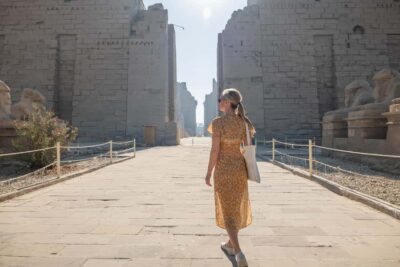
Small Group Excursion to Luxor Valley of the Kings from Hurghada
Read our review →Browse the lists this tour appears in