
Reviewed · VALLEY OF THE KINGS & WEST BANK TOURS
Marvelous Luxor East and West Bank Private Tour with Lunch From Airport /Hotels
Luxor hits you with scale and silence. This private East and West Bank day pairs an Egyptologist guide (you can choose the language) with air-conditioned transport, so you can focus on the big monuments like Valley of the Kings and Karnak Temple. I like how the guide helps each site make sense, and I like that you get an included local lunch plus bottled water to keep you steady in the heat. One thing to plan for, entrance fees are extra (listed as about $40) and the Egyptian government accepts Egyptian Pounds for entry.
You start on the West Bank, then move to the East Bank for the most famous temple complexes. It is a smart one-day route because it covers royal tombs and living-cult temples, without turning the day into a shuffle.
This is set up with hotel and cruise pickup, a small maximum group size (up to 15), and an 8-hour pace that fits most first-timers. If you want history explained clearly, in your language, this is a solid way to see Luxor in one shot.
In This Review
- Key highlights at a glance
- Why this Luxor East and West Bank route works
- Getting picked up, staying cool, and keeping the day moving
- Valley of the Kings: royal tombs and what to notice first
- Temple of Hatshepsut at Deir el Bahari: power, perspective, and symmetry
- Colossi of Memnon: the short stop that still delivers
- Karnak Temple: the big complex that makes time feel elastic
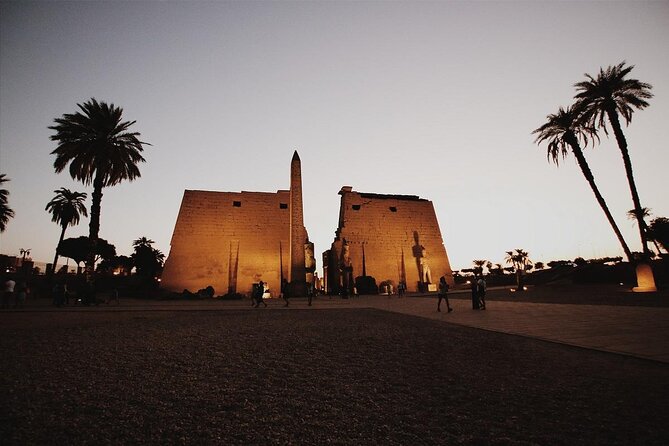
- Luxor Temple: finishing strong on the East Bank
- Lunch included: a real break, not a rushed stop
- Entrance fees, Egyptian Pounds, and what to do with the $40
- What the best guides do differently
- Languages, small groups, and how to make it feel truly private
- What to bring for Luxor sun and long stone days
- Price and value: is $86 worth it?
- Who should book this tour, and who might want a different day
- Should you book this Luxor private day tour?
- FAQ
- What’s included in the Luxor East and West Bank private tour price?
- Are entrance fees included?
- How long is the tour and what stops are included?
- Do you offer pickup from West Bank hotels?
- Can I choose the guide language?
- Can I cancel for a full refund, and how late?
Key highlights at a glance
- Egyptologist guide with your chosen language for clearer storytelling at every stop
- Air-conditioned private vehicle with bottled water during the day
- Included local lunch so you are not hunting for food between monuments
- West Bank classics like the Valley of the Kings, Hatshepsut, and the Colossi of Memnon
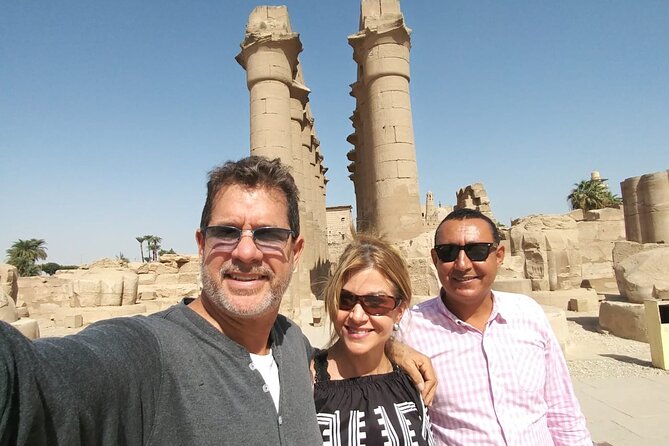
- Karnak Temple complex with the Hypostyle Hall and Amun temple columns
- Entrance fees extra, payable in Egyptian Pounds so you can plan ahead
Why this Luxor East and West Bank route works
Luxor is split by the Nile into two very different worlds. The West Bank feels like a long-ago royal city of stone, where pharaohs designed tombs to last forever. The East Bank is about temples, ongoing worship, and the living rhythm of ancient Egypt.
This tour stitches both worlds into one day. You get the Valley of the Kings first, then Deir el Bahari (Queen Hatshepsut), then the Colossi of Memnon, before finishing with the temple heavyweights on the East Bank, Karnak and Luxor Temple. That flow matters. Starting on the West Bank helps you see the tomb landscape with fresh energy, then ending on the temples gives the day a dramatic payoff.
It is also built around practical travel. You ride in an air-conditioned vehicle, you receive bottled water for each participant, and you get lunch included. For an 8-hour day in Egyptian sun, those details are not small stuff.
More West Bank and Valley of the Kings visits:
- Hurghada: Luxor Valley of the Kings & Tutankhamun Tomb Trip
★ 4.7 · 13,208 reviews - Luxor: Valley of the Kings and Hatshepsut Temple Day Tour
★ 4.4 · 1,404 reviews - Hurghada: Luxor Tour with Valley of Kings, Karnak & Tut Tomb
★ 4.6 · 1,082 reviews
Getting picked up, staying cool, and keeping the day moving
Pickup is included from Luxor hotels, or from a Nile cruise airport or train station. The tour also offers pickup from West Bank hotels for an extra $10 per person, which can be worth it if you are staying on that side.
The big comfort factor is the private, air-conditioned vehicle. You are visiting multiple sites, and Luxor traffic can slow things down. Having a vehicle ready and managed by your guide keeps your day from turning into guesswork.
One more thing I appreciate is pacing. The itinerary calls for planned blocks of time at each stop, roughly 1.5 hours for the Valley of the Kings, 1.5 hours for Hatshepsut, 30 minutes for the Colossi of Memnon, 2 hours at Karnak, and 1.5 hours at Luxor Temple. That is enough time to see what you came for, and also ask questions without feeling rushed every five minutes.
Valley of the Kings: royal tombs and what to notice first
Your day starts at the Valley of the Kings on the West Bank. This is the site famous for royal tombs, with 66 tombs from different dynasties listed for the Valley overall. The stop is planned for 1 hour 30 minutes, and entrance tickets are not included in the tour price.
If you arrive expecting one single tomb experience, you might miss the bigger point. This place works best when you focus on how the tombs fit the cliffs and the landscape. Your Egyptologist guide can help you understand the purpose behind the design, the idea of kingship, and how these tombs relate to each other across dynasties.
Practical tip: bring your sunglasses and head protection seriously. Even with shade, you will spend time outside. A hat or head scarf helps more than you think.
Temple of Hatshepsut at Deir el Bahari: power, perspective, and symmetry
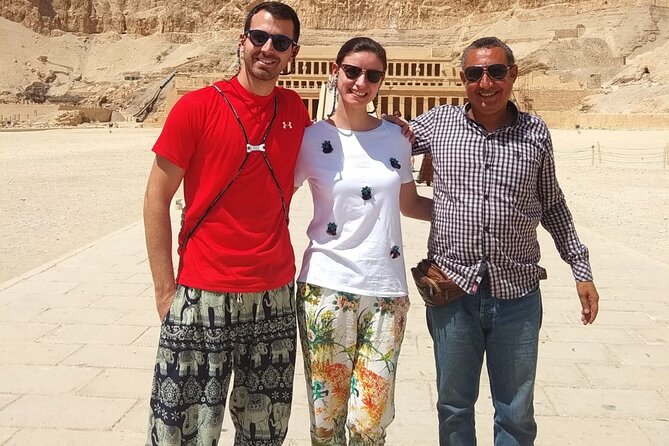
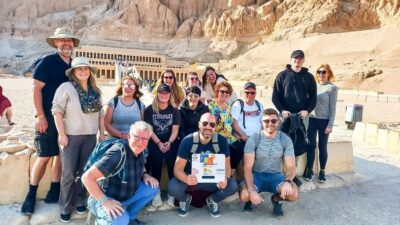
Next up is the Temple of Hatshepsut at Deir el Bahari, planned for 1 hour 30 minutes. Entrance tickets are not included here either.
Hatshepsut is one of those names that changes how you look at ancient Egypt. She was the only female ruler mentioned in this tour description, and that gets you thinking right away about how authority was expressed in stone. The temple sits in a place that rewards attention to structure and geometry, especially if your guide points out layout and symbolism while you are there.
What I like about this stop on a guided day is the pacing. At other places in Luxor, you can get swallowed by your own photo-taking and lose the meaning. Here, the time allotment gives you room to look, listen, and absorb.
A drawback to note: if you hate walking on uneven ground, this area can feel more demanding than a flat museum floor. Wear comfortable shoes and go slow.
Other Luxor options on the table
- Luxor Private Transfer Hotel to Airport or vice versa
★ 5.0 · 197 reviews - Private Transfer From/To Luxor International Airport
★ 5.0 · 99 reviews - Luxor Airport Transfer to Hotel
★ 4.5 · 88 reviews - Luxor Airport Private Arrival Transfer
★ 4.5 · 43 reviews
Colossi of Memnon: the short stop that still delivers
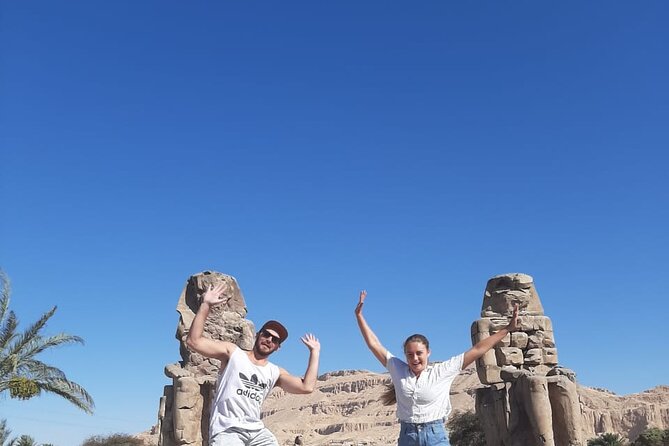
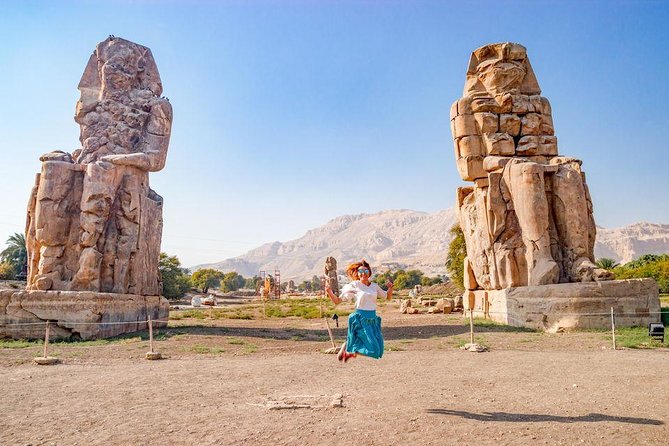
Then the tour includes a quick 30-minute stop at the Colossi of Memnon. Entrance is listed as free for this stop.
These are two gigantic sitting statues of Amen phis III facing the Nile, so you get a natural sense of scale fast. It is the kind of location that makes the day feel tangible because you can see something massive without needing a long museum-style explanation.
This stop is also a good pause. After longer stops, 30 minutes gives you time to reset, grab a quick photo, and then move on to the next big landmark feeling ready instead of drained.
Karnak Temple: the big complex that makes time feel elastic
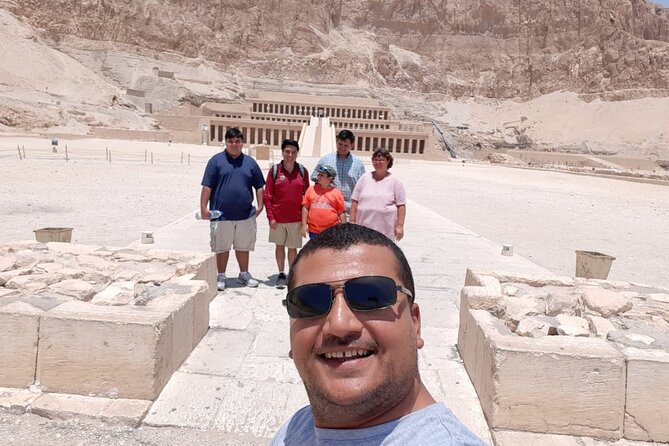
The centerpiece for many people is Karnak Temple. You get about 2 hours here. Entrance tickets are not included.
Karnak is not one temple. It is a massive complex originally dedicated to Amun Ra, his wife Mut, and their son Khons, with later touches added by around 30 additional kings. The description you are given puts its scale clearly: nearly 1 mile by 2 miles, with more than 20 temples in all.
The reason you want a guide in Karnak is simple. Without help, it is easy to feel overwhelmed and bounce from one photo spot to the next. With an Egyptologist, you can focus on the key architectural highlights your guide is pointing out, like the Hypostyle Hall, described as one of the world’s great architectural achievements, and the Temple of Amun, with its giant papyrus-shaped columns.
My practical advice: if you have limited stamina, decide in advance what you want. Even with 2 hours, Karnak can tempt you to run. It is better to see fewer details well than to skim everything.
Luxor Temple: finishing strong on the East Bank
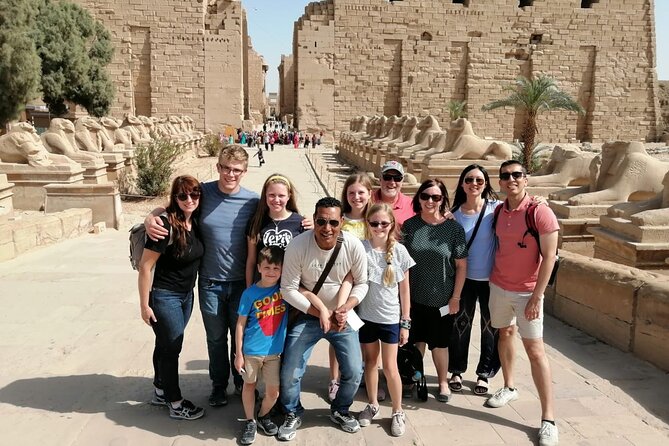
After Karnak, the itinerary continues to Luxor Temple, planned for about 1 hour 30 minutes. Entrance fees are not included here.
Luxor Temple is a natural end-of-day stop because it helps you bring the story together. Earlier you focused on the West Bank and tombs. Now you are back in the world of temples, ceremonies, and the way ancient Egyptians built spaces for worship and power.
You also benefit from timing. Late in the day, you often get better lighting for stone textures and photography. Even if your main goal is history, you will still appreciate how the stone looks when the light changes.
Lunch included: a real break, not a rushed stop
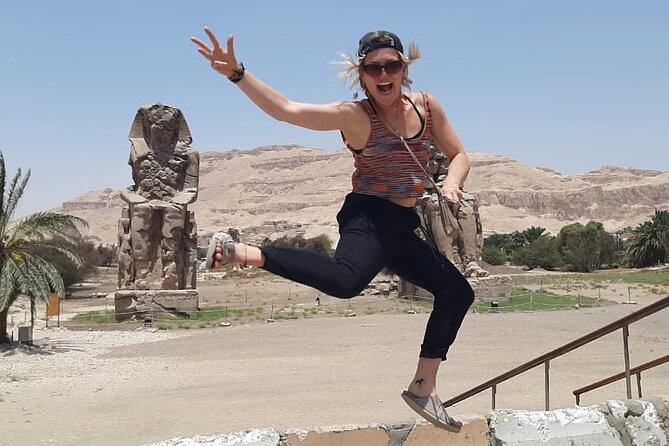
Lunch at a local restaurant is included. That matters because you avoid the typical hassle of trying to find something open and decent during a tight monument schedule.
I like that you are not left to guess. Included lunch also means the day is more controlled, which helps your guide keep the itinerary running smoothly. You also have bottled water included, which is a real lifesaver in Luxor heat.
A small planning note: entrance fees are separate, so you may want to have your cash ready before lunch or right after, depending on how your guide handles timing.
Entrance fees, Egyptian Pounds, and what to do with the $40
Here is the part that most people want to understand clearly before they arrive: entrance fees are not included. The total listed is about $40 for sightseeing.
More important than the number is the payment rule. The Egyptian government only accepts Egyptian Pounds for entry fees. That means you should plan to have Egyptian currency on hand specifically for sites.
If you do not, you will waste time and energy trying to sort out exchange or payment at the last moment. You can still enjoy the tour, but you will feel the friction. If you want the smoothest day, get Egyptian Pounds before you start.
What the best guides do differently
One reason this tour earns high marks is the human factor: the Egyptologist guide. Your experience will depend heavily on the guide’s clarity, organization, and how well they manage people in the heat.
In the positive reviews included with this tour’s details, guide names show up with specific strengths. Ramadan is mentioned for speaking Spanish and Portuguese, and for genuinely checking in on wellbeing when it was around 40°C. The day included extra concern for comfort, including stopping for fresh water and snacks. Summer is credited with strong time management when someone had limited time in Luxor, letting the group cover the major planned stops. Hamdy is praised for connecting monument talk with broader questions about Egypt, not just reciting facts.
There is also a reminder that not every guide experience will feel great. One negative review complains about a guide with poor Spanish, a lack of the agreed water, and a rushed attitude. That is a useful signal: if language matters to you, and if comfort matters, you should pay attention to how the tour starts.
Practical move: when your pickup happens, ask directly about the language you want and confirm the plan for water. If you are sensitive to heat, say that plainly. Guides who do this well respond quickly.
Languages, small groups, and how to make it feel truly private
This is described as a private tour with personal attention, with a maximum of 15 travelers. That is a good size for a day like this because it can still feel guided, even if it is not one-on-one.
The guide can work in your chosen language. That affects more than comfort. When you can understand explanations clearly, you notice details you would otherwise skip. Karnak becomes easier to process. Hatshepsut makes more sense. The Valley of the Kings stops feeling like a cliff with a lot of doors and instead feels like an organized story.
If you travel with kids or family members, this type of language and guidance combo can also reduce frustration. Everyone stays aligned on what you are seeing and why.
What to bring for Luxor sun and long stone days
You are outside more than you might expect, even with plenty of stops. The tour guidance suggests packing: sunglasses, a hat or head scarf, your camera, and a student card. Student discounts might be available at many locations, which can help with the extra entrance fee reality.
Also bring a reusable water bottle if you like. Bottled water is included for each participant, but extra water can give you comfort during waiting times.
Wear closed-toe shoes with grip. Some areas around temples and paths can be uneven. Comfortable clothes also help you focus on stonework and carvings instead of adjusting your clothing every few minutes.
Price and value: is $86 worth it?
At $86 per person for an 8-hour private Luxor East and West Bank day with pickup, an Egyptologist guide, private air-conditioned transport, bottled water, and lunch, the base package is priced like a practical “buy your day” option.
The catch is the entrance fees. You still need about $40 for sightseeing, and you pay those fees in Egyptian Pounds. If you compare costs, the tour price covers the expensive parts that visitors often underestimate: getting a trained guide and handling transport between major sites.
Also, group discounts are listed. If you are traveling with friends or family, you might be able to reduce the per-person cost slightly depending on how the booking is set.
The best way to think about value: this tour is good when you want fewer moving parts. If you already love planning your own museum-like route and you know exactly where to go, you might do it cheaper. If you want a guided day that moves smoothly and includes lunch, this is the value lane.
Who should book this tour, and who might want a different day
Book this if you:
- want East and West Bank coverage in one day
- like history explained by an Egyptologist, in your language
- value air-conditioned comfort, included bottled water, and an included lunch
- have limited time and want a focused list of major Luxor sights
Consider a different plan if you:
- want a very slow pace or long free time for wandering without a schedule
- dislike paying entrance fees separately, since they are not included
- want a more specialized theme tour, like only tombs, only temples, or only art details, rather than the full mix
This tour also makes sense for solo travelers, couples, and groups up to the small maximum size. The structure is built to keep the day coherent.
Should you book this Luxor private day tour?
If you want a smart, guided route that hits the big Luxor names, this is a strong choice. The combination of Valley of the Kings, Hatshepsut, Karnak, and Luxor Temple is exactly what most people come to Luxor for, and the included lunch plus bottled water helps the day feel manageable.
The decision hinges on two things. First, entrance fees are extra, and you need Egyptian Pounds for them. Second, choose the language you want and set expectations early so your guide can match your comfort level and pace.
If those two points line up, you will likely love the payoff of seeing royal tombs and monumental temples in a single, well-timed day.
FAQ
What’s included in the Luxor East and West Bank private tour price?
Pickup from your Luxor hotel, Nile cruise airport, or train station is included, plus transportation by a private air-conditioned vehicle. You also get a professional Egyptologist guide, bottle of water for each participant, and lunch at a local restaurant. Taxes, fuel surcharge, parking, and landing fees are included as well.
Are entrance fees included?
No. Entrance fees to sightseeing are not included, and they are listed as $40. The Egyptian government only accepts Egyptian Pounds for entry fees.
How long is the tour and what stops are included?
The tour is about 8 hours. It includes the Valley of the Kings, Temple of Hatshepsut at Deir el Bahari, the Colossi of Memnon, Karnak Temple, and Luxor Temple, then transfer back to your hotel or Nile cruise ship.
Do you offer pickup from West Bank hotels?
Yes, West Bank hotel pickup is available for an extra $10 per person. Standard pickup is included from Luxor hotels, Nile cruise airport, or train station.
Can I choose the guide language?
Yes. The Egyptologist guide offers a language choice, depending on what you select at booking.
Can I cancel for a full refund, and how late?
Free cancellation is available up to 24 hours in advance of the experience start time for a full refund. If you cancel less than 24 hours before, the amount paid is not refunded.
Newly added near Luxor
- Full-Day Private Guided Tour in the West Bank of Luxor★ 5.0 · 22 reviews
- Amazing 3 nights Nile cruise includes tours from Luxor to Aswan★ 5.0 · 57 reviews
- Hot Air Balloon Flight in Luxor with Pickup★ 4.5 · 14 reviews
- Private transfer from Luxor to Hurghada★ 5.0 · 43 reviews
- Quad Bike safari Experience in Luxor★ 4.5 · 62 reviews
- Private 2 Day Luxor Tour★ 5.0 · 71 reviews
- Private Tour in Luxor Egypt included entrance fees★ 5.0 · 11 reviews
- Private Transfer From Luxor to Marsa Alam★ 5.0 · 28 reviews
Valley of the Kings & West Bank Tours, compared.
Luxor Valley of the Kings & Tutankhamun Tomb Trip
Read our review →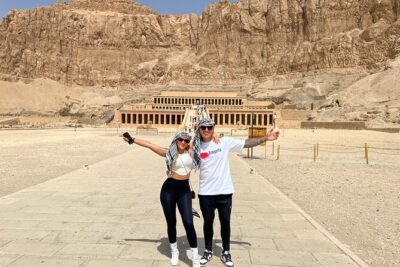
Small group Hurghada to Luxor, Valley of the Kings by Van
Read our review →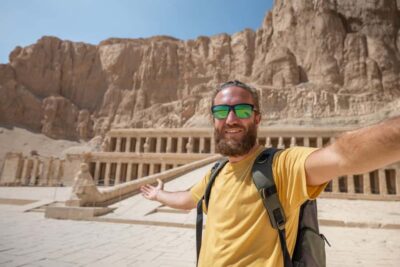
Valley of the Kings and Hatshepsut Temple Day Tour
Read our review →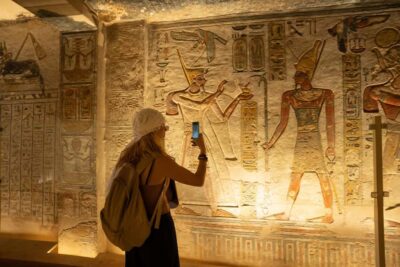
Luxor Tour with Valley of Kings, Karnak & Tut Tomb
Read our review →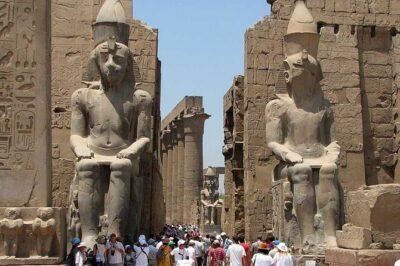
Valley of Kings, Hatchepsut Temple ,Karnak & Luxor-DayTour
Read our review →
Full Day Tour of Luxor West Bank Temples and Tombs (Private)
Read our review →
Small Group Excursion to Luxor Valley of the Kings from Hurghada
Read our review →Browse the lists this tour appears in