
Reviewed · VALLEY OF THE KINGS & WEST BANK TOURS
Nefertari and King Tut’s Tombs, Hatshepsut and More in Luxor
Six tombs, one big payoff. This Luxor West Bank tour strings together the Valley of the Queens and the Valley of the Kings, with a rare chance to see King Tutankhamun’s tomb and time to take in Deir el Bahari afterward.
I like the private setup and air-conditioned pickup, because you start the day comfortably instead of waiting in heat. I also like that the schedule is built around short, manageable tomb visits, roughly 20 minutes at the key sites, then longer blocks for the temples and main viewpoints.
One real thing to watch: access to Queen Nefertari’s tomb can change, and if it is closed you may not get the stop your ticket title promises.
In This Review
- Key points before you go
- How the 6 to 7 hour route actually feels on the West Bank
- Queen Nefertari’s Tomb in the Valley of the Queens
- King Tutankhamun’s tomb: what you see and why it hits
- Valley of the Kings: moving between tombs without losing the plot
- Ramses III, Ramses VI (KV2), and Merenptah: three styles of the afterlife
- Tomb of Ramses III
- Ramses VI stop, KV2 style highlights
- Tomb of Merenptah
- Deir el Bahari: Hatshepsut’s mortuary temple in 2 hours
- Colossi of Memnon: 30 minutes of scale
- Howard Carter House: the “how it happened” stop
- Price and logistics: where the value really comes from
- Who this tour suits best, and who should think twice
- Should you book Nefertari and King Tut’s Tombs in Luxor?
- FAQ
- How long is the Luxor West Bank tomb tour?
- Is hotel pickup and drop-off included?
- Are entrance fees included in the $50 price?
- Is this tour private?
- Do I get a mobile ticket?
- Is a guide included?
- How long do you spend inside the Valley of the Kings?
- What if the Tomb of Queen Nefertari is closed?
Key points before you go
- King Tutankhamun’s tomb time is the main draw, with the royal mummy viewed in its original resting place
- Queen Nefertari’s tomb is a limited-access highlight, so confirm it is open for your date
- Short tomb slots keep the day realistic in Luxor heat, rather than rushing for hours underground
- Hatshepsut at Deir el Bahari is a major culture shift from tomb corridors to bright, grand architecture
- Howard Carter House adds the backstory of the 1922 discovery, not just the finished monuments
- Solo travelers have felt safe and cared for, including AC during pickup and clear WhatsApp contact in at least one account
How the 6 to 7 hour route actually feels on the West Bank
This is a half-day style tour, usually clocking in around 6 to 7 hours. That matters in Luxor because the West Bank can feel like a heat machine, even on days that look fine in the morning.
You’re picked up and dropped off at your hotel, and you ride in an air-conditioned vehicle. Then the day becomes a series of timed stops: brief visits to tomb interiors, plus longer stretches at Deir el Bahari and the Howard Carter House. It is not a slow walk through one site. It is more like a carefully paced checklist, with enough time to actually look, not just pose.
The itinerary also uses a mobile ticket approach, so your day starts with less fuss if your phone is charged and you have stable access. Entrance fees are not included, so you should plan on paying separately for tomb and temple access when you arrive.
More West Bank and Valley of the Kings visits:
- Hurghada: Luxor Valley of the Kings & Tutankhamun Tomb Trip
★ 4.7 · 13,208 reviews - Luxor: Valley of the Kings and Hatshepsut Temple Day Tour
★ 4.4 · 1,404 reviews - Hurghada: Luxor Tour with Valley of Kings, Karnak & Tut Tomb
★ 4.6 · 1,082 reviews
Queen Nefertari’s Tomb in the Valley of the Queens
The first stop is the Tomb of Queen Nefertari in the Valley of the Queens, scheduled for about 20 minutes. Nefertari is described as a queen with a status often compared to the famous later queens, and she is tied to Ramses the Great as his wife. Her tomb is also presented as the one with standout decoration and a top tier level of royal artistry.
This is the type of stop that can make people book the whole tour. Not because it is long, but because it is special access compared with the more standard Valley of the Kings options.
The big practical point is this: Nefertari’s tomb access is not always guaranteed. One booking issue mentioned that the tomb had been closed for months, and the visit plan did not match the title. That does not mean it will happen to you. It does mean you should treat Nefertari as a “check before you commit” moment. If the tomb is open on your date, great. If it is closed, ask what the replacement plan will be.
King Tutankhamun’s tomb: what you see and why it hits
Next comes the Tomb of King Tutankhamun in the Valley of the Kings, also 20 minutes. The context here matters. The tomb was discovered in 1922 by Howard Carter, and the description emphasizes that it was found nearly intact.
The contrast is useful for your expectations. The famous Tutankhamun golden mask is displayed in the Egyptian Museum in Cairo, so this stop is about seeing the king’s mummy in the place where it originally rested. That is a different kind of experience than looking at exhibits. It is also why timed entry is so tightly managed in tours like this.
In practical terms, plan to go in with focus. Twenty minutes inside can vanish if you spend the whole time trying to decode everything at once. Give yourself a simple goal, like finding the key figure-focused areas first, then letting your eyes move slowly as you continue.
Entrance fees are not included, so you will likely have a quick pay or ticket moment for the tomb. If you prefer to avoid stress, budget extra time at the start of the tomb segment for paperwork and entry lines.
Valley of the Kings: moving between tombs without losing the plot
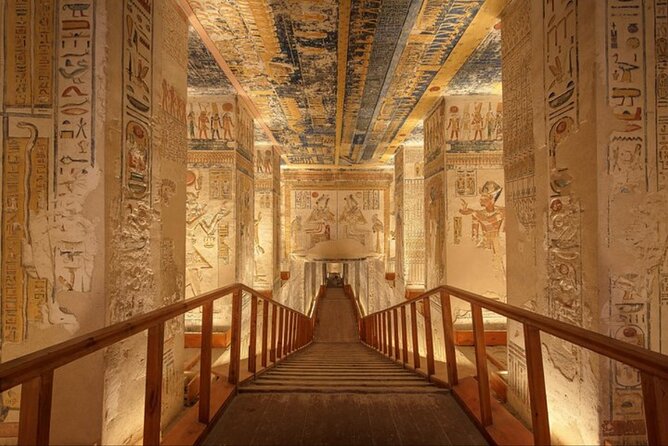
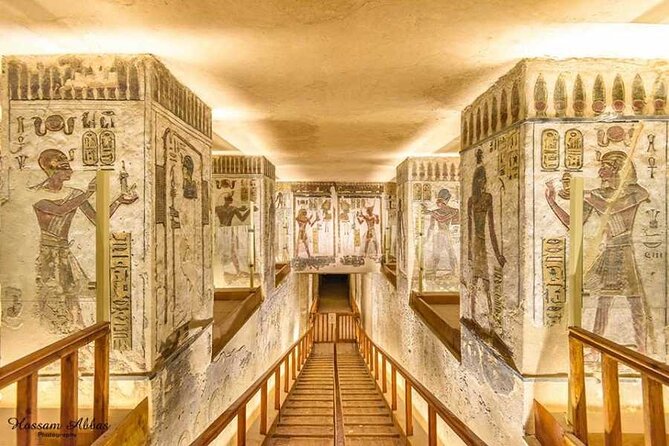
After Tut, the tour shifts into the Valley of the Kings area, including a 2 hour window to explore royal tombs. The description highlights that this is part of the Thebes necropolis on Luxor’s West Bank. It also notes an experience built around multiple royal tombs, with scenes and artwork that help tell stories from ancient Egypt.
Here’s the value of the way the day is designed. If you only hit one tomb, you can feel like you’re seeing one style. When you visit several, you start to notice patterns in religious texts, visual storytelling, and royal priorities. You also learn how different reigns expressed the afterlife in different artistic choices.
The itinerary then stacks specific tomb stops after this overview time, so you get both the “big picture” feel and then deeper snapshots of particular monuments.
Other Luxor options on the table
- Luxor Day Trip from Hurghada Small Group & Tutankhamun Tomb
★ 4.8 · 5,366 reviews - Hot Air Balloon Ride in Luxor Egypt with Transfers Included
★ 5.0 · 4,319 reviews - Luxor: Shared Full-Day Tour to Luxor West and East Banks
★ 4.5 · 1,812 reviews - Luxor: Hot Air Balloon Ride over Luxor Relics
★ 4.8 · 1,681 reviews
Ramses III, Ramses VI (KV2), and Merenptah: three styles of the afterlife
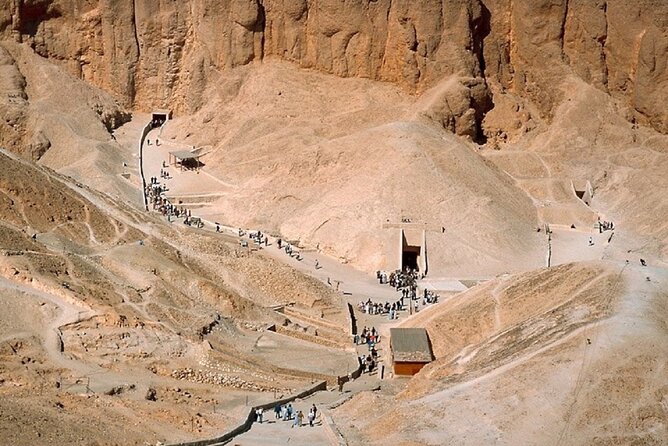
The tour includes multiple Valley of the Kings tomb interiors, each scheduled for about 20 minutes.
Tomb of Ramses III
This stop is framed around Ramses III and the complexity of the tomb’s layout, plus vibrant decorations. The highlight is sunken reliefs, including ritual texts and secular scenes. There is also emphasis on depictions tied to foreign tributes and royal life.
What I like about this stop type is that it gives you a sense of how Egypt recorded power. You can see not only religious themes, but also what the kingdom wanted to remember about itself.
Ramses VI stop, KV2 style highlights
The schedule lists a stop for Ramses VI, and the detailed description points to KV2-style features. What you should look for, based on the descriptions here, are the hieroglyphic programs tied to the Litany of Ra and multiple funerary and afterlife texts. The walls inside are described as having strong blue and white elements.
The stop also highlights a rose-colored granite sarcophagus and a ceiling scene featuring the goddess Nut, connected to the sun in her swallowing imagery. The description also notes some deterioration, but still frames the tomb as highly decorated.
This is one of the spots where short entry time can be tough. If you’re the type who reads small details, you may want to balance between taking in the big compositions and glancing at text enough to recognize recurring themes.
Tomb of Merenptah
This tomb is for Pharaoh Merneptah, described as a son of Ramses II. The features you’ll be looking for include intricate carvings and mythology-linked scenes. There are sunken reliefs with ritual texts, depictions of foreign tributes, plus scenes tied to royal armory and boats.
The practical win is variety. Between Ramses III and Merenptah, you should notice different emphasis in the storytelling. That makes the time inside feel less repetitive, even though each stop is brief.
One more note that helps you enjoy these interiors: you are moving through multiple sites in a single day. That means you are not just seeing a tomb, you are also seeing the way the tombs fit together inside the West Bank burial landscape.
Deir el Bahari: Hatshepsut’s mortuary temple in 2 hours
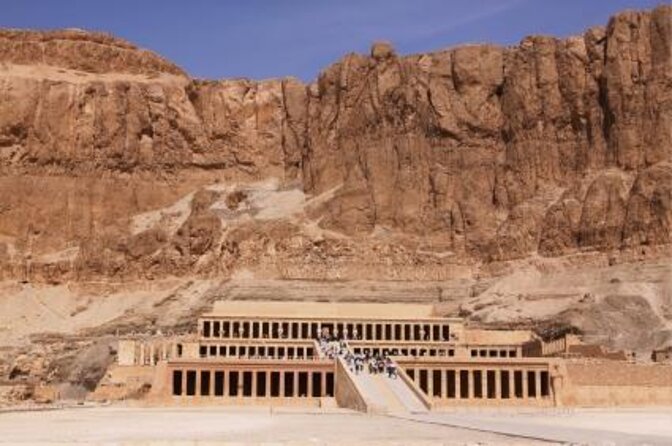
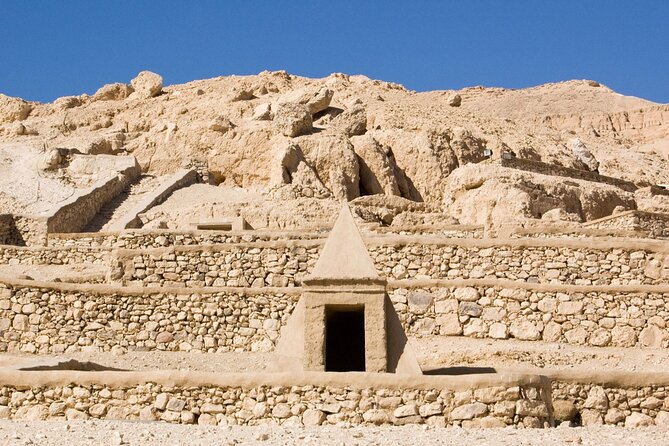
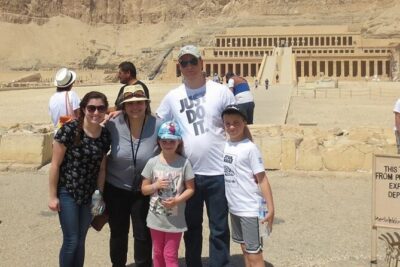
Next is the Temple of Hatshepsut at Deir el Bahari, scheduled for about 2 hours. This is a big change in mood from tomb interiors. Instead of underground corridors and sculpted narratives, you get monumental architecture against limestone cliffs.
Hatshepsut is described as the only woman to rule Egypt as pharaoh, and the stop is framed as her mortuary temple. If you’re trying to connect the dots between royal rule, religion, and public monument building, this is where the story clicks more visibly.
Two hours gives you enough time to slow down. Tomb visits can feel like sprints. Here, you can actually let your eyes rest on the structure and then return to the details.
Entrance fees are not included, so expect a separate payment or ticket step.
Colossi of Memnon: 30 minutes of scale
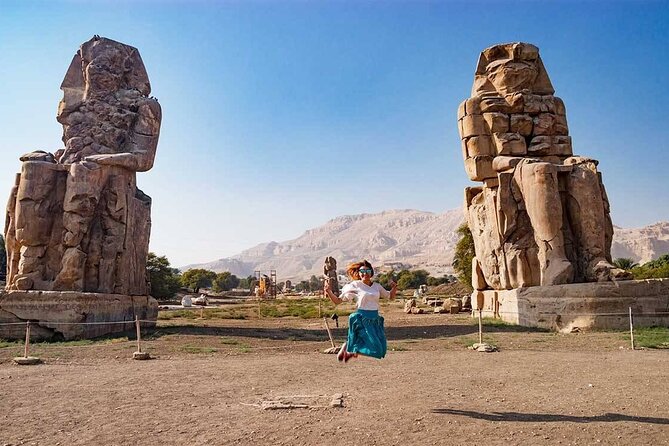
The Colossi of Memnon are a shorter stop, about 30 minutes, and described as colossal statues of Amenhotep III. The key point is that these statues are all that remains of a once grand mortuary temple.
This is a good breather. It is outside, and it lets you absorb scale after concentrated time at tomb entries. The site is also scheduled with a free admission note in the provided tour information, which is nice for budget planning.
Howard Carter House: the “how it happened” stop
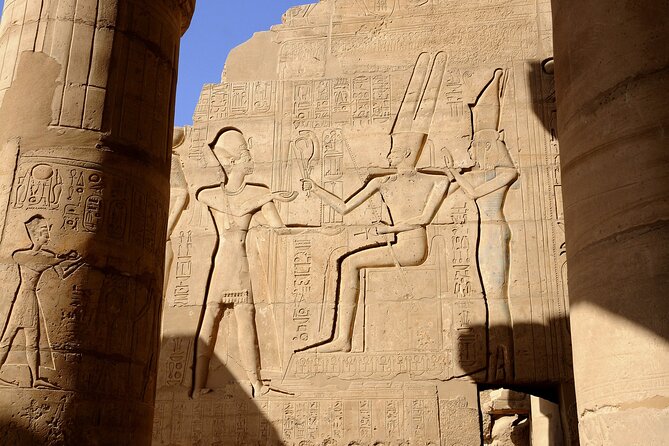
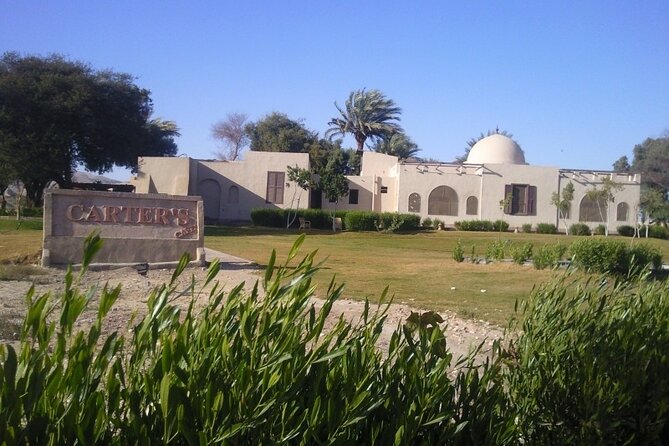
The tour also includes the Howard Carter House, scheduled for 30 minutes. This stop is connected to Carter’s life during his Luxor work and the 1922 discovery of Tutankhamun’s tomb.
The description says the house preserves Carter’s personal artifacts, tools, and a glimpse into the excavation process. This is valuable because it turns the famous story into something more human. You see the work behind the headlines, even if it is only a short visit.
Admission here is listed as not included, so you may pay separately if the house admission is required on the day you visit.
Price and logistics: where the value really comes from
The tour price is listed at $50 per person. That can sound like a steal if you get the signature tomb access you’re expecting. It can also feel disappointing if your day turns into “transfer only” or if a major stop is closed and replaced with something else.
Here’s what the price includes, based on the provided details:
- Hotel pickup and drop-off
- Transport by air-conditioned vehicle
- Private tour
- Bottle of water during the tour
- Mobile ticket
Entrance fees are not included. That is normal for Egypt tours, but it is still the part that can surprise people who compare only the headline price.
A separate practical issue came up in negative feedback: one account described feeling like the service was mostly just a vehicle transfer, with limited information or guidance during tomb visits. That is not what you want for tomb days where you need clear instructions and smooth entry.
So here’s my straight advice: before the day starts, confirm two things with your pickup contact.
- Confirm each named site is open for your date, especially Queen Nefertari
- Confirm what happens if a site is closed, so you are not stuck guessing at the gate
If you do that, the low ticket price is more likely to feel like real value rather than a gamble.
Who this tour suits best, and who should think twice
This tour fits best if you want a focused West Bank day with multiple tomb interiors and a classic temple add-on afterward. It is also a good match for solo travelers who care about safety and comfort, since at least one solo account mentioned feeling safe and supported, plus AC starting right from pickup.
It is less ideal if you hate timed schedules. Tombs are listed for about 20 minutes each, and that means you need to be comfortable with fast looking, not slow wandering.
It is also a weaker choice if you are booking specifically for Queen Nefertari and would be unhappy with substitution. Because the itinerary is advertised with her tomb in the title, missing that stop due to closure can feel like a bait and switch. Not every date has problems, but you should treat that as the main risk.
Should you book Nefertari and King Tut’s Tombs in Luxor?
If your priority is getting into King Tutankhamun’s tomb and you’re okay with a structured day, I think this can be a good buy for the $50 range, especially because pickup, AC transport, and private pacing reduce stress.
I would book it if you can also do one quick piece of homework: confirm that Queen Nefertari’s tomb is open on your exact date. If it is open, the combination of Nefertari plus Tut plus Hatshepsut in one day is a strong set of highlights.
I would skip it or renegotiate the plan if your heart is set on Nefertari and you cannot tolerate changes. In that case, pay attention to what you will see instead, because entrance fees and time are still real costs even when a tomb does not cooperate.
FAQ
How long is the Luxor West Bank tomb tour?
The tour runs about 6 to 7 hours, based on the scheduled time for the stops.
Is hotel pickup and drop-off included?
Yes. Hotel pickup and drop-off are included.
Are entrance fees included in the $50 price?
No. Entrance fees are optional and are not included in the tour price.
Is this tour private?
Yes. It is listed as a private tour, meaning only your group participates.
Do I get a mobile ticket?
Yes. The tour includes a mobile ticket.
Is a guide included?
A guide is listed as optional, meaning it is not included in the provided essentials.
How long do you spend inside the Valley of the Kings?
The Valley of the Kings time is scheduled for about 2 hours, with additional tomb stops inside the Valley listed at about 20 minutes each.
What if the Tomb of Queen Nefertari is closed?
Nefertari’s tomb is listed as stop 1, but some past bookings reported it was closed and that the plan was changed instead. Before you go, confirm your date’s access and ask what replacement is offered if it is closed.
Newly added near Luxor
- Full-Day Private Guided Tour in the West Bank of Luxor★ 5.0 · 22 reviews
- Amazing 3 nights Nile cruise includes tours from Luxor to Aswan★ 5.0 · 57 reviews
- Hot Air Balloon Flight in Luxor with Pickup★ 4.5 · 14 reviews
- Private transfer from Luxor to Hurghada★ 5.0 · 43 reviews
- Quad Bike safari Experience in Luxor★ 4.5 · 62 reviews
- Private 2 Day Luxor Tour★ 5.0 · 71 reviews
- Private Tour in Luxor Egypt included entrance fees★ 5.0 · 11 reviews
- Private Transfer From Luxor to Marsa Alam★ 5.0 · 28 reviews
Valley of the Kings & West Bank Tours, compared.
Luxor Valley of the Kings & Tutankhamun Tomb Trip
Read our review →
Small group Hurghada to Luxor, Valley of the Kings by Van
Read our review →
Valley of the Kings and Hatshepsut Temple Day Tour
Read our review →
Luxor Tour with Valley of Kings, Karnak & Tut Tomb
Read our review →
Valley of Kings, Hatchepsut Temple ,Karnak & Luxor-DayTour
Read our review →
Full Day Tour of Luxor West Bank Temples and Tombs (Private)
Read our review →
Small Group Excursion to Luxor Valley of the Kings from Hurghada
Read our review →Browse the lists this tour appears in