
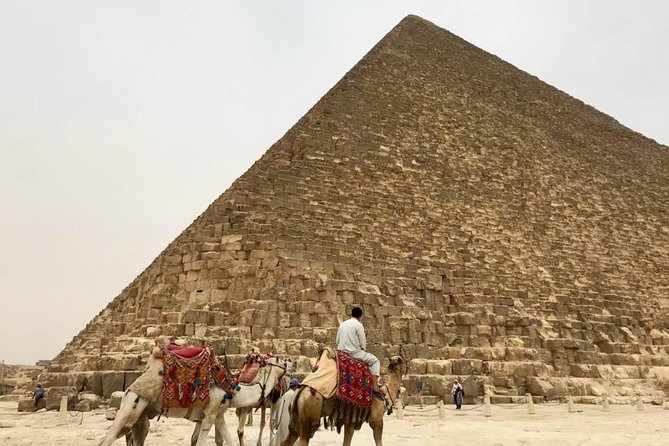
Reviewed · PYRAMIDS OF GIZA & SPHINX TOURS
Private Day Tour to Giza Pyramids, Memphis, Sakkara and Dahshur
Cairo can feel like a blur, so having one plan helps. This private day run strings together Giza, Dahshur, Memphis, and Saqqara in a single, doable schedule, with pickup and a vehicle built for the long drives. You’ll see the big icons, plus the quieter Old Kingdom sites that many people skip.
What I really like is the pace. You get set time blocks at each location, including long enough stops at Giza Plateau to actually understand what you’re looking at. I also like the practical setup: hotel pickup and drop-off, bottled water, and a focused route that avoids the “where do we even start?” problem.
One thing to think about: the day includes several shopping and government souvenir stops, which can be uncomfortable if you prefer not to browse or buy. Also, if you choose a driver-only option, the quality of the day can depend more on timing and communication than on interpretation.
In This Review
- Key highlights worth planning around
- A Full-Day Giza-to-Saqqara Loop That Starts With Pickup
- Giza Plateau and Valley Temple: More Than Just a Sphinx Photo
- Cheops, Menkaure, and Khafre: What the Short Pyramid Stops Add Up To
- Dahshur’s Bent and Red Pyramids: The “Different Angle” You’ll Be Glad You Took
- Memphis and Saqqara: Statues, Old Kingdom Tombs, and Everyday Life Scenes
- Price and Tickets: Why $16 Can Still Become a Real Budget
- Shopping Stops and Souvenir Time: Stay Polite, Stay Firm
- Transport Timing and the Crowd Trap at Giza
- Guides Make the Day: Look for Strong Planning and Clear Explanations
- Who This Tour Fits Best (and Who Might Want Something Different)
- Should You Book This Cairo Classics Day Trip?
Key highlights worth planning around
- One-day “top sites” route: Giza pyramids, Dahshur pyramids, Memphis, and major Saqqara monuments in about 8 hours
- Giza Plateau time: the valley temple and Sphinx area get a longer, more complete visit
- Dahshur Bent and Red Pyramids: a strong add-on because they’re older and visually different from Giza
- Saqqara variety: pyramids of Teti and Unas plus the Mastaba of Ti with everyday life scenes
- Built-in breaks for shopping and souvenirs: 20-minute stops at places like papyrus, cotton, and handmade carpets
- Inside-pyramid access is extra: basic area entry is included, but pyramid interiors are not
A Full-Day Giza-to-Saqqara Loop That Starts With Pickup
This tour is designed around an 8:00 am start and hotel pickup in Cairo or Giza. That early departure matters. Giza gets crowded, and being on the plateau before the worst congestion helps you enjoy the monuments instead of just surviving them.
The transport is private and air-conditioned, with parking, fuel, and bottled water included. That combination is more valuable than it sounds. Desert-area sites are spread out, and you want the comfort of a dedicated vehicle when you are moving between plateaus and valleys.
Also, this is set up as a private experience for just your group. In plain terms, you are not pressed to match a group schedule of strangers. You still keep to the day plan, but you typically have more control over your pace and photo stops, especially if your guide is organized.
More Giza pyramid visits:
- Cairo: Pyramids & Great Sphinx Private Tour with Camel Ride
★ 4.9 · 6,335 reviews - Tour to Giza Pyramids and The Egyptian Museum
★ 5.0 · 6,016 reviews - VIP All inclusive Best of the best Giza Pyramids,Sakkara,Memphis
★ 5.0 · 3,164 reviews
Giza Plateau and Valley Temple: More Than Just a Sphinx Photo
The day’s first big block is at the Giza Plateau, with about 2.5 hours spent in the area. This is the part that helps Giza feel less like a checklist.
You’ll visit the iconic Great Pyramid area, then move into the Valley Temple, known as the place where priests carried out mummification rituals for the dead king. If you’ve only seen pictures of pyramids, this temple stop adds the “people and process” side of the story. It is also a good moment to slow down and orient yourself: where the Sphinx sits, how the temples relate, and why these sites were built as a connected complex rather than separate monuments.
The Sphinx is next, with a close-up look. At Giza, this is one of those sites where your brain does a weird trick. From far away, it’s a landmark. Up close, it feels like an object that has been patiently staring at the desert for millennia. The second you can spot the scale of it, you start noticing details instead of just taking a quick picture.
One practical note: even with a guided stop, you should expect crowds around the Sphinx and the main pathways. If you want “less hustle” photos, wear comfortable shoes and choose your angles carefully instead of trying to fight everyone at the busiest corners.
Cheops, Menkaure, and Khafre: What the Short Pyramid Stops Add Up To
After the plateau introduction, the tour hits the pyramid complexes in a way that keeps the day moving without fully rushing you through everything.
You’ll focus on:
- Great Pyramid of Cheops (Khufu) with about 1 hour at the complex
- Pyramid of Menkaure around 30 minutes
- Khafre’s Pyramid about 30 minutes
- Then you return to the Sphinx area for additional time in the flow of the day
Here’s what makes this sequence smart for your time. Cheops gets the longest look, so you learn the “main event” first. Then Menkaure and Khafre become comparisons. You start noticing how the complexes are organized, not just how the pyramids look from one angle.
A small detail you might enjoy: the Great Pyramid complex includes references to the valley temple now buried beneath a village, which is a reminder that archaeology here sits next to modern life. Even if you cannot see everything excavated, the context helps you understand why some parts are hard to access and why conservation matters.
Also, entry is practical. You get basic area entry included for the relevant sites, but inside the pyramids is not included. If pyramid interiors are a must for you, you’ll need to budget for additional access or pick an option that adds it.
Dahshur’s Bent and Red Pyramids: The “Different Angle” You’ll Be Glad You Took
The tour’s strongest change of scenery is Dahshur, about 40 km south of Cairo. You get roughly 1 hour there, focused on the Bent and Red Pyramids.
This stop is valuable because Dahshur doesn’t feel like a watered-down second visit to Giza. The pyramids are built in the Old Kingdom period (with construction dates commonly given as 2613 to 2589 BCE), and visually, they land differently. The Bent Pyramid in particular gives you a chance to appreciate that the Egyptians were solving problems through experimentation and engineering, not just repeating a single blueprint.
The other advantage: fewer people. Giza is where most first-timers go. Dahshur gives you a calmer moment to compare forms, notice brick and stone choices at a distance, and feel what it means to stand in a royal necropolis area rather than a single famous monument.
If you care about architectural variety, this is the best reason to pick a multi-site day instead of only doing Giza.
More Saqqara and Memphis trips:
- From Cairo: Pyramids of Giza, Sphinx, Saqqara & Memphis Tour
★ 4.7 · 3,110 reviews - Cairo: Pyramids, Sakkara & Memphis Tour with Lunch
★ 4.6 · 2,493 reviews - Private Day Tour Giza Pyramids, Sphinx, Memphis, and Saqqara
★ 4.5 · 904 reviews - Private tour: GIza Pyramids, Memphis City & Sakkara Pyramid
★ 5.0 · 637 reviews
Memphis and Saqqara: Statues, Old Kingdom Tombs, and Everyday Life Scenes
Once Dahshur is done, you head toward Memphis, the ancient capital traditionally dated back to around 3100 B.C. You get about 1 hour in the area.
Memphis is different from the pyramid plateaus. It is about monumental sculpture and a sense of continuity. The tour highlights include the colossal statue associated with Ramses II and the Alabaster Sphinx. If you are only thinking “pyramids and mummies,” Memphis gives you a reality check: Egyptian civilization also left behind urban scale art, religious sculpture, and a long-lived cultural landscape.
Then comes Saqqara, with multiple stops that help you see how the Old Kingdom spread across different burial structures:
- Pyramid of Teti (about 30 minutes)
- Pyramid of Unas (about 30 minutes)
- Mastaba of Ti (about 30 minutes), including two serdabs and wall scenes of everyday life
Saqqara is where you start learning the “small but meaningful” side of ancient Egypt. Teti and Unas keep the pyramid theme alive, while the Mastaba of Ti brings you into the world of scenes and daily routines. Even in short time slots, that combination helps you connect the monuments to real beliefs about work, family, and the afterlife.
One thing I recommend here: set your expectation that Saqqara is spread out. You will not see every ruin in one sweep. But the structure of this day gives you a sampler that feels coherent.
Price and Tickets: Why $16 Can Still Become a Real Budget
The headline price is $16 per person, which is unusually low for a day tour that includes a private air-conditioned vehicle and multiple site stops. That’s why I think it can be great value, especially if you’re a small group.
But here’s the practical part. Entry fees are not fully included in the way many people imagine. Basic area entry is included at stops where the tour lists admission as included, but “basic area only” is explicitly mentioned. Inside pyramids are not included, and entry fees are optional.
So the smartest budgeting approach is this: plan on additional small charges for sites or sections, plus tipping. Lunch is optional too, and one suggested local option is koshari at a restaurant buffet style.
If you want to keep costs predictable, ask yourself these two questions before booking:
- Do I want to go inside any pyramid, or am I happy with the exterior and temple areas?
- Am I okay with shopping stops that may lead to additional spending?
If you can say no to inside access and yes to exterior viewing, the $16 price likely feels like a bargain. If you want interiors and you like to shop, your final total will climb fast.
Shopping Stops and Souvenir Time: Stay Polite, Stay Firm
This is one of those tours where the monuments share the day with a shopping circuit. In the schedule, there are 20-minute stops at places like:
- Paradise Perfumes & Flower Cotton, where you can see oils and soft cotton
- Key of Life Papyrus, with papyrus making and traditional artwork viewing
- Handmade Carpets, with rug weaving by artisans
Plus there are government stops for higher-quality souvenirs.
I get why these exist. Shops rely on tourist foot traffic, and tour operators often negotiate commissions or partnerships. The practical question for you is how much you enjoy browsing while a driver and guide are also trying to run a tight schedule.
If you are the kind of traveler who hates sales pressure, you should go in with a plan. One useful tip is simple: if you are solo and you dislike being pushed, you may want to skip certain stops entirely or move through them fast. You can also communicate early with your guide that you want photo time and monument time, not shopping time.
To keep the day happy, treat it like this: you can look, you can say no, and you can move on. Your money should only leave your wallet when it feels like a genuine choice.
Transport Timing and the Crowd Trap at Giza
The best day is the day that gets to Giza at the right moment. That sounds obvious, but it affects everything: how long you wait, how packed the main routes feel, and whether you enjoy the Sphinx area or just rush through it.
This tour starts at 8:00 am, with pickup from your hotel. If your pickup runs late, you may arrive when the plateau is already busy. That’s when even a well-planned tour starts feeling stressful.
You also benefit from choosing the right mindset. At Giza, even with a guide, you will be sharing space. Your goal is to watch the guide’s cues, move when suggested, and avoid getting stuck on the most congested viewpoints.
If you are photo-focused, it helps to ask your guide when the best angles are. And if you want quieter moments, you’ll often find them by stepping a little away from the main flow rather than staying directly in the busiest corridor.
Guides Make the Day: Look for Strong Planning and Clear Explanations
A day like this rises or falls on the guide. The positive pattern here is clear: the best guides combine history with logistics. Some famous names that have been praised for exactly that kind of flow include Mohammed, Christine, Mario, Wafe, and Yousouf.
In practice, what you want from a guide is not just dates. You want help with:
- what you are looking at in each temple or pyramid complex
- why the places connect to a larger Egyptian story
- how to manage opening times and keep you on schedule
Good guides also tend to be flexible. If you have specific photo preferences or pacing needs, a guide who can adjust while still covering the key stops makes the day feel relaxed.
A counterpoint to know about: there have been unhappy experiences where the guide or driver communication was weaker, including instances of late arrival or less helpful explanations. That’s why I strongly suggest choosing the option that includes the guided commentary you want, not just the vehicle.
When you book, also check whether you’re selecting a guide-inclusive option or only a driver, because that choice changes the whole feel of the day.
Who This Tour Fits Best (and Who Might Want Something Different)
This tour is a good match if you want a single day that covers the headline Cairo-area monuments: Giza, Dahshur, Memphis, and Saqqara. It’s especially appealing for:
- first-time visitors who want the big visuals plus at least some deeper monument variation
- small groups who prefer private pickup and a controlled schedule
- travelers who can tolerate short shopping stops as long as they are not forced into long detours
It may be less ideal if you:
- hate souvenir stops and want a pure archaeology-only day
- strongly need pyramid interior access, since those are not included
- are extremely sensitive to timing and arrive conditions, since crowd levels at Giza can make delays feel worse
If you love a slower pace, you may prefer separate half-days for Giza and Saqqara. But if time is your enemy, this tour is built to beat it.
Should You Book This Cairo Classics Day Trip?
I’d book this tour if your priority is maximum monument coverage in one day with private air-conditioned transport and a structured set of site stops. At this price point, it’s hard to beat the value, especially with basic area entry and hotel pickup included.
Before you click confirm, do two quick sanity checks:
- Decide whether you can live without entering the pyramids, since interior access is not included.
- Decide how you feel about the scheduled shopping and papyrus, cotton, and carpet stops. You can handle them with a firm no, but it helps to know you are choosing that trade-off.
If you want the day to feel smooth, pick the guide-inclusive option and be ready to communicate your preferences early. When the guide and timing line up, this is exactly the kind of Cairo day that makes the pyramids feel less like icons and more like a real, human-built world.
Newly added near Cairo
- Private Day Tour to El Fayoum & Valley of the Whales from Cairo★ 5.0 · 13 reviews
- Full Day Tour Giza Pyramids, Sphinx and Egyptian Museum &Felucca★ 5.0 · 9 reviews
- Private Day Tour Egyptian Museum, Citadel ,Mohamed Ali Mosque and Coptic Cairo★ 5.0 · 34 reviews
- Private Day Tour To Luxor from Cairo by Plane★ 4.5 · 41 reviews
- Grand Egyptian Museum★ 3.5 · 48 reviews
- Private Cairo Day Tour Giza Pyramid, Sphinx, Civilisation Museum★ 5.0 · 19 reviews
- Allinclusive Private Tour Fayoum Oasis & Valley of Wales★ 5.0 · 78 reviews
- Private Day Tour To Luxor from Cairo by Plane,Tours,Sailing Felucca,Camel&Lunch★ 5.0 · 45 reviews
Pyramids of Giza & Sphinx Tours, compared.
Pyramids & Great Sphinx Private Tour with Camel Ride
Read our review →
Tour to Giza Pyramids and The Egyptian Museum
Read our review →
VIP All inclusive Best of the best Giza Pyramids,Sakkara,Memphis
Read our review →
Pyramids of Giza, Sphinx, Saqqara & Memphis Tour
Read our review →
Cairo 8 Hour Private Tour of Pyramids, Egyptian Museum and Bazaar
Read our review →
Half-Day Tour to Pyramids of Giza and the Sphinx
Read our review →
Private ViP all-inclusive Giza Pyramids,Sphinx,Inside Pyramid
Read our review →Browse the lists this tour appears in