
Reviewed · LUXOR DAY TRIPS FROM THE RED SEA
Private Day Tour To Luxor From Safaga Port
One long day, and Luxor still feels huge. I love how this private trip strings together the West Bank hits with an Egyptologist who helps you understand what you are seeing, not just where to stand. You get Valley of the Kings tombs, including the option of Tutankhamun at extra cost, and you finish with Karnak highlights like the Great Hypostyle Hall. The main thing to plan for is the 11 to 12 hour pace, so start rested and stay hydrated.
Safaga Port pickup is handled with a name sign, then you settle into a comfortable private mini van with A.C. for the 3-hour ride to Luxor. I like that entry fees, lunch, and snacks are included, which means fewer money and ticket moments and more time looking at stone and paint like it matters.
In This Review
- Key highlights at a glance
- Safaga Port to Luxor in a private A.C. mini van
- Valley of the Kings: 63 royal tombs and the Tutankhamun decision
- Deir el Bahari and Hatshepsut: why this temple feels different
- Colossi of Memnon and Ramses III: huge statues, ruined by nature
- Karnak Temple highlights with Wadjet Hall and the Hypostyle Hall
- Lunch on a felucca plus snacks, built for a full day
- Is $280 per person good value for this Luxor route?
- Should you book this Private Day Tour to Luxor from Safaga Port?
- FAQ
- How long is the Luxor day tour from Safaga Port?
- Is this tour private or shared?
- Where do you get picked up?
- What sites are included in the itinerary?
- Are entry fees included?
- Is lunch included, and is it on the Nile?
- What is not included in the tour price?
- What is the cancellation policy?
Key highlights at a glance
- Private port pickup with a name sign for a smoother start in Safaga
- Valley of the Kings with 63 royal tombs plus Tutankhamun as an optional extra
- Deir el Bahari and Hatshepsut’s mortuary temple with the story of a queen-pharaoh
- Colossi of Memnon and the Temple of Ramses III for big-scale statue and temple views
- Karnak Temple highlights including Wadjet Hall, an avenue of small sphinxes, pylons, and the Great Hypostyle Hall
- Lunch on a felucca on the Nile plus snacks, so you do not lose time finding food
Safaga Port to Luxor in a private A.C. mini van
This is built for cruise passengers and long travel days. The day starts when your Egyptologist guide meets you at Safaga Port holding a sign with your names, so you are not playing hunt-the-group in the terminal crowd. From there, you ride in a private mini van with air-conditioning for about 3 hours to Luxor.
That transfer matters more than it sounds. Luxor’s monuments are spread out, and a day like this has to keep momentum. With the vehicle doing the heavy lifting, you spend your energy on the stops, not on navigating transport. And because it is private, the pace can stay more sensible for your group, rather than getting squeezed into a bigger schedule.
You also get practical comfort baked in. Entry fees are included, and lunch plus snacks are included. Drinks are not included, so if you are the type who likes to sip during temple walks, you will want to plan for that in advance.
One more detail I appreciate is flexibility on pickup. The tour states pickup is from Safaga Port or any other pick up location, which can help if your ship dock is complicated or you are combining days with other plans.
More Luxor days from the coast:
- Day Trip To Luxor From Cairo By Plane
★ 4.5 · 393 reviews - Day Trip to Luxor From Cairo By Flight, King Tut Tomb Included
★ 4.5 · 270 reviews - Private Day from Cairo to Luxor by plane with hotel,balloon,west,east and lunch
★ 4.5 · 199 reviews
Valley of the Kings: 63 royal tombs and the Tutankhamun decision
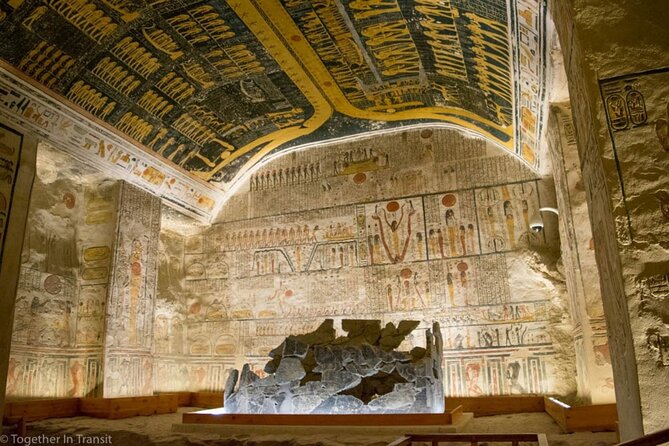
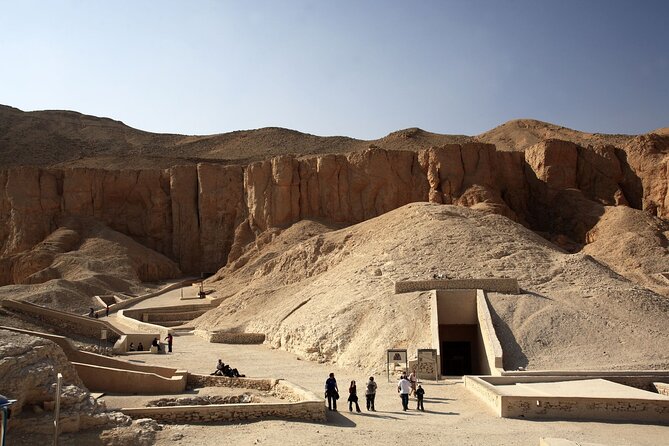
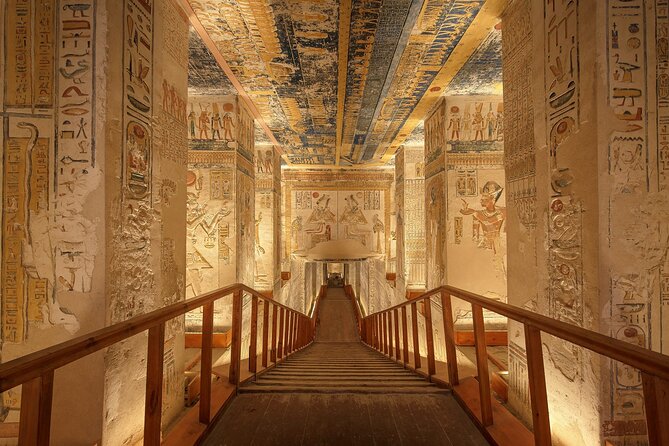
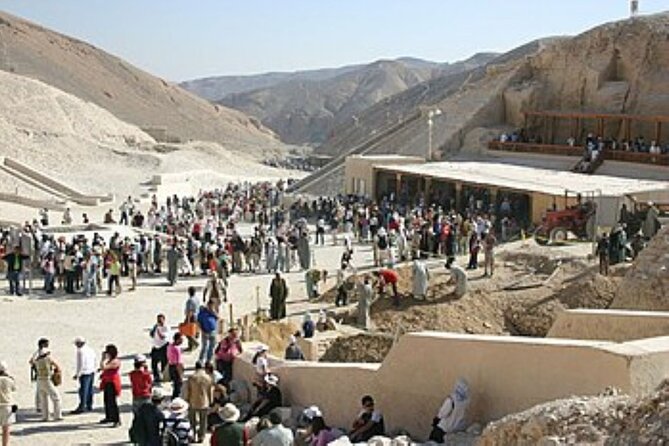
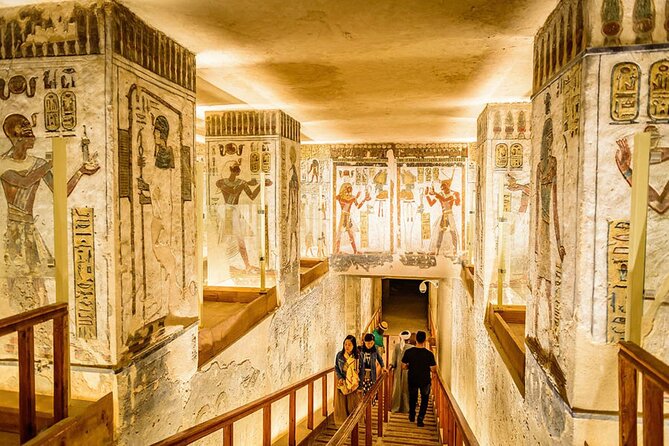
Valley of the Kings is the centerpiece of the West Bank route, and it is UNESCO-listed for good reason. This is where you see the underground tombs of the New Kingdom era, often described as the Necropolis of Thebes. It has 63 magnificent royal tombs from roughly 1550 to 1069 BC.
I like how the guide framing sets up what you are looking at. During the New Kingdom, this valley became a royal burial ground for pharaohs such as Tutankhamun, Seti I, and Ramses II, plus queens, high priests, and other elites from the 18th, 19th, and 20th dynasties. That is a lot of power packed into one valley, and it makes the tomb doors and corridors feel purposeful rather than random.
Plan for the “optional extra” part. The tour notes that some tombs were discovered only in the past hundred years, with Tutankhamun’s tomb as the most famous, and that one is extra cost. If you have your heart set on Tutankhamun, budget for it before you go. If you prefer to move efficiently and not make choices on the spot, you can treat the included tomb access as the main event.
Time on site is about 2 hours. That is usually enough to see key areas, get your bearings, and take photos without feeling rushed into a blur. If your group tends to ask questions, give the guide permission to slow down. Valley of the Kings becomes more meaningful when you understand why each tomb matters.
Practical tip: wear something comfortable for uneven ground and keep a steady pace. Underground tombs can feel cooler than outside light, so bring a layer you can manage easily.
Deir el Bahari and Hatshepsut: why this temple feels different
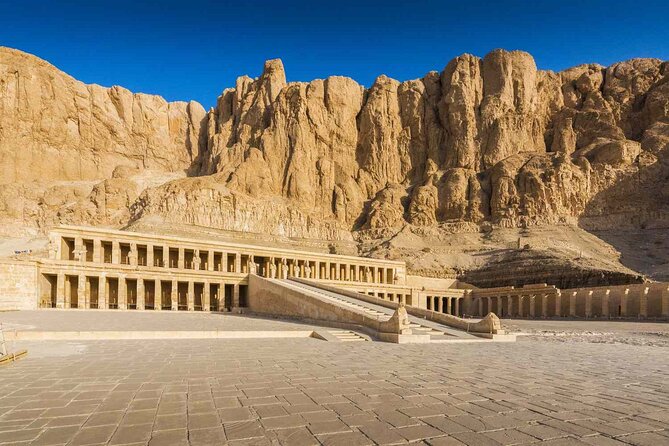
Next comes Temple of Queen Hatshepsut at Deir el Bahari, and it is a striking change of mood from the valley tombs. The setting, the scale, and the story all make it feel like more than a stop on a list. This mortuary temple is one of Hatshepsut’s most famous building achievements, also known as Deir Al-Bahiri or Hatshepsut’s temple.
Here is the context the guide should share as you walk. Hatshepsut was the Egyptian king, Thutmose I’s child with his wife Ahmose only child. She became one of the greatest queens and the second confirmed female pharaoh to rule Egypt, with Sobekneferu being the first. The timeline is part of the fascination too, with Hatshepsut taking over rule around 1478 BC.
What I like about this stop is how the temple connects the political to the personal. Hatshepsut built hundreds of buildings across the Nile Valley, and the statuary produced with her likeness was a major part of the message. Standing here, you can see why a ruler would use architecture to shape memory.
You get about 1 hour at Deir el Bahari, including the admission ticket. That is a good amount of time because you can move at a calm walk, pause for views, and still be ready for the next big stop without cutting out the most interesting angles.
Consideration: this is a long day. If your group is tired after Valley of the Kings, the best approach is to keep expectations realistic. Spend your time on the main visual sections and let the guide point out the details that matter most for understanding.
Colossi of Memnon and Ramses III: huge statues, ruined by nature
After Deir el Bahari, you move to the Colossi of Memnon. These are two monumental stone statues of Pharaoh Amenhotep III from the 18th Dynasty. They depict the seated king on a throne, with symbolic imagery that includes his mother, his wife, and the god Hapy, plus other engravings.
The tour description adds useful texture. The statues are made of quartzite stones quarried at el-Gabal el-Ahmar starting around 1350 BC. They were built as guardians for Amenhotep’s mortuary complex, which later was destroyed due to earthquakes and floods.
That natural damage story is important. It reminds you that ancient Egypt did not exist in a museum bubble. Even massive monuments were subject to time, water, and the earth itself. Seeing the statues in their current state is part of the meaning.
The stop is about 1 hour, and then the route continues with the Temple of Ramses III. That combination is smart. Colossi gives you scale and presence, while Ramses III shifts you back toward the idea of temple-building as a long-running tradition, not a single moment in time.
If you are the type who loves photography, this is a good section for it because the shapes are big and readable from multiple angles. If you prefer more slow, interpretive time, ask the guide to explain how the statues fit into the surrounding mortuary complex concept.
Practical tip: take a breath before you walk onward. Between valley walking and temple stairs, your body will want a reset. One or two small breaks here make the later temple section feel far more enjoyable.
Other Cairo options on the table
- Cairo: Pyramids & Great Sphinx Private Tour with Camel Ride
★ 4.9 · 6,335 reviews - Tour to Giza Pyramids and The Egyptian Museum
★ 5.0 · 6,016 reviews - VIP All inclusive Best of the best Giza Pyramids,Sakkara,Memphis
★ 5.0 · 3,164 reviews - From Cairo: Pyramids of Giza, Sphinx, Saqqara & Memphis Tour
★ 4.7 · 3,110 reviews
Karnak Temple highlights with Wadjet Hall and the Hypostyle Hall
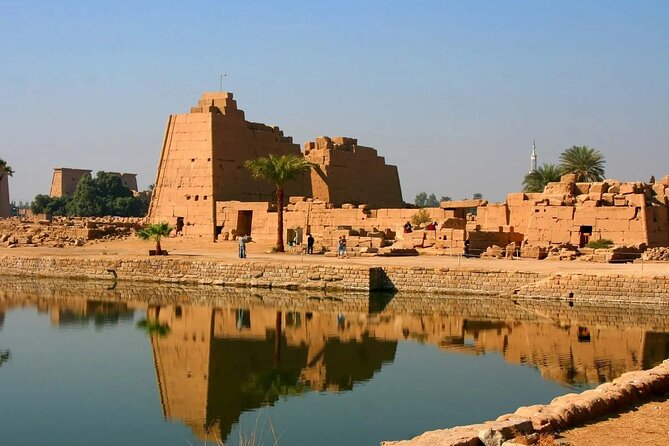
Karnak is where many people’s Luxor expectations become real. The temple complex took shape over a long stretch of time, built between 2055 BC and around 100 AD. It served as a cult temple dedicated to Amun, Mut, and Khonsu, and it is the largest religious building complex ever constructed.
This is not one neat postcard view. It is a whole system of spaces, and you will see why ancient Egyptians called it a most select of places. The tour focuses on highlights, which is a great approach for a day trip, because Karnak is massive and you do not want to spend your time trying to win at a self-made route.
You spend about 2 hours here, and you are guided through the big visual sequence:
- Wadjet Hall
- An avenue of small sphinxes
- The pylons
- The Great Hypostyle Hall
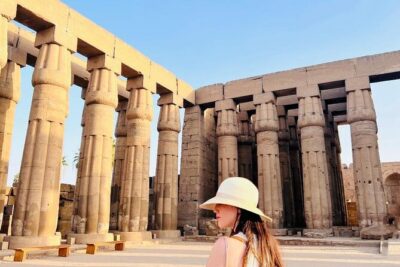
I especially like the Hypostyle Hall focus. A place like that is meant to overwhelm the senses in the best way. When you are told what you are looking at, the columns stop being just scenery and start becoming part of how the temple functioned.
Also note the value of having this guided rather than free-roaming. Karnak can feel like wandering through a forest of stone unless someone ties together the purpose of each section. The Egyptologist guide helps you see the logic in the route.
If you feel tempted to rush, resist. Give Karnak at least enough time to notice the rhythm of entry spaces and the shift from open areas to the denser interior. That change is what makes the experience memorable.
Lunch on a felucca plus snacks, built for a full day
After Karnak, the tour includes Egyptian lunch on a felucca on the Nile River. This is a great break in the middle and late parts of the day, because it gives you a chance to reset mentally. Stone temples can be exhausting, even when you enjoy them. Sitting down on the water, you get a different kind of Egypt experience without losing the day’s momentum.
The tour also includes snacks, which helps on long travel days when you do not want to feel shaky or cranky between stops. Drinks are not included, so if you know you tend to buy bottled water or prefer a juice on breaks, you should plan accordingly.
Timing-wise, the whole tour is about 11 to 12 hours. That means you should not treat it like a casual morning stroll. Instead, think of it as a full day itinerary with structured moments. The best way to enjoy it is to keep your expectations aligned with that reality.
Here is how to make it work for you:
- Eat lunch as a real meal, not a quick bite, because the day is still long after.
- Take advantage of included snacks to avoid delaying the guide for extra stops.
- If you are sensitive to heat or light, wear a hat and use sunscreen early, not after you feel uncomfortable.
By the time you head back to the port, the day will likely feel full but coherent. That coherence is the difference between seeing places and actually understanding how they connect.
Is $280 per person good value for this Luxor route?
At $280 per person for an 11 to 12 hour private day, the value comes down to what is included and how much hassle it removes. Here, you get a full Egyptologist guide, pickup and drop off, a private air-conditioned vehicle, entry fees, lunch, and snacks. For many visitors, that package is the real bargain, because it saves you from coordinating transport, ticketing, and timing across multiple sites.
The route also concentrates on the major West Bank icons plus Karnak highlights. Valley of the Kings, Deir el Bahari, the Colossi of Memnon, Temple of Ramses III, and then Karnak’s key sections are all big-ticket experiences. Doing them efficiently on one schedule is hard to replicate without a guide.
One more value factor is the private format. It is only your group, which usually means fewer compromises on pace and fewer moments where you are constantly trying to catch up. The tour also mentions group discounts, which can lower the per-person cost if you have travel companions.
The only real drawback is the long day. If you are easily fatigued or do not enjoy early starts, the itinerary might feel like too much. If you like guided explanations, you will probably love this format, because the guide experience is a major part of what makes the monuments click.
So, should you book it? If you want an efficient Luxor day from Safaga that hits the essentials with an expert guide and includes meals and entry fees, this is a strong option.
Should you book this Private Day Tour to Luxor from Safaga Port?
I would book it if your top priority is a well-paced, guided Luxor day with the right mix of tombs, temples, and a Nile break. The included entry fees, lunch, and snacks reduce hassle, and the private setup keeps the experience more comfortable.
Skip it only if you know you dislike long 11 to 12 hour days or you want a very slow, unstructured itinerary. Luxor rewards focus, and this tour gives you that, with a route that makes the West Bank and Karnak feel connected rather than random.
FAQ
How long is the Luxor day tour from Safaga Port?
The tour runs about 11 to 12 hours.
Is this tour private or shared?
It is a private tour, and only your group participates.
Where do you get picked up?
Pickup is offered from Safaga Port, or any other pick up location.
What sites are included in the itinerary?
You visit the Valley of the Kings, the Temple of Hatshepsut at Deir el Bahari, the Colossi of Memnon, the Temple of Ramses III, and the Temple of Karnak highlights.
Are entry fees included?
Yes, entry fees are included.
Is lunch included, and is it on the Nile?
Yes. Lunch is included on a felucca in the Nile River, and snacks are also included.
What is not included in the tour price?
Drinks are not included.
What is the cancellation policy?
Free cancellation is available, and you can cancel up to 24 hours in advance for a full refund.
Newly added near Cairo
- Private Day Tour to El Fayoum & Valley of the Whales from Cairo★ 5.0 · 13 reviews
- Full Day Tour Giza Pyramids, Sphinx and Egyptian Museum &Felucca★ 5.0 · 9 reviews
- Private Day Tour Egyptian Museum, Citadel ,Mohamed Ali Mosque and Coptic Cairo★ 5.0 · 34 reviews
- Private Day Tour To Luxor from Cairo by Plane★ 4.5 · 41 reviews
- Grand Egyptian Museum★ 3.5 · 48 reviews
- Private Cairo Day Tour Giza Pyramid, Sphinx, Civilisation Museum★ 5.0 · 19 reviews
- Private Day Tour of the Giza Pyramids Alabaster Mosque and Hanging Church★ 4.5 · 9 reviews
- Allinclusive Private Tour Fayoum Oasis & Valley of Wales★ 5.0 · 78 reviews
Luxor Day Trips from the Red Sea, compared.
4-Days Nile Cruise From Aswan To Luxor including Abu Simbel and Hot Air Balloon
Read our review →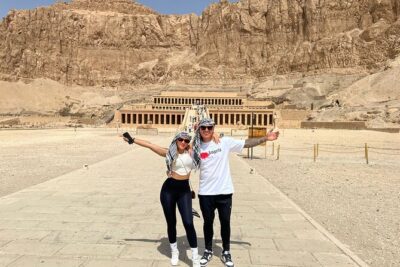
Small group Hurghada to Luxor, Valley of the Kings by Van
Read our review →
4-Day 3-Night Nile Cruise from Aswan to Luxor&Abu Simbel+Balloon
Read our review →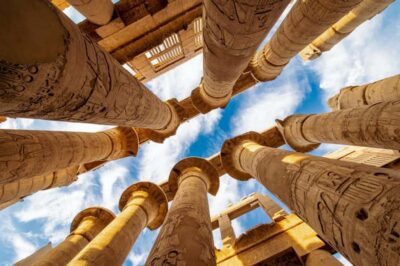
Shared Full-Day Tour to Luxor West and East Banks
Read our review →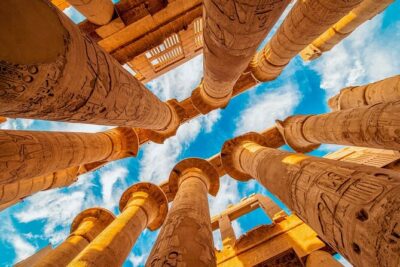
Full Day Tour to Luxor West and East Banks & Lunch
Read our review →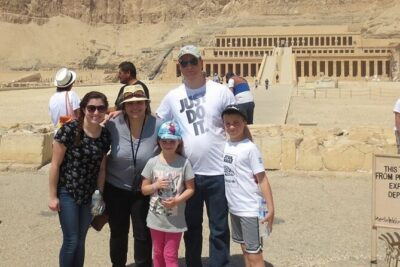
Small Group Excursion to Luxor Valley of the Kings from Hurghada
Read our review →
4-Day 3-Night Nile Cruise from Aswan to Luxor including Abu Simbel, Air Balloon
Read our review →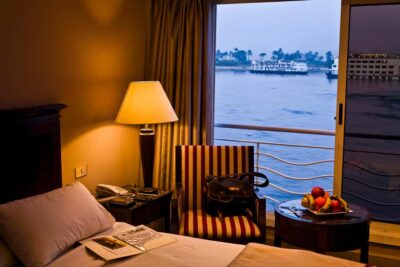
Browse the lists this tour appears in