Reviewed · DAY TRIPS & EXCURSIONS FROM CAIRO
Private Day Tour to the Monasteries of Wadi El-Natrun from Cairo
Four monasteries, one quiet valley. This private day trip to Wadi El Natrun turns a long drive into a simple, comfortable outing, with hotel pickup and an air-conditioned van that carries you out and back from Cairo or Giza in about 8 hours.
I also love the chance to meet priests and monks and ask questions in a place where daily life still centers on faith. You also get all four surviving monasteries in this valley in a single, well-paced day. One possible catch: even on a private booking, you may still share a monastery space with other visitors at one stop, depending on timing.
In This Review
- Key points
- Wadi El Natrun, Where Egyptian Monastic Life Still Breathes
- Price and Value: What $62.10 Buys You (And Why It Can Beat Self-Drive)
- Morning Pickup From Cairo or Giza, Plus How to Start the Day Right
- Stop 1: Deir al-Baramus, The Oldest Surviving Monastery
- Deir Anba Bishoi: Meeting St. Pishoy in One of the Most Personal Stops
- Deir Abu Maqar (Anba Makaryus): The Largest Working Community in Wadi El Natrun
- Stop 4: The Syrian Monastery and Finishing the Circuit
- What You Really Get From a Private Guide Here
- Dress Code and Practical Tips You Should Not Ignore
- Who This Day Trip Fits Best
- Should You Book This Private Monasteries Day Trip?
- FAQ
- What time does the day tour start?
- How long is the tour?
- Where is pickup offered?
- How do you get to Wadi El Natrun?
- Which monasteries are visited?
- Is admission included?
- Is food or drinks included?
- Is there a dress code?
- What ticket do I use?
- What is the cancellation policy?
Key points
- Deir al-Baramus (Paromeos) opens your day at the oldest surviving monastery and often feels the most isolated
- Deir Anba Bishoi includes the site tied to St. Pishoy, whose body is still kept in the monastery
- Deir Abu Maqar, also called Anba Makaryus is the largest working community, with more than 100 monks and 600 workers
- Door-to-door transport means about a 1.5-hour drive each way, handled for you in an A/C vehicle
- Dress code matters: knees and shoulders covered, no shorts or sleeveless tops for men and women
Wadi El Natrun, Where Egyptian Monastic Life Still Breathes
Wadi El Natrun is one of those places where the setting does half the work. The valley is known as a birthplace for Christian monasticism, and that old idea of leaving the chaos behind feels real when you arrive.
Long ago, there were around 50 monasteries lining the valley. Today, only four remain, and that makes your visit more focused. Instead of getting lost among dozens of ruined sites, you see the main surviving living monasteries: Paromeos (Deir al-Baramus), St. Pishoy (Deir Anba Bishoi), St. Macarius the Great (Deir Abu Maqar, also Anba Makaryus), and the Syrian Monastery.
What I like most is that you are not just looking at buildings. Your day is structured around what these monasteries mean to people now, and that changes your perspective fast. You get a guided visit where conversation is part of the experience, not an optional extra.
More day trips out of Cairo:
- Private Tour: Day Trip to the Pyramids and Sphinx from Cairo
★ 5.0 · 202 reviews - Giza Pyramids Tour With Entry To Khufu Pyramid From Cairo
★ 4.6 · 190 reviews - Private Tour to Whales Valley & Wadi El Rayan Waterfalls in El Fayoum from Cairo
★ 5.0 · 61 reviews
Price and Value: What $62.10 Buys You (And Why It Can Beat Self-Drive)
At $62.10 per person, this is priced like a real day outing with planning included. The math gets better when you count what is bundled: hotel pickup and drop-off, an A/C minivan, a professional guide, and all taxes and fees.
Self-driving is the biggest temptation here, because the distance looks manageable on a map. But Wadi El Natrun is not a place you want to troubleshoot before breakfast. Parking, road familiarity, and timing around monastery entrances can eat up your energy. The private format keeps your day from turning into logistics.
Food and drinks are not included, so plan on handling meals separately on your own schedule. Also note that admission is listed as free for the visit, which makes the day feel less like you are paying for checkmarks and more like you are paying for access, guidance, and transport.
There is one value caution to keep in mind. If a tour advertises private, you should confirm what private means in practice at the monasteries. In some cases, even with a private guide and private ride, you can end up sharing space inside a monastery complex with other visitors depending on timing.
Morning Pickup From Cairo or Giza, Plus How to Start the Day Right
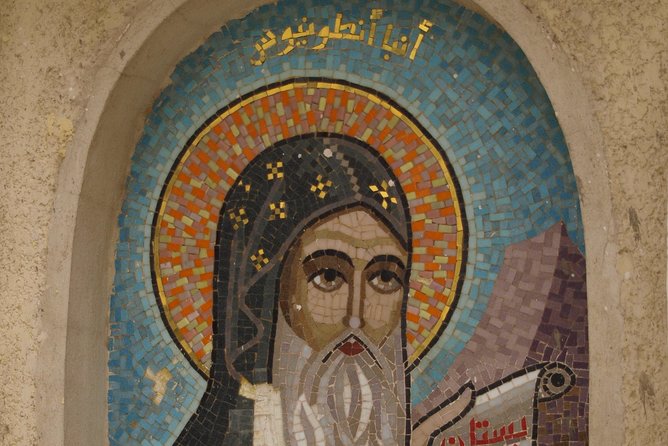
Your day begins early, with a start time of 7:30am. Pickup is from your hotel in Cairo or Giza, and the drive to Wadi El Natrun is about 1.5 hours.
This is one of those schedules where being ready matters. Get your shoulders and knees covered before you leave, because you will need to meet the dress code for places of worship. That means no shorts and no sleeveless tops for both men and women, with knees and shoulders covered.
You also do not want to arrive without a plan for water and small snacks. Since food and drinks are not included, I suggest bringing a bottle of water and something simple you can eat between stops if you get hungry. It keeps the day comfortable, especially on a long outing with minimal downtime.
The good news is the pace is built for ease. You are not managing directions, you are not dealing with multiple tickets, and a guide is there to help you understand what you are seeing so you can spend your energy on the actual visit.
Stop 1: Deir al-Baramus, The Oldest Surviving Monastery
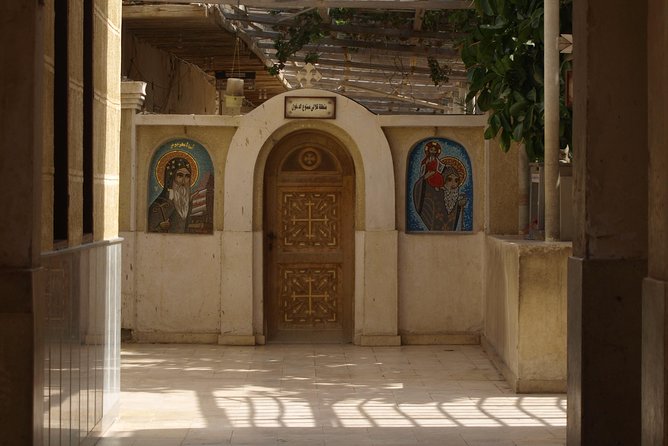
Your first monastery is Deir al-Baramus, also known as Paromeos and described as the oldest of the surviving four. This matters because it sets a tone for the whole day. The older a monastery is, the more you tend to feel layers of tradition in the way it is used and explained.
This site is also described as more isolated. That can be a positive thing for you. Isolation often means a quieter feel, and it helps the focus stay on the spiritual and daily rhythms of the place rather than on crowds.
A key part of this stop is that you meet priests who introduce the site and share a lot of information. That is what turns a walk into an education. Instead of just seeing stone and corridors, you learn what people believe, what the monastery life looks like, and how visitors should think about what they are observing.
One practical note: because this stop is first, it can set the tone for your whole clothing and timing routine. If you have any doubts about your outfit, fix it before you show up.
Other Giza options on the table
- Private guided tour to Giza Pyramids, and Great Sphinx
★ 5.0 · 1,755 reviews - VIP Giza Pyramids,Sphinx,ATV bike,CamelRide,Shopping&DinnerCruise
★ 5.0 · 704 reviews - From Hurghada: Pyramids and Egyptian Museum Tour & Boat Ride
★ 4.4 · 381 reviews - Egyptian Museum in Cairo: Private Guided Tour
★ 5.0 · 316 reviews
Deir Anba Bishoi: Meeting St. Pishoy in One of the Most Personal Stops
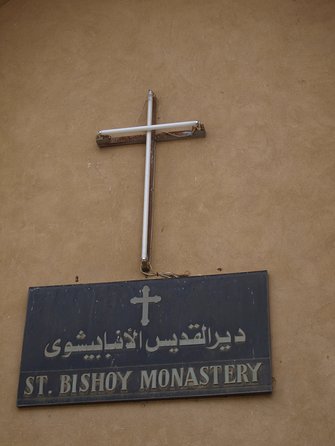
After the first introduction, you continue to Deir Anba Bishoi, tied to St. Pishoy. Here, one detail makes the stop feel unusually direct: the body is still kept in the monastery.
That does not mean the visit is about shock value. It means you have a chance to understand how devotion works in real spaces, not just as an idea. When a site preserves what matters to a saint, your questions tend to become more meaningful, because you are standing in a living focus of faith.
This monastery also benefits from guided interpretation. A good guide helps you read what you are seeing, so you do not just walk through rooms. You learn how the monastery is organized and what elements are important, and you get to connect those points back to daily religious life.
If you like visits where questions feel welcome, this is a strong stop. I find these moments are best when you keep your curiosity specific: ask how daily life works, how visitors are treated, and what routines stay constant.
Deir Abu Maqar (Anba Makaryus): The Largest Working Community in Wadi El Natrun
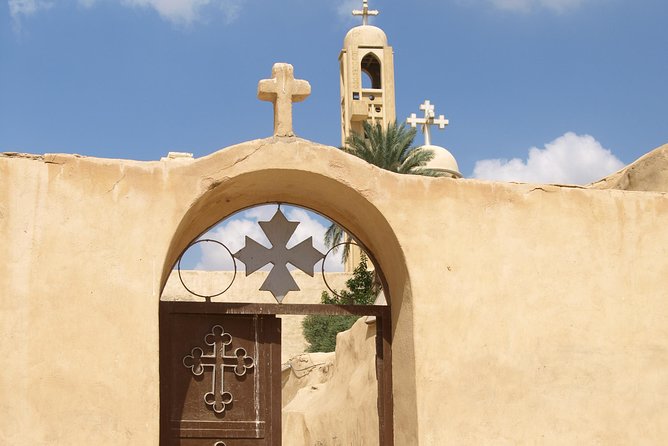
Next comes Deir Abu Maqar, also called Anba Makaryus Monastery. This one is described as the richest monastery now in Wadi El Natrun, which you feel fast once you understand its scale.
It has more than 100 monks and about 600 workers. That means this is not only a spiritual center. It is also a place with a functioning workforce and a big day-to-day operation to keep everything going.
This stop can be the most “real life” moment of the trip. You may notice the monastery is not frozen in time. Instead, it operates with the needs of the community in mind, and the sheer number of people tied to the place makes that visible.
For you, the value here is perspective. Many religious sites feel like museums. This does not. The point is that monastic life continues, and the monastery is active enough that it needs people across roles.
If you are sensitive to long days, pace yourself at this stop. It is easy to get swept up, but it is also the kind of place where taking a breath and slowing down helps you absorb more.
Stop 4: The Syrian Monastery and Finishing the Circuit
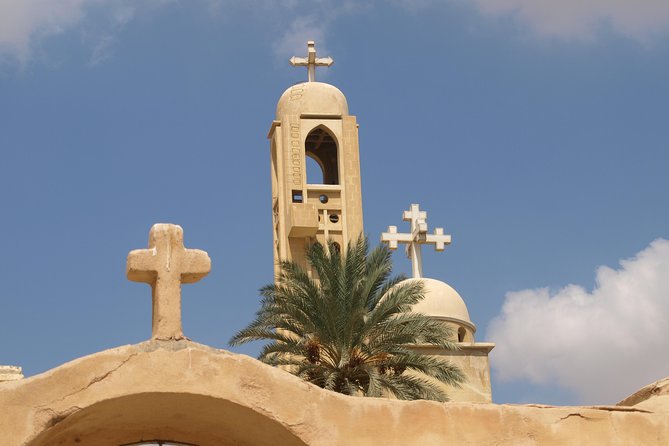
The day rounds out with the Syrian Monastery, the fourth surviving monastery in Wadi El Natrun. The itinerary keeps you moving through the surviving sites as a connected story, not as separate random stops.
Even when you do not get detailed time for every location, finishing the circuit matters. You see how different traditions and lineages show up across the monasteries, and you get a clearer picture of why Wadi El Natrun became such a central focus for Egyptian Christianity.
I recommend using the last stop to ask comparative questions if your guide offers that chance. For example: what makes each monastery distinct, how did they evolve, and what stays consistent across them all.
Because this is the last stop, it is also where your preparation shows. If you handled your water and clothing well earlier, you will feel more comfortable lingering a bit, taking in the calm, and enjoying the end of the day without rushing.
What You Really Get From a Private Guide Here
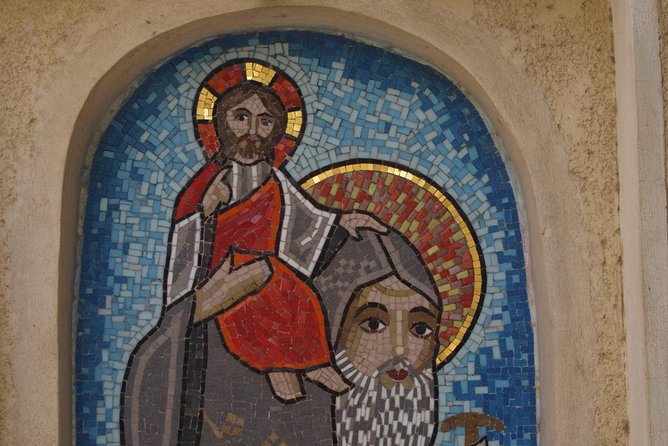
A guide is the difference between walking through monasteries and actually understanding them. You want someone who can translate the meaning behind the spaces, explain what you are seeing, and help you ask better questions.
In the experience of one guide named Mahmoud Badr, the emphasis is on being responsive and sharing stories that connect the monasteries to both antiquity and modern faith. That style helps you get more than pictures. You come away with a sense of how these places function, and you pick up details that stick.
Here are a few question types that work well for this kind of visit, and that you can use as you go:
- What does a typical day look like for monks or priests?
- How do visitors usually behave so they are respectful?
- What traditions are still practiced today, and what changed over time?
- How should you understand the saints tied to each monastery?
Keep your questions simple and respectful. If people are busy, short questions often work better than long speeches. You get more back that way.
Dress Code and Practical Tips You Should Not Ignore
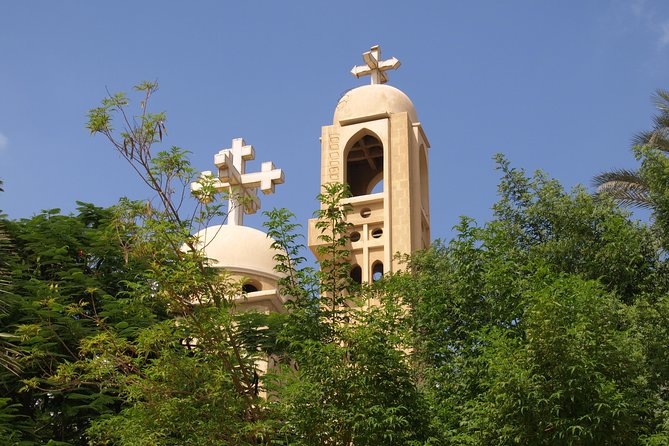
The dress code is clear and strict: no shorts or sleeveless tops. Knees and shoulders must be covered for both men and women.
This is not a polite suggestion. If you fail to comply, you risk refused entry. So plan your outfit around this before you ever leave Cairo. Lightweight pants and a T-shirt or long-sleeve top are your easiest fix.
Also remember that the tour does not include food and drinks. Bring water, and consider a small snack. It helps you stay calm during transitions and keeps the day from feeling rushed.
Finally, keep expectations realistic about time. This is an 8-hour round-trip day with multiple stops. You will see four monasteries, but you will not have unlimited free roam. Go in ready to learn, not just to stroll.
Who This Day Trip Fits Best
This is ideal for you if you want a structured, guided day to a part of Egypt that most people skip. It is also a good fit if you like places where religion is not just on display, but lived.
You will probably enjoy it most if you:
- want a long day with clear stops and guidance
- like asking questions and hearing firsthand explanations
- prefer not to deal with self-drive logistics
If you hate early mornings, this might feel heavy, since the pickup is at 7:30am. And if you expect an environment with zero other visitors anywhere, set a slightly softer expectation. Private guide and private transport are the focus, but monastery timing can still overlap with other groups.
Should You Book This Private Monasteries Day Trip?
Book it if you want an efficient, guided day that shows you the main surviving monasteries of Wadi El Natrun, with the comfort of hotel pickup and A/C transport. At $62.10 per person, the value is strongest when you consider that guidance and door-to-door logistics are included, and the admission is listed as free.
I would think twice if privacy is your top demand. Even when the booking is private, monastery spaces can overlap with other visitors at certain times. If that would bother you, ask how they manage entry timing and how private the experience feels at each site.
If you like quiet places, thoughtful questions, and a real connection to Egyptian Christian monastic life, this is a solid choice.
FAQ
What time does the day tour start?
The tour starts at 7:30am.
How long is the tour?
The duration is about 8 hours.
Where is pickup offered?
Pickup and drop-off are offered from your hotel in Cairo or Giza.
How do you get to Wadi El Natrun?
You travel in an air-conditioned minivan.
Which monasteries are visited?
The tour visits Deir al-Baramus, Deir Anba Bishoi, Deir Abu Maqar (Anba Makaryus), and the Syrian Monastery.
Is admission included?
Admission is listed as free for the visit.
Is food or drinks included?
No. Food and drinks are not included.
Is there a dress code?
Yes. You must cover knees and shoulders. No shorts and no sleeveless tops for men and women.
What ticket do I use?
A mobile ticket is provided.
What is the cancellation policy?
You can cancel for a full refund up to 24 hours before the experience starts.
Newly added near Giza
- Full Day Trip from Cairo to Luxor★ 5.0 · 16 reviews
- Private half Day Tour to the Great 3 Pyramids of Egypt★ 5.0 · 15 reviews
- Private Guided Day Tour to Luxor from Cairo by Plane★ 4.5 · 11 reviews
- Private guide’s trip to Giza pyramids, Great sphinx valley temple★ 5.0 · 37 reviews
- Explore Pyramids & Great Egyptian Museum(gym)★ 5.0 · 12 reviews
- White desert camping and Baharya oasis overnight from Cairo★ 4.5 · 12 reviews
- Full-Day Private Tour to Giza Pyramids, Sphinx, Memphis & Saqqara★ 5.0 · 106 reviews
- Elite Boats Tour in Cairo & Giza with Drinks Included★ 4.5 · 15 reviews
Day Trips & Excursions from Cairo, compared.
Pyramids of Giza, Sphinx, Saqqara & Memphis Tour
Read our review →
Half-Day Tour to Pyramids of Giza and the Sphinx
Read our review →
From Cairo Alexandria Catacombs, Citadel Day Trip with Lunch
Read our review →
Desert Safari, Camel Ride, Magic Lake, & Lunch
Read our review →
Private Full-Day Tour of Historical Alexandria
Read our review →
VIP Meet and Greet Private Hotel Transfer from Cairo Airport
Read our review →