
Reviewed · VALLEY OF THE KINGS & WEST BANK TOURS
Private Guided tour Valley of the King ,Queen Hatshepsut, &Memnon
Luxor can feel overwhelming without context. This private day pulls together Karnak, the Valley of the Kings, Hatshepsut at Deir el Bahari, and more, guided by an Egyptologist with air-conditioned comfort and hotel pickup. You also get lunch included, which matters when you are spending hours hopping between the East and West Banks.
What I like most is the pacing and focus. Instead of treating the tombs like a quick photo line, you get guided time at key royal tombs, including Ramses III, Ramses IX, Merenptah, and a stop at Tutankhamun’s tomb, so you can actually make sense of what you’re seeing. I also like the people side of it, since reviews highlight guides like Khalid and Mohammed for clear explanations, helpful photo moments, and even practical problem solving.
One drawback to keep in mind: entrance fees are not included, so your final cost depends on which tombs you plan to enter. Also, tomb time is typically limited to around 25 minutes at several stops, so if you want slow, lingering viewing, plan to choose what matters most to you.
In This Review
- Key highlights at a glance
- Private Egyptologist guidance, AC comfort, and timing that actually works
- East Bank to West Bank, how the route keeps you from feeling rushed
- Necropolis of Thebes and the Valley of the Kings, where royal time starts underground
- Ramses III tomb (KV 11): sunken reliefs, ritual texts, and the Tomb of the Harpers
- Ramses IX and Merenptah: how decoration and design shift from tomb to tomb
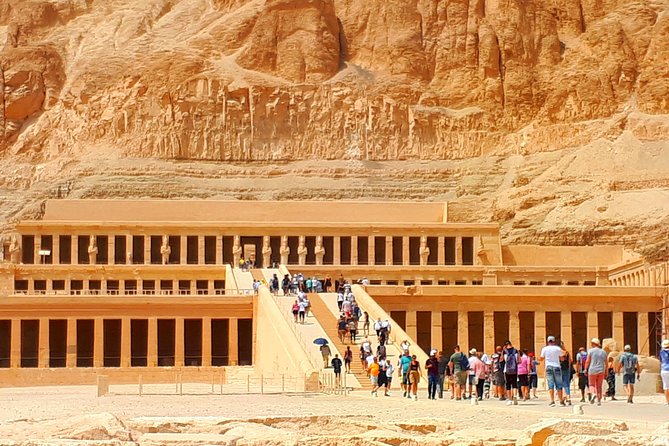
- Deir el Bahari and Hatshepsut’s temple: power, dynasty, and a huge view of the day
- Tutankhamun’s tomb stop plus the rest of the West and East Bank landmarks
- Lunch in Luxor: a practical break that keeps the day enjoyable
- Price and tickets: what you really get for $45, and what you must pay separately
- Who should book this tour, and who should compare options
- Should you book this private guided tour of the Valley of the Kings, Hatshepsut, and Memnon?
- FAQ
- What time does the tour start?
- How long is the tour?
- What’s included in the price?
- Are entrance fees included?
- How many people are on the tour?
- Can I cancel and get a full refund?
Key highlights at a glance
- Private Egyptologist guidance with an air-conditioned vehicle and hotel pickup and drop-off
- Valley of the Kings tomb stops that include Ramses III (KV 11), Ramses IX, Merenptah, and time at Tutankhamun’s tomb
- Deir el Bahari and Hatshepsut’s temple after the tombs, when the day’s rhythm starts to settle
- Lunch at a local establishment so you are not improvising midday meals
- Small group cap of 15, while still traveling with your own guide and vehicle
Private Egyptologist guidance, AC comfort, and timing that actually works
Luxor’s monuments are so big that a guide changes everything. With an Egyptologist leading you, you’re not just reading hieroglyphs through your imagination. You get the who, what, and why behind each complex, from Karnak’s scale to the West Bank tomb layouts.
You also get the kind of comfort that makes a long day survivable. The tour uses a private air-conditioned vehicle and includes hotel pickup and drop-off, which means less wasted time figuring out transport and meeting points. Reviews also point to real flexibility in how the day runs. One review praised a guide for accommodating changes to pickup timing and location without drama, and another mentioned the guide stepping in when a shoe broke mid-day. That’s the sort of detail you notice when you travel with confidence, not stress.
One more practical note: this is sold as a day tour, but the schedule can run close to a full working day. The duration is listed as about 5 hours, and the itinerary description points to roughly 8 hours. Either way, treat it like a long day. Start with comfortable shoes, a water plan, and a mindset of seeing the highlights with guidance, not trying to do everything at a crawl.
More West Bank and Valley of the Kings visits:
- Hurghada: Luxor Valley of the Kings & Tutankhamun Tomb Trip
★ 4.7 · 13,208 reviews - Luxor: Valley of the Kings and Hatshepsut Temple Day Tour
★ 4.4 · 1,404 reviews - Hurghada: Luxor Tour with Valley of Kings, Karnak & Tut Tomb
★ 4.6 · 1,082 reviews
East Bank to West Bank, how the route keeps you from feeling rushed
Luxor is split by the Nile into the East Bank and the West Bank, and this tour plays that geography smartly. The day is built around major stops on both sides, so you get the big religious centers on the East Bank, then you head to the burial landscapes on the West Bank where the tombs live.
The tour’s structure is also designed around the way tombs are usually experienced. The Valley of the Kings portion starts early, which is helpful because tomb visits can get slow if you arrive when lines and heat are already climbing. After the West Bank tombs, you shift to Deir el Bahari for Queen Hatshepsut’s temple, then you continue with additional landmark stops.
Even if you are not a die-hard Egyptology nerd, this route helps you build a story. Karnak and Luxor Temple connect to power and worship in the living world. The Valley of the Kings and the Necropolis of Thebes connect to the royal afterlife. Deir el Bahari ties in dynasty and ambition through a woman ruler who left a major architectural statement. When you see these elements in sequence, Luxor feels less like random monuments and more like one long narrative.
Necropolis of Thebes and the Valley of the Kings, where royal time starts underground
The heart of the West Bank experience is the Necropolis of Thebes and, of course, the Valley of the Kings. This is where Egypt’s royal tombs were carved into the cliffs, and it’s also where the atmosphere changes quickly. It is quiet in a way you do not get in open-air ruins. And because the tombs are decorated, you’re not only walking through history, you’re walking through it like a set of rooms with ceilings, corridors, and walls that were planned for eternity.
In the tour plan, you get guided time that includes multiple tomb stops. The Valley of the Kings segment is described as a must-see, with access to royal tombs. You’re not just moving from one doorway to another, either. You get specific tomb visits, including Ramses III (KV 11), Ramses IX, and Merenptah (Tomb 8), plus a separate stop at Tutankhamun’s tomb.
The practical value of multiple tomb stops is that each one shows a slightly different approach to the afterlife idea. Even when tombs follow broad conventions, details like corridor design, wall decoration style, and icon selection help you see the individuality of each reign. You also get a better sense of the scale of the Valley, because you experience it as a set of destinations rather than one single highlight.
A small consideration: tombs can be visually busy, and time inside is limited at several stops (25 minutes is stated for key entries). If you want to remember details later, bring your attention skills. Focus on one or two themes your guide points out per tomb. That makes the time feel longer than it is.
Ramses III tomb (KV 11): sunken reliefs, ritual texts, and the Tomb of the Harpers
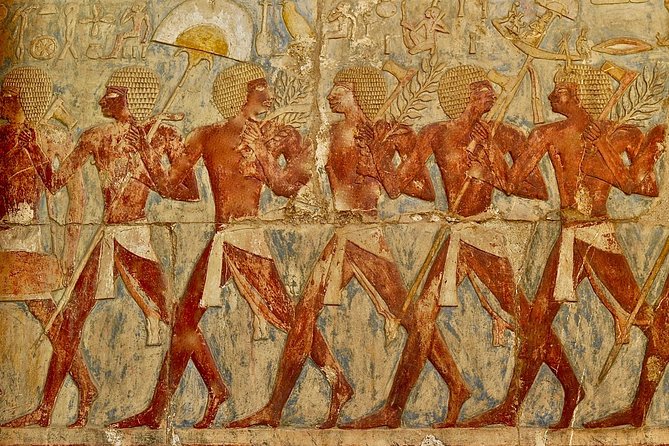
If you like details, Ramses III’s tomb is a strong reason to book this tour. KV 11 is described as a complex system known since antiquity, and what makes it especially interesting is the mix of religious ritual texts and more unusual scenes.
Here’s what stands out in the tour notes:
- Colorful painted sunken reliefs with ritual texts like the Litany of Ra and the Book of Gates
- Images of Ramses positioned before the gods
- Side areas with secular scenes, including foreign tributes
- References to imported pottery from the Aegean, royal armoury items, and boats
- Blind harpists, which helped earn the tomb one of its alternate names, the Tomb of the Harpers
This matters because it’s a reminder that royal tombs were not only about gods in theory. They also captured the world of work, travel, and state power in a way that feels strangely human. You get a chance to see how art communicates status, not just belief.
Also, the fact that the tour calls out the structure of KV 11 and the types of scenes you’ll see helps you go in with a map in your head. When a guide tells you where to look for the reliefs or what to notice in side chambers, you stop feeling like you are walking through a dark hallway. You start reading the tomb as a designed experience.
Plan for photo time, but do it sensibly. Tombs are tight, light is limited, and your guide can help you find a workable angle fast.
Other Luxor options on the table
- Luxor Day Trip from Hurghada Small Group & Tutankhamun Tomb
★ 4.8 · 5,366 reviews - Hot Air Balloon Ride in Luxor Egypt with Transfers Included
★ 5.0 · 4,319 reviews - Luxor: Shared Full-Day Tour to Luxor West and East Banks
★ 4.5 · 1,812 reviews - Luxor: Hot Air Balloon Ride over Luxor Relics
★ 4.8 · 1,681 reviews
Ramses IX and Merenptah: how decoration and design shift from tomb to tomb
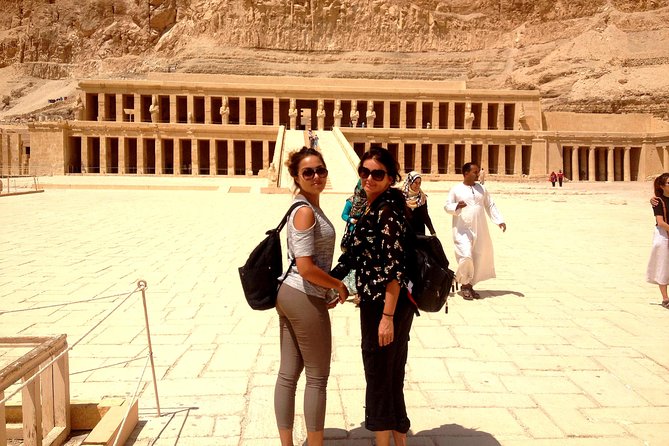
Ramses IX’s tomb is described as a place packed with color and detail, including something that really helps your orientation once you’re inside: the ceiling above the sarcophagi with the goddess Nut stretching across the space. The sarcophagus is also described as one of the largest in the Valley, even though some paintings have deteriorated over time.
Why I think this stop is valuable for you: ceiling scenes change how you experience a tomb. Instead of only focusing on what’s on the walls at eye level, you can look up and feel how the design pulls your attention across the whole room. That’s the kind of difference that makes “tomb time” more memorable when you have only a short window.
Then you move to Merenptah’s tomb (Tomb 8), also tied to interesting design evolution. In the tour notes, the tomb is described as the burial place of Pharaoh Merneptah, and it states that Howard Carter discovered it in 1903. It also points out shifts in architecture, like a decrease in lateral rooms and taller corridors and rooms compared to earlier models.
Even if you are not studying architecture, corridor height and room spacing affect how a tomb feels. Taller spaces can make the decorations feel more prominent, and changes in layout give you a sense of how tomb planning adapted across reigns.
In both Ramses IX and Merenptah’s cases, the time commitment is clearly set (25 minutes per stop). That’s not enough for a slow museum tour, but it is enough for a guided visit where you focus on a few key features. Your guide’s job is to help you choose what those features are before you get inside.
Deir el Bahari and Hatshepsut’s temple: power, dynasty, and a huge view of the day
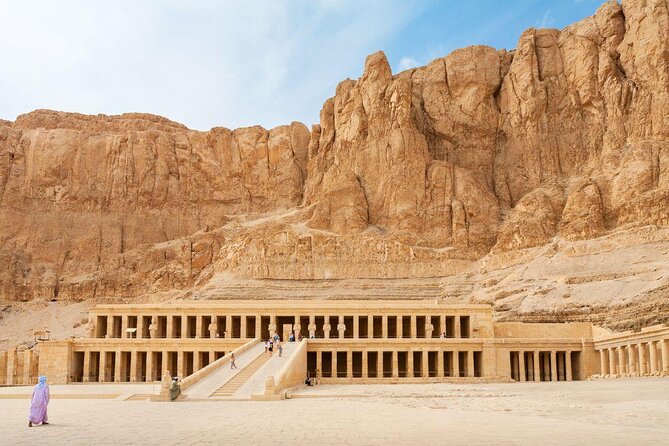
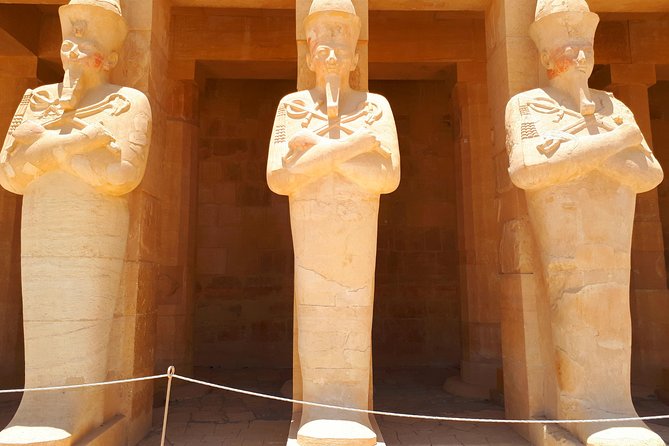
After tombs, the body tends to crave open air and light. That’s where Deir el Bahari and Queen Hatshepsut’s temple make sense in the flow. The tour frames Hatshepsut as the only woman ever to reign over Egypt as Pharaoh, and it notes she was an ancestor of Tutankhamun and part of the same dynasty.
What you gain here is contrast. Tombs are planned for darkness and permanence. Deir el Bahari is about visibility and monumentality, a mortuary temple that turns leadership into architecture you can read from far away. Even when you only have limited time, the setting and scale help your brain switch modes from underground rooms to a grand temple form.
This stop also works as a narrative hinge. After spending time in royal burial spaces, you now see how a ruler presented themselves through building projects. The guide explanation helps connect the dots so the story does not feel like a pile of unrelated sites.
If you are traveling in warmer months, I’d treat this as the segment where you take your slowest breaths. Use the break to rehydrate and reset your eyes. Your guide will keep moving, but your body will feel the difference.
Tutankhamun’s tomb stop plus the rest of the West and East Bank landmarks
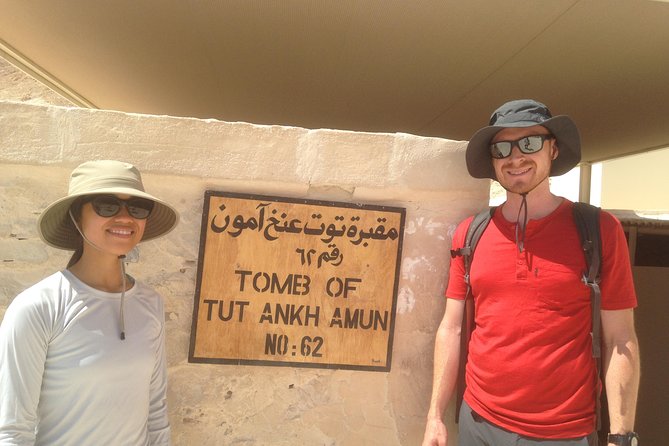
In the plan, there is also a stop for Tomb of King Tutankhamun (Tut), with a stated time of about 25 minutes. Even though the tomb’s famous status can make people expect a single dramatic moment, the real value on a guided tour is context. When someone explains what you are looking for and how Tut fits into the dynasty story, the experience becomes more than name recognition.
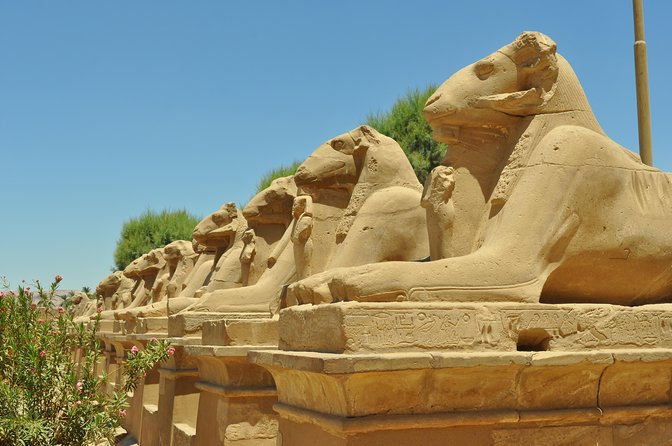
The tour overview also includes other major Luxor landmarks that help fill in the big picture. You’ll see the Karnak Temple on the East Bank, described as the largest place of worship ever built. You’ll also visit the Luxor Temple and the Temple of Ramses III, plus the Colossi of Memnon. These stops matter because they connect worship, kingship, and monumental art across different reigns and purposes.
A good way to think about this part: you are not trying to master all of Luxor in one day. You are building a working mental map. Karnak helps you understand scale. Luxor Temple adds the sense of daily religious importance. West Bank stops remind you what royalty was designed to outlast. Colossi of Memnon gives you that iconic statue moment that makes the city feel like a real place, not just a map full of ruins.
Lunch in Luxor: a practical break that keeps the day enjoyable
Lunch is included, and that’s more important than it sounds. When you are moving through tombs and temples, getting hungry at the wrong time turns the whole day into decision fatigue. A set lunch at a local establishment is one less thing to plan.
The tour notes are clear that this is a lunch option as part of the experience, not just a quick snack. That usually means you get enough time to refuel and reset before continuing with the next cluster of monuments.
If you have any dietary needs, you’ll want to ask ahead of time, because the provided info does not specify menu flexibility. Still, having lunch planned helps you protect your energy so the guiding and walking stay fun, not draining.
Price and tickets: what you really get for $45, and what you must pay separately
At $45 per person, this tour pricing is attractive for a few reasons. You’re not only buying a guide. You’re buying:
- a qualified Egyptologist guide
- transport by air-conditioned vehicle
- hotel pickup and drop-off
- and a lunch at a local establishment
That combination is where value is born, especially in Luxor, where travel time can steal hours if you’re coordinating yourself.
The key caveat is that entrance fees are not included. The tour mentions total entrance fees to the mentioned sites, but your final bill depends on the sites you enter and the current ticket prices. If you already know exactly which tombs you want, you can estimate your full cost more accurately.
Also note that the tour is booked on average about 7 days in advance, so if you are traveling during a busy period, you may want to reserve earlier to match your preferred pickup.
The tour group cap is listed as maximum of 15 travelers. Even with that number, the experience is described as private with your own Egyptologist and vehicle, so you should expect a more tailored pace than big bus tours.
Who should book this tour, and who should compare options
This private guided day is a great fit if you want:
- guided tomb visits with explanations tied to what you are actually seeing
- a route that covers both East and West Bank highlights
- air-conditioned comfort and hotel pickup
- a lunch included, so the day feels continuous
I think it’s especially good for first-time Luxor visitors who feel a little overwhelmed by the number of major sites. Having an Egyptologist help you prioritize turns a long list into a coherent arc.
It may be less ideal if you are the type who wants to linger for a long time in one tomb and study details without time pressure. The tour’s tomb stops are timed (25 minutes is stated for multiple entries), so you’ll need to choose what you want to focus on. If you’re traveling with very young kids, the day can also be long, but the private setup can still make it easier to manage breaks.
Should you book this private guided tour of the Valley of the Kings, Hatshepsut, and Memnon?
If you want one day that covers the essentials with an Egyptologist guiding you through royal tombs and major temples, I’d book this. The combination of private vehicle comfort, hotel pickup, and lunch included makes it feel like a real day plan, not just a collection of stops.
I’d only hesitate if you are trying to minimize your total spend at the expense of guidance, because entrance fees are extra and tomb time is limited at several entries. Otherwise, this is a smart way to experience Luxor’s most important monuments without turning the trip into logistical work.
FAQ
What time does the tour start?
The start time is 8:00 am.
How long is the tour?
The tour duration is listed as 5 hours (approx.), and the itinerary description also refers to about 8 hours. Plan for a longer day if you want extra breathing room.
What’s included in the price?
Included features are a qualified Egyptologist guide, transport by air-conditioned vehicle, and hotel pickup and drop-off, plus lunch at a local establishment.
Are entrance fees included?
No. Entrance fee(s) are not included, and the tour notes that total entrance fees to the mentioned sites are extra.
How many people are on the tour?
The tour has a maximum of 15 travelers.
Can I cancel and get a full refund?
Yes. The experience offers free cancellation and you can cancel up to 24 hours in advance for a full refund.
Newly added near Luxor
- Full-Day Private Guided Tour in the West Bank of Luxor★ 5.0 · 22 reviews
- Amazing 3 nights Nile cruise includes tours from Luxor to Aswan★ 5.0 · 57 reviews
- Hot Air Balloon Flight in Luxor with Pickup★ 4.5 · 14 reviews
- Private transfer from Luxor to Hurghada★ 5.0 · 43 reviews
- Quad Bike safari Experience in Luxor★ 4.5 · 62 reviews
- Private 2 Day Luxor Tour★ 5.0 · 71 reviews
- Private Tour in Luxor Egypt included entrance fees★ 5.0 · 11 reviews
- Private Transfer From Luxor to Marsa Alam★ 5.0 · 28 reviews
Valley of the Kings & West Bank Tours, compared.
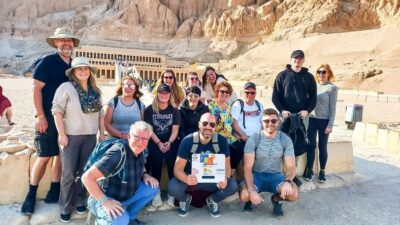
Luxor Valley of the Kings & Tutankhamun Tomb Trip
Read our review →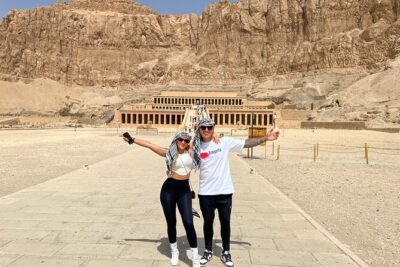
Small group Hurghada to Luxor, Valley of the Kings by Van
Read our review →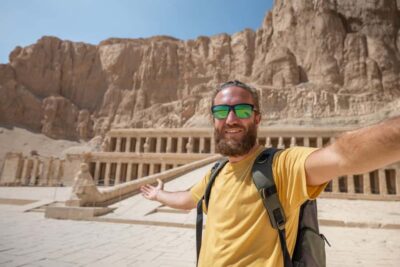
Valley of the Kings and Hatshepsut Temple Day Tour
Read our review →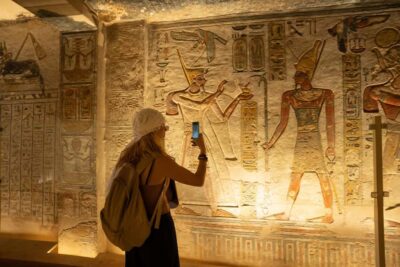
Luxor Tour with Valley of Kings, Karnak & Tut Tomb
Read our review →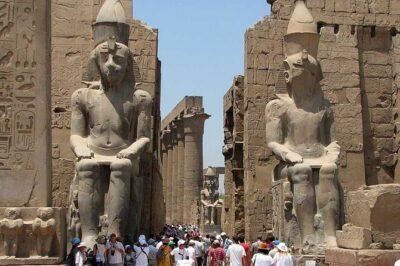
Valley of Kings, Hatchepsut Temple ,Karnak & Luxor-DayTour
Read our review →
Full Day Tour of Luxor West Bank Temples and Tombs (Private)
Read our review →
Small Group Excursion to Luxor Valley of the Kings from Hurghada
Read our review →Browse the lists this tour appears in