Reviewed · LUXOR TOURS & ACTIVITIES
Private Habu Temple, Valley of the Artisans, Valley of the Queens from Luxor
West Bank tombs still feel alive when a good guide drives. This private circuit stitches together Medinat Habu, Deir el-Medina, and the Valley of the Queens with a real human story behind the art. From vivid painted scenes to royal burial rituals, the day makes ancient Thebes feel personal, not just old stone.
I especially love how the tour gives you a smooth rhythm: early pickup, private transport, and entrance fees included so you spend energy on the sites, not ticket lines. I also love the focus on who built and who used these spaces, from artisan communities to pharaoh family burials.
One consideration: it is still Egypt in the morning sun, and the pace can feel warm if you are visiting in high heat. I also suggest you be ready to ask questions, since one review noted that explanations can vary from guide to guide.
In This Review
- Key points before you go
- Luxor West Bank, early starts, and why private pacing helps
- Medinat Habu and the mortuary world of Ramesses III
- Deir el-Medina, the Valley of the Artisans, and tomb paintings that look new
- Valley of the Queens: Ta-Set-Neferu and why the rituals mattered
- How the transport and included entry fees change your whole day
- Price and value: what you really get for $55
- The guides are the difference, and the best ones do real work
- What you should wear and bring for this West Bank morning
- Who this tour suits best, and who might want a different route
- Should you book this private Habu, Deir el-Medina, and Queens tour?
- FAQ
- What sites are included on this private West Bank tour from Luxor?
- How long is the tour?
- Is hotel pickup and drop-off included?
- Are entrance fees included?
- Does the price include bottled water?
- Is lunch included?
- Is this tour private?
- What is the cancellation window?
Key points before you go
- Medinat Habu stands apart for its preserved reliefs and Ramesses III setting, less hurried than the big-name temples
- Deir el-Medina connects art to labor, showing how tomb decorations came from a working community, not a mystery
- Valley of the Queens can be unusually quiet, especially if a major tomb like Nefertari’s is closed for renovation
- Private, fee-included visiting means fewer logistical headaches and more time for photos and questions
- Guides matter here, and the best ones can read symbols and explain how burial rites worked
Luxor West Bank, early starts, and why private pacing helps
The West Bank is big, and it rewards calm. Doing this as a private tour means you are not stuck in a slow shuffle behind other groups, so you can pause when something catches your eye, like a faded color in a relief or a painted figure that looks almost new.
This itinerary is built around a morning start, with pickup at 7:00 am from your hotel or Nile cruise. You then head by private A/C vehicle to the archaeology zone, and that one choice makes the day feel easier, especially if you are dealing with heat, sun, or jet lag.
Also, the sites on this route are not only about royal monuments. You will see the side of ancient Thebes that includes the people who worked on tombs and the rituals that kept beliefs alive day after day. That broader lens is a big part of the value.
Other Luxor options on the table
- Hurghada: Luxor Valley of the Kings & Tutankhamun Tomb Trip
★ 4.7 · 13,208 reviews - Luxor Day Trip from Hurghada Small Group & Tutankhamun Tomb
★ 4.8 · 5,366 reviews - Hot Air Balloon Ride in Luxor Egypt with Transfers Included
★ 5.0 · 4,319 reviews
Medinat Habu and the mortuary world of Ramesses III
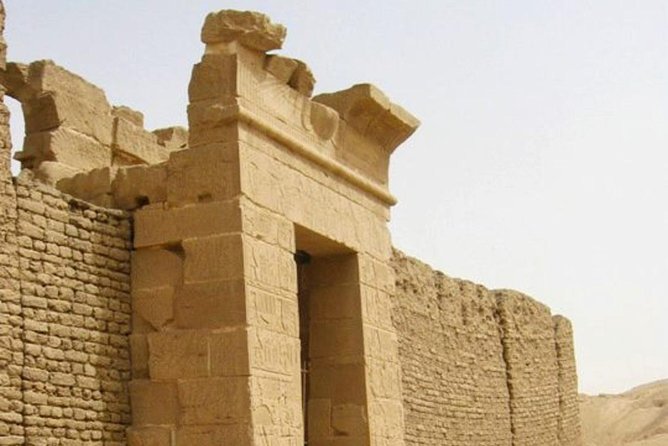
Your first stop is Medinat Habu, sometimes referred to as Medinet Habu, home to the Mortuary Temple of Ramesses III. The location sits near the Theban Hills on Luxor’s West Bank, and it gives you that classic desert-and-stone feel without the circus atmosphere some major sites can bring.
This temple is described as about 150 meters long and follows an orthodox design. It also closely resembles the mortuary temple of Ramesses II, often called the Ramesseum. Even if you do not know the dynasties, you will likely feel the logic of the layout, because it is built to support a mortuary complex and the ceremonies around it.
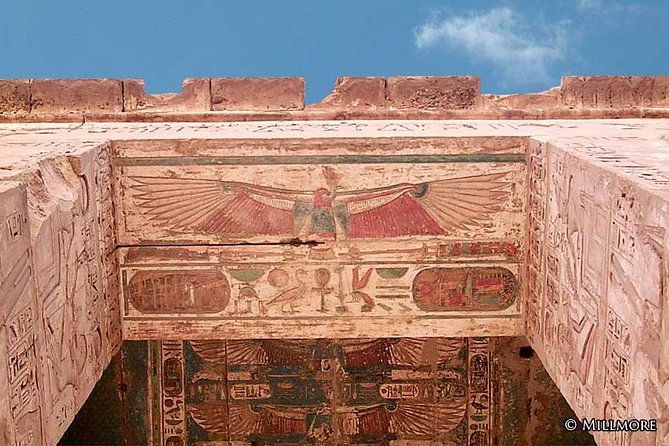
What I like most is the chance to focus on artwork that often looks surprisingly fresh. Multiple reviews call out Habu as a place where the colors in reliefs can still pop, including the tones on columns and ceilings. You also get a contrast with Luxor’s more famous temples, where you can spend your time fighting crowds and glare.
Practical note: Habu Temple can be visually dense, so ask your guide to point out one or two key scenes first. If you let the guide frame what you are looking at, the carvings stop being random and start reading like a story.
Deir el-Medina, the Valley of the Artisans, and tomb paintings that look new
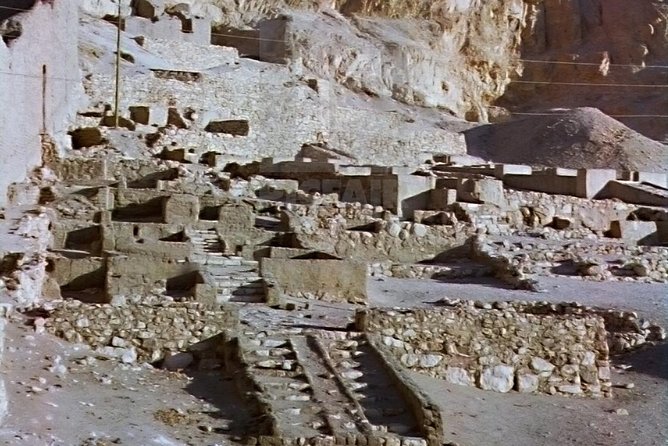
After Medinat Habu, you move on to Deir el-Medina, known as the Valley of the worker. This is the most “human” stop on the route. Deir el-Medina was an ancient Egyptian village where artisans lived and worked, especially during the 18th to 20th dynasties of the New Kingdom period, roughly 1550 to 1080 BC.
You are not just visiting where a tomb stands. You are visiting where the people connected to it lived. That changes how the wall art lands in your brain. Instead of thinking the decoration appeared by magic, you get the sense that skilled workers produced these scenes as part of a system, with traditions that had to be consistent.
The tour timing gives you around two hours at this stop, which is important. Deir el-Medina can reward slow looking, especially if your guide points out how the paintings are organized or why certain figures and symbols show up where they do. One review specifically mentions that the paintings can appear remarkably fresh, which makes the site feel less like a distant museum and more like something you can still interpret.
A smart way to get more out of Deir el-Medina is to ask your guide how the artisan community fit into the larger Theban religious picture. The best guides link it to burial beliefs and daily life, and it turns a small valley into a big explanation.
Also, if you care about photography, this is a good place to take your time. You will likely find fewer photo-stops that feel purely repetitive, because the human context keeps things interesting.
Valley of the Queens: Ta-Set-Neferu and why the rituals mattered
Your final major site is the Valley of the Queens, a burial ground for wives of pharaohs and other royal family members. In ancient times it was known as Ta-Set-Neferu, which translates as the place of the Children of the Pharaoh. Along with queens from the 18th, 19th, and 20th dynasties, many princes and princesses were also buried here.
This valley is close to the better-known Valley of the Kings, but it often feels quieter and more intimate. It is also a place where the maintenance of tombs mattered. The tour explains that mortuary priests performed daily rituals and provided offerings and prayers for the deceased noble members. That detail is key, because it tells you the tombs were part of an ongoing system, not just a one-time event.
Expect another two-hour window. In a private setting, you can take your time comparing tomb styles and scenes, instead of racing the group. You will also appreciate the reliefs more if you understand what they were meant to do: support beliefs about the afterlife and keep identity intact.
One useful heads-up from recent feedback: the tomb of Queen Nefertari was reported as closed for renovation in at least one outing. In that situation, the whole valley can feel calmer. Even if major tomb access is affected by closures, the surrounding atmosphere and the overall storytelling still make the visit worth it, especially if you have a guide who explains what you are seeing.
Also reachable from Luxor:
- Luxor: Shared Full-Day Tour to Luxor West and East Banks
★ 4.5 · 1,812 reviews - Luxor: Hot Air Balloon Ride over Luxor Relics
★ 4.8 · 1,681 reviews - Luxor Day Tour: Valley of Kings & Queens & Hatchepsut Temples
★ 5.0 · 1,496 reviews - Full Day Tour to East and West Banks of Luxor
★ 5.0 · 1,449 reviews
How the transport and included entry fees change your whole day
This is not a “grab a ticket and wander” setup. It is a private tour with hotel pickup and drop-off in Luxor, plus all transfers by private A/C vehicle. It also includes entry fees and a guided experience, along with bottled water.
Here is why this matters to you in practical terms. On the West Bank, the biggest stress is time. You lose time when you have to negotiate taxis, handle multiple tickets, or wait for late arrivals at each site. By packing transport and entrance fees into the tour price, you can keep the day on schedule and focus on the actual monuments.
You also get a guide who can switch gears as the morning unfolds. If you arrive and notice a tomb or area is less accessible that day, a guide can often help you make sense of what you can still see, and that keeps the day from feeling like a checklist.
One more small but real comfort: water. Deir el-Medina and the queen’s valley can bake in the sun, and bottled water can save you from the scramble of finding a shop at the wrong moment.
Price and value: what you really get for $55
At $55 per person for a private West Bank loop, this is aiming at value, not luxury. The math gets better because entrance fees are included, and you also get private round-trip transport plus a guide.
If you were to DIY this, you might pay separate entrance fees for each site, plus local transport between them, plus time spent coordinating schedules. Even if you keep the transport “cheap,” your time cost rises fast. With this tour, your main currency is your morning, and it stays organized.
You should also think about group size. The tour is private, so you are generally paying for your own group experience rather than sharing with strangers. Private visiting is especially meaningful at sites like Medinat Habu and Deir el-Medina, where understanding the story behind the walls can transform a quick look into a real connection.
One note: lunch is not included. That is normal for these circuits, but it means you should plan either a pre-arranged meal with your own preferences or a post-tour lunch back in Luxor.
The guides are the difference, and the best ones do real work
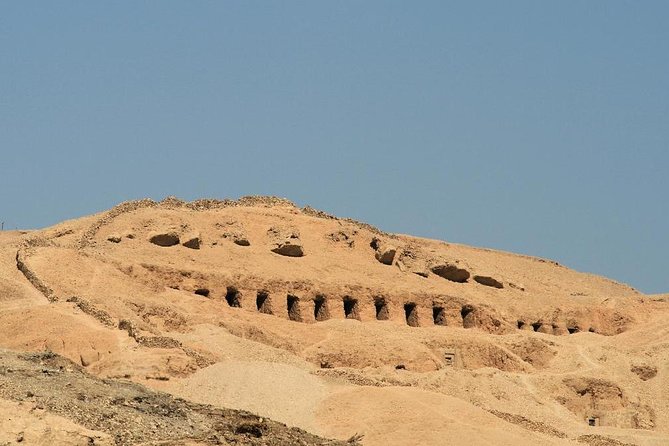
The highest praise in the reviews is not just about the sites. It is about the guides. People highlight guides like Aliaa, who was praised as kind, very knowledgeable, and attentive, and Soosan, who was praised for making the day smooth. Others mention guides like Sam, noted for reading hieroglyphs fluently, and Reham, praised as friendly and quick to answer questions.
Even without naming every guide, the pattern is clear: the tour quality lives or dies on interpretation. When your guide can connect the carvings, burial purpose, and daily rituals into plain talk, these sites stop feeling like empty rooms.
So how do you judge this before you book? Look for a guide who explains the “why” behind what you see. Ask, at the start of the day, what scene or symbol you should watch for. If your guide can confidently answer, you are in good hands.
Also, if you hit a guide day that feels light on explanations, you can still salvage the visit by using your questions. One review noted a more frustrating explanation at Habu Temple, so be proactive. In this kind of tour, you do not need to be shy about asking for clarity.
What you should wear and bring for this West Bank morning
This itinerary covers multiple outdoor areas and walking. The tour provides bottled water, but you should do the rest.
Bring sun protection and plan for heat, because at least one review flagged that the experience is better when temperatures are not extreme. Think hat, sunglasses, and sunscreen. Wear shoes that handle uneven ground.
If you like photos, bring your camera strap and keep extra space on your device. You will likely want shots of carved columns, wall scenes, and the desert light at each stop. And if you care about reading details, bring a small notebook or save a few notes on your phone, so you can remember what your guide pointed out.
Who this tour suits best, and who might want a different route
This private tour is a strong match if you want:
- A guided West Bank circuit that includes both workers and royalty
- A calmer pace than you might get on a group bus
- Fewer logistics headaches, since transport and entrance fees are handled
- A chance to see less crowded or less dominant sites compared to the biggest Luxor hits
It might feel less ideal if you want a very flexible day where you can roam the West Bank completely on your own terms. This tour is structured, with set time at each stop.
It also depends on your heat tolerance. If you are very sensitive to hot sun, you might want to focus on cooler seasons or protect yourself hard with shade habits, water, and early arrival.
Should you book this private Habu, Deir el-Medina, and Queens tour?
I would book it if you want the best kind of Luxor day: organized transport, included fees, and a guide who turns art into meaning. Medinat Habu is a great way to start because it is a different flavor of temple than the headline sites, and Deir el-Medina gives you the human connection that makes the tombs feel grounded. Ending in the Valley of the Queens adds the royal and ritual side, so the day feels like a full story.
I would skip or reconsider if you hate walking in hot sun or if you are the type who prefers self-guided wandering without timed transitions. Also, if you are worried about explanation quality, bring a few questions to ask early, so you can set expectations for how you want the story told.
Overall, at $55 with private A/C transfers, entrance fees, a guide, and water, this is good value for a focused West Bank day. If you want less crowd pressure and more “I get it now” moments, this is the kind of tour that can make Luxor feel personal fast.
FAQ
What sites are included on this private West Bank tour from Luxor?
You visit Medinat Habu (Temple of Medinat Habu), Deir el-Medina, and the Valley of the Queens.
How long is the tour?
The tour duration is about 6 hours.
Is hotel pickup and drop-off included?
Yes. The tour includes pickup and drop-off at hotels in Luxor, and it also mentions pickup from a Nile cruise.
Are entrance fees included?
Yes. Entry fees are included.
Does the price include bottled water?
Yes. Bottled water is included.
Is lunch included?
No. Lunch is not included.
Is this tour private?
Yes. This is a private tour or activity, with only your group participating.
What is the cancellation window?
You can cancel up to 24 hours in advance for a full refund. Less than 24 hours before the start time is not refunded.
Newly added near Luxor
- Full-Day Private Guided Tour in the West Bank of Luxor★ 5.0 · 22 reviews
- Amazing 3 nights Nile cruise includes tours from Luxor to Aswan★ 5.0 · 57 reviews
- Hot Air Balloon Flight in Luxor with Pickup★ 4.5 · 14 reviews
- Private transfer from Luxor to Hurghada★ 5.0 · 43 reviews
- Quad Bike safari Experience in Luxor★ 4.5 · 62 reviews
- Private 2 Day Luxor Tour★ 5.0 · 71 reviews
- Private Tour in Luxor Egypt included entrance fees★ 5.0 · 11 reviews
- Private Transfer From Luxor to Marsa Alam★ 5.0 · 28 reviews
Luxor Tours & Activities, compared.
Luxor Valley of the Kings & Tutankhamun Tomb Trip
Read our review →
Luxor Day Trip from Hurghada Small Group & Tutankhamun Tomb
Read our review →
Hot Air Balloon Ride in Luxor Egypt with Transfers Included
Read our review →
Shared Full-Day Tour to Luxor West and East Banks
Read our review →
Luxor Day Tour: Valley of Kings & Queens & Hatchepsut Temples
Read our review →
Full Day Tour to East and West Banks of Luxor
Read our review →