
Reviewed · VALLEY OF THE KINGS & WEST BANK TOURS
Private Tour: Valley of the Kings – Tombs of Seti I & King Tut
Tut, Seti I, and more in one day. This private Luxor tour strings together the Valley of the Kings and Hatshepsut’s temple with a qualified Egyptologist, so the sites make sense fast. I like the hotel pickup convenience and the comfort of an air-conditioned vehicle while you travel between stops. One thing to plan for: entrance tickets are not included, so you’ll want to budget for them.
You also get a smooth, first-timer friendly flow on the West Bank, starting early and moving through famous tombs like Tutankhamun and Seti I. The tradeoff is pace: you’re inside tombs and temples for short stretches, so you’ll want to arrive ready to take your time where it matters most.
Because it’s private, you’re not waiting on other people. That makes it easier to ask questions, especially when the guide explains why certain tombs are famous and how the art works.
In This Review
- Key highlights worth focusing on
- A private Luxor tomb day, start-to-finish pace and comfort
- KV 11 Ramses III: painted ritual scenes and the Tomb of the Harpers
- King Tutankhamun tomb: why the 1922 discovery still shapes the visit
- The Valley of the Kings tomb circuit: multiple royal burials in one flow
- Tomb of Merenptah: a later feel, taller corridors, fewer side rooms
- Tomb of Seti I: long, detailed, and limited-visitor access
- Ramses IV and the ceiling of Nut: blue-white scenes with big symbolism
- Deir el Bahari and Hatshepsut: the woman-pharaoh connection to Tut
- Colossi of Memnon: the 18-meter bookend that grounds the day
- Price and value: what $60 covers, and what you should budget for
- Who should book this private Valley of the Kings and Seti I day
- Final thought: should you book Valley of the Kings, Seti I and King Tut?
- FAQ
- What is the price per person?
- How long is the tour?
- What time does the tour start?
- Is hotel pickup and drop-off included?
- Is this a private tour?
- What transportation is included?
- Do I need to buy entrance tickets separately?
- Which sites does the tour include?
- Who leads the tour?
- Can I cancel and get a full refund?
Key highlights worth focusing on
- Private tour means you stay with your group only, not a mixed crowd
- Hotel pickup and drop-off from select hotels saves time and hassle in Luxor
- King Tutankhamun tomb viewing is built around the 1922 nearly intact discovery
- Tomb of Seti I access is rare, with limited time and limited visitors mentioned for opening
- Deir el Bahari and Hatshepsut connects directly to Tutankhamun’s royal dynasty
- Colossi of Memnon gives you a big, final visual payoff after the tombs
A private Luxor tomb day, start-to-finish pace and comfort
This is the kind of day you plan when Luxor is short on time but long on ambition. You’re scheduled for about six hours total, starting at 8:00 am, and you’ll cover multiple Valley of the Kings tombs plus Deir el Bahari (Hatshepsut’s temple) and the Colossi of Memnon.
The comfort part is real. Your tour includes private transport in an air-conditioned vehicle, plus hotel pickup and drop-off from select hotels. That matters in Luxor because the West Bank stops are spread out, and you don’t want your day turning into a sweaty transit shuffle.
The private format is the quiet win. It’s explicitly set up so only your group participates. That typically means fewer pauses, and more room to ask direct questions when the guide points out what you should be looking for in the tomb scenes.
More West Bank and Valley of the Kings visits:
- Hurghada: Luxor Valley of the Kings & Tutankhamun Tomb Trip
★ 4.7 · 13,208 reviews - Luxor: Valley of the Kings and Hatshepsut Temple Day Tour
★ 4.4 · 1,404 reviews - Hurghada: Luxor Tour with Valley of Kings, Karnak & Tut Tomb
★ 4.6 · 1,082 reviews
KV 11 Ramses III: painted ritual scenes and the Tomb of the Harpers
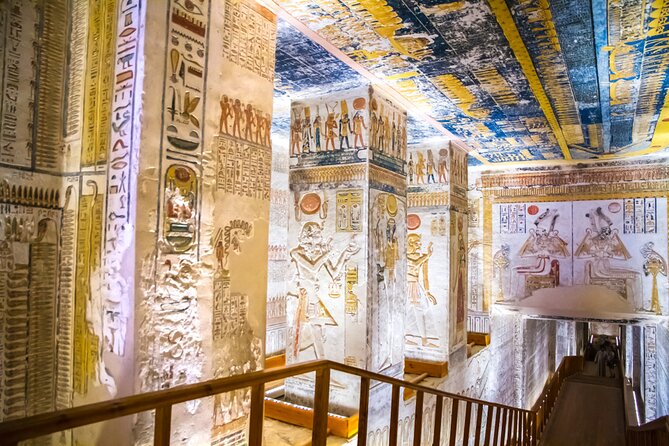
One of your earliest stops is the Tomb of Ramses III (KV 11) in the Valley of the Kings. This tomb is known for more than its scale. You’ll see colorful painted sunken reliefs with ritual texts like the Litany of Ra and the Book of Gates, plus scenes showing Ramses in front of the gods.
What I find especially interesting here is the contrast. In smaller side rooms near the entrance corridor, you get more secular-style scenes, including foreign tributes. The description highlights highly detailed pottery imported from the Aegean, along with depictions of the royal armoury and boats. And then there’s the detail that gives the tomb its alternative nickname, the blind harpists, linked to a scene found in one of the side chambers.
A practical note: you’ll usually get around 25 minutes at each tomb in this style of program. That’s enough time to see the main features and catch the symbolism the guide is explaining, but it’s not enough to study every figure like a museum conservator. If you care most about art details, pick one or two themes the guide emphasizes and focus your attention there.
Also, plan on buying your own entry ticket. Entrance tickets are not included for the stops.
King Tutankhamun tomb: why the 1922 discovery still shapes the visit
Next comes the biggest name on the West Bank: the Tomb of King Tutankhamun (King Tut). This tomb is famous for a simple reason with huge impact on your visit: it was discovered nearly intact in 1922.
The guide context matters because this is more than a celebrity stop. It’s tied to Howard Carter, the discoverer, and it connects to what you’ve probably seen back in Cairo. The description points out that Tut’s famous golden mask is on display at the Egyptian Museum in Cairo, while here you can be amazed by the royal mummy of the young king.
You’ll have about 25 minutes for this stop, so again, think of this as a focused highlight rather than a slow, repeat-viewing experience. If you want the emotional impact of walking into one of Egypt’s most discussed tombs, this is the moment.
And if you’re the type who likes to understand what you’re looking at, this is where an Egyptologist adds a lot of value. The tomb’s fame is easy. The meaning is the part you’ll remember.
The Valley of the Kings tomb circuit: multiple royal burials in one flow
After the Tutankhamun highlight, the day expands into a broader Valley of the Kings experience. The Valley of the Kings itself is described as the West Bank necropolis of Thebes, and it’s positioned as a must-see for Luxor travelers.
This part of the tour is where you’re meant to see the overall range of royal tomb design and storytelling. You’re set up to visit multiple royal tombs, with the program specifically mentioning Horemheb, Merenptah, and Ramses alongside Tutankhamun as part of the four royal tomb set.
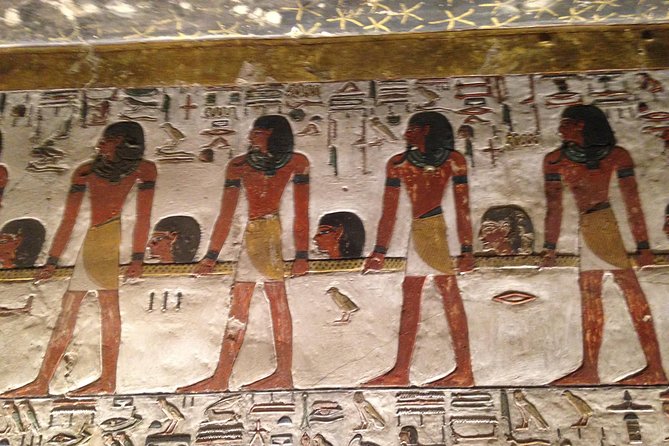
You’re given about two hours here, which is more time than most of the individual tomb stops. That extra block helps because it’s easier to absorb the pattern. You can start spotting themes in the decoration, the way kings are positioned in relation to the gods, and how each tomb emphasizes a slightly different story of the afterlife journey.
One caution: tombs can feel cooler and quieter than the outside world, but they’re still not designed for long wandering. In tight corridors and carved rooms, you’ll likely need to keep an eye on space, especially when you’re trying to take photos while the guide is pointing out key scenes.
Entrance tickets remain not included.
Other Luxor options on the table
- Luxor Day Trip from Hurghada Small Group & Tutankhamun Tomb
★ 4.8 · 5,366 reviews - Hot Air Balloon Ride in Luxor Egypt with Transfers Included
★ 5.0 · 4,319 reviews - Luxor: Shared Full-Day Tour to Luxor West and East Banks
★ 4.5 · 1,812 reviews - Luxor: Hot Air Balloon Ride over Luxor Relics
★ 4.8 · 1,681 reviews
Tomb of Merenptah: a later feel, taller corridors, fewer side rooms
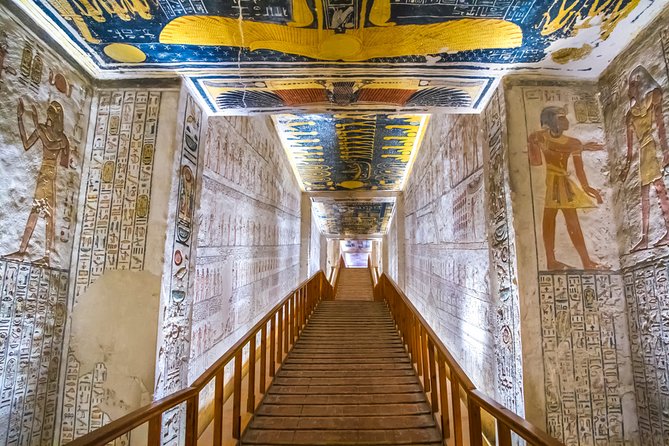
Tomb of Merenptah is another Valley of the Kings stop, aimed at giving you variety beyond the biggest names. The program description ties the tomb to Egyptian religious thinking, mentioning Ptah and how a deity connected to Memphis and craftsmen was used to protect the dead.
You’ll also get design context. The description notes a material decrease in the number of lateral rooms and a dramatic increase in the height of the corridors and rooms compared to earlier models. That’s a useful detail because it tells you the tomb wasn’t just decorated, it was engineered differently as royal burial practices evolved.
Howard Carter’s role shows up here too. The description says the tomb was discovered by him in 1903. That gives you a neat timeline thread through the Valley, linking different tombs to the early 1900s moment when so many famous discoveries were made.
You’ll have around 25 minutes for this stop, so take the guide’s cue about what makes Merenptah’s layout distinct, then look for those shifts while you move through the chamber.
Tomb of Seti I: long, detailed, and limited-visitor access
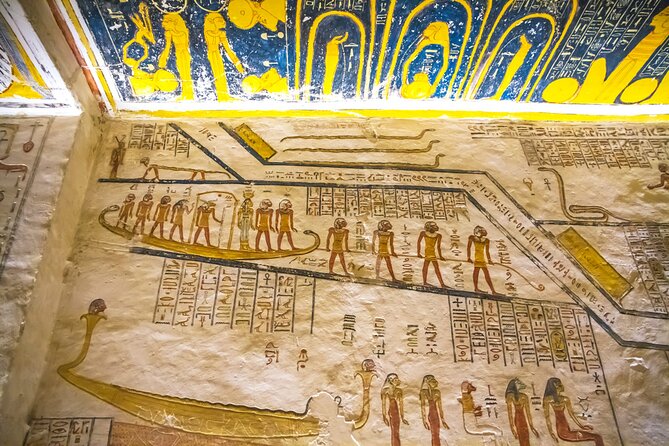
If you’ve come to Luxor for the best decoration, set your attention on Tomb of Seti I. The program describes it as one of the longest and most beautifully decorated tombs discovered, with intricate carvings and vivid colors.
There’s a major reason this stop feels special, beyond the art. The description says Seti I is currently open to the public for a limited time and limited visitors only. That means your visit is likely tied to a schedule that doesn’t run exactly like every other tomb.
For you, that’s a value signal. It’s not just another ticketed room on a checklist. It’s a chance to see a tomb that may not always be available, at least not in the same way.
Your time here is about 30 minutes, which is enough to take in the overall design and hit the details the guide highlights. Still, don’t expect a slow museum session. This is the kind of stop where you’ll get the most out of it by listening, then looking, then asking one or two follow-up questions.
Tickets are separate from the tour price.
Ramses IV and the ceiling of Nut: blue-white scenes with big symbolism
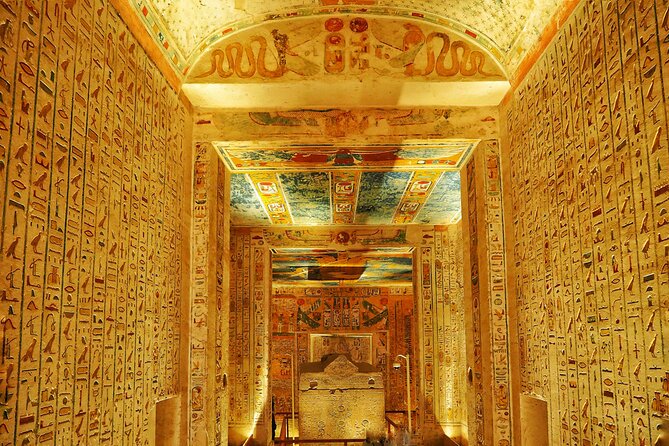
The day also includes Tomb of Ramses IV (KV 2), described as different from most other tombs. The description emphasizes the wall texts and the color scheme, including scenes from the Litany of Ra, the Book of the Dead, the Book of Caverns, the Book of the Heavens, the Book of Amduat, and the Book of the Night.
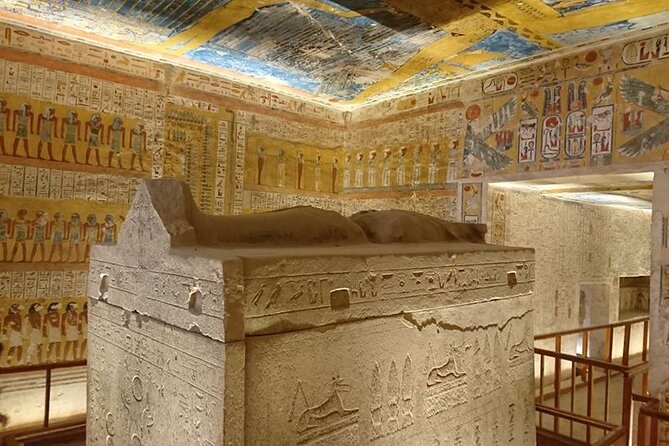
The walls inside the burial chamber are said to be finished with blue and white colors that are easy to notice. You’ll also see the king’s sarcophagus made of rose-colored granite in the chamber, plus a ceiling scene of the goddess Nut, depicted swallowing the sun and giving birth to it.
That Nut imagery is a perfect example of what an Egyptologist helps with. A lot of visitors see the iconography, but only some people understand what the cycle means in the story of the afterlife. Here, the guide can turn a ceiling you might otherwise gloss over into the centerpiece of the room.
You’ll typically have about 25 minutes for this tomb, so again, think focused, not exhaustive. Look at what the guide points out, then scan the rest of the room to see how the text and decoration work together.
Deir el Bahari and Hatshepsut: the woman-pharaoh connection to Tut
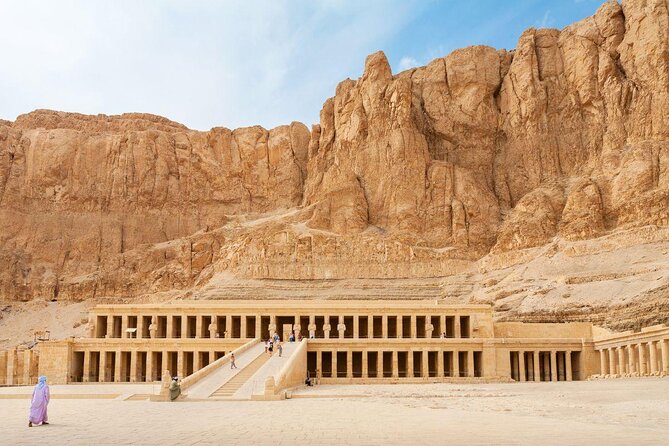
After the tombs, the program shifts to monumental architecture at Deir el Bahari, the Temple of Queen Hatshepsut. The description makes the family link explicit. Hatshepsut is presented as the only woman ever to reign over Egypt as Pharaoh, and she’s described as an ancestor of King Tutankhamun.
That connection is why this stop plays so well after the tombs. You move from underground royal afterlife beliefs to a temple that projects power above ground. And you can see how dynasties tie themselves together through symbols and lineage.
You’ll have about one hour here. That length is useful because temple complexes reward walking a bit more than tomb chambers do. Still, the time is finite, so choose your moments. If you want the broad view of the temple area, aim for one main vantage point and let the guide explain what you’re seeing there.
Entrance tickets are not included for this stop either.
Colossi of Memnon: the 18-meter bookend that grounds the day
To close out the day, you visit the Colossi of Memnon. These are two massive stone statues of Pharaoh Amenhotep III, each about 18 meters (60 feet) tall. The description calls them guardians of ancient Thebes, and it notes they have watched the Nile Valley for over 3,400 years.
This is your best chance to take a breath and switch gears. After hours of enclosed tomb rooms, the Colossi feel open and monumental. They also provide a sense of what the surrounding mortuary temple complex was like, even though most of it is now lost to floods and time, as described.
If timing is right, the description suggests they’re especially impressive around sunrise, and with an 8:00 am start, you may get some of that morning light. Even if you do not, the scale still does the job.
This stop is short, about 15 minutes, so treat it as a final visual anchor before you head back.
Price and value: what $60 covers, and what you should budget for
The price is $60 per person for a private day with an Egyptologist. On top of that, it includes qualified Egyptologist guide, private transport by air-conditioned vehicle, and hotel pickup and drop-off from select hotels.
That package is the value core. You’re not only paying to enter sites, you’re paying for the storytelling and logistics. In Luxor, reducing travel friction matters, especially when your day is packed.
What’s not included is entrance tickets. Since the tour includes multiple tombs and two major temple sites, entrance costs can add up. My practical advice: treat the $60 as the guided day cost, then budget separately for site admissions.
If you’re comparing options, the main question is simple: do you want to follow a plan with context, or do you want to piece things together on your own? For many first-time Luxor visits, a private guided day like this hits the sweet spot between convenience and depth.
Who should book this private Valley of the Kings and Seti I day
This tour fits best if you:
- Want a first-time Luxor overview that still focuses on major tomb highlights like King Tutankhamun and Seti I
- Prefer a private format where you can ask questions and keep the pace aligned with your group
- Like the idea of connecting tomb art themes with a top temple stop at Deir el Bahari and Hatshepsut’s story
- Are okay with a schedule that moves site to site and gives each highlight a focused time window
It may be less ideal if you’re the type who wants one tomb for a long, quiet study session. This day spreads attention across many spaces. You’ll get depth from the guide, but you won’t have unlimited time in any single chamber.
If you’re traveling with kids, this also depends on your family’s patience, because tomb interiors are often a lot of looking and listening in a compressed time frame.
Final thought: should you book Valley of the Kings, Seti I and King Tut?
I’d book this tour if your priority is seeing the big Luxor tomb names with a guide who can explain what you’re seeing, and if you appreciate pickup plus air-conditioned transport for a packed West Bank day. The standout value is the way the day connects Tut, Seti I, and Hatshepsut, rather than treating them like random stops.
My one real caution is budget and timing. Entrance tickets are not included, and Seti I may be limited-access when it’s open. If that tomb is on your personal must-see list, this is one of the smarter ways to plan your day.
If your goal is maximum context per hour, this private format delivers.
FAQ
What is the price per person?
The tour costs $60.00 per person.
How long is the tour?
It runs for about 6 hours.
What time does the tour start?
The start time is 8:00 am.
Is hotel pickup and drop-off included?
Yes. Hotel pickup and drop-off are included from select hotels.
Is this a private tour?
Yes. It is a private tour, and only your group will participate.
What transportation is included?
You travel in a private vehicle that is air-conditioned.
Do I need to buy entrance tickets separately?
Yes. Entrance tickets are not included in the tour price.
Which sites does the tour include?
It includes Valley of the Kings tomb visits, plus stops such as the Temple of Hatshepsut at Deir el Bahari and the Colossi of Memnon.
Who leads the tour?
The tour includes a qualified Egyptologist guide.
Can I cancel and get a full refund?
Yes. You can cancel up to 24 hours before the experience start time for a full refund.
Newly added near Luxor
- Full-Day Private Guided Tour in the West Bank of Luxor★ 5.0 · 22 reviews
- Amazing 3 nights Nile cruise includes tours from Luxor to Aswan★ 5.0 · 57 reviews
- Hot Air Balloon Flight in Luxor with Pickup★ 4.5 · 14 reviews
- Private transfer from Luxor to Hurghada★ 5.0 · 43 reviews
- Quad Bike safari Experience in Luxor★ 4.5 · 62 reviews
- Private 2 Day Luxor Tour★ 5.0 · 71 reviews
- Private Tour in Luxor Egypt included entrance fees★ 5.0 · 11 reviews
- Private Transfer From Luxor to Marsa Alam★ 5.0 · 28 reviews
Valley of the Kings & West Bank Tours, compared.
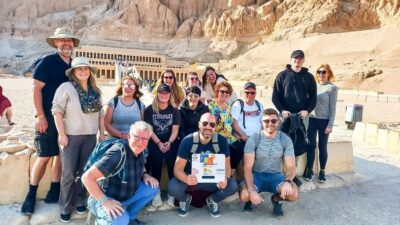
Luxor Valley of the Kings & Tutankhamun Tomb Trip
Read our review →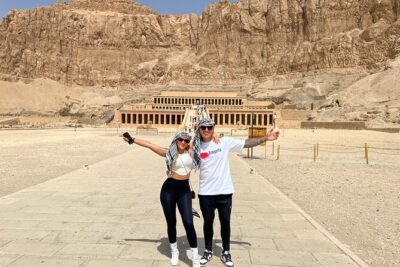
Small group Hurghada to Luxor, Valley of the Kings by Van
Read our review →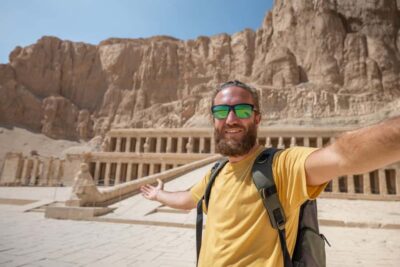
Valley of the Kings and Hatshepsut Temple Day Tour
Read our review →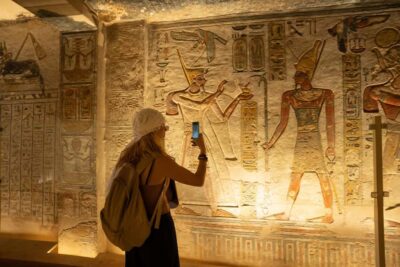
Luxor Tour with Valley of Kings, Karnak & Tut Tomb
Read our review →
Valley of Kings, Hatchepsut Temple ,Karnak & Luxor-DayTour
Read our review →
Full Day Tour of Luxor West Bank Temples and Tombs (Private)
Read our review →
Small Group Excursion to Luxor Valley of the Kings from Hurghada
Read our review →Browse the lists this tour appears in