Reviewed · LUXOR TOURS & ACTIVITIES
Tour to Ramesseum, Habu Temples, and the Valley of the Nobles
Three West Bank sites in one smooth half-day. This private Luxor tour strings together the Ramesseum, Medinat Habu, and the Valley of the Nobles, guided by an Egyptologist and built for an easy morning start. You get hotel or cruise pickup, a private vehicle, and admission to each stop, so the day stays focused on the monuments.
I especially like how the stops feel different from each other. The Valley of the Nobles shows nobles’ tomb life up close, while the Ramesseum and Medinat Habu shift into big, dramatic state monuments tied to Ramesses and major battles.
One consideration: this is on the West Bank and includes walking on uneven ground and steps, so it helps to have moderate physical fitness and comfortable shoes.
In This Review
- Key highlights worth planning around
- Theben necropolis on the clock: starting at the Valley of the Nobles
- Ramesseum’s scale: Ramesses II, big reliefs, and Ozymandias
- Medinat Habu: Ramesses III’s best-preserved memorial temple
- How the half-day pacing works in about 5 hours
- What’s included (and why it matters for value)
- Practical tips for the Ramesseum, Medinat Habu, and Nobles circuit
- Who this tour suits best
- Should you book this Ramesseum, Medinat Habu, and Valley of the Nobles tour?
- FAQ
- How long is the tour?
- Where does pickup happen?
- Is this tour private?
- Which sites are included?
- Are entrance fees included?
- Do you provide bottled water?
- Is there an Egyptologist guide?
- Can I choose my start time?
- What is the cancellation policy?
Key highlights worth planning around
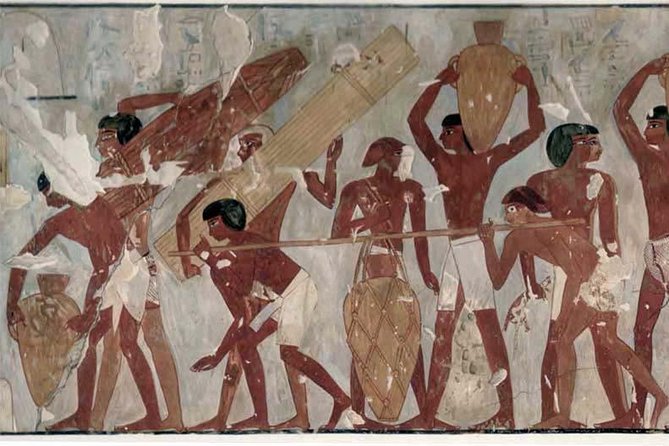
- Valley of the Nobles, el-Qurna hills: tombs of high officials with daily life, funerals, and afterlife scenes.
- Ramesseum’s massive Ramesses II setting: the half-preserved temple is famous for the seated statue tied to Ozymandias.
- Medinat Habu’s military memory: scenes and texts about Ramesses III and battles linked to the Sea Peoples.
- Morning flexibility: you can choose among a variety of start times, with early departures for cooler temperatures.
- Private, door-to-door logistics: pickup and drop-off in Luxor by a private air-conditioned vehicle.
- Tickets and water handled: entrance fees and bottled water are included, so you can budget without surprises.
Theben necropolis on the clock: starting at the Valley of the Nobles
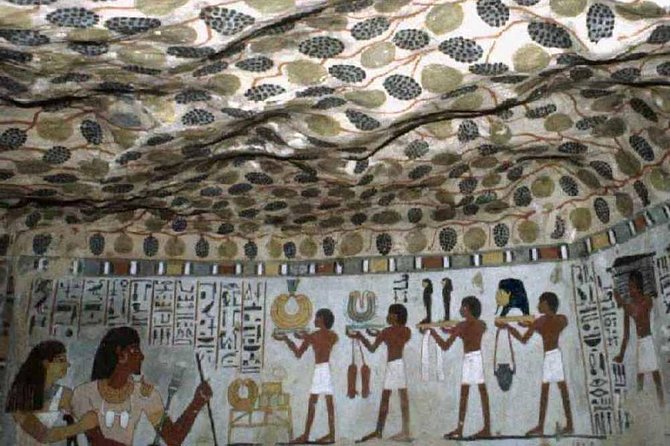
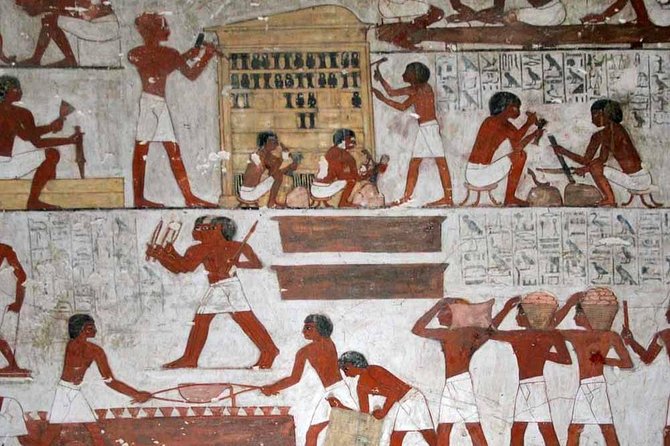
The best part of starting here is that the Valley of the Nobles sets the tone for the whole day. You’re on Luxor’s West Bank in the Theban necropolis, specifically around the el-Qurna hills, where nobles and high officials were buried. This is not the super-famous Valley of the Kings. It’s quieter, more spread out through rocky terrain, and that difference matters because you see how elite Egyptians imagined both life and the afterlife.
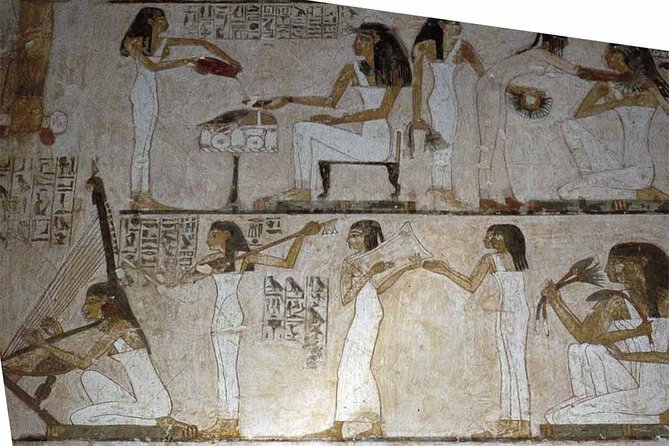
This stop gives you about one hour plus an admission ticket. The tombs date mainly to the New Kingdom’s Golden Age of Thebes, roughly 1550 to 1080 BC. Inside, the decoration themes are practical and human, not just grand royal propaganda. You’ll find scenes of daily life, funerals, and ideal afterlives, plus the kind of careful craftsmanship that tells you these weren’t generic rooms. They were designed around beliefs, status, and personal memory.
Walking-wise, plan for uneven ground and some steps. The tour asks for moderate physical fitness, which makes sense for rocky hills and temple access paths. If you’re the kind of traveler who hates shoes that slip on stone, bring grippy footwear and take your time.
Other Luxor options on the table
- Hurghada: Luxor Valley of the Kings & Tutankhamun Tomb Trip
★ 4.7 · 13,208 reviews - Luxor Day Trip from Hurghada Small Group & Tutankhamun Tomb
★ 4.8 · 5,366 reviews - Hot Air Balloon Ride in Luxor Egypt with Transfers Included
★ 5.0 · 4,319 reviews
Ramesseum’s scale: Ramesses II, big reliefs, and Ozymandias
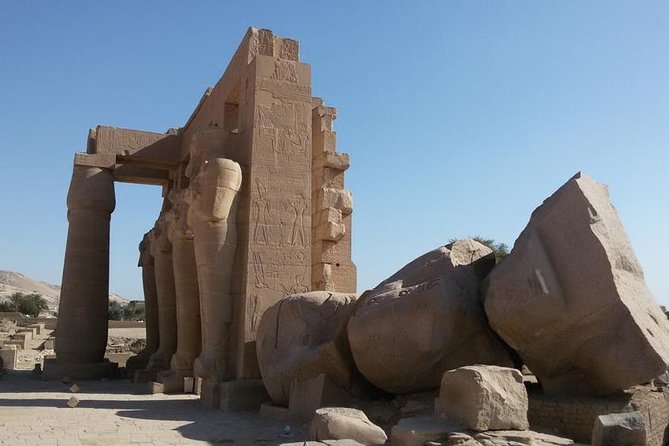
From the nobles’ tomb world, the day jumps to a royal memorial. The Ramesseum, also called the Mortuary Temple of Ramses II, is famous for its dramatic remnants, especially the seated statue that was about 19 meters high (around 62 feet). Most of the statue is gone now, but fragments remain, and the size is part of why people still feel something in their chest when they stand nearby.
This is also the temple that inspired Percy Bysshe Shelley’s poem Ozymandias, which is one reason the Ramesseum is such a good stop for literary-minded visitors. Even if you don’t read the poem again later, it helps you connect the idea of imperial power with the reality of ruin.
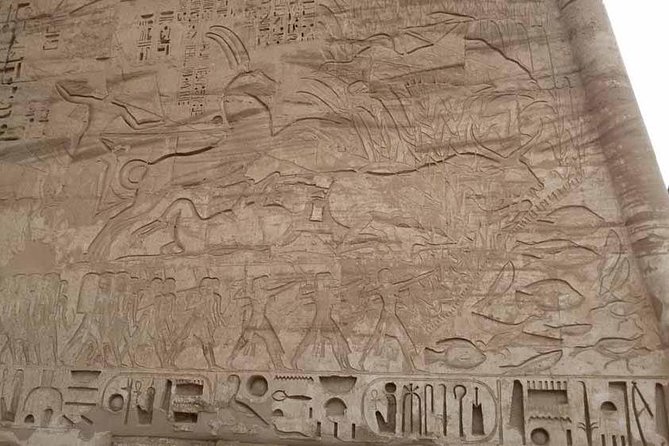
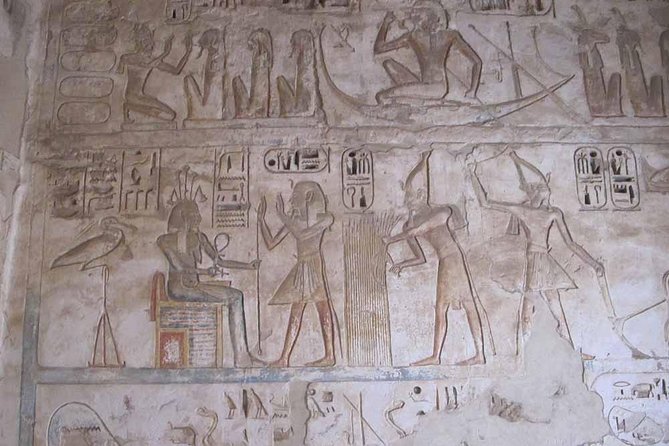
You get around 45 minutes here. The temple is only about half preserved, so your guide’s job really matters. The walls include reliefs tied to major events and religious festivals. Expect battle scenes such as the Battle of Kadesh, plus depictions linked to the Syrian wars, and ceremonial imagery like the Festival of Amon Min.
What to look for, practically: reliefs tend to have repeated patterns, but each one carries specific figures, actions, and locations. A good Egyptologist guide helps you “read” the sequence instead of treating it like random carvings. In the better-guided experiences I’ve seen from Egyptologists, explanations can turn those scenes into a story you can follow in a few minutes.
Medinat Habu: Ramesses III’s best-preserved memorial temple
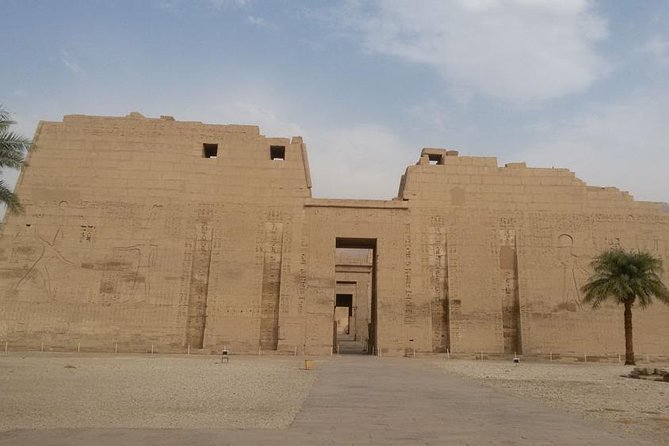
After the Ramesseum, you move to Madinat Habu, the memorial temple of Ramesses III. If you want a clear contrast, this stop delivers it. The site is described as the best-preserved of the New Kingdom memorial temples, so you’re not just looking at fragments. You’re dealing with walls that still feel structured, organized, and meaningful.
This stop is about one hour and includes admission. The decoration focuses on military memory and royal messaging. You’ll see military scenes and texts about victories in three wars, along with ritual and festival themes. You’ll also hear the storyline tied to Ramesses III defeating the Sea Peoples. Even if you’ve never studied this campaign, the temple layout and the wall scenes are the kind of classroom that works without a textbook.
The complex also includes more than the main temple area. A royal palace was built to the south of the temple, facing an open forecourt. Priests’ dwellings and administrative units lay to either side. That matters because it changes how you imagine the place. It wasn’t only a stone room for rituals. It was connected to the people who ran ceremonies and supported the state religion around the king’s commemorated victories.
If you’re short on time, this is still a high-value stop. The preservation makes details easier to spot, and the theme is focused, so it’s easier to connect what you see to what your guide is explaining.
How the half-day pacing works in about 5 hours
Even though the tour feels packed, the structure is designed for a morning loop. The total time is about 5 hours, and you get targeted time at each main site rather than lingering too long anywhere. That’s a big deal on the West Bank, where walking, heat, and uneven surfaces add up.
Timing is also flexible. Start times can be customized, and the tour specifically mentions early departures to take advantage of cooler morning temperatures. That’s the kind of practical detail that changes the experience. You’ll get better walking comfort, and the morning light can make stone details easier to notice.
For driving, expect private transfers between the stops. One leg to the Ramesseum is described as roughly a 40-minute trip. After that, the West Bank hops tend to be shorter, but the exact rhythm depends on your schedule and what time you hit each site.
One more logistics point: you cross to the West Bank area and pass through modern infrastructure while heading to ancient sites. In one of the guide-and-driver experiences, the route included crossing a more recent bridge built in 1992 to reach the Valley of the Nobles area. It’s not a sightseeing moment, but it does remind you how close the ancient and modern worlds really are in Luxor.
Safety and pace are also part of the appeal. In the experiences where the pace felt “just right,” the common thread was a smooth rhythm plus a guide who kept explanations organized while you moved.
Also reachable from Luxor:
- Luxor: Shared Full-Day Tour to Luxor West and East Banks
★ 4.5 · 1,812 reviews - Luxor: Hot Air Balloon Ride over Luxor Relics
★ 4.8 · 1,681 reviews - Luxor Day Tour: Valley of Kings & Queens & Hatchepsut Temples
★ 5.0 · 1,496 reviews - Full Day Tour to East and West Banks of Luxor
★ 5.0 · 1,449 reviews
What’s included (and why it matters for value)
At $57 per person, this tour can be a strong deal compared with tours that leave you to pay separate entrance fees or scramble for basic necessities. Here, the core costs that often blow up your budget are handled up front: entrance fees to all the included sites, private air-conditioned vehicle transfers, pickup and drop-off in Luxor, and bottled water during the tour.
You also get a qualified Egyptologist guide, which is the difference between seeing carvings and actually understanding them. The West Bank sites are full of text and relief scenes, and the meaning is not always obvious. A good guide helps you connect names, historical events, and religious beliefs to what’s physically on the wall.
The private format is another value driver. The tour is private, meaning only your group participates, so you’re not squeezed into someone else’s pace or interrupted by a large group moving at a different speed.
On the guide side, names like Tayeb and Mahmoud show up in the experiences people loved. Their strengths were described as turning scenes into understandable stories and giving clear explanations at each stop. There was also a Spanish-language option in at least one case, with a guide who was friendly and shared background beyond just the highlights.
Practical tips for the Ramesseum, Medinat Habu, and Nobles circuit
This route works best if you prepare for two things: outdoor walking and concentrated site time.
First, wear shoes you trust on stone. The Valley of the Nobles sits in rocky hills around el-Qurna, so footing matters. Bring something breathable if you’re traveling in warmer months, and take breaks when your guide suggests them.
Second, plan your photo strategy. With relief-heavy temples like the Ramesseum and Medinat Habu, it helps to photograph what your guide is pointing out. Otherwise, you can end up with a camera full of carvings that are hard to interpret later.
Third, use the included bottled water and take small sips during transfers. It sounds basic, but with three ancient sites in one morning-style flow, you’ll feel better if you stay ahead of dehydration.
Finally, come ready to ask questions. The tour is designed for an Egyptologist to guide you through scenes, festivals, and royal campaigns. If you’re curious about how these monuments relate to belief and political messaging, this is the kind of day where those questions pay off.
Who this tour suits best
This is a great fit if you want a private, Egyptologist-led West Bank experience without committing to a full day. It’s especially appealing if you like variety: tomb decoration focused on daily life at the Valley of the Nobles, then royal memorial scale at the Ramesseum, then the best-preserved Ramesses III program at Medinat Habu.
It also makes sense if you want something less crowded than the Valley of the Kings. The Valley of the Nobles is described as far less visited, and that can make the experience feel more personal, less rushed, and easier to take in.
This may be less ideal if you have limited mobility or you struggle with walking on uneven ground. The tour notes moderate physical fitness, so be honest with yourself about comfort on steps and rocky paths.
Should you book this Ramesseum, Medinat Habu, and Valley of the Nobles tour?
If you’re trying to get meaningful Luxor West Bank value in a half-day, I think this is an easy yes. You get three major Theban necropolis stops tied to two different Ramesses reigns, and you’re not paying extra for tickets or basic essentials. The private setup helps too, because the guide can shape the day to your pace and questions.
Book it if you like structured highlights that still leave room for real explanations. Consider looking elsewhere if you want a slow, museum-style visit with long time per site, or if uneven outdoor walking is a problem for you. For most travelers, this is a smart, efficient way to see the story of power and belief on the West Bank without turning your day into a marathon.
FAQ
How long is the tour?
The tour lasts about 5 hours.
Where does pickup happen?
Pickup is offered from your Luxor hotel or your Nile cruise.
Is this tour private?
Yes. It is a private tour, so only your group participates.
Which sites are included?
The tour includes the Valley of the Nobles, the Ramesseum (Mortuary Temple of Ramses II), and the Temple of Medinat Habu.
Are entrance fees included?
Yes. Admission tickets for the included sites are included, and entrance fees are listed as included.
Do you provide bottled water?
Yes. Bottled water is included during the tour.
Is there an Egyptologist guide?
Yes. The tour includes a qualified Egyptologist tour guide.
Can I choose my start time?
Yes. Start times can be customized, including early departures.
What is the cancellation policy?
Free cancellation is available. You can cancel up to 24 hours in advance for a full refund. If you cancel less than 24 hours before the experience starts, the amount paid is not refunded.
Newly added near Luxor
- Full-Day Private Guided Tour in the West Bank of Luxor★ 5.0 · 22 reviews
- Amazing 3 nights Nile cruise includes tours from Luxor to Aswan★ 5.0 · 57 reviews
- Hot Air Balloon Flight in Luxor with Pickup★ 4.5 · 14 reviews
- Private transfer from Luxor to Hurghada★ 5.0 · 43 reviews
- Quad Bike safari Experience in Luxor★ 4.5 · 62 reviews
- Private 2 Day Luxor Tour★ 5.0 · 71 reviews
- Private Tour in Luxor Egypt included entrance fees★ 5.0 · 11 reviews
- Private Transfer From Luxor to Marsa Alam★ 5.0 · 28 reviews
Luxor Tours & Activities, compared.
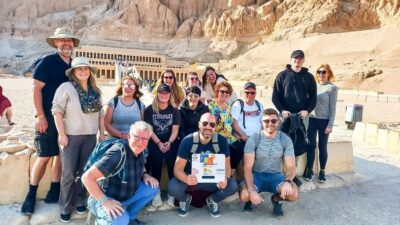
Luxor Valley of the Kings & Tutankhamun Tomb Trip
Read our review →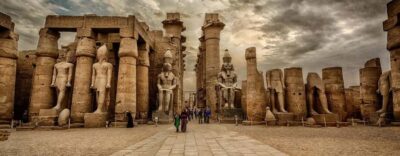
Luxor Day Trip from Hurghada Small Group & Tutankhamun Tomb
Read our review →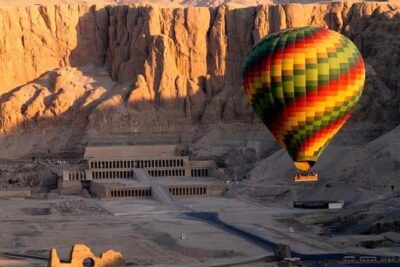
Hot Air Balloon Ride in Luxor Egypt with Transfers Included
Read our review →
Shared Full-Day Tour to Luxor West and East Banks
Read our review →
Luxor Day Tour: Valley of Kings & Queens & Hatchepsut Temples
Read our review →
Full Day Tour to East and West Banks of Luxor
Read our review →