Reviewed · LUXOR TOURS & ACTIVITIES
Valley of Kings, Queens, Temples of Hatchepsut, Habu, and Mooore
The West Bank feels like a living museum. This full-day circuit links together the big-name sights of Thebes West with extra context at Deir el-Medina and the Valley of the Nobles, so you leave with more than just photos.
Two things I really like: you get a licensed Egyptologist guide, not a generic storyteller, and the schedule is built to keep the flow smooth with pickup and an air-conditioned vehicle. The other standout is that the key site admissions are included, so you are not juggling tickets mid-day.
One consideration: this is a lot of stops in about 8 hours, so some sections feel like quick visits rather than slow wandering. If you want long, quiet time in one place, you may find the pace a bit tight.
In This Review
- Key things to love about this Luxor West Bank day
- A West Bank day that hits the big thebes sights without feeling random
- Valley of the Kings: 63 tombs and the myth-borne idea of kingship
- Hatshepsut at Deir el-Bahari: architecture you can actually understand
- Colossi of Memnon: a short stop with a legendary payoff
- Medinat Habu (Temple of Habu): Ramses III, scenes of power, and shocking details
- Deir el-Medina, the Valley of the Artisans: the people behind the tomb art
- Valley of the Queens: special tombs, Ramses III’s family, and a preserved mummy detail
- Tombs of the Nobles: more than 400 tombs and the afterlife “map”
- Price and comfort: what $192 buys you in real terms
- Who should book this West Bank circuit, and who should rethink the pace
- Should you book this tour?
- FAQ
- How long is the Luxor West Bank tour?
- Where do you get picked up from, and is there a return transfer?
- What is included in the price?
- Which sites are part of the itinerary?
- Is tipping included?
- Is there free cancellation?
Key things to love about this Luxor West Bank day
- An Egyptologist-led circuit across Kings, Queens, mortuary temples, and worker communities
- Included entry tickets for Valley of the Kings, Hatshepsut, Habu, Deir el-Medina, and more
- A comfortable A/C vehicle pickup and return, with water included
- Stops that explain the why, like Hatshepsut’s divine birth story and the afterlife beliefs in nobles’ tombs
- Extra variety beyond the pharaoh highlights, especially Deir el-Medina and the Valley of the Artisans
- A tightly packed itinerary, so you see a lot, but some stops are naturally brief
A West Bank day that hits the big thebes sights without feeling random
This tour is focused on Luxor’s West Bank, where the monuments connect to one long story about power, religion, and the afterlife. The best part of a structured day like this is that an Egyptologist guide can turn scattered ruins into a coherent map in your head. You start thinking in themes, not just locations.
You are picked up from your hotel or Nile Cruise by an A/C vehicle, and you get a bottle of water during the trip. In a location where midday heat can be a factor, that comfort matters more than people expect. In one write-up, I was impressed by the way the team keeps things practical, with a newer car and the AC running consistently even between stops, so the rides stay calm rather than exhausting.
Logistically, it is built as a “see the highlights” day, but not a bare-bones rush. The itinerary includes the Valley of the Kings, the mortuary temple of Hatshepsut, Colossi of Memnon, Medinat Habu (Ramses III), Deir el-Medina, the Valley of the Queens, and the Tombs of the Nobles. For first-timers, that is a huge chunk of what people come to Thebes West to understand. For return visitors, it still adds value because it reaches beyond just the famous royal valleys.
Other Luxor options on the table
- Hurghada: Luxor Valley of the Kings & Tutankhamun Tomb Trip
★ 4.7 · 13,208 reviews - Luxor Day Trip from Hurghada Small Group & Tutankhamun Tomb
★ 4.8 · 5,366 reviews - Hot Air Balloon Ride in Luxor Egypt with Transfers Included
★ 5.0 · 4,319 reviews
Valley of the Kings: 63 tombs and the myth-borne idea of kingship
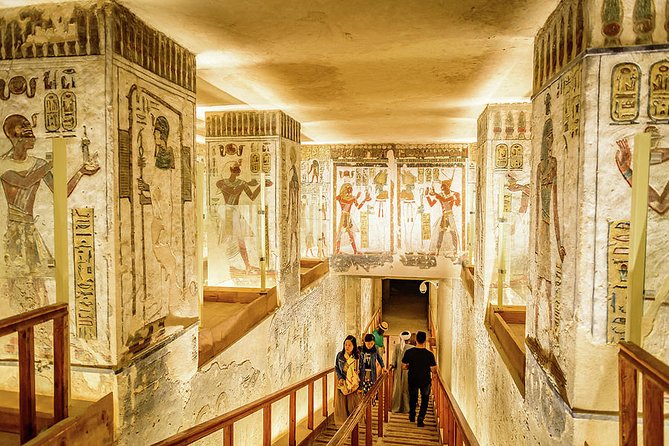
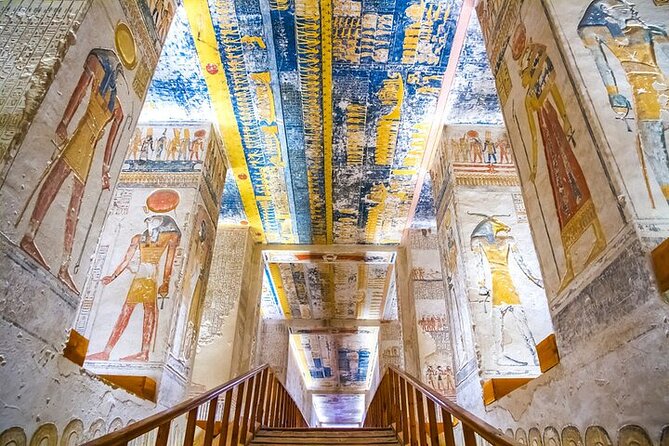
The day starts in the Valley of the Kings, one of Egypt’s most recognizable landscapes. The valley contains 63 tombs, and your guide frames them around Egyptian mythology and the beliefs of the period. Even if you do not pick a single famous tomb name to obsess over, the guide’s explanations help you see the logic behind why these kings were placed here.
The site is strongly tied to royalty, and the monuments reflect that in both theme and symbolism. You also get the anchor point everyone knows, King Tutankhamun, without needing to treat him as the only story. The real value is that your Egyptologist can explain how the burial tradition worked, and why the decoration and layout mattered to people who believed the journey continued after death.
A realistic consideration: the valley is famous, but it is also physically demanding and visually dense. With limited time in an 8-hour day, you cannot treat it like a multi-day museum marathon. The practical play is to listen closely to your guide’s suggested focus, so you are not leaving with a blur of openings and painted walls.
Hatshepsut at Deir el-Bahari: architecture you can actually understand
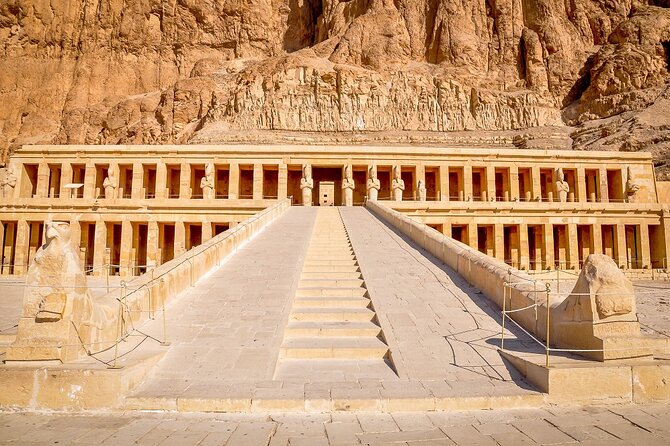
Next comes the Temple of Hatshepsut at Deir el-Bahari, a site known for its striking, distinctive architectural style. It is not just another temple stop. You get a clear narrative: this mortuary temple was designed and constructed by Senenmut around 1503 B.C., and it includes inscriptions that present Hatshepsut’s royal story and divine legitimacy.
The guide context here is what makes the difference. You will hear about the divine birth story attributed to Queen Hatshepsut, and you will also see inscriptions connected to a royal journey to Puntland. That combination turns the temple from “cool walls” into a visible statement of authority, carved into stone.
Timing is about 1 hour 30 minutes. That is enough time to walk the main areas and absorb the big ideas, especially with an Egyptologist guiding what you are looking at. If you are the type who loves symbolism and how rulers used religion to justify rule, this stop will likely feel like one of the top moments of the day.
Colossi of Memnon: a short stop with a legendary payoff
After that, you visit the Colossi of Memnon. These are gigantic statues carved from sandstone, and they are tied to a legendary story your guide will explain. The stop is brief, about 20 minutes, and it is basically a “see it, get the story, move on” moment.
Even with the short timing, this can work well because the statues are visually powerful. They also set a tone for the day, reminding you that ancient Egypt often used grand scale to communicate status. If you are worried about the stop being too quick, it helps to remember why it exists here: it is a reset between the larger temples and the next deeper context stop at Habu and Deir el-Medina.
Also reachable from Luxor:
- Luxor: Shared Full-Day Tour to Luxor West and East Banks
★ 4.5 · 1,812 reviews - Luxor: Hot Air Balloon Ride over Luxor Relics
★ 4.8 · 1,681 reviews - Luxor Day Tour: Valley of Kings & Queens & Hatchepsut Temples
★ 5.0 · 1,496 reviews - Full Day Tour to East and West Banks of Luxor
★ 5.0 · 1,449 reviews
Medinat Habu (Temple of Habu): Ramses III, scenes of power, and shocking details
Medinat Habu is presented as the best and biggest temple on the West Bank, constructed by King Ramses III. The main draw is the wall decoration and the range of scenes. This is where the tour leans into what made these temples feel like public statements, not just sacred spaces.
Your visit includes colorful scenes that connect to some very specific ideas. You will hear about the first work strike ever, shown in temple imagery related to labor disruption. You will also encounter aggression scenes, where soldiers appear counting the hands and limbs taken from enemies, presented as rewards for service given to the king. It is intense content, and the guide’s job is to keep it grounded in meaning rather than just shock value.
You also get an added layer beyond the temple itself: nearby ruined mud-brick houses of the workers and a ruined mud-brick palace area linked to the king. That is a key detail, because it makes the temple complex feel like a whole working ecosystem, with the people and the power structure showing up side by side.
This stop runs about 1 hour, which is a good length for looking carefully at wall scenes without losing the rhythm of the day.
Deir el-Medina, the Valley of the Artisans: the people behind the tomb art
One of the most interesting parts of this itinerary is the stop at Deir el-Medina, also described as the Valley of the Artisans. This was an ancient town for workers, craftsmen, and sculptors who carved the cemeteries of kings, queens, and nobles. Instead of only focusing on rulers, you get a chance to understand the labor system that made the monuments possible.
Your guide explains that these workers preferred to dedicate a distinct necropolis for themselves, and that it could feel even more attractive than the royal cemeteries. The idea is that their lives mattered too, and their presence is part of the story.
This is also where the tour connects work to identity. The workers are described as marking life events through their own declarations, and the sculptors valued their craft. For anyone who likes archaeology as a human story, this stop tends to land well. You start thinking less like a visitor of monuments and more like a reader of a society.
Timing is about 1 hour. That is enough to take in the core layout and understand why this place is essential for comprehending how the royal tombs got made.
Valley of the Queens: special tombs, Ramses III’s family, and a preserved mummy detail
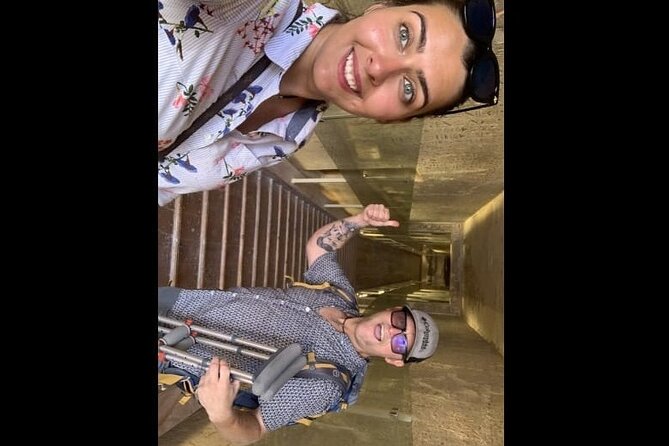
The next chapter is the Valley of the Queens. In the New Kingdom period, pharaohs created special tombs here for queens, princesses, and other royal family members. This means the experience shifts from kingship to family and dynastic continuity.
Your guide will point out that many wives and children of Ramses III were buried in this area. You will also hear about a detail described as a fetus mummy preserved in a tomb. That kind of information can feel emotionally heavy, and it is also exactly the point of why this valley matters. It connects royal iconography to real human lives and family lines.
This stop is about 1 hour, and the value is how the guide frames the burial purpose for women in the royal household. You may not get the same intensity of temple-wall symbolism as at Deir el-Bahari or Habu, but the context is still powerful. You end up with a fuller picture of who Egypt was building monuments for, not only the throne holders.
Tombs of the Nobles: more than 400 tombs and the afterlife “map”
To close out the day, you visit the Tombs of the Nobles. Here the story turns outward from royalty into the wider elite who also wanted access to the afterlife.
This area includes more than 400 tombs belonging to nobles. Your guide explains that many royal tombs used cryptic passages from the Book of the Dead to guide people through the afterlife. Even if you do not memorize lines, you come away understanding the concept: these were instructions, beliefs, and prayers translated into wall text and burial design.
This is a strong ending because it broadens the scale. Earlier in the day, you were guided through kings, queens, and royal temples. Here, you see that belief systems were shared across social layers, even if the grandeur and resources differed.
Practical note: as the day closes, keep your attention on what your guide emphasizes. In a multi-stop itinerary, the best way to get value at the end is to focus on the key themes, not to treat each entryway like a standalone photo mission.
Price and comfort: what $192 buys you in real terms
The price is listed at $192.00 per person for about 8 hours, and it includes several high-value items. You get pickup and return transfers by a modern A/C vehicle, an Egyptologist guide who is fully licensed, a bottle of water, and service charges and taxes.
Most importantly, the entry costs are included for the major stops: Valley of the Kings, Hatshepsut Temple, Habu Temple, Deir el-Medina, and the Valley of the Queens. That matters because the West Bank sites are not small, and ticketing can turn into a hassle if you are trying to self-plan. With admissions handled, your time goes toward learning and seeing, not paperwork.
The trade-off is that you are paying for a structured day, not maximum flexibility. If you want to do a slower custom route, you might prefer separate planning. But for many people, paying for the guide and included admissions is exactly what makes the West Bank feel doable in a single day.
One extra human comfort point comes through in how the vehicle is used. In one highlighted case, the driver team kept the A/C on to maintain cool comfort during and between stops. That is not a small thing when your schedule includes multiple outdoor areas and walking.
Tipping is not included, so plan for that. The tour also notes that optional add-ons are not included if you decide you want extra time somewhere.
Who should book this West Bank circuit, and who should rethink the pace
This tour fits best if you want a smart overview of Thebes West with clear explanations. If you are a first-time Luxor visitor, I think the itinerary is a strong “big ideas day,” because it connects kingship (Valley of the Kings), royal legitimacy and architecture (Hatshepsut), state power and labor stories (Habu), craftspeople who built the system (Deir el-Medina), royal family burial (Valley of the Queens), and elite afterlife beliefs (Tombs of the Nobles).
It is also a good fit if you like history that includes people, not just rulers. Deir el-Medina and the Nobles’ tombs do that work for you.
If you are the kind of traveler who hates time pressure, this might not be perfect. With multiple major sites packed into 8 hours, you cannot treat each location like a long museum visit. You are going to move. You might also prefer a day where the focus is only the Valley of the Kings, or only the temples, rather than covering everything.
If you are sensitive to intense content, note that the Habu temple scenes described for the visit include graphic imagery about enemies and rewards. The guide can help interpret it, but it is still not a light subject.
Should you book this tour?
Yes, I would book it if your goal is a well-explained West Bank sweep that covers far more than the royal valleys alone. The value here comes from the combination of a licensed Egyptologist guide, included admissions for major sites, and transport that keeps the day comfortable enough to function.
I would also book if you want more than slogans. The Hatshepsut divine birth context, the Puntland journey inscriptions, the work strike note at Habu, and the Book of the Dead passages in the Nobles’ tombs give you hooks to remember.
I would think twice only if you want a slower pace or you already plan to spend extra days on one specific valley or temple complex. In that case, you might feel the time is spread thin.
If you are deciding last minute, the tour offers free cancellation up to 24 hours in advance, which gives you breathing room if your Luxor schedule shifts.
FAQ
How long is the Luxor West Bank tour?
The tour duration is listed as approximately 8 hours.
Where do you get picked up from, and is there a return transfer?
Pickup is offered from your hotel or Nile Cruise in Luxor, and you are transferred back to your hotel or Nile Cruise after the tour.
What is included in the price?
Included are pickup and return transfers by modern A/C vehicle, qualified fully licensed Egyptologist guides, a bottle of water, service charges and taxes, and admission for the Valley of the Kings, Hatshepsut Temple, Habu Temple, Deir el-Medina, and the Valley of the Queens.
Which sites are part of the itinerary?
The itinerary includes the Valley of the Kings, the Temple of Hatshepsut at Deir el-Bahari, Colossi of Memnon, Temple of Medinat Habu, Deir el-Medina, the Valley of the Queens, and the Tombs of the Nobles.
Is tipping included?
No. Tipping is not included.
Is there free cancellation?
Yes. Free cancellation is available, and you can cancel up to 24 hours in advance for a full refund.
Newly added near Luxor
- Full-Day Private Guided Tour in the West Bank of Luxor★ 5.0 · 22 reviews
- Amazing 3 nights Nile cruise includes tours from Luxor to Aswan★ 5.0 · 57 reviews
- Hot Air Balloon Flight in Luxor with Pickup★ 4.5 · 14 reviews
- Private transfer from Luxor to Hurghada★ 5.0 · 43 reviews
- Quad Bike safari Experience in Luxor★ 4.5 · 62 reviews
- Private 2 Day Luxor Tour★ 5.0 · 71 reviews
- Private Tour in Luxor Egypt included entrance fees★ 5.0 · 11 reviews
- Private Transfer From Luxor to Marsa Alam★ 5.0 · 28 reviews
Luxor Tours & Activities, compared.
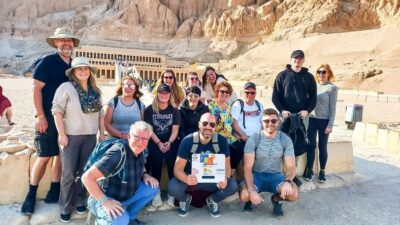
Luxor Valley of the Kings & Tutankhamun Tomb Trip
Read our review →
Luxor Day Trip from Hurghada Small Group & Tutankhamun Tomb
Read our review →
Hot Air Balloon Ride in Luxor Egypt with Transfers Included
Read our review →
Shared Full-Day Tour to Luxor West and East Banks
Read our review →
Luxor Day Tour: Valley of Kings & Queens & Hatchepsut Temples
Read our review →
Full Day Tour to East and West Banks of Luxor
Read our review →