
Reviewed · ABU SIMBEL DAY TRIPS
3-Day Luxor Aswan and Abu Simbel Historical Sites Private Tour
Three days, and you see the best of Egypt. I like the way the package includes first-class train tickets between Luxor and Aswan and a guided boat trip to Philae, so you spend your time looking, not negotiating. I also love having an Egyptologist guide with you across the main sights, where the explanations help you notice details most first-timers would miss.
One thing to plan for: the Abu Simbel day is long (about 8 hours), and at some major tomb and temple areas, the guide cannot go inside, so you’ll rely on their explanations, photos, and illustrations for parts of the experience.
In This Review
- Key things I would not skip
- Why this 3-day route is smart for first-timers
- Day 1 on the West Bank and Karnak: temples that tell different stories
- Valley of the Kings: the tombs you can’t walk into
- Hatshepsut and the Colossi of Memnon: power, scale, and drama
- Karnak’s Avenue of Sphinx to the 134-column forest
- Luxor Temple: Ramses II, hieroglyphs, and an obelisk connection
- Day 2 in Aswan: Philae, unfinished stone, and modern Egypt
- Philae Temple: an island visit tied to the High Dam story
- Unfinished Obelisk: seeing the “work in progress”
- Aswan High Dam: Lake Nasser scale and the “friendship” crossing
- Abu Simbel on Day 3: worth the long day, with one key limitation
- What you can expect at the temples (and why guides can’t enter)
- A long day needs smart pacing
- Price and logistics: where the value really comes from
- Who this tour suits best
- Should you book this 3-day Luxor, Aswan and Abu Simbel tour?
- FAQ
- Are entrance fees included in the tour price?
- Is hotel pickup and drop-off included?
- Does the tour include transportation between Luxor and Aswan?
- Is Philae Temple included, and how do you get there?
- Can you visit inside the tombs at the Valley of the Kings and the temples at Abu Simbel?
- Is there free cancellation?
Key things I would not skip
- First-class train + air-conditioned transport, which saves real stress on travel days.
- Egyptologist guide support through Luxor, Aswan, and Abu Simbel, including story-driven explanations.
- Karnak’s Great Hypostyle Hall, with 134 columns, plus time for you to wander after the guided walk.
- Philae Temple’s relocation story, paired with an actual motorboat ride to the island.
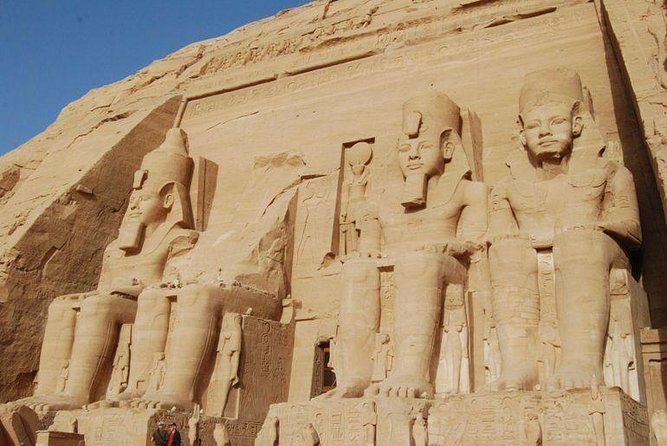
- Abu Simbel’s UNESCO cliff relocation context and the four rock-hewn pharaoh figures.
- Tomb and temple entry limits in a few key spots, so manage expectations and wear comfortable shoes.
Why this 3-day route is smart for first-timers
Luxor and Aswan are not just “a couple of temples.” They’re two stretches of the Nile where you can feel how layered ancient Egypt really is. The big win with this private format is simple: you connect the dots fast, without bargaining for rides or chasing ticket lines on your own.
You’re also not doing the trickiest logistics yourself. The tour handles round-trip hotel pickup and drop-off, air-conditioned vehicle transport, and the included first-class train tickets between Luxor and Aswan. That matters because the region’s timing can be tight. When the transport is arranged, you can show up earlier than you’d otherwise manage, and earlier usually means fewer headaches and better light for photos.
And yes, you’ll still see crowds at the big sites. But with an Egyptologist guide (I’ve seen names like Khaled and the operator Mohamed mentioned in feedback), the experience tends to feel more like a guided “how to read this place” lesson than a checklist.
More Abu Simbel runs:
- Luxor: Abu Simbel Temple Private Guided Day Trip with Lunch
★ 4.6 · 546 reviews - 4 Nights Luxor to Aswan Nile cruise with Abu Simbel&Air Balloon
★ 5.0 · 155 reviews - 4 Days Aswan and Luxor Nile cruise&Abu Simbel by plane from Cairo
★ 5.0 · 155 reviews
Day 1 on the West Bank and Karnak: temples that tell different stories
Day 1 is where Luxor starts flexing. You hit the West Bank first, then pivot to Karnak and Luxor Temple on the East Bank. It’s a classic structure for good reason: the West Bank is about kings and afterlife, and the East Bank is about daily rituals and imperial power.
This day is most satisfying if you’re willing to walk through big complexes and accept that some areas will be partly explained rather than fully entered.
Valley of the Kings: the tombs you can’t walk into
At the Valley of the Kings, the guide includes a brief stop at the visitors center, which is useful for setting context. Then you move through the area with the expectation that you will not have guided access inside the tomb chambers. The guide isn’t permitted inside the tombs, but they will help you understand what to look for once you’re at the decorated rooms.
Here’s the practical part: if you want the tomb of Tutankhamun, there’s an additional cost you pay directly. If you think you’ll care most about the “top tomb,” plan your time so you can add it without rushing the rest of the West Bank stops.
Tip: bring water, and aim for comfortable, grippy shoes. The steps and uneven paths can add up even when the walking feels short on paper.
Hatshepsut and the Colossi of Memnon: power, scale, and drama
Next up is the Temple of Hatshepsut, which is a standout for many first-time visitors because the architecture looks bold even today. The story matters here. Your guide will walk you through how Queen Hatshepsut built her reign into monument form, including the unusual political trick of adopting a male presentation to secure authority.
You also get time to explore. You can linger in the courtyards and spend your own moments with the carved hieroglyphic decorations, rather than feeling swept along.
Then you’ll see the Colossi of Memnon, two giant statues that mark the funerary temple site of Amenhotep III. This stop is short, but it’s perfect as a breather. It’s also an easy win for photos because the statues are visible and readable from a distance.
Other Luxor options on the table
- Sunrise Hot Air Balloon Over the Historical sites in Luxor
★ 5.0 · 697 reviews - Explore the history and treasures of Luxor on a full-day tour
★ 5.0 · 21 reviews - Valley of the Kings & Hatchepsut temple and Back into Egypt’s ancient history
★ 5.0 · 18 reviews - 2-Day Private Historic Tour in Luxor with Pick Up
★ 5.0 · 13 reviews
Karnak’s Avenue of Sphinx to the 134-column forest
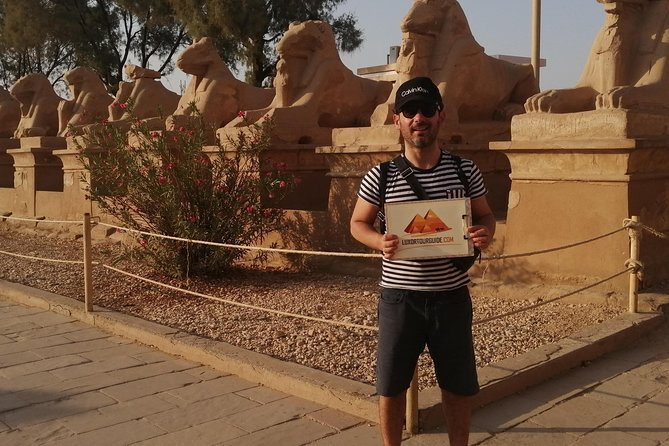
Karnak is the “wow” factor for a reason. You’ll enter through the Avenue of Sphinx, and your guide explains how the massive facade was constructed. Then you move into the complex and start noticing that Karnak grew over time, with different pharaohs adding their own layers.
The guided highlight here is walking into the Great Court and then the Great Hypostyle Hall, with 134 columns that rise like an ancient forest. The sacred lake at the rear is another important piece, tied to ritual purification and offerings centuries ago.
After your guided tour, you get free time to explore at your own pace. That freedom is valuable because Karnak rewards attention. If you have 20 extra minutes, you can choose the carvings or side areas that match your interests instead of sticking only to the main route.
Luxor Temple: Ramses II, hieroglyphs, and an obelisk connection
The final stop on Day 1 is Luxor Temple, which once connected to Karnak by a 2-kilometer Avenue of Sphinx. Luxor Temple is dominated by statues of Ramses II, and your guide helps you connect the dots between what survived Nile floods, invasions, and centuries of exposure.
What I like about Luxor Temple is how it feels more “intimate” than Karnak, even though it’s still huge. The inner walls and columns carry intricate hieroglyphics, and your guide can help you decipher what you’re seeing instead of leaving you staring at patterns.
One more detail worth your attention: you’ll hear about how Alexander the Great is written into the site’s history, and you’ll learn about an original pair of obelisks, with the second now standing at Place de la Concorde in Paris. That kind of connection helps the monuments feel less distant.
Day 2 in Aswan: Philae, unfinished stone, and modern Egypt
Day 2 has a smart mix. You start with a temple shaped by modern engineering decisions, then move backward in time to where stone was cut, and finally look at a modern structure that still defines life around the Nile.
Philae Temple: an island visit tied to the High Dam story
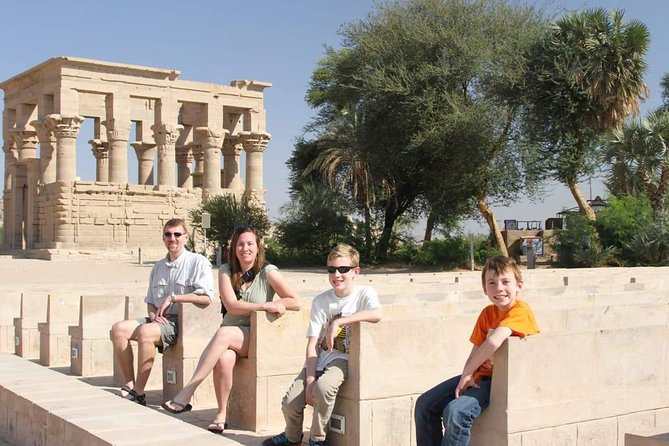
Philae Temple is one of those places where context changes everything. The temple was carefully moved when the High Dam raised Nile waters. You’re taken to the island by a short motorboat ride, which makes the approach feel like part of the ritual, not just transport.
You’ll walk through the temple area with your guide and then have time to explore further on your own. Philae is dedicated to goddess Isis, and it connects to the myth of Isis and Osiris, so the sanctuaries you see relate to specific stories and deities. If you’ve ever felt overwhelmed by temple symbolism, this is a good day to get your bearings.
Unfinished Obelisk: seeing the “work in progress”
Then you’ll head to the Unfinished Obelisk in Aswan’s granite quarries. Most temple visitors see finished monuments. Here, you see the process and the problem.
Your guide explains how the stone was carved and why it was abandoned when a crack appeared. The obelisk was carved from red granite, which was used for many ancient temples and colossi, and you’ll hear about the scale involved in carving something around one tonne. It’s a rare chance to picture ancient craft as a technical challenge, not just a final product.
Aswan High Dam: Lake Nasser scale and the “friendship” crossing
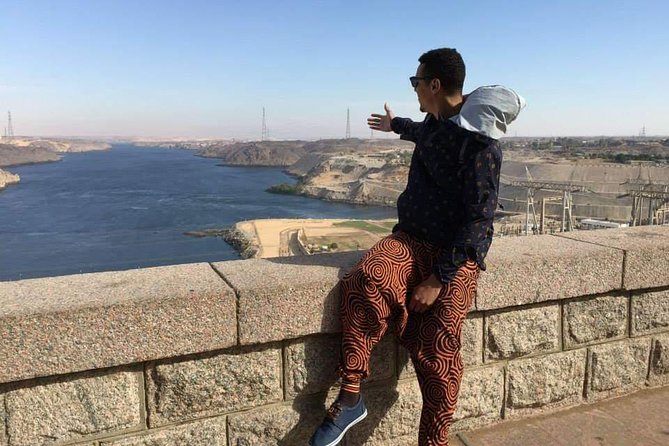
The day ends with Aswan High Dam. This is where you shift from ancient Egypt to modern engineering achievements. You’ll learn it took from 1960 to 1970, about 10 years to complete, and that it created Lake Nasser, described as the second largest artificial lake in the world.
You’ll also cross over the friendship emblem. It’s a small visual detail, but it gives the site a human and political dimension, which keeps the day from feeling like purely scenic stops.
Abu Simbel on Day 3: worth the long day, with one key limitation
Day 3 is the big-ticket finale. Abu Simbel is far enough from Aswan that you’ll spend a good chunk of the day traveling and then focusing intensely on the temples themselves.
You’ll do it by vehicle from Aswan with a qualified Egyptologist guide. The on-site experience includes a short walk to the entrances and a lot of orientation: your guide explains the history of the site, including how the temples were discovered in 1813 by accident, and the UNESCO-led relocation of the entire cliff face to higher ground.
What you can expect at the temples (and why guides can’t enter)
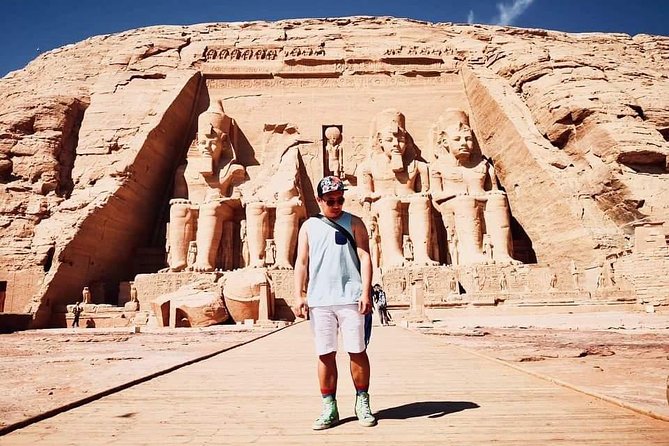
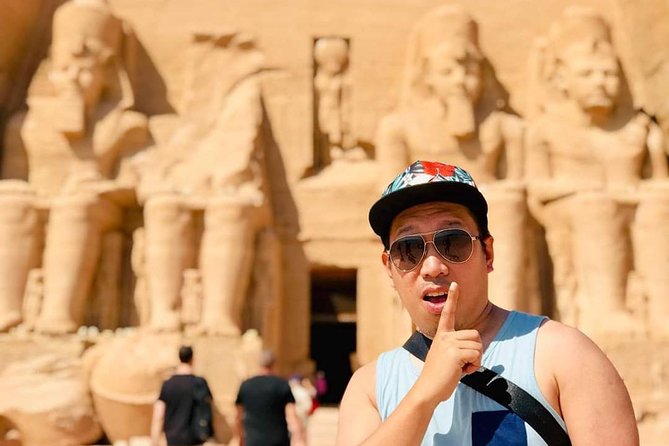
Abu Simbel is famous for its four rock-hewn pharaoh figures. The main highlight is the Great Temple of Ramses II, and the smaller one is dedicated to Hathor.
Now the important limit: due to the number of visitors, guides are not permitted inside the Great Temple or the smaller Temple. That means you won’t be inside the chambers with a guide pointing things out in real time. Instead, the guide uses photos and illustrations to explain what you’re seeing and what it means.
Does that make it less valuable? Not usually. The bigger sites at Abu Simbel are still impressive from outside, and the explanations you get while approaching the entrances help you connect the visual impact to the ancient purpose. Just adjust expectations so you don’t feel like you paid for an inside-only tour.
A long day needs smart pacing
Because this is about an 8-hour day, I’d go into it with a simple strategy. Eat something before you’re out the door, keep water handy, and plan to take breaks when the schedule allows. When you’ve got huge monuments at the end of a long day, your energy becomes part of the experience.
Also, dress for bright sun. Abu Simbel and Aswan both mean strong light, and shade can be limited around certain viewing points.
Price and logistics: where the value really comes from
The price is $251.29 per person. On its own, that might sound like a lot until you compare it to what’s doing the heavy lifting here.
This package includes:
- Hotel pickup and drop-off
- Air-conditioned vehicle transport
- First-class train tickets between Luxor and Aswan
- A boat journey to Philae
- A qualified Egyptologist guide
- Parking, fuel surcharge, driver, and taxes
Entrance fees and meals are not included. That’s normal for tours like this, but it affects your total budget. If you add entrance tickets and food, your trip cost will rise, so set aside extra money for that.
Still, the big value is time and friction. The train and boat transfers can be the part of a trip that breaks your schedule, especially if you’re trying to coordinate transport on your own. Here, your time goes toward temples and explanations instead of figuring out logistics.
Another small plus: the tour is private for your party. If you like moving at a human pace and asking questions without feeling rushed, that matters.
Who this tour suits best
This works especially well for:
- First-time visitors who want the Luxor and Aswan essentials plus Abu Simbel in a tight window
- People who don’t want to bargain or handle tickets mid-trip
- Travelers who enjoy guided interpretation, not just sightseeing photos
- Families or groups with moderate comfort with walking, since the tour notes a moderate physical fitness level
If you are the type who hates early starts and long days, Abu Simbel may feel like a stretch. But if you’ve come this far, most people find the payoff worth the effort.
Should you book this 3-day Luxor, Aswan and Abu Simbel tour?
I’d book it if your main goal is seeing the headline monuments with transport handled, and you care about understanding what you’re looking at. The included first-class train, the Philae boat ride, and the fact that you’ll have an Egyptologist guide across multiple sites make it a strong use of limited time.
I’d think twice if you mainly want free-roaming independence at every stop, because some of the best-known areas come with guide access limits. You can still enjoy the sites, but the experience becomes more about explanations and visuals than walking inside every chamber with a guide.
If you do book, wear comfortable shoes, pack sun protection, and bring a little patience for the reality that Abu Simbel is a long day. Then you’ll be set to enjoy the main event: the scale, the stories, and the way Luxor and Aswan connect in just three days.
FAQ
Are entrance fees included in the tour price?
No. Entrance fees to all sites are not included, and food and drinks are also not included unless specified.
Is hotel pickup and drop-off included?
Yes. The tour includes hotel pickup and drop-off.
Does the tour include transportation between Luxor and Aswan?
Yes. It includes first-class train tickets between Luxor and Aswan, plus other transfers in an air-conditioned vehicle.
Is Philae Temple included, and how do you get there?
Yes. The tour includes a boat journey to Philae Temple.
Can you visit inside the tombs at the Valley of the Kings and the temples at Abu Simbel?
Guides are not permitted inside the tombs at the Valley of the Kings, and guides are also not permitted inside either Abu Simbel temple due to visitor numbers.
Is there free cancellation?
Yes. You can cancel up to 24 hours in advance for a full refund. If you cancel less than 24 hours before the start time, the amount paid will not be refunded.
Newly added near Luxor
- Full-Day Private Guided Tour in the West Bank of Luxor★ 5.0 · 22 reviews
- Amazing 3 nights Nile cruise includes tours from Luxor to Aswan★ 5.0 · 57 reviews
- Hot Air Balloon Flight in Luxor with Pickup★ 4.5 · 14 reviews
- Private transfer from Luxor to Hurghada★ 5.0 · 43 reviews
- Quad Bike safari Experience in Luxor★ 4.5 · 62 reviews
- Private 2 Day Luxor Tour★ 5.0 · 71 reviews
- Private Tour in Luxor Egypt included entrance fees★ 5.0 · 11 reviews
- Private Transfer From Luxor to Marsa Alam★ 5.0 · 28 reviews
Abu Simbel Day Trips, compared.
4-Days Nile Cruise From Aswan To Luxor including Abu Simbel and Hot Air Balloon
Read our review →
4-Day 3-Night Nile Cruise from Aswan to Luxor&Abu Simbel+Balloon
Read our review →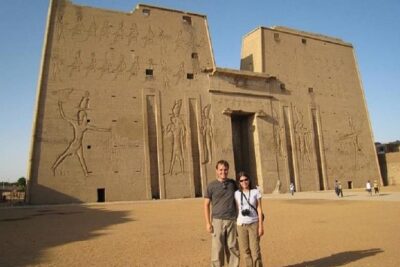
4-Day 3-Night Nile Cruise from Aswan to Luxor including Abu Simbel, Air Balloon
Read our review →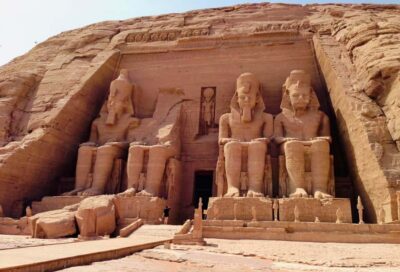
Abu Simbel Temple Private Guided Day Trip with Lunch
Read our review →4-Days Nile Cruise From Aswan To Luxor including Abu Simbel and Hot Air Balloon
Read our review →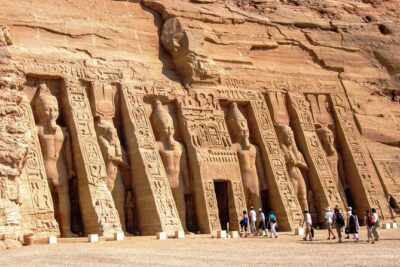
Private Day Tour to Abu Simbel Temples from Aswan
Read our review →4 Days Nile Cruise from Aswan to Luxor including Abu Simbel and Hot Air Balloon
Read our review →Browse the lists this tour appears in