
Reviewed · 5-DAY EXPERIENCES
5 Days 4 Nights from Luxor to Aswan on Gentle Breeze Dahabyia
A five-day cruise that hits the big names. You’ll start in Luxor with Karnak Temples and Luxor Temple, then sail south with expert-led stops at the Valley of the Kings, Edfu, Kom Ombo, and Aswan highlights. I like that entrance fees and all board meals are included, so you’re not doing math every day. One real consideration: cabin cleanliness and ship condition can vary, so it pays to be picky about your room.
This is a private Luxor to Aswan cruise built around guided archaeology. If you get paired with a strong guide (a name like Rushdi pops up for being prompt and informative), you’ll move through the sites with context, not just stamps in a passport. Still, since this is a dahabiya-style floating stay, you should expect the experience to be more “cozy and lived-in” than “brand-new hotel.”
In This Review
- Key highlights to look for
- Luxor Temple and Karnak, where the day starts loud
- West Bank mornings: Valley of the Kings, Hatshepsut, and Memnon’s statues
- Edfu and Kom Ombo: Horus versus Seth, then Horus plus Sobek
- Aswan’s big trio: High Dam, Unfinished Obelisk, and Philae Temple
- Aswan market time, plus your Day 5 choices
- Gentle Breeze Dahabyia: what to expect on the ship
- Value for $1,300: where the money really goes
- What the daily guiding adds at crowded ancient sites
- Who this Luxor to Aswan cruise suits best (and who should pause)
- Should you book Gentle Breeze Dahabyia from Luxor to Aswan?
- FAQ
- What is the duration of the Luxor to Aswan cruise?
- What is included in the tour price?
- Are site admissions included for all the stops?
- How are transfers handled?
- Do I need to buy tickets or is there a mobile ticket?
- Is tipping included?
- Are optional tours available on the last day?
- Is this a private tour?
- Can I cancel for a full refund?
- Are service animals allowed?
Key highlights to look for
- Admissions included every day, so temple time stays focused on exploring, not ticket hassles
- Full board meals onboard for four dinners, four lunches, and four breakfasts, which makes the pace easier
- Private English-speaking Egyptologist guide (plus private vehicle transfers), good for questions and smoother schedules
- High Dam, Unfinished Obelisk, and Philae Temple give Aswan a solid mix of engineering and ancient devotion
- West Bank classics on Day 2, including Valley of the Kings and the temple of Hatshepsut
- Optional add-ons on Day 5 in Aswan, with choices like Abu Simbel or a Nubian Village visit
Luxor Temple and Karnak, where the day starts loud
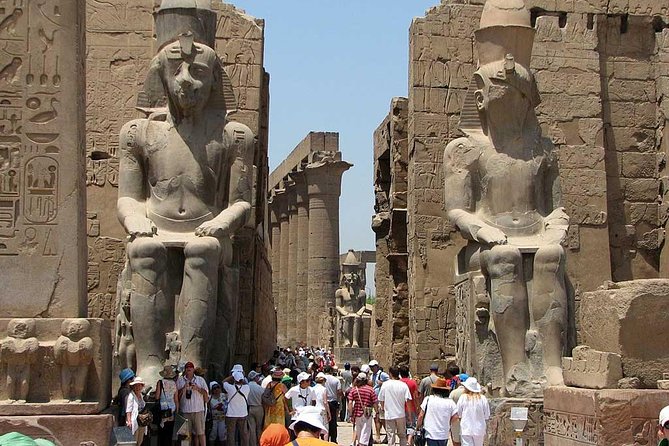
Your tour begins in Luxor with pickup and meet-and-assist, then a guided run at two of Egypt’s most important temple sites. The first stop is Karnak Temples, dedicated to the god Amun and his wife Mut. Karnak is one of those places where you understand why people built monumental places for gods, because the scale makes you look up on instinct.
What I like here is that the guide doesn’t treat it like a photo stop. The temple includes story threads you can track on the wall, like the mention of an early international peace treaty idea preserved on a wall in the Temple of Amun. Even if you only catch part of it, it gives your visit a spine: you’re seeing symbols tied to meaning, not just stone.
After Karnak, you head to Luxor Temple, built in the 18th Dynasty by Amunhotep III and completed in the 19th Dynasty by Ramesses II. You’ll see the Obelisk of Ramses II in front of the First Pylon, and you’ll connect the dots to the Theban triad theme of Amun-Ra, Mut, and their son Khonsu. Then you check into your Nile cruise for the next leg.
Practical tip: this is a long first day, with about 3 hours at Karnak and 2 hours at Luxor Temple. If you’re sensitive to heat, plan on slowing down your camera work and just letting the guide’s pacing carry you through.
Other Luxor options on the table
- Hurghada: Luxor Valley of the Kings & Tutankhamun Tomb Trip
★ 4.7 · 13,208 reviews - Luxor Day Trip from Hurghada Small Group & Tutankhamun Tomb
★ 4.8 · 5,366 reviews - Hot Air Balloon Ride in Luxor Egypt with Transfers Included
★ 5.0 · 4,319 reviews
West Bank mornings: Valley of the Kings, Hatshepsut, and Memnon’s statues
Day 2 shifts you to Luxor’s West Bank, where the scenery gets quieter and the tombs get louder. You’ll start with the Valley of the Kings, home to royal tombs connected to rulers you’ve likely heard of. The schedule calls out the tomb areas associated with Tutankhamun, Ramesses V1, Tutmosis, and Amonhotep II.
This stop usually feels like a choose-your-own-adventure for history nerds, because the guide can point out themes that link different tombs: royal power, afterlife beliefs, and why these locations were treated like sacred real estate. You’ll spend about 3 hours here, which is enough time to see more than just the highlights without feeling rushed.
Next you’ll visit Temple of Hatshepsut at Deir el Bahari (also called El Deir El Bahari). Hatshepsut gets a clear spotlight as one of the first Pharaonic women to rule and as a figure tied to early trading routes. The temple’s place on the West Bank makes it feel like a stage set for ambition, even before you start listening to the details.
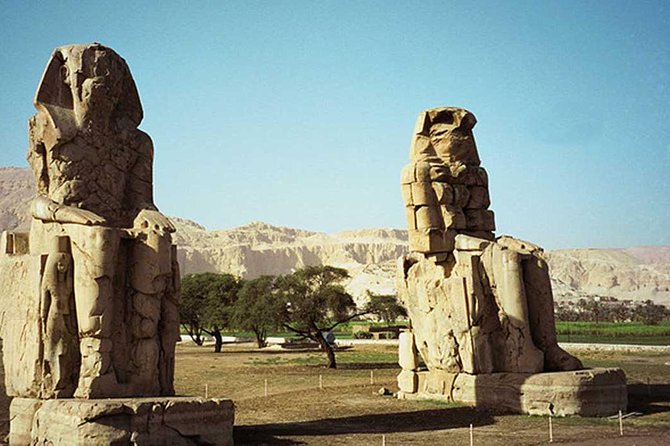
Then comes a shorter stop: the Colossi of Memnon, two large statues of Amenhotep III facing the Nile. You’ll get the earthquake story and the famous idea that the northern statue reportedly “sang” near sunrise after it was damaged. Even if you treat that as legend, it adds a human tone to a stone scene.
Schedule-wise, this day is built as a steady progression: Valley of the Kings (about 3 hours), then Hatshepsut (about 2 hours), then Colossi of Memnon (about 20 minutes). That last one is brief by design, so you don’t burn out before returning to the ship.
Edfu and Kom Ombo: Horus versus Seth, then Horus plus Sobek
On Day 3, you’ll sail onward to Edfu, where the centerpiece is the Temple of Horus. This is one of the sites where temple scenes are not random decoration. The tour notes explain that Edfu’s temple contains important inscriptions tied to the sacred drama about the conflict between Horus and Seth.
If you’re the kind of person who usually wonders why ancient Egyptians carved so much story into walls, this stop is made for you. Even when you can’t read everything, the guide can point you toward the key scene themes so the visit feels structured. You’ll have about 2 hours at the temple.
Then you sail to Kom Ombo and visit the Temple of Kom Ombo, which is shared by two gods: Sobek (the crocodile god connected to the Nile, army, military, and fertility) and Horus (god of sky and kingship). The “two gods” setup is a great way to understand how temples could be political, religious, and local all at once.
After that, you return to your cruise and sail onward to Aswan. This day is clean and focused: one major temple with a story theme, then one major temple with two-god structure.
Aswan’s big trio: High Dam, Unfinished Obelisk, and Philae Temple
Day 4 brings you into the Aswan spotlight with three separate flavors of awe: modern engineering, ancient stone ambition, and living faith in old walls.
First is the Aswan High Dam. The tour frames it as a water controller for Egypt, and notes that there are three years of Nile water stored. An hour at the High Dam is a good reality-check against the purely ancient stops earlier. You can stand there and think: Egypt’s infrastructure is also a kind of civilization project.
Next comes the Unfinished Obelisk, a quarry piece that tells you what happens when plans run into reality. The obelisk is listed at 1,168 tons, and the idea that it would have been 1,200 tons if finished is the kind of detail that makes you picture the quarry operations. The tour also points out that many casing stones for the pyramids at Giza came from this quarry, which is a connection you can use to understand Egypt’s long supply chains.
Finally, you visit Temple of Philae, built for Isis, associated with health, marriage, and wisdom. Philae’s role as a major temple dedicated to Isis gives your Aswan day a spiritual arc after the dam and the quarry.
This is the longest “three-stop” day in terms of total time on-site: High Dam (about 1 hour), Unfinished Obelisk (about 2 hours), and Philae (about 2 hours). It’s also the day where you’ll likely appreciate comfortable shoes the most.
Also reachable from Luxor:
- Luxor: Shared Full-Day Tour to Luxor West and East Banks
★ 4.5 · 1,812 reviews - Luxor: Hot Air Balloon Ride over Luxor Relics
★ 4.8 · 1,681 reviews - Luxor Day Tour: Valley of Kings & Queens & Hatchepsut Temples
★ 5.0 · 1,496 reviews - Full Day Tour to East and West Banks of Luxor
★ 5.0 · 1,449 reviews
Aswan market time, plus your Day 5 choices
Day 5 is built to start with ease. After breakfast, you disembark your cruise in Aswan and you’ll have time for Aswan Market, plus optional add-ons.
The tour lists options for an optional excursion to either Abu Simbel or a Nubian Village, or you can just spend time sightseeing around Aswan on your own. You’ll have about 1 hour in the plan for this final window.
Here’s how I’d think about that choice: if you want one last “big headline” site, Abu Simbel is a powerful closer. If you want culture and community rather than another monumental temple, the Nubian Village option is the more human-scale ending.
If you’re trying to pack the day tight, keep in mind that you only get a limited time window after breakfast. Plan to be decisive, not hopeful.
Gentle Breeze Dahabyia: what to expect on the ship
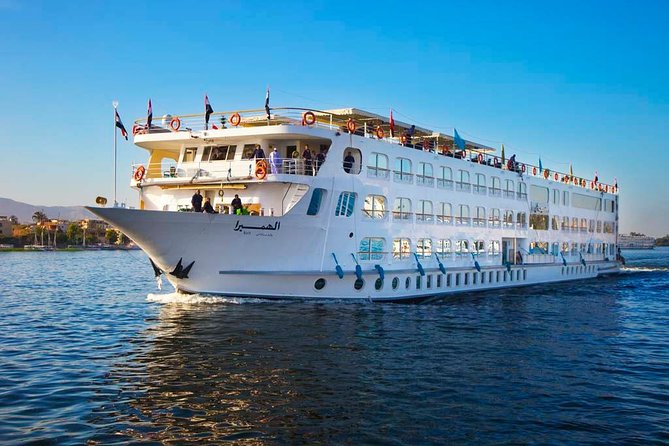
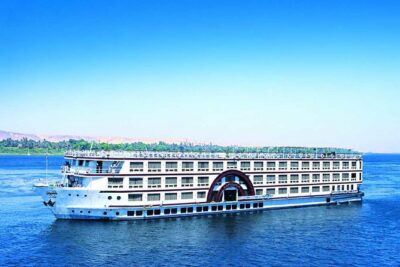
The cruise is described as a 5-star Dahabiya cruise on full board, with meals served onboard and included. You’ll also get onboard lodging for four nights. That’s a good chunk of time to find your routine: breakfast on the water, temple days with admissions handled for you, then evening meals back onboard.
Still, ship quality is the one piece you should take seriously. One negative account highlights an older-feeling ship with cleanliness issues, including dirty linens and shower standing water, plus food described as unpleasant and an odor like diesel fumes. Other accounts emphasize helpful, polite staff and tasty meals, with different dishes each day.
So, how do you handle that uncertainty in a practical way? I’d do three things:
- Ask what cabin type you’ll get, and whether you have access to the upper decks or shared areas. One report mentions a ground-floor room versus an upper-floor setup.
- Set expectations about towels and linens, since at least one account suggests they needed changing.
- Plan your comfort strategy, meaning if you care a lot about smell, cleanliness, or fresh linens, ask direct questions before you accept the cabin assignment.
You can’t eliminate every risk on any boat, but you can reduce surprises.
Value for $1,300: where the money really goes
At $1,300 per person, this tour isn’t bargain-basement. The value comes from what is handled for you, not just the sailing.
Here’s what’s included that usually costs extra on a DIY trip:
- Four nights onboard on the Gentle Breeze Dahabyia
- All meals: four breakfasts, four lunches, four dinners
- Entrance fees to the sites each day
- Private English-speaking Egyptologist guide
- Private air-conditioned transfers
- Meet and assist services
- All service charges and taxes
That’s a lot of “logistics tax” removed from your day. When entrance fees are included, you avoid the common headache of realizing you only planned for some of the tickets. When transfers are private, you avoid waiting around for a group bus shuffle.
What’s not included is also straightforward: optional tours on Day 5 and tipping. If you’re budgeting, assume you’ll add at least some discretionary amount for tips, since the tour explicitly doesn’t include it.
What the daily guiding adds at crowded ancient sites
A private guided format matters on these routes. You’re not just moving from one famous stop to another. You’re pairing each stop with a local guide who can connect themes across days: Amun at Karnak and Luxor Temple, royal tomb context in the Valley of the Kings, Hatshepsut as a major ruler, then Egyptian religious stories and god conflicts at Edfu and Kom Ombo.
The pacing is also built around realistic blocks of time:
- Karnak about 3 hours, Luxor Temple about 2 hours on Day 1
- Valley of the Kings about 3 hours, Hatshepsut about 2 hours, Colossi about 20 minutes on Day 2
- Horus Temple about 2 hours, Kom Ombo about 2 hours on Day 3
- High Dam about 1 hour, Unfinished Obelisk about 2 hours, Philae about 2 hours on Day 4
That matters because on a Nile route, the “in-between” time can drain you if you keep adding stops. Here, the itinerary keeps the day shape consistent.
Also, because your guide is included, you’re more likely to understand why each temple is laid out the way it is, rather than just walking through rooms with your phone doing all the work.
Who this Luxor to Aswan cruise suits best (and who should pause)
This tour fits best if you want:
- A classic Luxor to Aswan route with big-name archaeological stops
- Guide-led context rather than self-guided wandering
- Meals and admissions handled, so your days run on rails
It’s also a decent choice for first-time Nile cruise travelers because the route covers the major sites: Karnak, Luxor Temple, Valley of the Kings, Hatshepsut, Edfu, Kom Ombo, the High Dam, Unfinished Obelisk, and Philae.
Who should pause? If you’re extremely picky about cabin cleanliness, strong odors, or towel and linen freshness, you’ll want to ask direct questions before you lock in your cabin. The schedule is strong, but ship condition can be the swing factor.
Should you book Gentle Breeze Dahabyia from Luxor to Aswan?
If your priority is a guided, high-coverage route where entrance fees and full meals are included, this cruise has real appeal. The structure is clear, the sites are the right mix of temples and tombs plus Aswan’s modern and ancient landmarks, and the private guiding format helps you get more out of each stop.
But don’t ignore the one caution flag: ship comfort and cleanliness can be uneven. My call: book it if you’re comfortable asking the operator for cabin specifics and you treat this as a guided floating temple tour, not a brand-new resort experience. If that sounds like your style, you’ll likely enjoy having each day set for you, while you focus on the archaeology.
FAQ
What is the duration of the Luxor to Aswan cruise?
The tour runs for 5 days and 4 nights, traveling from Luxor to Aswan.
What is included in the tour price?
The price includes accommodation onboard on a full board basis, entrance fees, a private English-speaking Egyptologist guide, onboard breakfast, lunch, and dinner, and private air-conditioned transfers, plus meet-and-assist services.
Are site admissions included for all the stops?
Yes. The itinerary lists admission tickets included for each major visit.
How are transfers handled?
You get all transfers by a private air-conditioned vehicle, with meet and assist by representatives.
Do I need to buy tickets or is there a mobile ticket?
The tour includes mobile ticket access.
Is tipping included?
No. Tipping is not included.
Are optional tours available on the last day?
Yes. On the final day in Aswan, you have optional choices such as Abu Simbel or a Nubian Village, or you can spend time on your own sightseeing.
Is this a private tour?
Yes. It is a private tour/activity, meaning only your group participates.
Can I cancel for a full refund?
Yes. You can cancel up to 24 hours in advance for a full refund.
Are service animals allowed?
Yes. Service animals are allowed.
Newly added near Luxor
- Full-Day Private Guided Tour in the West Bank of Luxor★ 5.0 · 22 reviews
- Amazing 3 nights Nile cruise includes tours from Luxor to Aswan★ 5.0 · 57 reviews
- Hot Air Balloon Flight in Luxor with Pickup★ 4.5 · 14 reviews
- Private transfer from Luxor to Hurghada★ 5.0 · 43 reviews
- Quad Bike safari Experience in Luxor★ 4.5 · 62 reviews
- Private 2 Day Luxor Tour★ 5.0 · 71 reviews
- Private Tour in Luxor Egypt included entrance fees★ 5.0 · 11 reviews
- Private Transfer From Luxor to Marsa Alam★ 5.0 · 28 reviews
5-Day Experiences, compared.

5-Day Egypt Highlights Private Tour with Flights
Read our review →
Private 5-Day Tour, Nile Cruise, Flights & Balloon
Read our review →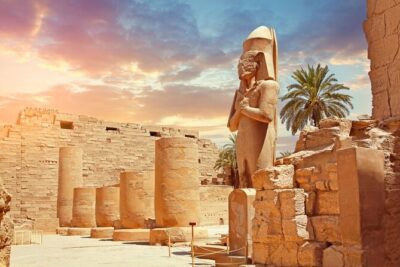
5 Days Private Guided Nile River Cruise Tour from Luxor to Aswan
Read our review →
Our Exceptional 5 days Cairo, Luxor and Abu Simbel Tour Package
Read our review →
5-Day Nile Cruise to Aswan with Balloon Ride
Read our review →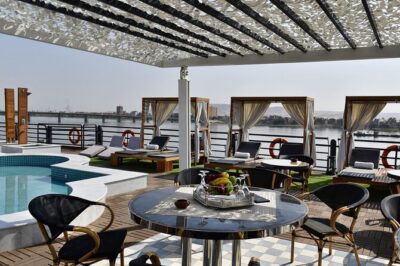
Luxury 5 Days Nile River Cruise from Luxor to Aswan with Private Tour Guide
Read our review →
Browse the lists this tour appears in