
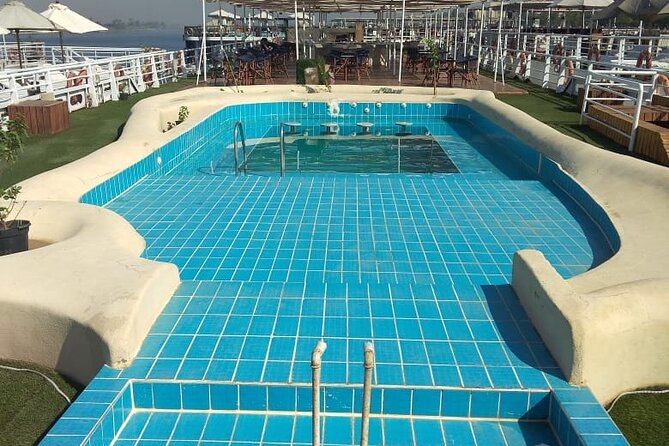
Reviewed · LUXOR & ASWAN NILE CRUISES
5 Days 4 nights Nile Cruise From Luxor to Aswan
Five days, one ancient river route, and temples everywhere. This Luxor to Aswan cruise is built around big-name sights, with an Egyptologist guide steering you through Karnak, the Valley of the Kings, Edfu, Kom Ombo, and Aswan. It is also designed to keep logistics simple, with pickup and end-of-trip transfers so you spend more time looking up at columns and less time figuring out what bus to take.
I especially like the all-in approach to meals, with breakfast, lunch, and dinner handled onboard. I also like the pacing that comes with a maximum group size of 8, so you get more real attention when questions come up, not just a rushed shuffle through stone halls.
One consideration before you book: the price is clear, but entrance fees can be confusing. The trip notes some site admissions as included, yet the package states entrance fees to sites are not included, so confirm with the provider what you will pay on the ground, plus plan for tipping.
In This Review
- Key points worth knowing before you go
- Luxor to Aswan by Nile: what this 4-night cruise is really like
- Karnak Temple: the scale is the lesson
- Luxor Temple: columns, sculpted power, and a living site
- Valley of the Kings, Deir el Bahari, and the Colossi of Memnon
- Valley of the Kings: secrecy, power, and Tutankhamun’s tomb
- Temple of Hatshepsut at Deir el Bahari: the queen who shaped the design
- Colossi of Memnon: two statues, big presence
- Edfu and Kom Ombo: one river day, two very different temple vibes
- Edfu Temple: Horus worship and a best-preserved feel
- Kom Ombo Temple: two halves and the healer theme
- Philae and the Aswan High Dam: sacred island, modern engineering
- Philae Temple: Isis and Hathor on an island
- Aswan High Dam: flood control and Lake Nasser
- Onboard ship life: meals, transfers, and a small group pace
- Meals included, drinks not
- Transfers and timing
- Egyptologist guide support
- Price and practical planning: where the $432 really goes
- Who this cruise suits best, and who might want a different style
- Should you book this Luxor to Aswan Nile cruise?
- FAQ
- What is the price for this tour?
- How long is the cruise?
- Where do you start and where do you end?
- Is pickup offered?
- What’s included in the tour cost?
- Are drinks included on board?
- Are site entrance fees included?
- Are meals included?
- How many people are on the tour?
- Is free cancellation available?
Key points worth knowing before you go
- Small group size (max 8) for a calmer pace and better Q and A time
- Onboard meals included across the cruise days (breakfast, lunch, dinner)
- Egyptologist guidance across Luxor and the Nubian-side stops for context that makes the carvings make sense
- Door-to-ship and ship-to-Aswan transfers, so your days stay efficient
- Major temple lineup, from Karnak and Luxor to Edfu, Kom Ombo, and Philae
Luxor to Aswan by Nile: what this 4-night cruise is really like
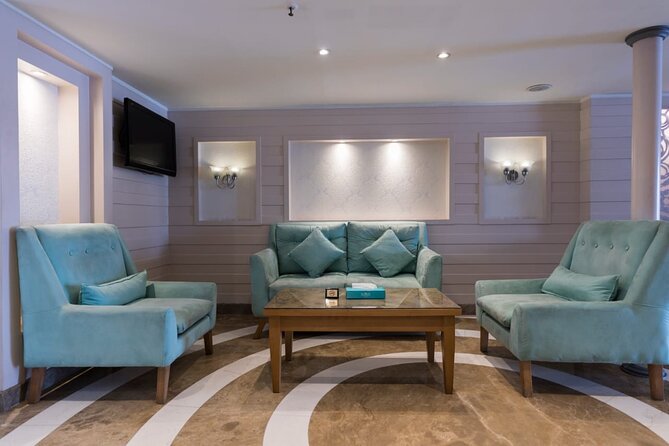
This is the kind of Nile trip that works best when you want both structure and breathing room. You start in Luxor, get hit with the essentials fast, then cruise south through the classic middle stretch of the river, finishing in Aswan with time for key sites before you’re transferred to your next step.
The biggest value for me is that your days are organized around temple highlights with an Egyptologist guide. That matters because these places are not just pretty ruins. When someone explains why each hall, doorway, or statue is where it is, you stop seeing random stone and start seeing a system: power, religion, and daily life layered on top of each other.
At the same time, the format is practical. You are not left to negotiate every single step alone. The package includes transfers to the temples in Luxor and Aswan, and you end in Aswan with a drop at your hotel, train station, or airport.
More Nile Cruises in Luxor
- From Luxor: 3-Night Nile Cruise to Aswan and Hot Air Balloon
★ 3.7 · 297 reviews - 5 Days Private Guided Nile River Cruise Tour from Luxor to Aswan
★ 5.0 · 229 reviews - Historia Hotel Nile Cruise, Mon. from Luxor 4 nts inc. Excursions
★ 5.0 · 185 reviews
Karnak Temple: the scale is the lesson
Karnak is one of those places where the first reaction is just, wow, this is huge. The program describes Karnak as the largest temples in the ancient world, spread across about 60 acres, with kings and monuments pressing for space like a long-running competition.
You’ll focus on the highlights that help you understand why it became such a magnet for rulers. Expect to see the remaining obelisks, the lofty hypostyle hall associated with King Ramesses II, and a temple lake mentioned as part of the complex. Even if you have limited time, those stops give you a map of what to look for: vertical symbols like obelisks, crowding and columns in the hypostyle hall, and the sacred water logic that appears in many Egyptian religious spaces.
Karnak is also a good first temple day because it sets your frame for the rest. After Karnak, Luxor Temple and the west bank sites feel less like separate attractions and more like chapters in the same story.
Luxor Temple: columns, sculpted power, and a living site

From Karnak you head to Luxor Temple, a place that is smaller by comparison but still made to impress. The temple is named after the city, and the description you get focuses on architecture and sculpture that concentrate around its columns and statues.
In practical terms, this stop is easier to process than Karnak because the focus tightens. You’ll see work attributed to Ramses II and Amenhotep III, and you’ll also hear how the complex has had layered religious use over time. The trip notes that the complex of religions has never closed its doors, which is a reminder that even when empires fall, sacred spaces can keep a second life.
If you like temples best when you can see details, Luxor Temple is a strong follow-up. It’s the kind of place where you can slow down, look for recurring shapes, and connect those shapes to what you heard earlier.
Valley of the Kings, Deir el Bahari, and the Colossi of Memnon
Day 2 is your west bank day in Luxor, and it is packed with the big names that most people come for.
More Nile cruise itineraries:
- From Luxor: 5-Day Nile Cruise to Aswan with Balloon Ride
★ 4.2 · 168 reviews - 4 Nights Luxor to Aswan Nile cruise with Abu Simbel&Air Balloon
★ 5.0 · 155 reviews - 4 Days Aswan and Luxor Nile cruise&Abu Simbel by plane from Cairo
★ 5.0 · 155 reviews - From Luxor: 3-Day Nile Cruise to Aswan with Private Guide
★ 4.2 · 147 reviews
Valley of the Kings: secrecy, power, and Tutankhamun’s tomb
You start at the Valley of the Kings, described as the hidden valley where the greatest New Kingdom kings were buried across years, with the idea of secrecy and privacy. The visit is guided so you don’t just wander around. You get the meaning behind the valley layout and why tombs stayed difficult to locate in the first place.
The description also points out that treasures were still discovered through later years, and that the great king Tutankhamun rests in peace with his body inside his tomb. That context helps you understand why people feel a special kind of awe here, even when they’re not seeing everything firsthand. You’re not only visiting stone, you are visiting the logic of royal survival after death.
Temple of Hatshepsut at Deir el Bahari: the queen who shaped the design
Next comes Deir el Bahari and the Temple of Hatshepsut. The trip calls it the oldest temple carved in the mountain in the ancient world, with a strong emphasis on sculpture and design. You also get the angle that Hatshepsut, a pharaoh queen, ruled and used architecture to prove her place in Egyptian power.
This stop can be emotionally persuasive, even if you’ve read about Egypt for years. The reason is simple: when you hear that the whole structure is tied to a ruler’s claim to legitimacy, the temple’s scale and placement start to feel less like decoration and more like strategy.
Colossi of Memnon: two statues, big presence
You finish the day at the Colossi of Memnon, which the program describes as the biggest temple in the west bank even though what remains are two large statues known as the Colossi of Memnon. This is a shorter stop, but it works as a breather. When your day has intense sites one after another, a simple visual landmark helps you reset your brain and still leave with a lasting image.
Edfu and Kom Ombo: one river day, two very different temple vibes
Day 3 is where the cruise starts to feel like cruise travel, not just a day-trip marathon.
Edfu Temple: Horus worship and a best-preserved feel
At Edfu, the description highlights a Greco-Roman temple with Egyptian hands, dedicated to Horus, king of the Two Lands. The key word in the provided info is preservation. The temple is noted as one of the best preserved, so it gives you better visibility of the carved storytelling.
You’ll also hear the link to Hathor, wife of Horus, and that wishes can be sent through the goddess connected to the temple. When a guide explains that relationship, temple symbols stop feeling like generic decoration. They become messages meant for specific gods and specific kinds of prayers.
Kom Ombo Temple: two halves and the healer theme
Then you sail to Kom Ombo, a temple described as difficult to see anywhere else because it is divided into two halves, with a layout that still shows its different purposes. The location is also part of why it feels different, since it is on an island in the Nile.
Kom Ombo’s highlights are distinctive: mummified crocodiles and surgical tools carved into the walls. The program specifically frames it as a healer temple, designed to support the sick through its building years. That is a great reminder that Egyptian religion was not only about fate and afterlife. It also dealt with everyday needs and healing.
If you want your temple days to feel varied, Edfu and Kom Ombo are a good combination. One leans into preservation and Horus worship. The other leans into the unusual theme of healing and the temple’s mirrored architecture.
Philae and the Aswan High Dam: sacred island, modern engineering
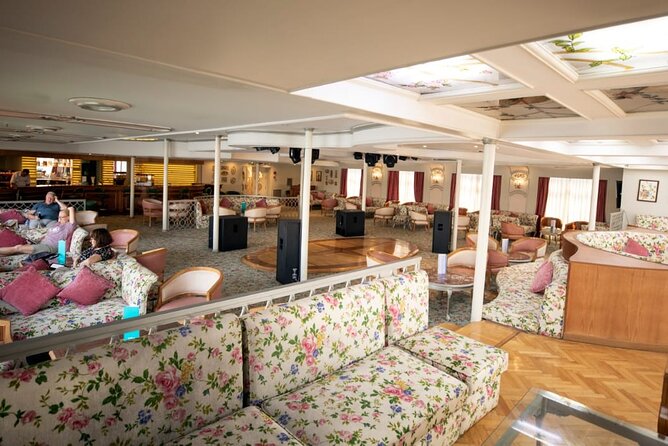
Day 4 shifts you from temple density to a blend of sacred and modern Aswan.
Philae Temple: Isis and Hathor on an island
Philae is described as a group of exquisitely designed temples for Isis and Hathor, called the island of love. You’ll hear about the tradition that lovers come to hang wishes on the walls, and you’ll travel by boat to reach the island.
One detail that makes Philae feel real is the relocation story. The program notes that the temples were saved from drowning, dismantled, and transferred to their current island. So even though you are standing in front of a major sacred complex, you’re also standing in front of a preservation effort shaped by modern infrastructure.
Aswan High Dam: flood control and Lake Nasser
After Philae, you visit the Aswan High Dam. The description in the program calls it the fourth pyramid of Egypt, explaining that protective materials used in its construction were found in Aswan in quantities compared to the Great Pyramid. You then get the flood-control purpose: it’s built as a shield from the annual flood that once destroyed villages.
The dam also creates Lake Nasser, described as the largest artificial lake in the world. This pairing is useful because it gives you perspective. You see ancient systems that shaped life along the Nile, then you see the modern system that reshaped how water works today.
Onboard ship life: meals, transfers, and a small group pace
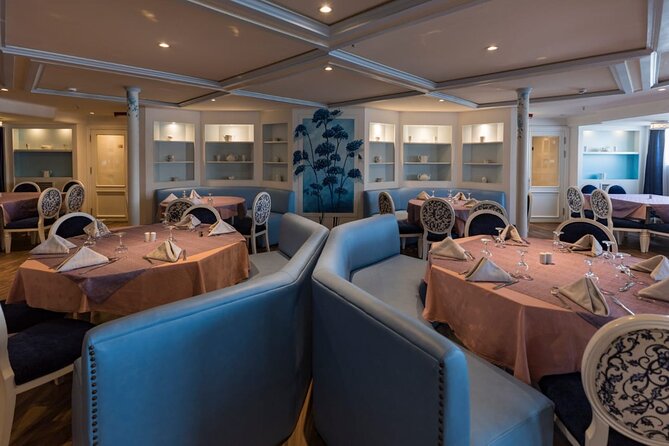
This cruise is set up as an all-in experience for your time on board and your time on shore.
Meals included, drinks not
The package includes breakfast, lunch, and dinner onboard for the cruise days. You also get a small bottle of water per person each tour. Drinks are not included, so if you like soda, juice, or alcohol, plan to purchase separately.
For me, the value is not just the convenience. It reduces decision fatigue. You don’t need to guess where to eat after a long temple day. That means you can keep your energy focused on monuments and not logistics.
Transfers and timing
The program emphasizes transfers to the temples in Luxor and Aswan, and you get picked up for the Luxor day activities. At the end, you drop in Aswan at the hotel you want, the Aswan train station, or the airport.
A small group of up to 8 people helps here, because the guide can move at a human pace. In a setting like this, speed is not automatically the best thing. You want enough time to ask what a symbol means before you rush to the next stop.
Egyptologist guide support
You’ll have qualified instruction from an Egyptologist guide throughout the temple visits. That’s the core ingredient that turns a checklist into understanding. And in at least some departures, guides such as Magdy have been noted, with Spanish guidance also offered by someone like Mohamed Awad.
Price and practical planning: where the $432 really goes
The price is listed at $432 per person for about 5 days and 4 nights. At that rate, you are paying for a bundle: 5-star Nile cruise accommodation, a guided temple program with transfers, and most daily meals.
Where you need to plan carefully is entrance fees and tipping. The package states that tipping is not included, and it also states entrance fees to all the sites are not included. At the same time, the daily visit descriptions mention admission tickets for several stops. That mismatch is worth sorting out before you go, ideally by confirming what the operator includes in your final total.
Also pay attention to what is not included: drinks in the cruise are not included, and any other visits not in the program are not included.
If you want the trip to feel smooth, budget a little extra for entrance fees, plus keep a separate amount aside for tipping your Egyptologist guide and driver, since the package does not cover it.
Who this cruise suits best, and who might want a different style
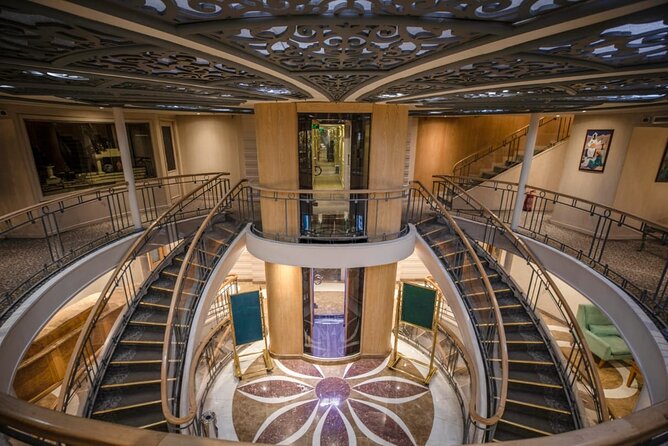
This is a great match if you want the big Luxor and Aswan hits without having to coordinate transport every day. It’s also a good fit if you appreciate context, because you get an Egyptologist guide rather than a driver who can only point.
It’s especially appealing if you like the idea of a small group up to 8. You’ll get more chances to ask questions, and you won’t feel like you’re in a fast-moving cattle line.
You might consider a different option if you dislike fixed schedules. The day structure is temple-focused and transfer-connected, so there is less freedom to wander off on your own between stops.
Should you book this Luxor to Aswan Nile cruise?
I’d book it if you want a guided route that hits the classics efficiently, with a ship stay that does not leave you hungry or stuck at a strange hour. The combination of Karnak and Luxor Temple, then the west bank day, then Edfu and Kom Ombo, and ending with Philae and the High Dam makes sense as one clean southbound journey.
I would not book blindly if you hate budgeting for extras. Confirm entrance fees versus admissions included in your specific package, and plan for tipping since it is not covered.
If you can do that one homework step, this trip is strong value for what it includes: 5-star Nile accommodation, Egyptologist-led temple touring, and onboard meals that keep your days moving without turning into chaos.
FAQ
What is the price for this tour?
The price is $432.00 per person.
How long is the cruise?
It runs about 5 days and 4 nights.
Where do you start and where do you end?
You start in Luxor (Nile River Valley area) and end in Aswan, with drop-off at the airport, train station, or your chosen hotel.
Is pickup offered?
Pickup is offered.
What’s included in the tour cost?
It includes a qualified tour guide, all transfers to the temples in Luxor and Aswan, water bottles per person for each tour, 4 nights accommodation on a 5-star Nile River cruise, and breakfast, lunch, and dinner on the cruise days.
Are drinks included on board?
No, drinks in the cruise are not included.
Are site entrance fees included?
Entrance fees to the sites are listed as not included, so plan for additional payments on site.
Are meals included?
Yes. Breakfast, lunch, and dinner are included for the cruise days.
How many people are on the tour?
The maximum group size is 8 travelers.
Is free cancellation available?
Yes, you can cancel for a full refund up to 24 hours in advance of the experience start time.
More Cruises & Boat Tours in Luxor
- Hurghada: 2-Day Luxor Tour with Hotel, Balloon, & Boat Ride
★ 4.5 · 1,113 reviews - Amazing Sunset sailing by Felucca in Luxor -2 Hours (Private)
★ 5.0 · 255 reviews - Luxor: Private East and West Banks Tour and Felucca Cruise
★ 4.7 · 209 reviews - Luxury 5 Days Nile River Cruise from Luxor to Aswan with Private Tour Guide
★ 5.0 · 114 reviews
Newly added near Luxor
- Full-Day Private Guided Tour in the West Bank of Luxor★ 5.0 · 22 reviews
- Amazing 3 nights Nile cruise includes tours from Luxor to Aswan★ 5.0 · 57 reviews
- Hot Air Balloon Flight in Luxor with Pickup★ 4.5 · 14 reviews
- Private transfer from Luxor to Hurghada★ 5.0 · 43 reviews
- Quad Bike safari Experience in Luxor★ 4.5 · 62 reviews
- Private 2 Day Luxor Tour★ 5.0 · 71 reviews
- Private Tour in Luxor Egypt included entrance fees★ 5.0 · 11 reviews
- Private Transfer From Luxor to Marsa Alam★ 5.0 · 28 reviews
Luxor & Aswan Nile Cruises, compared.
4-Days Nile Cruise From Aswan To Luxor including Abu Simbel and Hot Air Balloon
Read our review →
4-Day 3-Night Nile Cruise from Aswan to Luxor&Abu Simbel+Balloon
Read our review →
4-Day 3-Night Nile Cruise from Aswan to Luxor including Abu Simbel, Air Balloon
Read our review →
4-Day Nile Cruise from Aswan to Luxor with Guide
Read our review →4-Days Nile Cruise From Aswan To Luxor including Abu Simbel and Hot Air Balloon
Read our review →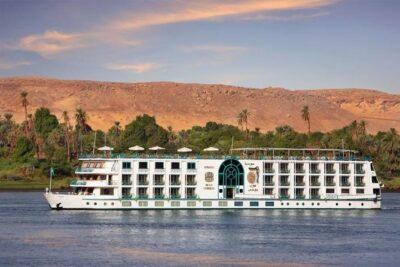
4-Day 3-Night Nile Cruise from Aswan to Luxor – Private Tour
Read our review →4 Days Nile Cruise from Aswan to Luxor including Abu Simbel and Hot Air Balloon
Read our review →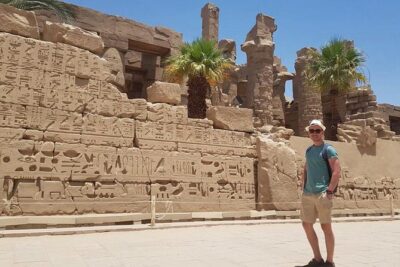
4-Day 3-Night Nile Cruise from Aswan to Luxor With Balloon and Abu Simbel
Read our review →Browse the lists this tour appears in