
Reviewed · HORSE RIDING IN LUXOR
First impression of Luxor-Explore secrets of Luxor by horse carriage
A day in Luxor starts better with a horse carriage. I like how this route pairs horse carriage transport with an Egyptologist guide, so you get both the atmosphere and the why behind what you are seeing. You trade haggling for a set plan, and you still get that slow, Nile-side feeling as you move between the big temple sights.
The best part for me is the balance. You spend real time walking the standout areas at Karnak Temple and Luxor Temple, then you finish with the smaller stops that most people skip. One consideration is that entry tickets for Karnak and Luxor temples are extra, and they will not be included in the base price.
There is also one practical watch-out. The horse part is central to the experience, so I suggest taking a quick look at the horses at the start of the tour and speaking up if anything seems off for animal welfare.
In This Review
- Key highlights you will actually care about
- Starting at Luxor Museum, then going straight to Karnak
- Karnak Temple: where Amun-Ra and the Hypostyle Hall do the talking
- Luxor Temple: the Great Colonnade and the idea of rebirth
- Avenue of Sphinxes: sand-buried road to a 2021 reopening
- Abu Haggag Mosque: a living stop inside ancient Luxor Temple
- Price and logistics: where the value comes from
- Ride quality, heat, and timing for a smoother half-day
- What to look for in your Egyptologist explanations
- Who this tour suits best
- Should you book this Luxor horse carriage tour?
- FAQ
- What is the duration of the Luxor horse carriage tour?
- Where do we meet for the tour?
- What is included in the price?
- Which attractions require extra entrance tickets?
- Is this a group tour, and how large is the group?
- Do I need to bring a mobile ticket?
- Can I cancel for a full refund?
Key highlights you will actually care about
- Horse carriage, not a car tour: you cover distances while keeping the Nile-side feel
- An Egyptologist guide with on-the-ground context: you will get explanations as you move through the sites
- Karnak plus Luxor Temple in one half-day: two major complexes, each with different vibes
- Avenue of Sphinxes reopened in 2021: you get to see the road that was buried under sand for centuries
- Abu Haggag Mosque is integrated into an ancient temple: a rare living link between eras
- Most major stops are free to enter here: only Karnak and Luxor temple tickets cost extra
Starting at Luxor Museum, then going straight to Karnak
The day begins at the Luxor Museum on the Kornish Al Nile, and the meeting point is clearly marked with a tour leader holding a red flag. From there, you go by horse carriage to your next stop, Karnak Temple.
This is a smart way to start your first day in Luxor, because Karnak is not just a temple. It is a whole religious city, grown over thousands of years. Being there early enough in your schedule helps you keep your energy for the walking parts, and the carriage ride gives you time to settle in before the crowds and heat hit.
At the first stop, you also get a short Luxor Museum look. It is only about 10 minutes here, and the ticket is free for this stop, but it helps you place the temples in the bigger Luxor story before you start chasing hieroglyphs.
More Horse Riding in Luxor
- Private Horse Riding Tour in Luxor West Bank
★ 5.0 · 91 reviews - Traditional Egyptian Breakfast at the AlHabib Arabian Horse Farm
★ 5.0 · 24 reviews - Luxor: Scenic Camel or Horse Ride
★ 3.9 · 24 reviews
Karnak Temple: where Amun-Ra and the Hypostyle Hall do the talking
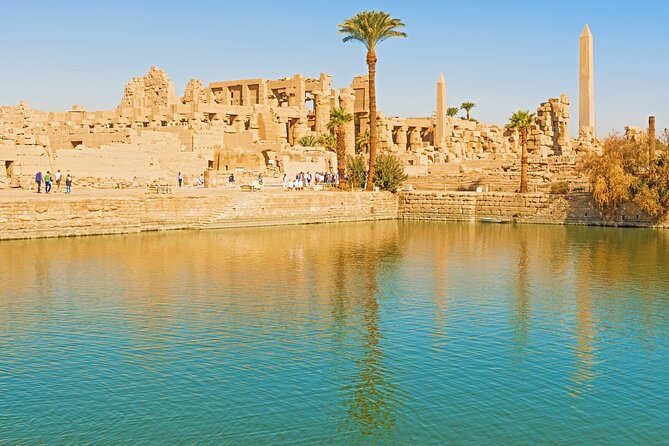
At Karnak, construction started roughly 4,000 years ago and kept going for centuries, long enough that multiple dynasties layered their marks on the same sacred ground. Even the Romans took control at some point, so the complex reflects an Egypt that kept rewriting itself.
The main focus is the Temple of Amun-Ra, described as the place where the god was believed to live on earth with Mut and Khonsu. That matters because Karnak is not built for one moment. It is built for repeated ceremonies, repeated rulers, and repeated rebuilding.
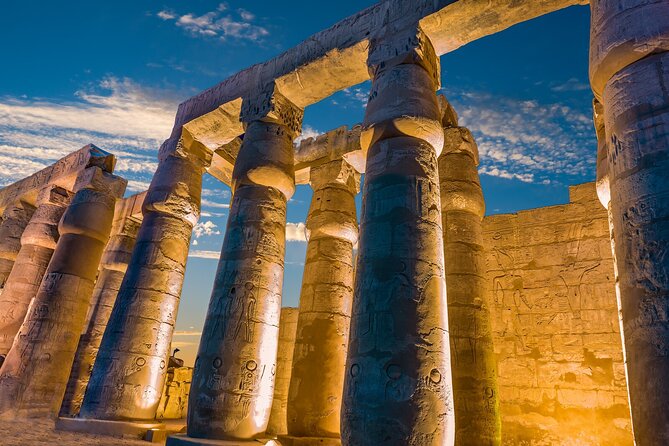
The area you will hear about most is the Hypostyle Hall, famous for its scale and for the reign connection to Seti I. This is one of those places where the architecture does the explaining: towering columns, huge interior space, and that strong feeling of walking through something designed to impress gods and humans alike.
Practical note: Karnak entrance tickets are not included in the tour price. You should budget 200 EGP total, listed as about 12 USD for both Karnak and Luxor Temple entries. The good news is you only pay for the two big temple complexes, while the carriage ride and the on-site guided experience are already covered.
Luxor Temple: the Great Colonnade and the idea of rebirth
After Karnak, you move to Luxor Temple, and this is where the day shifts. Karnak feels like an enormous sacred machine. Luxor Temple feels like a dramatic stage.
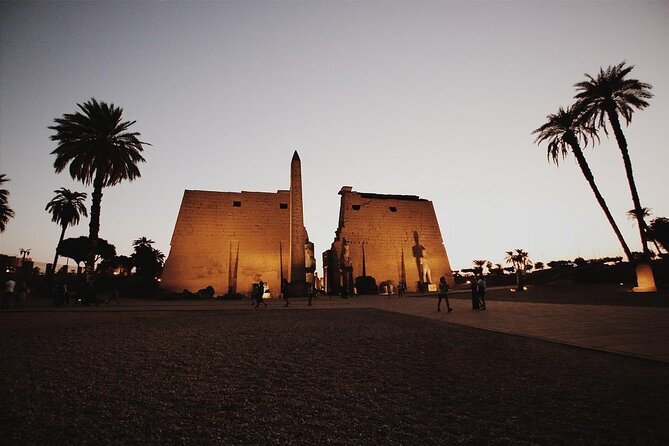
It was constructed over hundreds of years by multiple pharaohs, including Amenhotep III and Ramses II, with later work attributed to Tutankhamun. You will also get the key myth behind the place: it was linked to the god Amun experiencing rebirth during an annually reenacted coronation ceremony. That is a helpful frame because it explains why the temple is not only about the past. It was about repeating meaning year after year.
One of the major structures you will be oriented to is the Great Colonnade Hall, almost 61 meters long, with 28 columns described as being about 21 feet high. The decoration is largely associated with Tutankhamun around 1330 BC, so it is a good place to focus your attention and not rush.
A detail I appreciate here is that some sidewalls were torn down after the pharaoh era and reused for building materials. Luxor has that layered, real-world quality, where sacred architecture and daily construction have been connected for a very long time.
As with Karnak, Luxor Temple entrance is not included in the tour price. Plan to handle that on the day so you do not end up scrambling mid-walk.
Avenue of Sphinxes: sand-buried road to a 2021 reopening
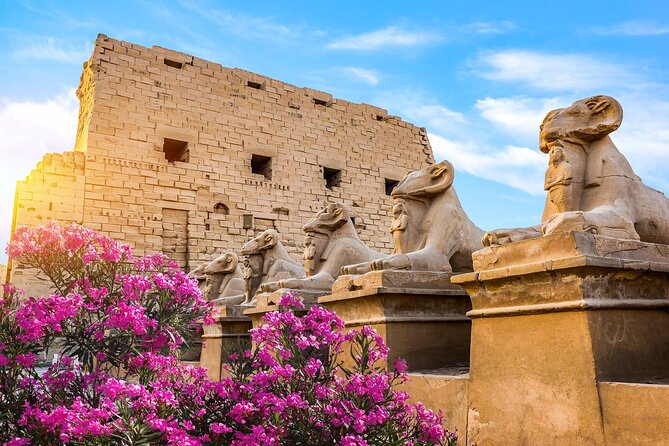
The Avenue of Sphinxes stop is short, about 30 minutes, but it is the kind of stop that turns your understanding from temple walls to temple connections. This avenue was part of how people moved between sacred spaces, and it was built during the New Kingdom era, then completed during the reign of Nectanebo I, around 380 to 362 BC.
Over centuries, the road got buried under layers of sand. So when it was rediscovered, it felt like uncovering a missing chapter. The first trace was found in 1949 by Egyptian archaeologist Mohammed Zakaria Ghoneim, with eight statues uncovered near Luxor Temple. More figures were found in later periods, including discoveries from 1958 to 1961 and from 1961 to 1964, within a stated perimeter of about 250 meters.
Even better, you are not just hearing about it. The avenue was reopened in a ceremony on 25 November 2021. That means the stop you take today is tied to modern conservation and a current push to bring visitors into the full spatial story of Luxor, not just the most famous monuments.
This is a free admission stop here, so it is a strong value add for a short time block.
Other Luxor options on the table
- Luxor City Tour by Horse Carriage Visit Local
★ 4.9 · 13 reviews - Hurghada: Red Sea & Desert Horse Riding Tour with Swimming
★ 4.8 · 2,198 reviews - Hurghada: Sea & Desert Horse Tour, Stargazing, Dinner & Show
★ 4.5 · 1,592 reviews - Hurghada: Arabian Desert and Sea Horseback Adventure
★ 4.5 · 778 reviews
Abu Haggag Mosque: a living stop inside ancient Luxor Temple
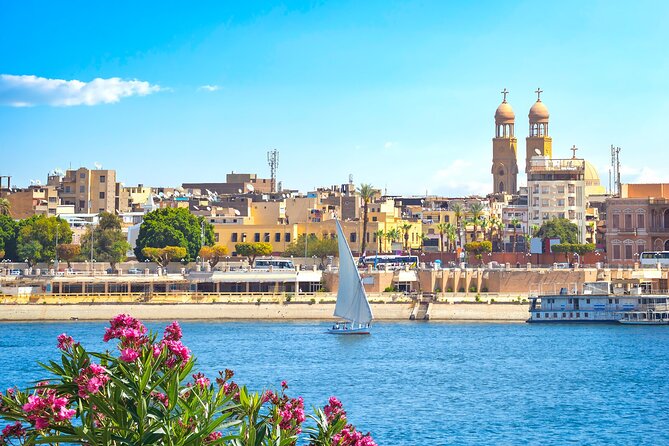
The final stop is Abu Haggag Mosque, integrated into the structure of Luxor Temple. This is one of those experiences that makes Luxor feel like it is not frozen behind glass.
The mosque is described as one of the oldest continuously used temples in the world, dating back to the reign of Pharaoh Amenhotep III in the 14th century BC. That is a remarkable timeline stretch: you are looking at a place that has kept serving people while remaining physically connected to an ancient complex.
In this tour flow, it is also a good way to end, because it is brief (around 10 minutes) and free. It gives your brain a rest from the big scale, while still leaving you with a moment that feels unusually human compared with the usual stone-on-stone temple routine.
Price and logistics: where the value comes from

The tour runs about 4 hours and is priced at $30 per person. On average, it is booked about 15 days in advance, which is a sign that it is popular for first-time visitors who want a structured East Bank plan without committing to a full-day schedule.
What you get for that price is the key value: an Egyptologist tour guide plus transportation by horse carriage. You also get group discounts and a mobile ticket, and the group size is capped at 50 travelers. In other words, you are not being packed into a massive herd.
What costs extra is straightforward. Karnak Temple and Luxor Temple entrance tickets are not included, and the total listed cost is 200 EGP (about 12 USD). The rest of the stops you visit here, including Avenue of Sphinxes and Abu Haggag Mosque, are listed as free admission in this plan.
So I think of this as a tour where most of your money goes toward guidance and the carriage transport, while the temple entry is paid separately for the two biggest sites.
Ride quality, heat, and timing for a smoother half-day
Horse carriage days can be great, but they need a little common sense.
First, keep your expectations aligned with the schedule. This is not a ride around town for hours. The carriage is the link between stops, and you spend most of the time walking inside and around the temple areas.
Second, plan for heat and sun. You will be outdoors in Luxor, moving between major sites. Short stops help, like the Avenue of Sphinxes and mosque timing, but you should still bring what you need for a hot walk.
Third, if you care about animal welfare, do what you would do anywhere: look closely at the horse before you board. If you see a horse that looks in bad condition or behaves oddly, speak up or step back. The tour can be meaningful for the right reasons, and you do not have to accept something that feels wrong.
What to look for in your Egyptologist explanations
The guide component is not just trivia. In Luxor, the temples can look like a pile of carved columns unless someone ties them to the way the ancient world understood power, gods, and time.
This tour is set up so you hear those connections while walking. At Karnak, you will focus on the scale and the way construction stretched across rulers and eras. At Luxor Temple, you get the myth and ceremony angle tied to rebirth and coronation. At the Avenue of Sphinxes, you shift to how the sacred landscape was designed for movement, then lost, then found again.
If you get a guide who is strong at current archaeological context, that can change the day from seeing monuments to understanding what researchers are still learning.
One guide name that has come up as especially warm and host-like is Ababoub. If you see that name in your schedule, it is a good sign that your day may feel smoother and more personal.
Who this tour suits best
This is a strong fit if:
- you are visiting Luxor for the first time and want a clean East Bank hits list without haggling
- you like a mix of major temples and “in-between” stops like the mosque and the avenue
- you want an Egyptologist guide rather than self-guided guessing
- you prefer a half-day plan that still has enough time on foot to feel like you saw something real
It may be less ideal if:
- you dislike the idea of riding a carriage as part of sightseeing, even briefly
- you strongly prefer to pay as little as possible at the door, since Karnak and Luxor Temple entry tickets are extra
Should you book this Luxor horse carriage tour?
I would book it if you want an efficient, atmospheric half-day with a guide and you are comfortable paying the separate entry fees for Karnak and Luxor Temple. The itinerary is structured so the big sights get real time, and the Avenue of Sphinxes plus Abu Haggag Mosque add texture that many temple-only plans miss.
Just do two things before you commit: confirm the meeting spot near Luxor Museum so you know where the day starts, and take a quick look at the horses when you arrive. If everything feels right, this is an easy way to see why Luxor still pulls people in, even after millennia of change.
FAQ
What is the duration of the Luxor horse carriage tour?
The tour runs about 4 hours (approx.).
Where do we meet for the tour?
You meet in front of the Luxor Museum on the Kornish Al Nile in Luxor City. The tour leader will be holding a red flag.
What is included in the price?
Included are an Egyptologist tour guide and transportation by horse carriage.
Which attractions require extra entrance tickets?
Karnak Temple and Luxor Temple entrance tickets are not included. The total listed cost is 200 EGP (about 12 USD). The Luxor Museum stop, Avenue of Sphinxes, and Abu Haggag Mosque are listed as free admission in this plan.
Is this a group tour, and how large is the group?
Yes, it is a group tour with a maximum of 50 travelers.
Do I need to bring a mobile ticket?
The tour includes a mobile ticket.
Can I cancel for a full refund?
Free cancellation is available. You must cancel at least 24 hours in advance for a full refund. If you cancel less than 24 hours before the start time, the amount paid is not refunded.
Newly added near Luxor
- Luxor: Karnak and Luxor Temples Private Half-Day Tour★ 4.7 · 27 reviews
- Private Full Day West Bank: Valley of kings Hatshepsut &More★ 4.9 · 40 reviews
- From Hurghada: Luxor Private Guided Day Tour with Lunch★ 4.6 · 28 reviews
- From Luxor: 3-Day Nile Cruise to Aswan with Private Guide★ 4.2 · 147 reviews
- Marsa Alam : Over Day Tour to Luxor & Balloon Ride & Felucca★ 4.4 · 29 reviews
- Marsa Alam: Snorkeling with Sea Turtles Marsa Mubarak★ 4.9 · 26 reviews
- Luxor Tour from Hurghada by bus★ 3.9 · 11 reviews
- Luxor: Habu, Deir El Medina, Shared tour, Guide, and Lunch★ 4.7 · 21 reviews
Horse Riding in Luxor, compared.


Browse the lists this tour appears in