
Reviewed · HORSE RIDING IN LUXOR
Luxor City Tour by Horse Carriage Visit Local
Luxor at a slower pace feels better. I love the calm horse-carriage speed and I like how the guide connects monuments to everyday Egyptian life. The main consideration is simple: you’ll be outdoors for much of the 150 minutes, so bring sunglasses and plan for sun.
In the best versions of this tour, the whole ride feels personal, like the combination of a warm, talkative guide such as Adam and a careful carriage driver such as Mostafa. You get to soak up street-level Luxor without the feeling of rushing from one stop to the next.
If you select it, the tour can also add the Karnak Sound and Light show, which gives the temple stones an easy, evening-style context. One more bonus worth knowing: the experience includes a skip-the-ticket-line benefit for the included sites.
In This Review
- Key highlights worth your attention
- Why a horse carriage Luxor city tour works so well
- From hotel pickup to a historic village view on the way
- Abu Haggag Mosque: continuous worship you can feel in the setting
- Souq time and the east bank layers: churches, shops, and real life
- Luxor Temple with Ramses II: what to watch for beyond the postcard
- Optional Karnak Sound and Light: a practical add-on for the evening mood
- Price, timing, and practical tips for a smooth Luxor day
- Should you book this Luxor horse carriage city tour or pass?
- FAQ
- How long is the Luxor city tour by horse carriage?
- Where is pickup included?
- Is this tour private?
- What language is the tour guide?
- Which main sights are included during the tour?
- Is the Sound and Light Show in Karnak included?
- Do I need to buy tickets for the sites separately?
- What should I bring, and can I bring luggage?
- Is free cancellation available?
Key highlights worth your attention
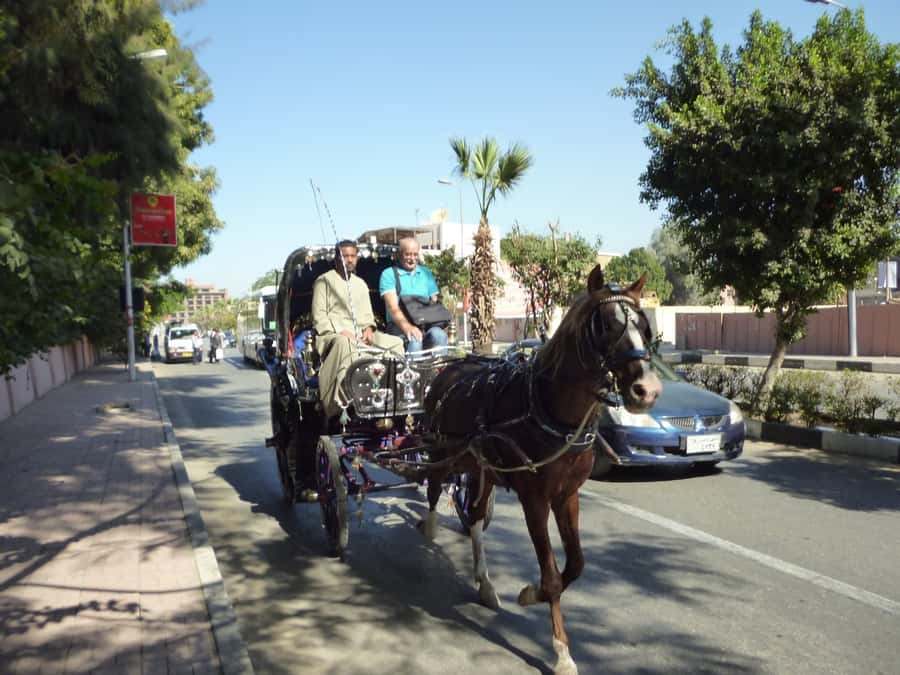
- Private horse carriage ride around Luxor with hotel pickup and drop-off
- Mosque of Abu Haggag visit, tied to over 3400 years of continuous worship
- Local souq time to see how people shop and bargain in real life
- Coptic Christian churches along the east bank, showing layered religious history
- Luxor Temple built by Ramses II around 1400 BC, with a real sense of scale
- Optional Karnak Sound and Light if you want an evening-style add-on
Why a horse carriage Luxor city tour works so well
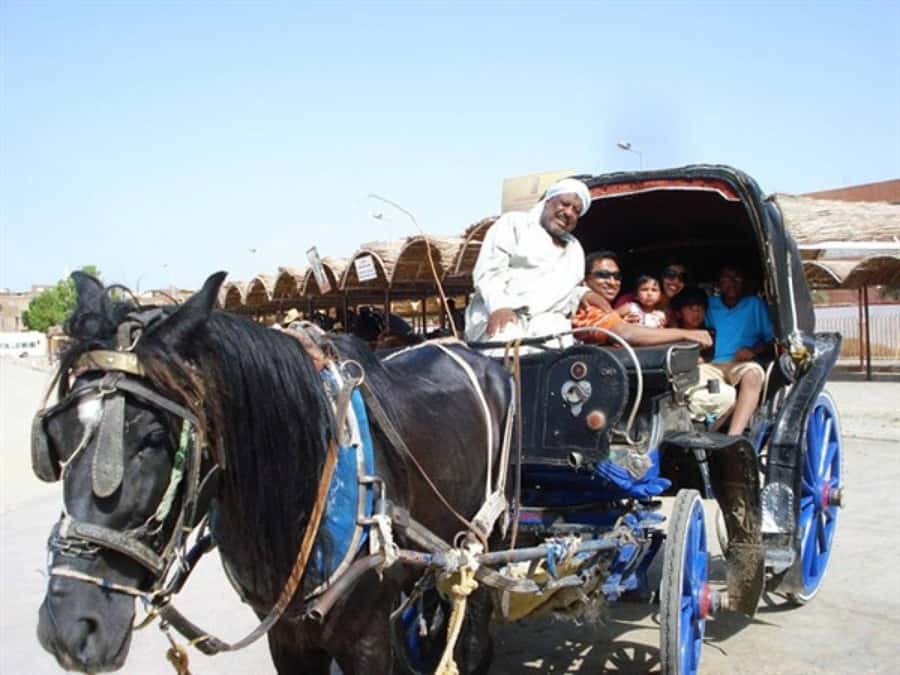
Luxor is famous for big-ticket ancient sites, but the magic here is how you approach them. A horse carriage slows your brain down. Instead of scanning for the next photo angle, you notice small details: how people move through their day, how shops are arranged, and how the neighborhoods feel close to the temples.
This tour is built for that kind of seeing. You’re not hopping between far-flung locations by car for the whole time. You’re guided through key spots on foot and by carriage, with an English-speaking guide explaining what you’re looking at and what it means in the context of modern Luxor.
The biggest win for me is the human scale. The carriage ride keeps things gentle and relaxed, especially compared with the usual rush you might expect in Egypt’s tourist corridors. That calm pace also helps you take photos without constantly thinking about traffic or timing.
The only real tradeoff is time and weather. Since it’s outdoors and low-speed, you cannot expect a frantic “see everything” sprint. If you’re the type who hates standing in the sun, you’ll need to manage your expectations and hydrate. (Sunglasses are listed as the practical must-have for a reason.)
More Horse Riding in Luxor
- Private Horse Riding Tour in Luxor West Bank
★ 5.0 · 91 reviews - First impression of Luxor-Explore secrets of Luxor by horse carriage
★ 5.0 · 50 reviews - Traditional Egyptian Breakfast at the AlHabib Arabian Horse Farm
★ 5.0 · 24 reviews
From hotel pickup to a historic village view on the way
The experience starts with hotel pickup in Luxor, specifically from East Bank side hotels. That matters because it keeps your morning or afternoon simple. You don’t waste time figuring out transportation or hunting for a meeting point after you arrive tired from travel.
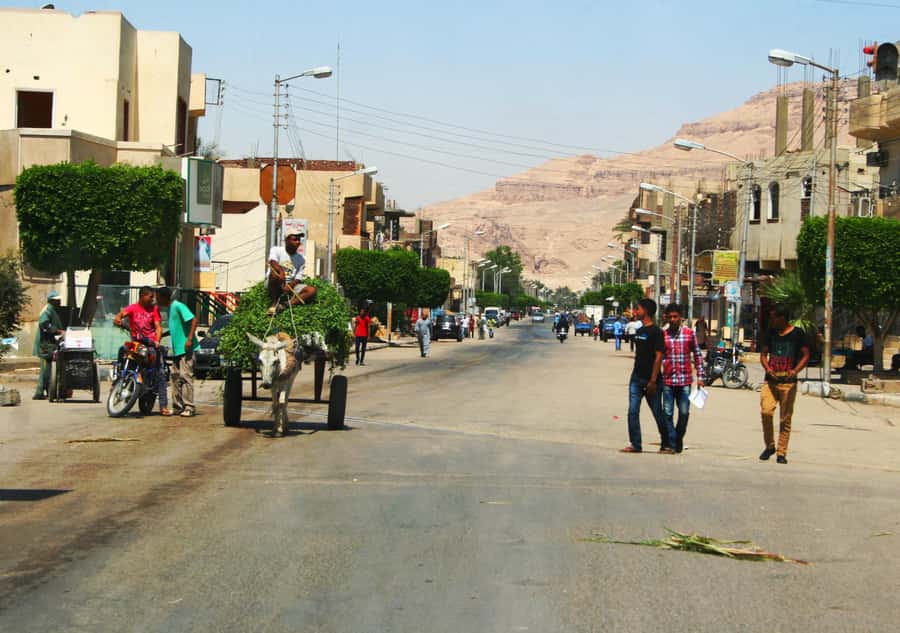
Once you board the carriage, the tour moves through a historic village area. This is not just a drive-by. You’re meant to get a glimpse into a more ancient and traditional way of life, framed by your guide’s explanations. Think of it as a warm-up for the next stops, where you’ll be learning about layers of time.
What I like about this part is the balance. You’re not going straight to the monuments. You’re first given a sense of how Luxor lives now, and then you start seeing the monuments as part of the same city, not as items sealed in a museum.
If you’re a photographer, this section can be useful for building context. You’ll get a feel for streets, everyday movement, and how the city’s layout relates to the historic sites you’ll later visit.
A practical note: the tour doesn’t allow luggage or large bags. So travel light. The carriage is not designed for bulky backpacks, and keeping your bag small makes everything easier.
Abu Haggag Mosque: continuous worship you can feel in the setting
One of the most meaningful stops is the Mosque of Abu Haggag. Your route takes you into the city to see it, with your guide explaining its significance.
This is described as one of the oldest places of continuous worship in the world, with a history dating back over 3400 years. That’s the kind of fact that could feel abstract, but the location helps it land. You’re not hearing about it in a lecture hall. You’re seeing a functioning religious site within a living neighborhood.
Why it’s worth your time, even if you’re not an architecture buff: it ties the ancient story to a continuing present. Luxor isn’t frozen in time. People still gather, pray, and mark life events in spaces that have been respected across millennia.
You may also find that the visit adds texture to the rest of the tour. After Abu Haggag, it’s easier to understand why Luxor Temple, Coptic churches, and other religious sites are all part of one broader urban story.
If you want to get more from this stop, listen closely to your guide’s framing, then look around. Notice where worship happens, how the space is used, and how the site fits into the surrounding streets.
Souq time and the east bank layers: churches, shops, and real life
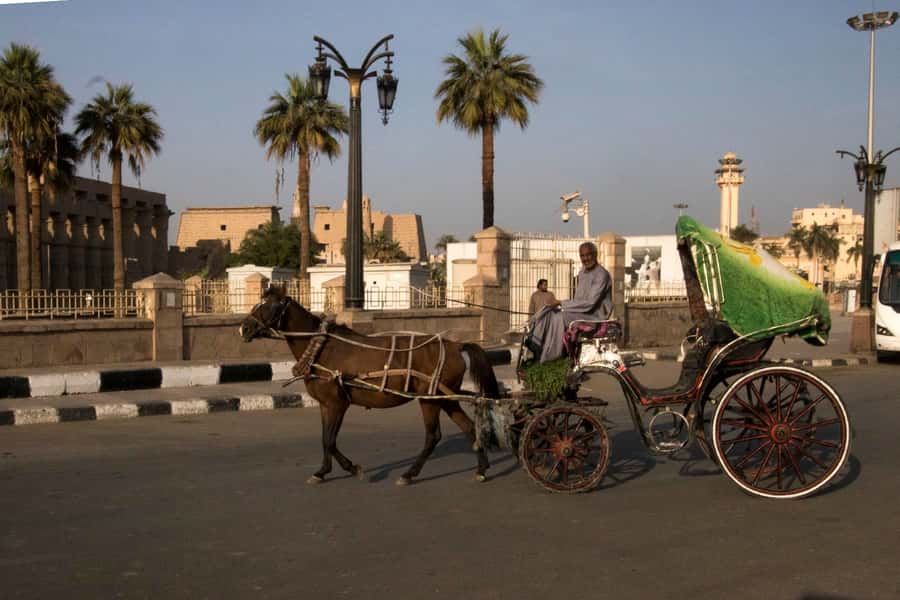
After Abu Haggag, the tour shifts into a local souq experience. This is a practical, “this is how daily shopping works” moment, not just a market walk for the sake of photos.
You’ll pass through a full, active marketplace environment where locals and visitors look for goods and bargains. Your guide can help you interpret what you’re seeing, and it’s a chance to slow down and watch routine transactions in motion. If you’ve only seen Egypt’s markets from a distance, this is the part that makes the day feel grounded.
One extra benefit here is variety. A souq walk is different from a temple visit. Your senses wake up in a new way. You start noticing how shopfronts are arranged, what kinds of items show up, and how people interact while buying and selling.
Next comes the Coptic Christian church section along the east bank. Coptic Christian churches are built along this stretch, giving the area a visible layer beyond the ancient Egyptian era. It’s a clear reminder that Luxor is not only about Pharaohs. It’s also about the generations who lived here after the pharaohs, with their own traditions and places of worship.
If you want to make this section work for you, don’t treat it like a museum corridor. Instead, give yourself small breaks. Look at one church detail, then reset your focus to the market scene, then listen again when your guide points something out.
Other Luxor options on the table
- Luxor: Scenic Camel or Horse Ride
★ 3.9 · 24 reviews - Hurghada: Red Sea & Desert Horse Riding Tour with Swimming
★ 4.8 · 2,198 reviews - Hurghada: Sea & Desert Horse Tour, Stargazing, Dinner & Show
★ 4.5 · 1,592 reviews - Hurghada: Arabian Desert and Sea Horseback Adventure
★ 4.5 · 778 reviews
Luxor Temple with Ramses II: what to watch for beyond the postcard
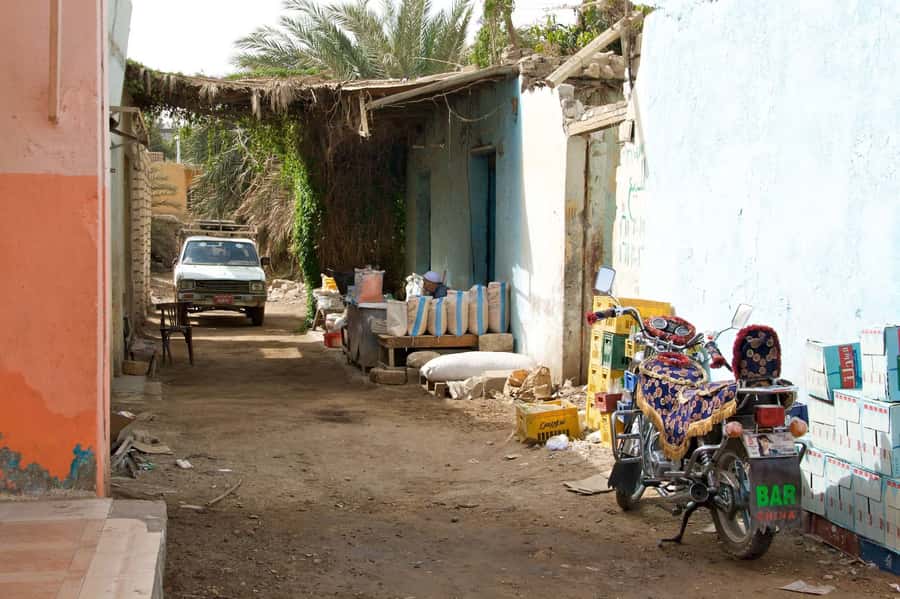
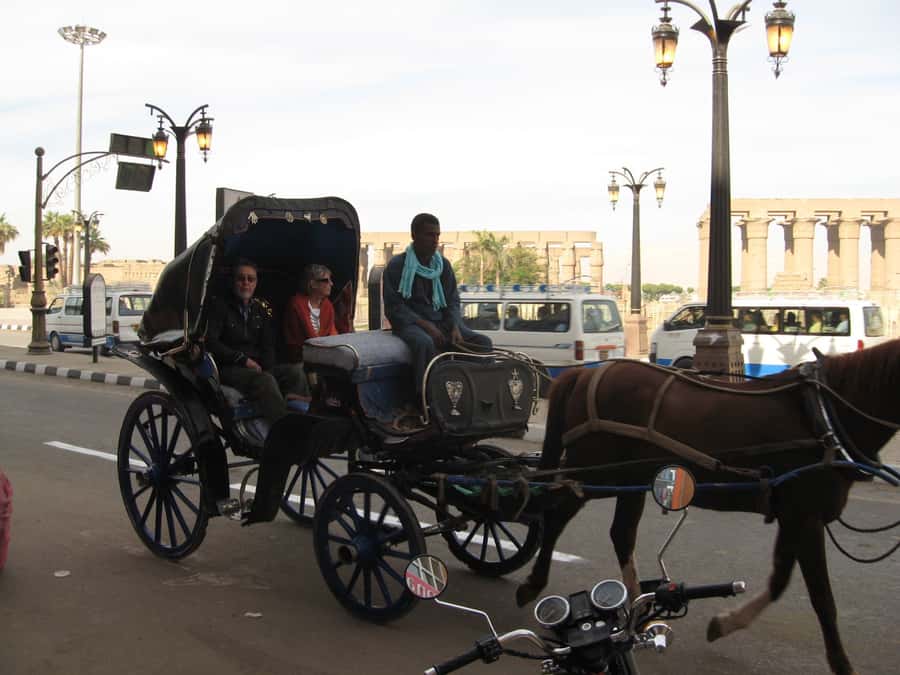
Luxor Temple is the anchor moment for many visitors, and for good reason. Built by Ramses II around 1400 BC, it’s one of those places where the size and placement do the storytelling for you.
On this tour, you visit Luxor Temple after learning about the other nearby religious and neighborhood points. That order helps. If you arrive with only the assumption that Luxor Temple is a standalone artifact, you might miss how it functions inside the larger city story. Here, the temple arrives after you’ve already seen the neighborhood context.
As you walk through, focus on scale and rhythm. The temple is not one single “thing.” It’s a sequence of spaces and monumental details that build an overall feeling. Your guide’s explanations can help you understand what you’re looking at, but even without memorizing dates, you can feel the intention in the layout.
Also, Luxor Temple tends to be a better match for photography than people expect. It’s a mix of grand structures and human-scale movement. You’ll have chances to frame shots that show both the stone and the everyday city around it.
One thing to keep in mind is that this portion is still part of a 150-minute overall experience. So you’ll want to stay engaged, but not expect endless time like you would on a self-guided afternoon. If you’re hoping for a long, slow temple study session, you might want to plan extra time later on your own.
Optional Karnak Sound and Light: a practical add-on for the evening mood
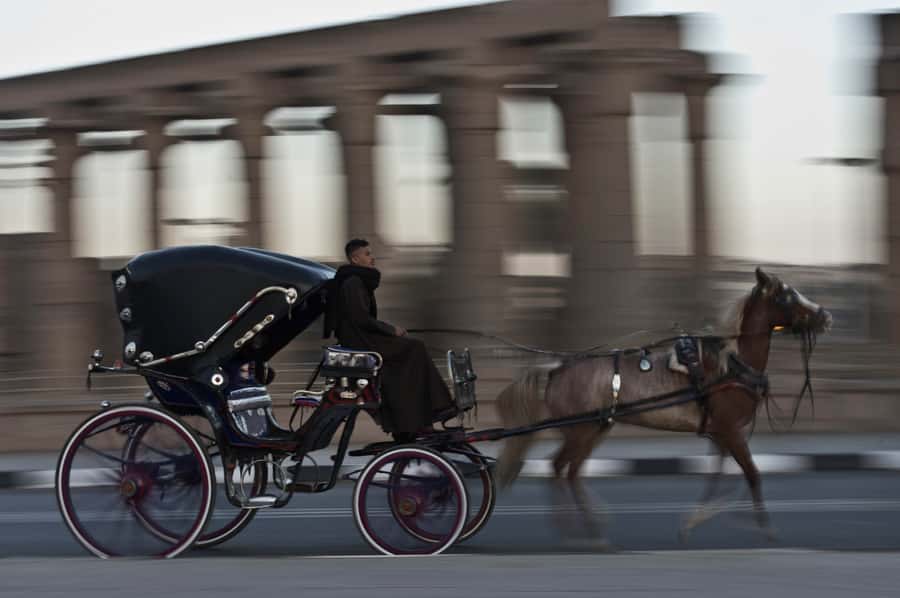
If you choose the option, the tour includes the Sound and Light Show in Karnak. This is a smart add-on when you want your ancient-site knowledge to land emotionally, not just intellectually.
Karnak’s setting makes the show feel logical. The temples are already dramatic during the day. At night, with narration and sound, the stones become a stage. It’s less about learning new facts, and more about getting a coherent storyline in a way that sticks.
Is it required? No. But if your schedule allows and you want a low-effort way to connect the dots between what you’ve seen and what it meant, it’s a strong choice.
One practical point: because it’s optional, your total timing and how the day flows may shift. If you’re the kind of person who likes strict schedules, confirm the timing for your specific start time before you make other evening plans.
Price, timing, and practical tips for a smooth Luxor day
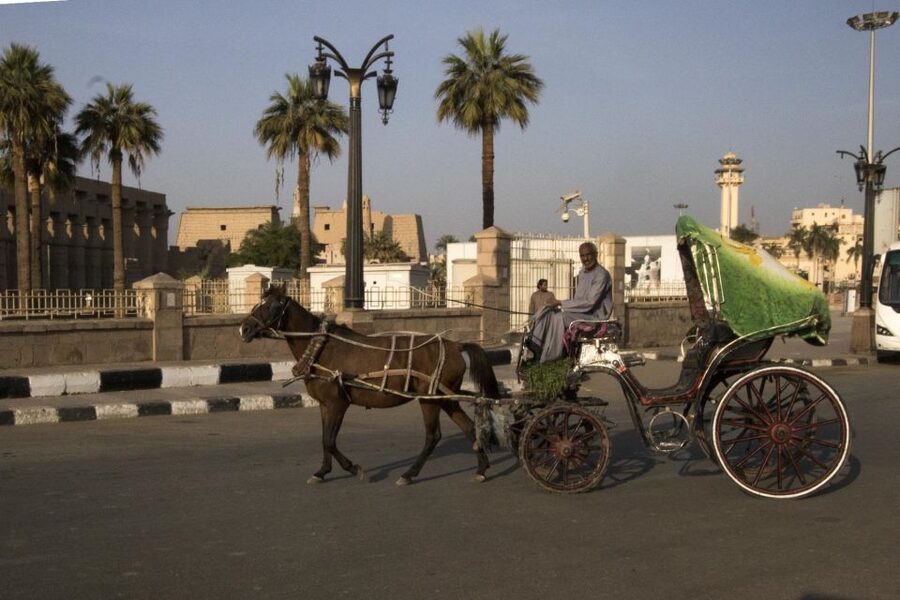
At $12 per person, this tour is priced like a value-focused experience. The real question is whether it matches your travel style. Here’s why it can be great value:
- You’re paying for hotel pickup and drop-off, which can remove a big chunk of hassle in Luxor.
- You’re getting a guided experience with an English live guide, which improves how much you get out of each stop.
- You’re combining a slower horse carriage ride with multiple high-interest sites, so it’s not just one attraction with a long waiting period.
The duration is listed as 150 minutes, so about two and a half hours in total. That’s long enough to feel like you saw local life and important sights, but short enough that you’re not stuck in a full-day routine.
My practical advice is to pack light. The tour says no luggage or large bags, and your comfort on a carriage will be better if you keep your hands free.
Bring sunglasses, because you’ll be outdoors. Also, wear footwear that works for walking in city areas. And if you tend to get impatient with slow travel, remind yourself that this pace is the point. The carriage ride is what makes the day feel different.
If you’re planning your day around other activities, remember this is offered as a private group, so your route and timing may feel a bit more flexible than a large group schedule. It also helps that you’re looked after by an expert tour operator, so you spend less time coordinating and more time seeing.
Should you book this Luxor horse carriage city tour or pass?
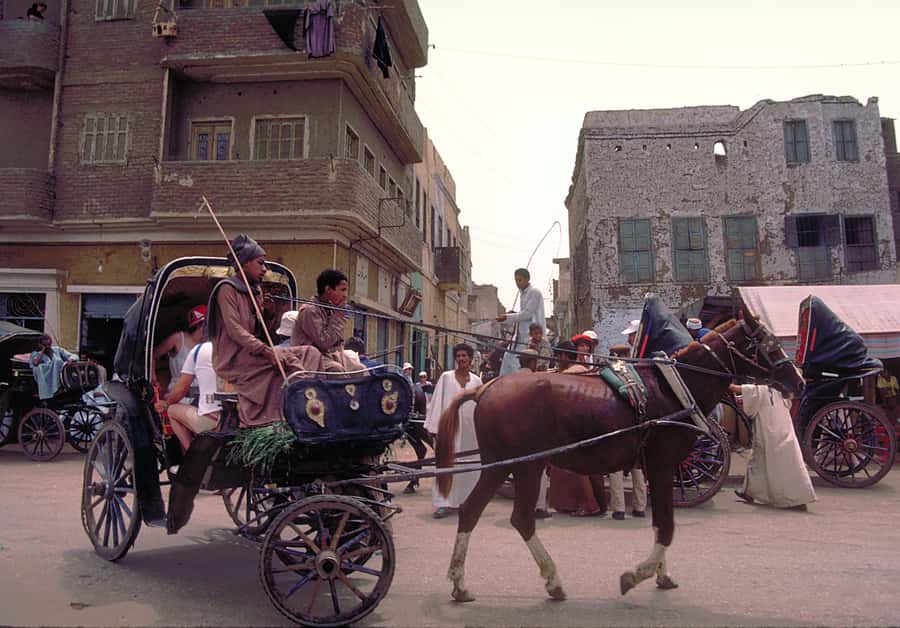
Book it if you want Luxor from street level, not only from the biggest archaeological monuments. The combination of horse carriage pace, an English guide, and visits like Abu Haggag Mosque and Luxor Temple is a rare mix. It also fits well if you like markets and want to see real daily life, then connect it to what the stones mean.
Skip it if you need a fast, high-volume highlights tour, or if you dislike outdoor time. The experience is designed for calm movement, and the best version of it is the one where you slow down with it.
If you can, keep one small goal for the day. Maybe you want to understand the religious layers on the east bank, or maybe you want to feel what Luxor looks like when you’re not barreling between sites. This tour is built for that kind of focus.
FAQ
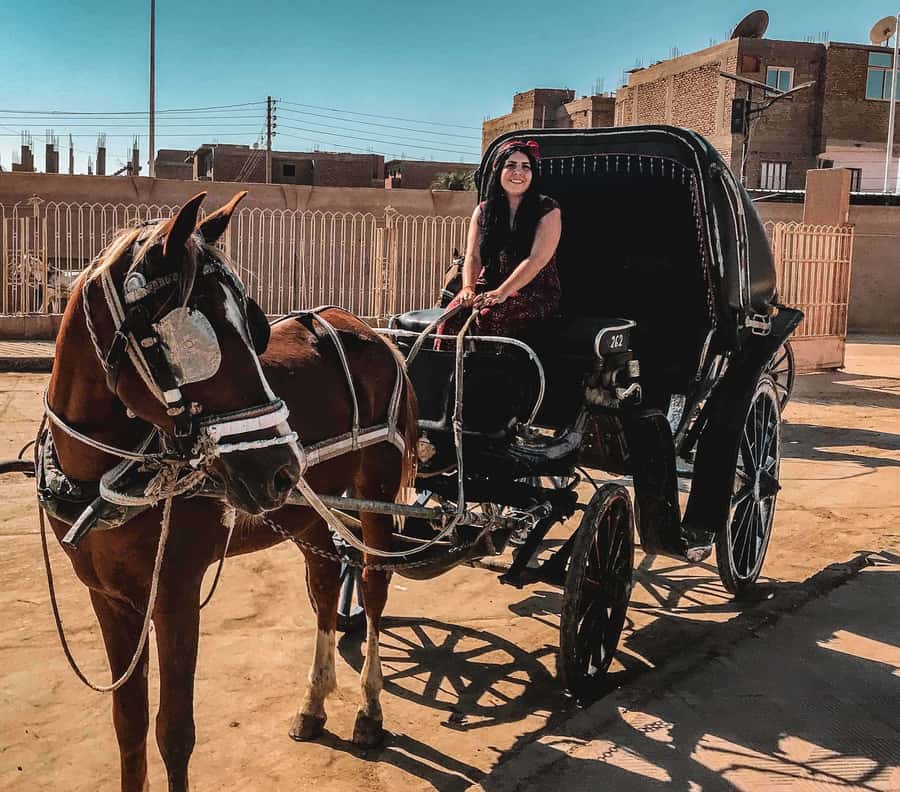
How long is the Luxor city tour by horse carriage?
The tour duration is listed as 150 minutes.
Where is pickup included?
Hotel pickup is included from all East Bank side hotels in Luxor.
Is this tour private?
Yes, it is described as a private group.
What language is the tour guide?
The live tour guide is available in English.
Which main sights are included during the tour?
The tour includes stops such as Luxor Temple and the Mosque of Abu Haggag, along with a souq and Coptic Christian churches along the east bank.
Is the Sound and Light Show in Karnak included?
It is listed as an option. You can enjoy it if that option is selected.
Do I need to buy tickets for the sites separately?
The information says you get a skip-the-ticket-line benefit, but it does not list full ticket details for each site. Any extras not mentioned are not included.
What should I bring, and can I bring luggage?
You should bring sunglasses. Luggage or large bags are not allowed.
Is free cancellation available?
Yes, you can cancel up to 24 hours in advance for a full refund.
Newly added near Luxor
- Luxor: Karnak and Luxor Temples Private Half-Day Tour★ 4.7 · 27 reviews
- Private Full Day West Bank: Valley of kings Hatshepsut &More★ 4.9 · 40 reviews
- From Hurghada: Luxor Private Guided Day Tour with Lunch★ 4.6 · 28 reviews
- From Luxor: 3-Day Nile Cruise to Aswan with Private Guide★ 4.2 · 147 reviews
- Marsa Alam : Over Day Tour to Luxor & Balloon Ride & Felucca★ 4.4 · 29 reviews
- Marsa Alam: Snorkeling with Sea Turtles Marsa Mubarak★ 4.9 · 26 reviews
- Luxor Tour from Hurghada by bus★ 3.9 · 11 reviews
- Luxor: Habu, Deir El Medina, Shared tour, Guide, and Lunch★ 4.7 · 21 reviews
Horse Riding in Luxor, compared.

First impression of Luxor-Explore secrets of Luxor by horse carriage
Read our review →
Browse the lists this tour appears in